Artwork
馬鳴菩薩図像|Iconographic Drawing of the Bodhisattva Memyō (Ashvaghosha)
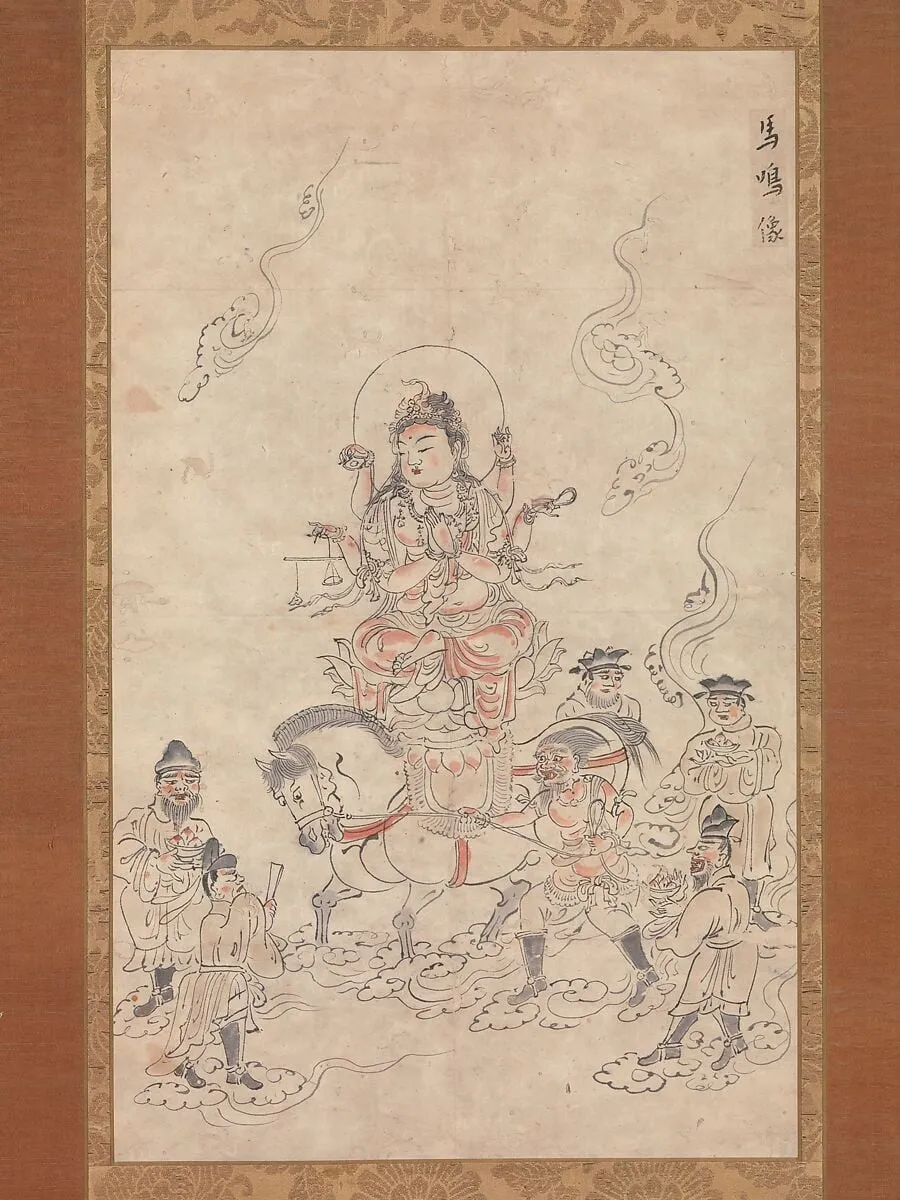
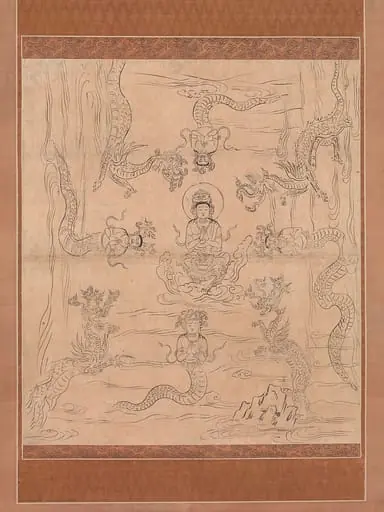
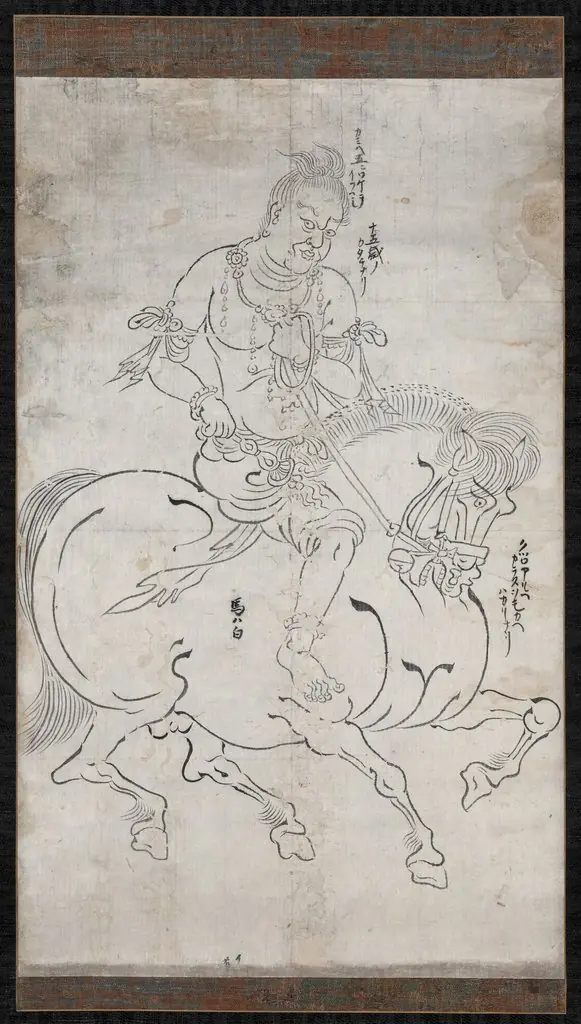
馬鳴菩薩図像|Iconographic Drawing of the Bodhisattva Memyō (Ashvaghosha) is an ink painting. It dates from 1142 and is held in the collection of the Metropolitan Museum of Art. This hanging scroll, an ink and color drawing on paper, depicts the Bodhisattva Memyō, also known as Ashvaghosha.
About this work
Subject & Meaning
The inclusion of the horse and the attendant man serves to identify the subject and illustrate his narrative context within Buddhist tradition.
Created in 1142 in Japan, this hanging scroll depicts the Bodhisattva Memyō, also known as Ashvaghosha, accompanied by a horse and a man. As a work of religious art, the composition centers on the veneration of this specific Buddhist figure, whose name and iconography link him to the legendary horse that carried him. The inclusion of the horse and the attendant man serves to identify the subject and illustrate his narrative context within Buddhist tradition.
The visual elements combine to represent the spiritual authority and historical identity of Ashvaghosha, a key philosopher and poet in Mahayana Buddhism, rendering him as a sacred figure worthy of devotion.
Technique & Style
The work is executed as a hanging scroll in ink and polychrome on paper, a standard support for Japanese Buddhist paintings of the twelfth century. The artist applied fine brush lines to delineate the Bodhisattva, horse, and attendant figure, then layered translucent color washes to model forms and define garments. This technique reflects the restrained yet expressive handling characteristic of religious iconographic drawings produced in Japan during the Heian period, as indicated by the artwork’s 1142 date and its classification as a religious painting. The sources do not provide information on the object’s current condition.
History & Provenance
The Iconographic Drawing of the Bodhisattva Memyō (Ashvaghosha) is dated to 1142 based on internal documentation and is attributed to an anonymous Japanese artist of the mid-12th century. The work entered the collection of the Metropolitan Museum of Art as part of its holdings of religious paintings, with no recorded commission or early provenance prior to its acquisition. Its creation aligns with the mature Heian period, a time marked by refined religious iconography in Japanese Buddhist art. The specific accession number and any exhibition history are not provided in the cited sources.
Overview
This hanging scroll, an ink and color drawing on paper, depicts the Bodhisattva Memyō, also known as Ashvaghosha. The artwork presents a historical figure as a bodhisattva, a being dedicated to assisting others in achieving enlightenment. It is notable for its vibrant palette and the ethereal quality of its central subject, making it a significant early representation of this specific figure.
Artist & collection

 大威徳明王|Daiitoku Myōō
 Bishamonten, the Guardian of the North, with his Retinue
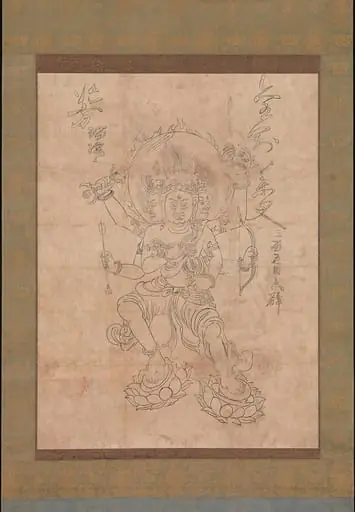 金剛夜叉明王|Kongōyasha Myōō
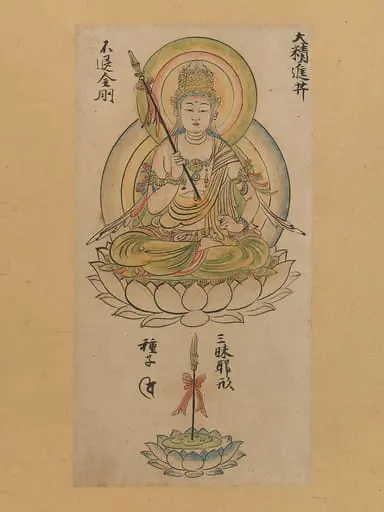 大精進菩薩図像 (「金胎仏画帖」より)|Daishōjin Bosatsu, from “Album of Buddhist Deities from the Diamond World and Womb World Mandalas”
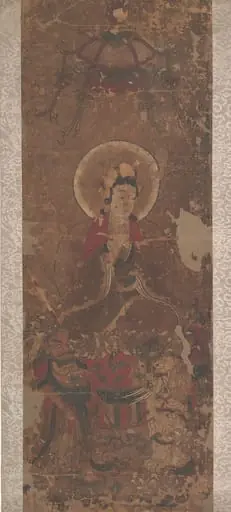 Untitled
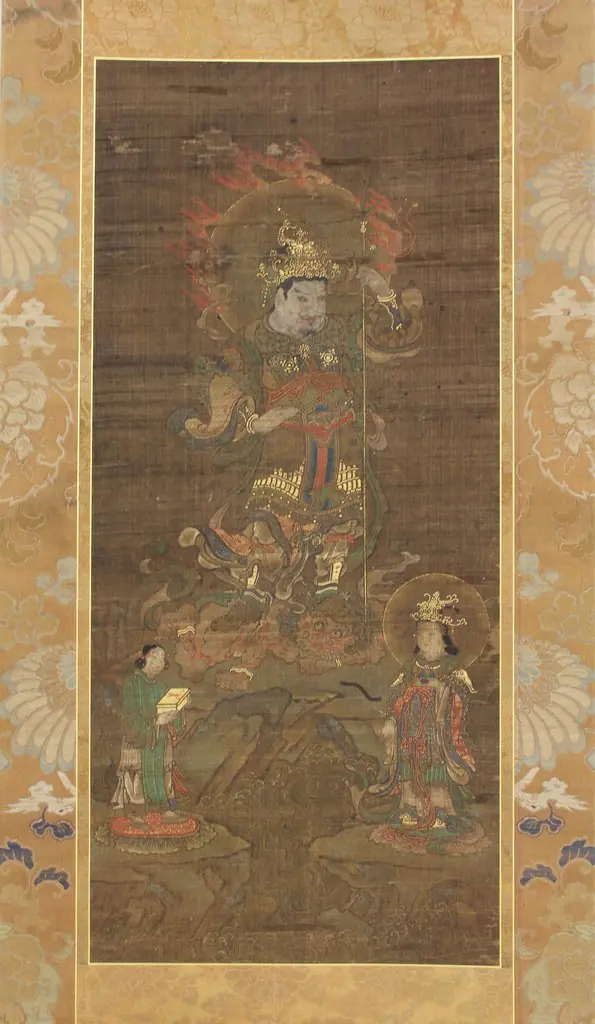 Mount Kurama Mandala: Bishamonten Triad (Kuramayama mandara: Bishamonten sanzonzō)
 The Youth Seitaka (Seitaka Dōji)