Artwork
天部諸尊図像抄|Scroll 9 of Collected Iconography (Zuzōshō): Ten (Devas)
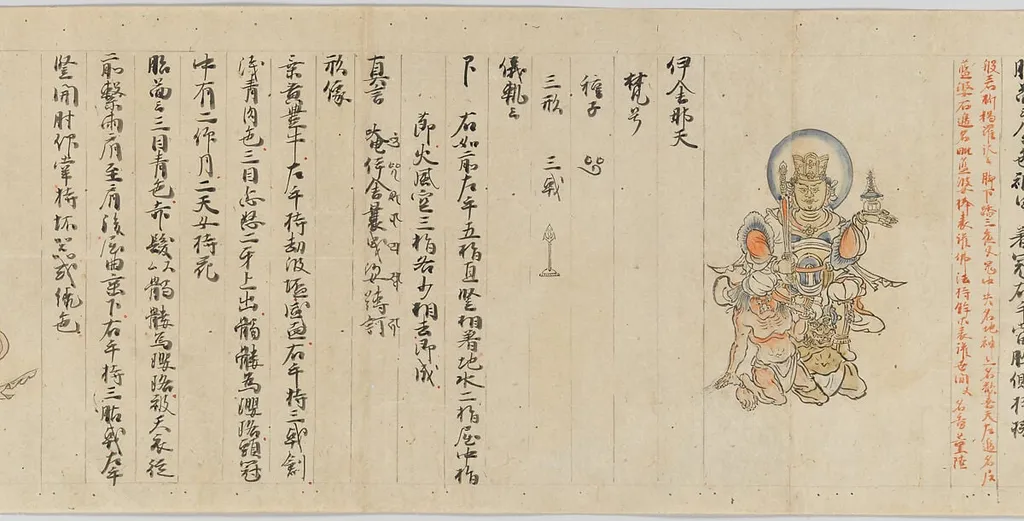
天部諸尊図像抄|Scroll 9 of Collected Iconography (Zuzōshō): Ten (Devas) is an ink painting. It dates from 1249 and is held in the collection of the Metropolitan Museum of Art. The Collected Iconography (Zuzōshō): Ten (Devas) is the ninth scroll in a series, rendered in ink and color on paper.
About this work
Technique & Style
5 cm in height and 1,623 cm in length, and it was created in Japan in 1249 by an anonymous hand.
The work is executed as a handscroll on paper using ink outlines filled with polychrome pigments, a technique typical of 13th-century Japanese religious painting. The support is thin paper, measuring approximately 30.5 cm in height and 1,623 cm in length, and it was created in Japan in 1249 by an anonymous hand. The composition illustrates ten celestial devas within a Buddhist iconographic context, rendered in a restrained linear style that emphasises hierarchical arrangement and symbolic iconography. The piece resides in the Metropolitan Museum of Art collection.
History & Provenance
The scroll titled Scroll 9 of the Collected Iconography (Zuzōshō): Ten Devas was created in 1249 in Japan by an anonymous painter. Executed as a handscroll in ink and colour on paper, it portrays Buddhist devas. The work is held in the collection of the Metropolitan Museum of Art, where it measures 30.5 cm in height and 1,623 cm in length.
No documentation of its early ownership or commissioning patron is extant, and no specific exhibition or loan records are provided in the available sources.
Legacy
The handscroll, dated 1249, known as Scroll 9 of the Collected Iconography (Zuzōshō), depicting the Ten Devas, is held in the Metropolitan Museum of Art. Its presence in a major institution has contributed to ongoing scholarly attention to early Japanese Buddhist painting and has made it a reference point for studies of medieval Japanese religious art and the depiction of celestial beings within the Buddhist pantheon.
Overview
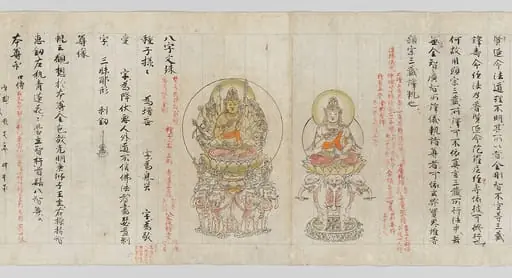
The Collected Iconography (Zuzōshō): Ten (Devas) is the ninth scroll in a series, rendered in ink and color on paper. This handscroll presents a compilation of individual studies depicting various Buddhist deities. Each figure is rendered distinctly, isolated within the scroll's expanse, serving as a visual record of sacred forms.
Subject & Meaning
The scroll's primary focus is the precise depiction of Buddhist deities, known as Devas. These figures are presented with specific attributes, including their distinct robes and symbolic hand gestures, or mudras. Such details were essential for conveying the correct identity and spiritual significance of each divine being within Buddhist art.
Context
This handscroll functioned as a practical reference for artists engaged in creating Buddhist imagery. It provided essential guidelines for accurately portraying deities, detailing their specific iconography. Such a resource ensured consistency and correctness in religious art, acting as a visual manual for practitioners.
Artist & collection

 Listening to the Wind in the Pines
 Preface
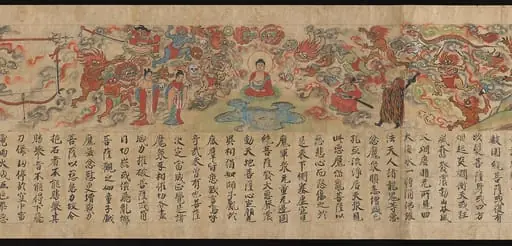 『過去現在絵因果経』 断簡 (松永本)|Scene from The Illustrated Sutra of Past and Present Karma (Kako genzai e-inga-kyō; Matsunaga Version)
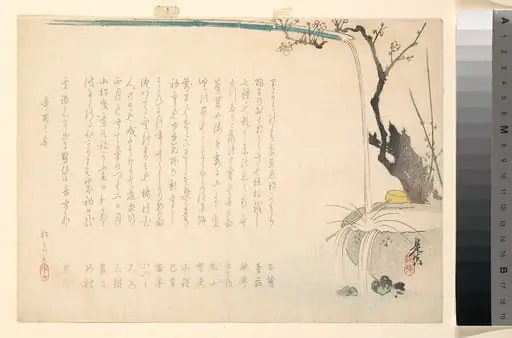 Untitled
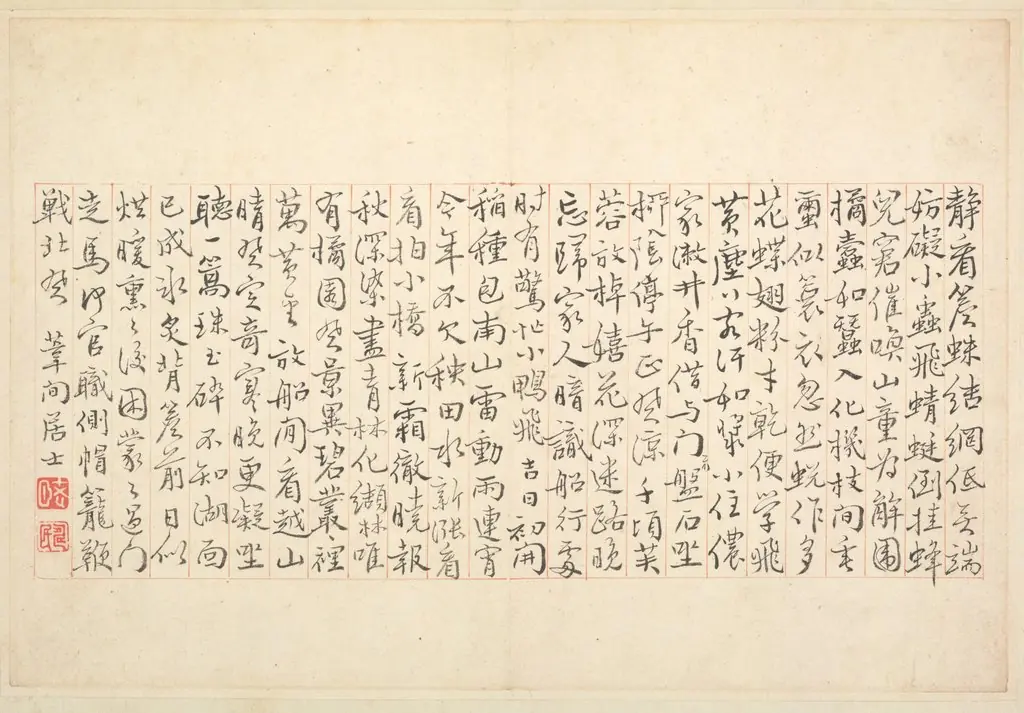 Album of Calligraphy and Paintings
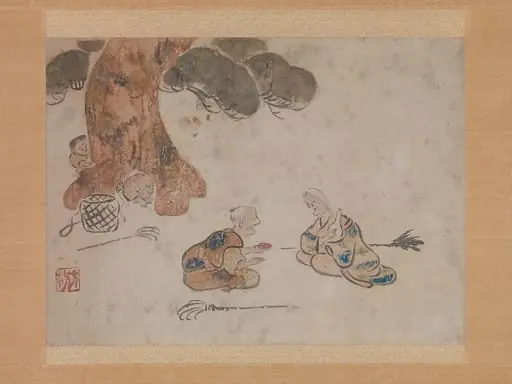 Untitled
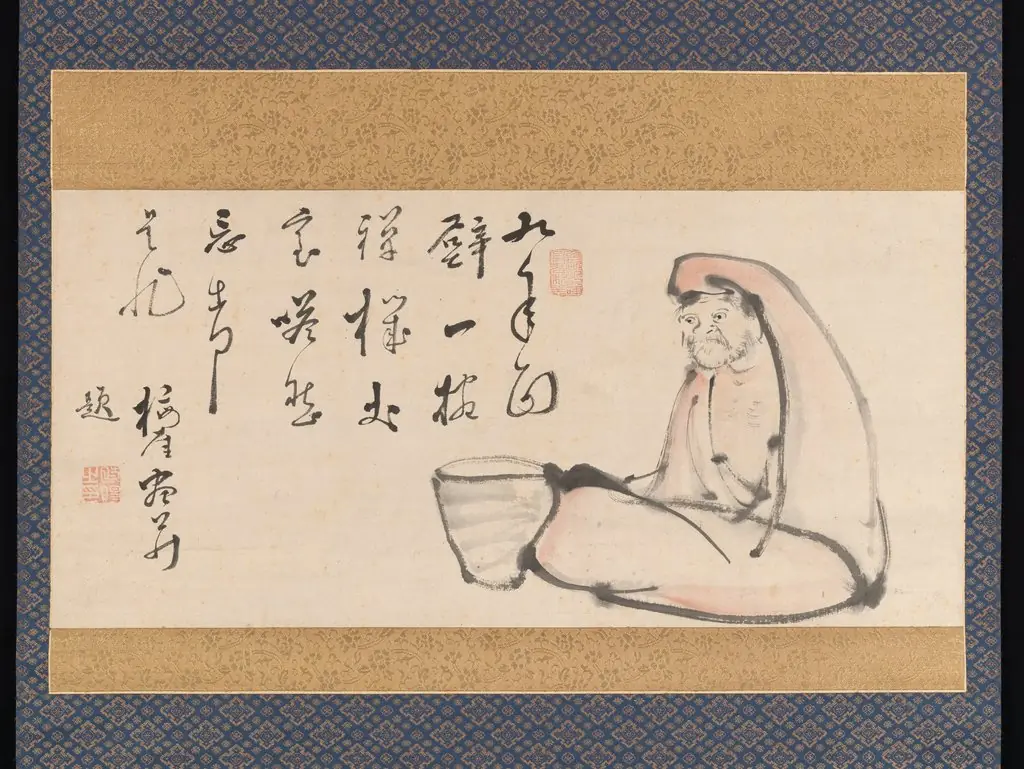 Daruma
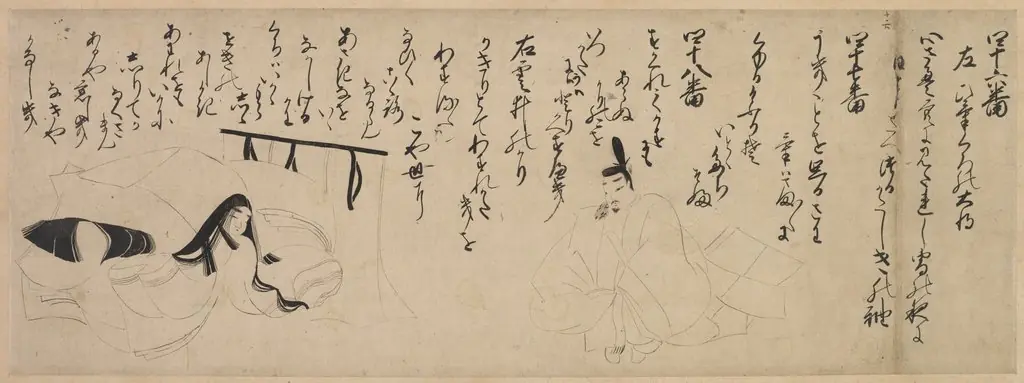 Section of an Illustrated Tale of Genji Poetry Contest
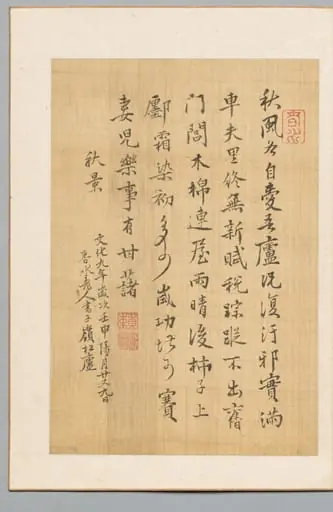 Poem
Poem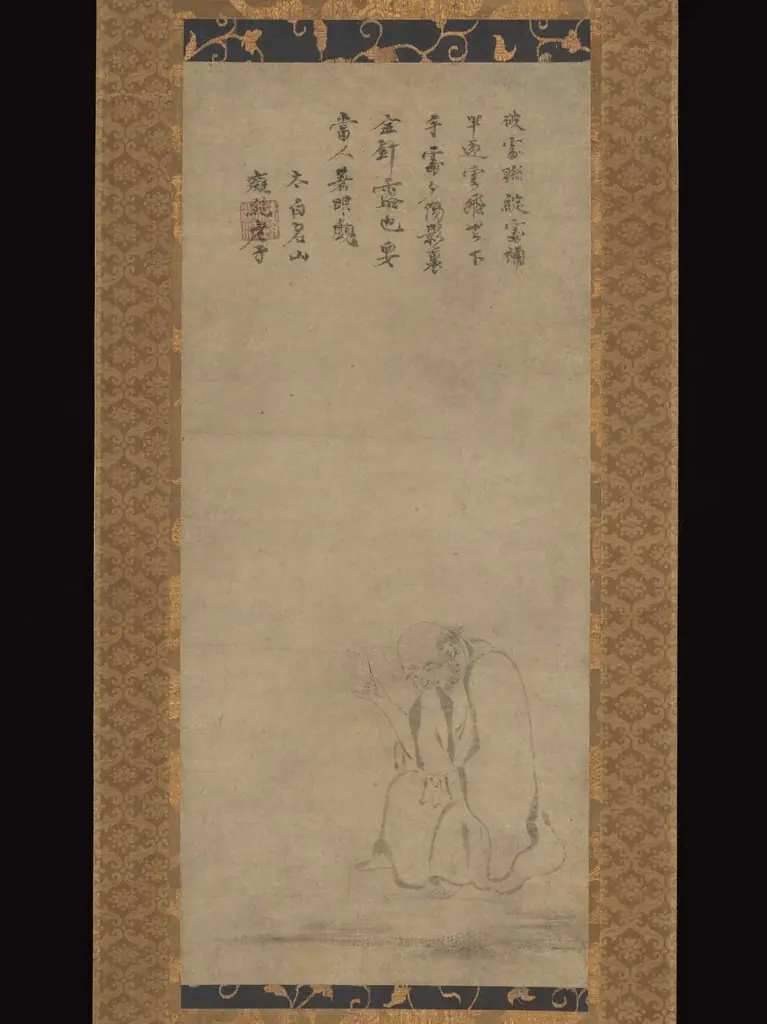 Mending clothes by daylight