Artwork
Section of an Illustrated Tale of Genji Poetry Contest
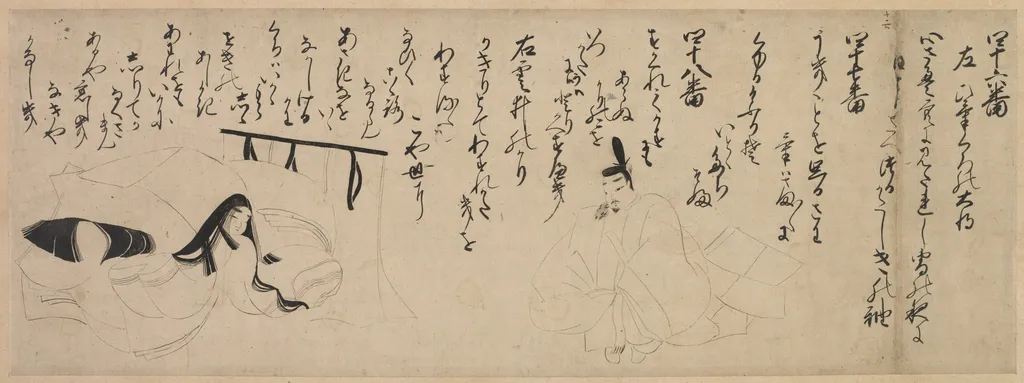
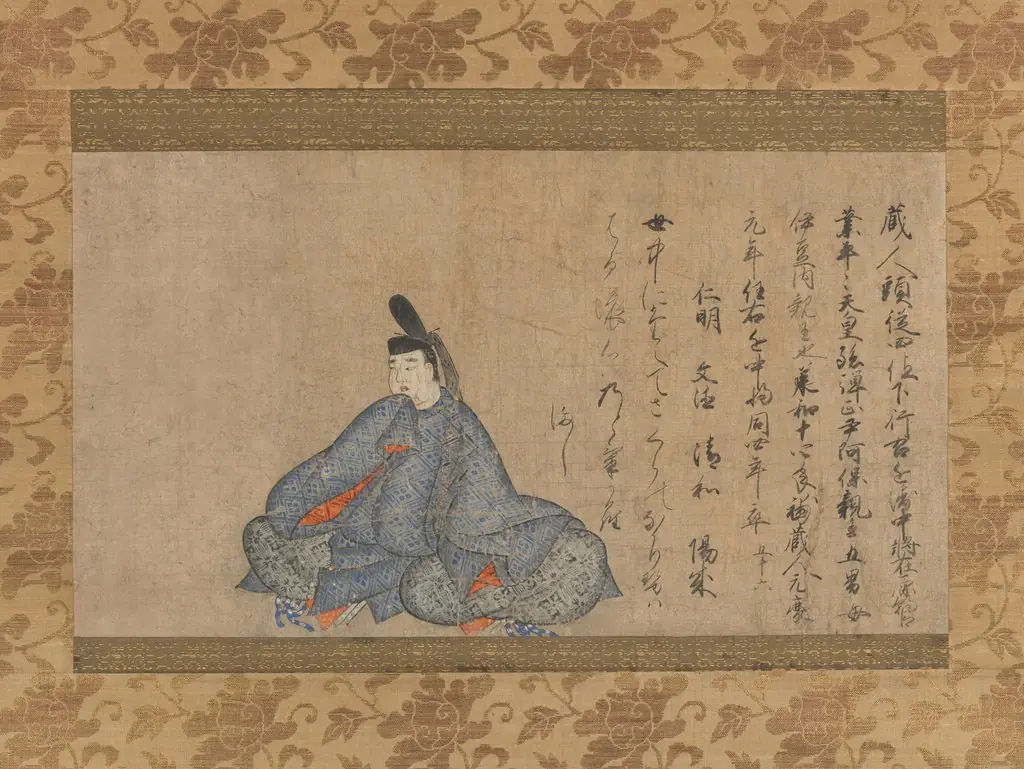
Section of an Illustrated Tale of Genji Poetry Contest is an unspecified painting. It dates from 1449 and is held in the collection of the Cleveland Museum of Art. The work portrays a scene from an illustrated version of the Tale of Genji, focusing on a poetry contest.
About this work
Overview
The work portrays a scene from an illustrated version of the Tale of Genji, focusing on a poetry contest. A reclining woman with long black hair lies on a low bed, while a seated man in a traditional robe and hat observes her. Behind them, black ink calligraphy is rendered on a beige surface, linking the visual narrative to the literary source.
Subject & Meaning
The composition captures a moment of poetic exchange, a common motif in Heian-era storytelling where courtly participants engage in lyrical competition.
The composition captures a moment of poetic exchange, a common motif in Heian-era storytelling where courtly participants engage in lyrical competition. The woman's relaxed posture suggests receptivity to the verses, whereas the man's attentive pose reflects contemplation of the poetic form. The accompanying calligraphy likely contains excerpts from the contest, reinforcing the interplay between image and text.
Technique & Style
Executed in ink and color on paper, the painting employs delicate brushwork characteristic of Japanese narrative scrolls. The contrast between the woman's dark hair and the muted background emphasizes her presence, while the calligraphic script is integrated as a visual element rather than mere annotation. The use of a beige ground for the ink characters creates a subtle tonal harmony across the scene.
History & Provenance
This illustration belongs to a series that visualized episodes from the Tale of Genji, a seminal 11th‑century Japanese novel. Such works were traditionally produced for aristocratic patrons and circulated among literati circles. The specific provenance of this panel is undocumented, but its style aligns with early Edo period manuscript traditions.
Artist & collection

 Untitled
 The Thirty-Six Poetic Immortals (Sanjūrokkasen)
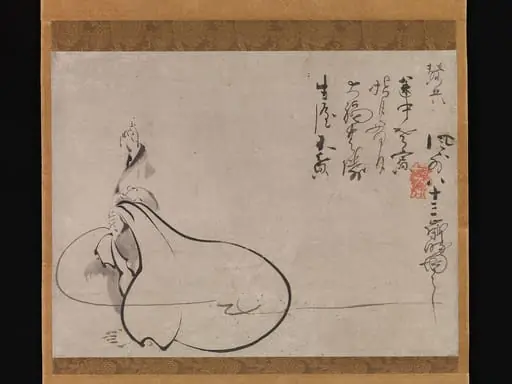 風外慧薫筆 指月布袋図|Hotei Pointing at the Moon
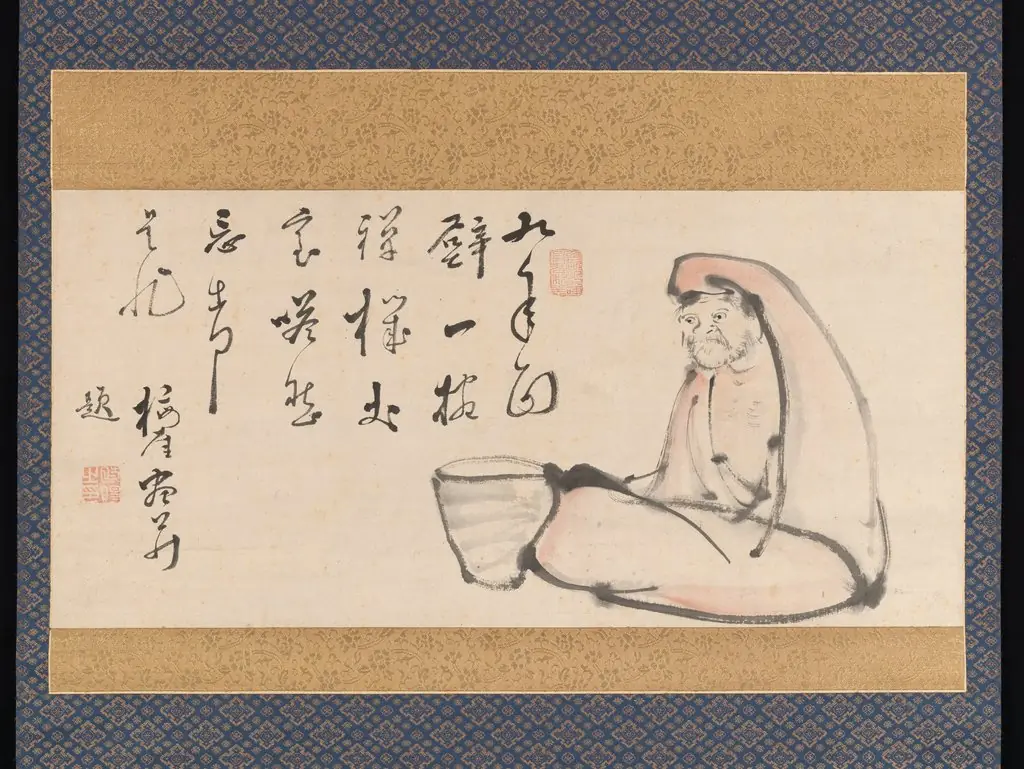 Daruma
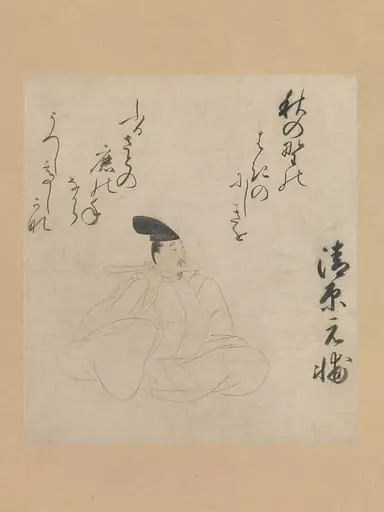 清原元輔 「為重本 時代不同歌合絵巻」 断簡 |The Poet Kiyohara Motosuke, from the “Tameshige Version” of Thirty-six Poetic Immortals (Tameshige-bon Jidai fudō utawase emaki)
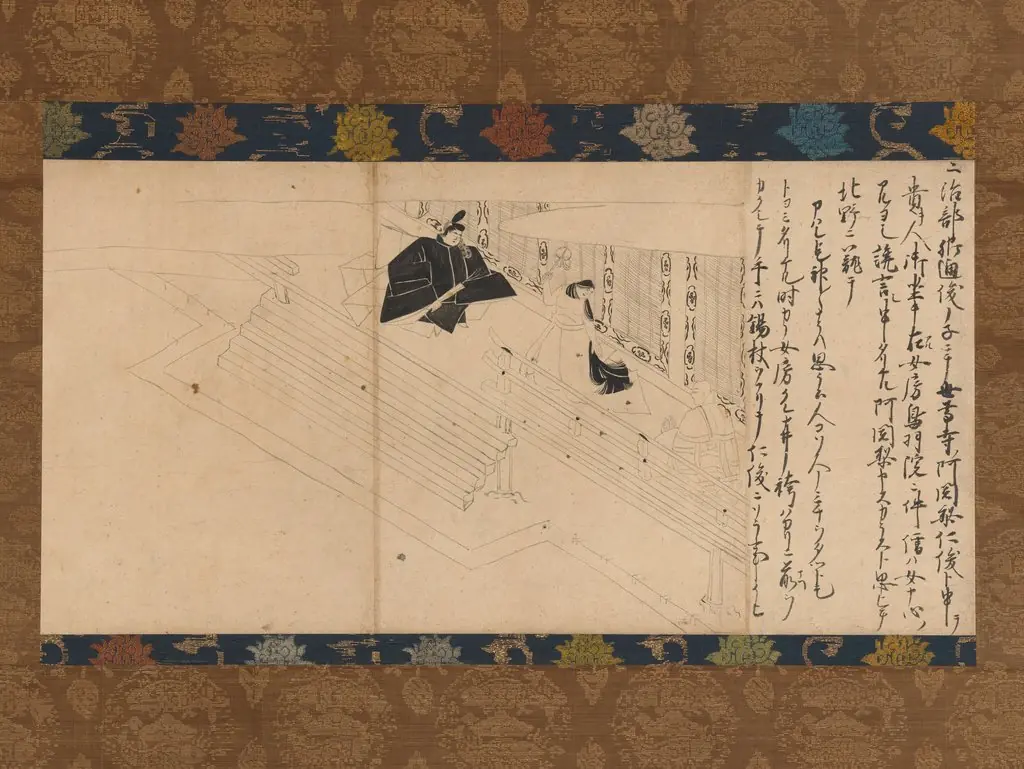 Shrine Maiden-Shamaness Possessed by a Spirit, from Illustrated Legends of the Kitano Tenjin Shrine (Kitano Tenjin engi emaki)
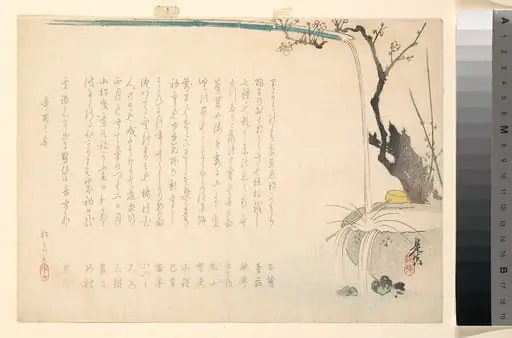 Untitled
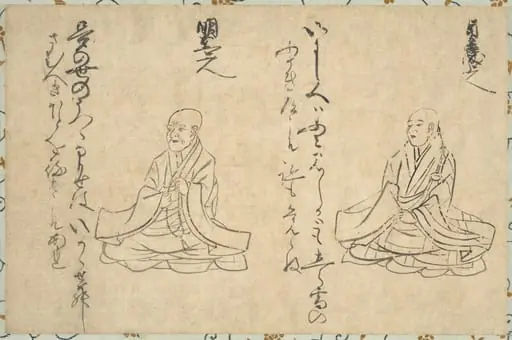 Thirty-Six Poetic Immortals of the Buddhist Clergy
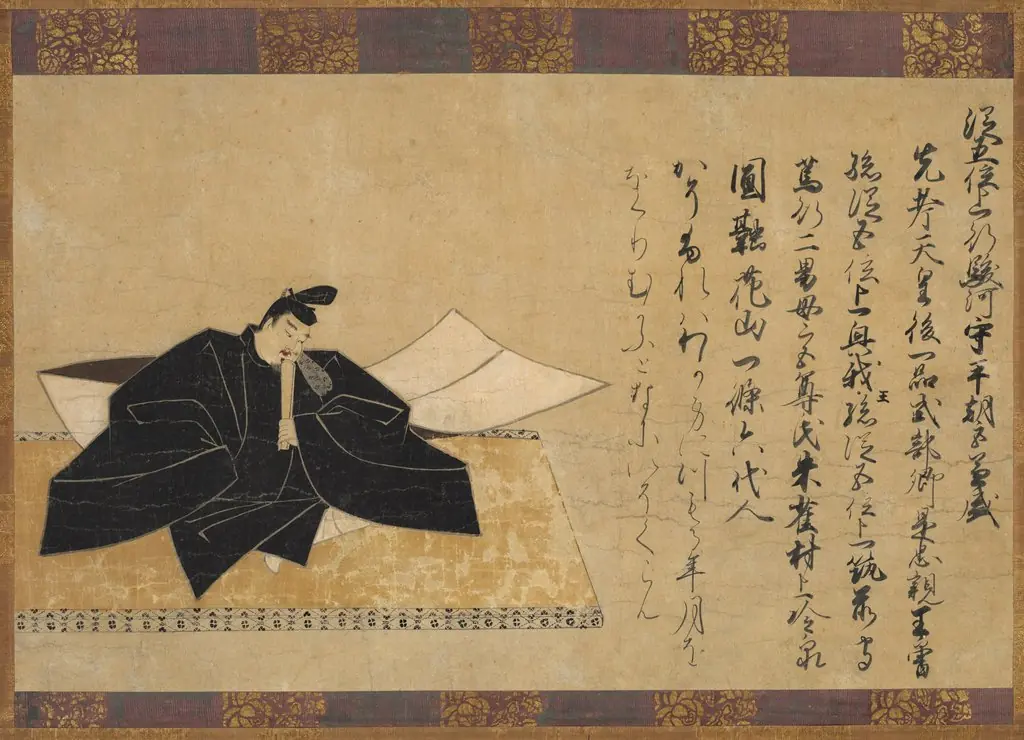 Taira no Kanemori of the Thirty-six Poetic Immortals
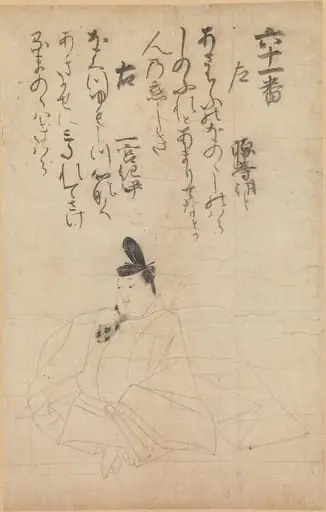
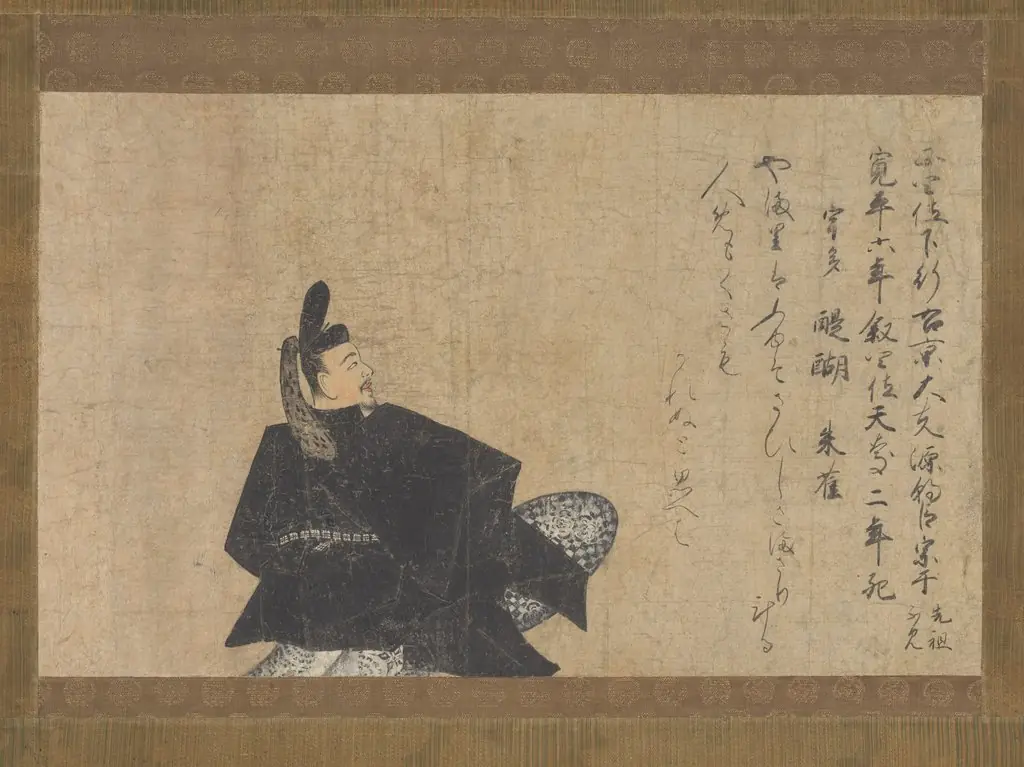 Minamoto no Muneyuki, from the “Fujifusa Version” of Thirty-six Poetic Immortals (Fujifusa-bon Sanjūrokkasen emaki)
- Section of an Illustrated Tale of Genji Poetry Contest
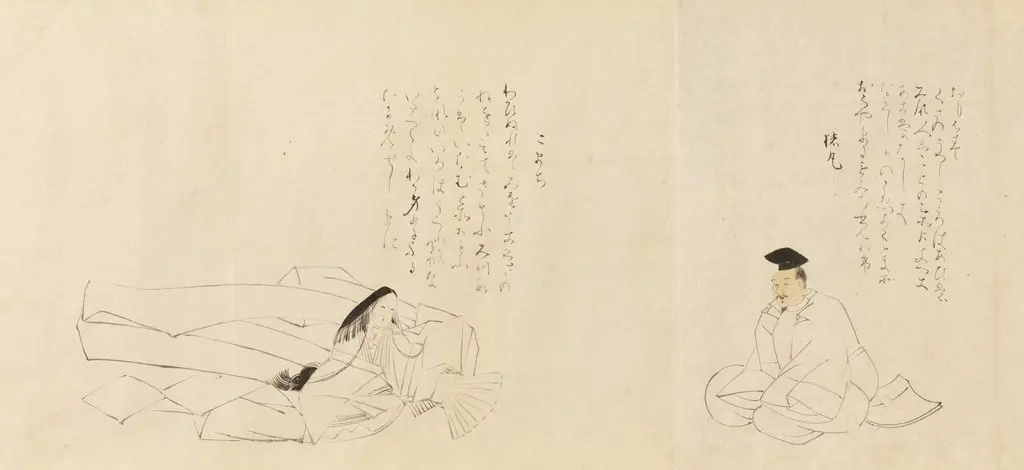
 Ariwara Narihira (825–880), from the Fujifusa version of Thirty-six Immortal Poets