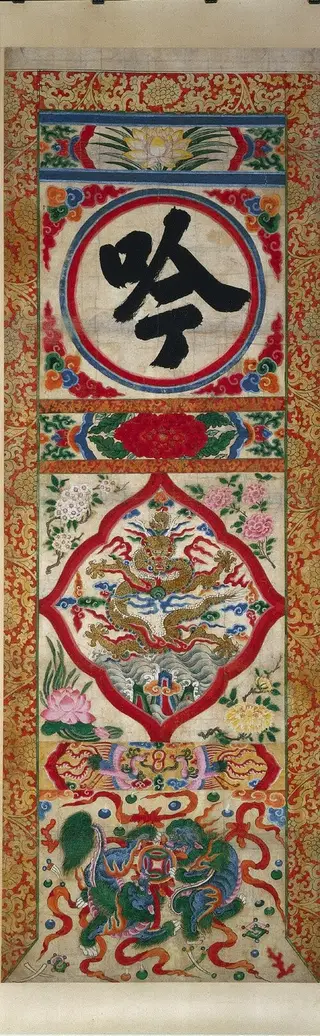
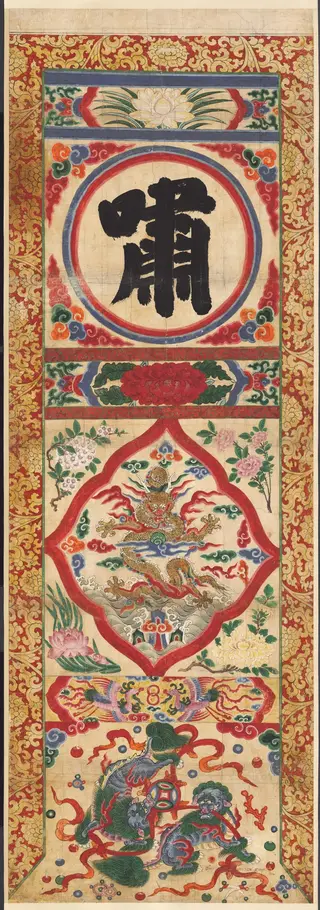
Artwork
Set of Four Painted Characters
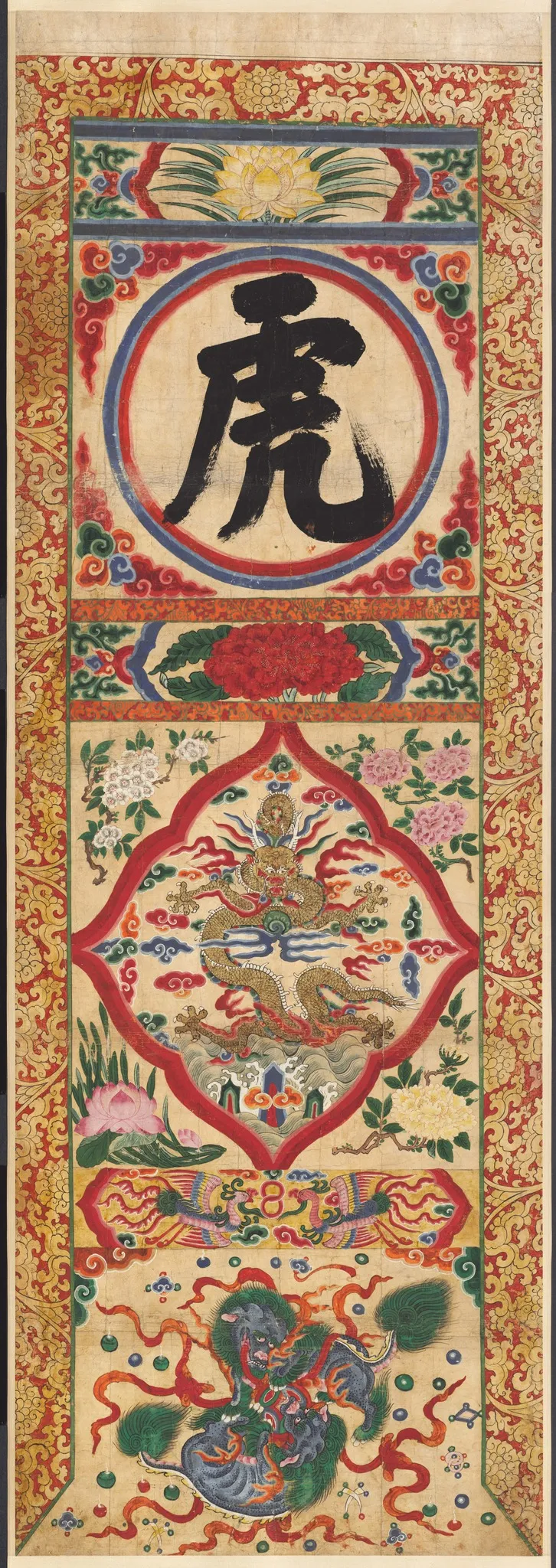
Set of Four Painted Characters is an unspecified painting. It dates from 1850 and is held in the collection of the Cleveland Museum of Art. The work is a vertically oriented painted banner, composed of vivid hues and strong geometric forms.
About this work
History & Provenance
The set of four painted characters was created in Korea around 1850. The specific artist responsible for the work remains unknown. The paintings entered the collection of the Cleveland Museum of Art, where they are currently housed. The museum's records indicate the works were acquired as part of accession number 1998.119.
Context
The work entered the Cleveland Museum of Art collection in 1850 and is attributed to an unknown artist, situating it within the broader 19th-century painting tradition. Its Korean provenance adds a distinctive geographical context that enriches understanding of cross-cultural artistic exchanges during this period.
Legacy
The work Set of Four Painted Characters has been recognized for its significance in contemporary Korean art and has been part of the Cleveland Museum of Art collection since its acquisition, influencing subsequent interpretations of painted character studies. Its inclusion in major exhibitions has highlighted its role in shaping modern understandings of narrative painting in Korea.
Overview
The work is a vertically oriented painted banner, composed of vivid hues and strong geometric forms. A dominant black circle at the upper portion contains a single, boldly rendered Chinese character. Beneath this, two circular panels depict dragons entwined with clouds and floral motifs, set against gold and blue‑green backgrounds and framed by repetitive red, green, and gold ornamental borders.
Subject & Meaning
The central character, rendered in thick brushstrokes, likely serves as a name or emblem, standing out amid the surrounding decorative scheme. The dragons, traditional symbols of power and protection, appear to coil around an implied sacred object, possibly representing a Buddhist figure, suggesting a devotional or ceremonial purpose for the banner.
Technique & Style
Executed with flat areas of saturated color, the painting employs clear outlines and stylized forms typical of Chinese decorative art. The use of contrasting black ink for the character against bright pigments, along with repetitive floral motifs, reflects a synthesis of calligraphic and ornamental traditions.
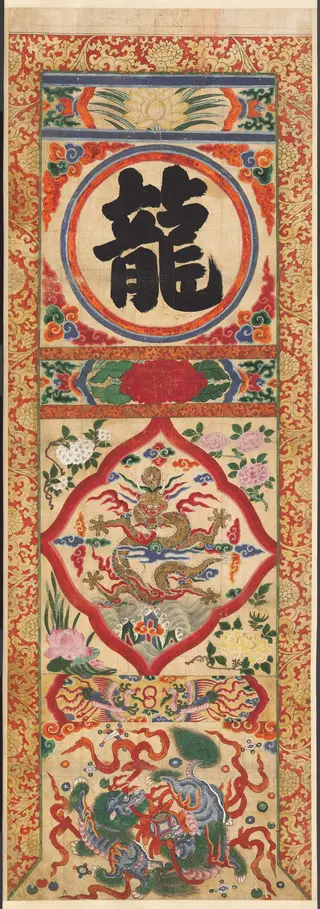
Artist & collection

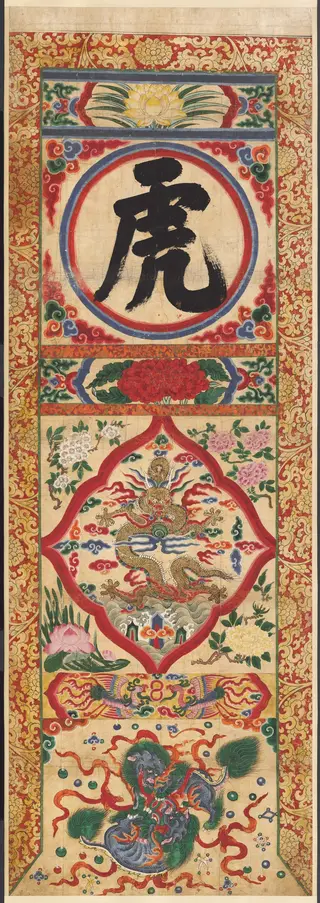 Painted Panel of Character "Tiger"
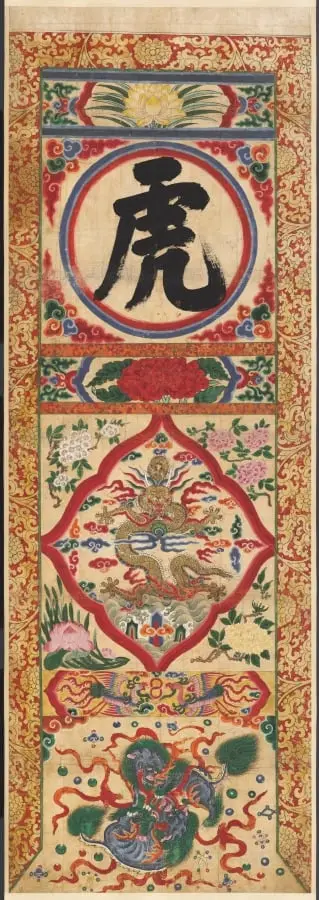 Set of Four Painted Characters
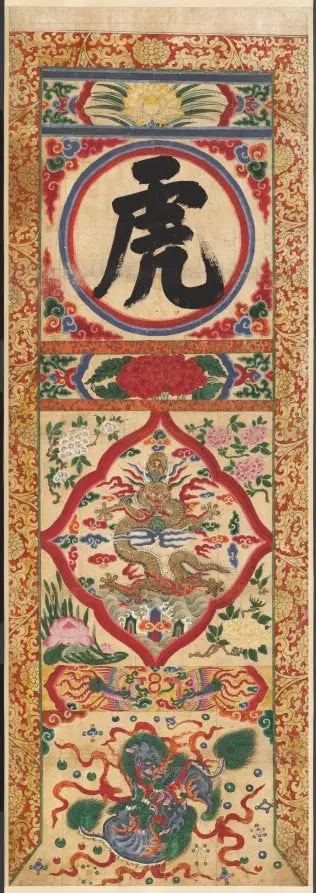 Painted Panel of Character "Tiger"
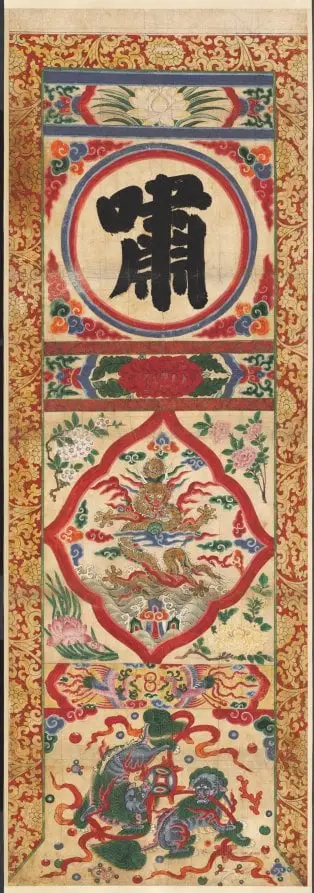 Painted Panel of Character "Whistle"
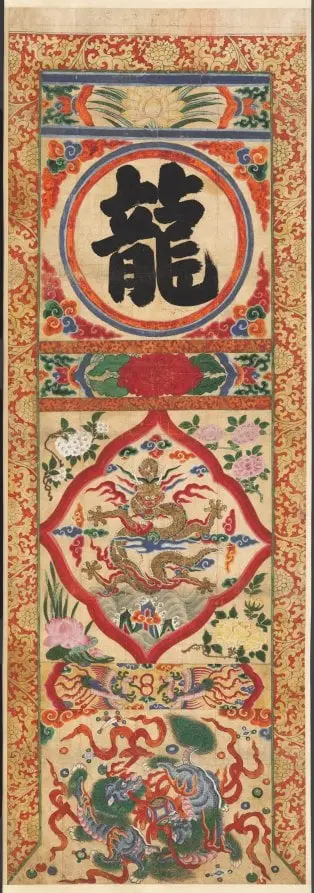 Painted Panel of Character "Dragon"
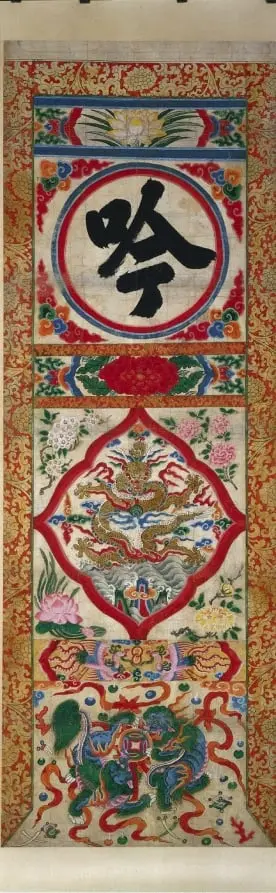 Painted Panel of Character "Recite"
![The Guardian Generals of the Directions (Lokapalas) Dhritarashtra (East) [top] and Virudhaka (South) [bottom]](https://artifactworldgallery.com/img/the-guardian-generals-of-the-directions-lokapalas-dhritarash--26a8da85b3fb4c5a-w320.webp) The Guardian Generals of the Directions (Lokapalas) Dhritarashtra (East) [top] and Virudhaka (South) [bottom]
The Guardian Generals of the Directions (Lokapalas) Dhritarashtra (East) [top] and Virudhaka (South) [bottom]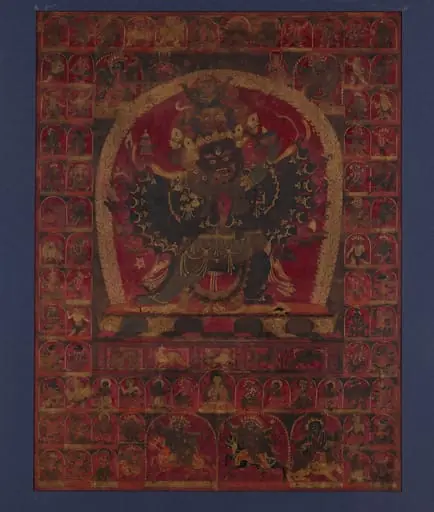 Untitled
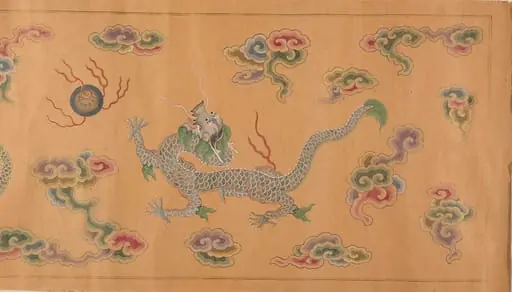 Untitled