Artwork
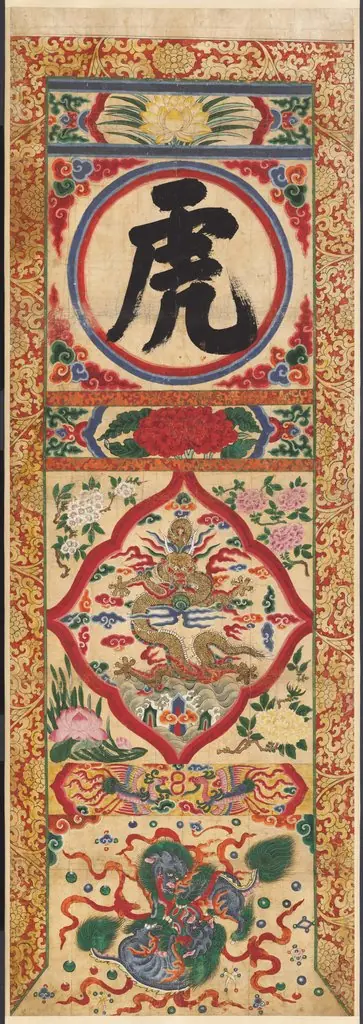
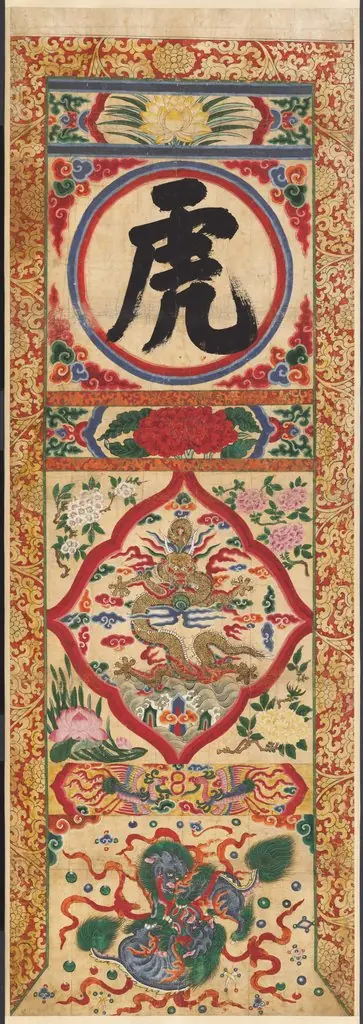
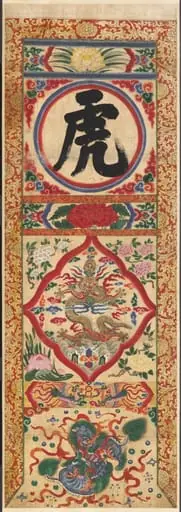
Painted Panel of Character "Tiger"
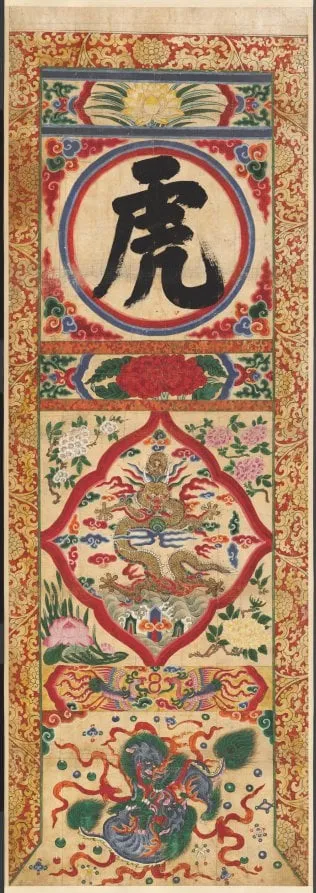
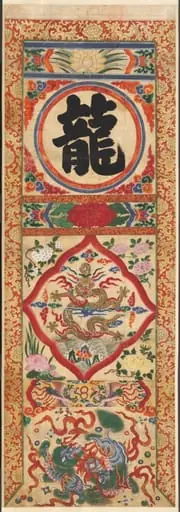
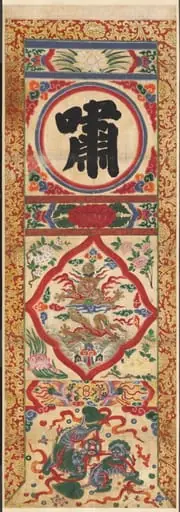
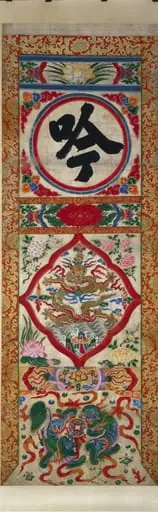
Painted Panel of Character "Tiger" is an unspecified painting by the Korean Minhwa artist Unknown. It dates from 1904 and is held in the collection of the Cleveland Museum of Art. This painting is one of four hanging scrolls created during Korea’s Joseon dynasty, likely used in outdoor Buddhist ceremonies.
- Accession no.
- 1998.119.1
About this work
This painting shows a bright orange tiger with black stripes, standing on a rock against a plain background.
This painting shows a bright orange tiger with black stripes, standing on a rock against a plain background. Its mouth is open like it’s roaring.
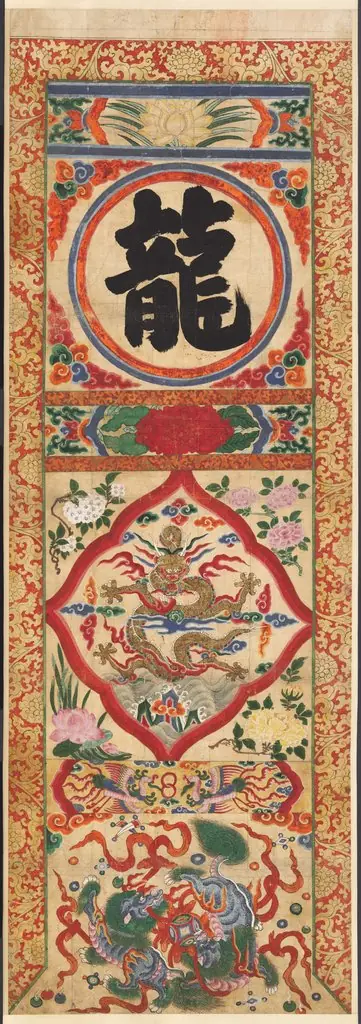
The tiger was part of a set of four scrolls used in outdoor Buddhist rituals in Korea. Each scroll had a different character, tiger, dragon, whistle, and recite, meant to call down blessings. Tigers were seen as protectors in Korean tradition.
To see more art like this, look up korea, joseon dynasty (1392–1910).
Overview
This painting is one of four hanging scrolls created during Korea’s Joseon dynasty, likely used in outdoor Buddhist ceremonies. Each scroll depicted a symbolic figure, tiger, dragon, whistle, and recite, intended to invoke celestial protection and blessings. The tiger scroll, distinguished by its vivid orange fur and black stripes, was positioned to represent the western direction among the four guardian spirits in traditional East Asian cosmology.
Subject & Meaning
The tiger in this panel symbolizes protection and strength, rooted in Korean folk and Buddhist traditions where it was revered as a guardian spirit. Unlike mythological beasts, this tiger is rendered with naturalistic vigor, its open mouth suggesting a powerful roar meant to ward off malevolent forces. The inclusion of the tiger alongside the dragon, whistle, and recite figures suggests a ritual sequence designed to harmonize earthly and spiritual realms.
Technique & Style
Executed in ink and color on silk, the painting employs bold outlines and flat areas of pigment to emphasize the tiger’s form against a minimalist background. The absence of landscape or detail focuses attention on the animal’s dynamic posture and expressive face. Brushwork is confident and economical, reflecting a stylistic preference for symbolic clarity over ornate detail, typical of Joseon-era religious art intended for public ritual use.
History & Provenance
The set of four scrolls originated in Korea during the Joseon dynasty (1392–1910), likely commissioned for use in seasonal or ceremonial rites held outdoors. Their portable format suggests they were carried and displayed temporarily during rituals. While specific provenance is undocumented, similar scrolls survive in temple collections and private holdings, indicating their role in localized religious practices rather than courtly patronage.
Context
In Joseon Korea, Buddhist rituals often blended with indigenous beliefs, incorporating animals like the tiger as spiritual sentinels. The tiger, though not native to Buddhist iconography in India or China, gained prominence in Korean cosmology as a protector of the west. Its pairing with the dragon (east), whistle (north), and recite (south) reflects a localized adaptation of directional guardianship, merging Daoist, Buddhist, and folk motifs into a cohesive ritual system.
Legacy
These scrolls represent a unique fusion of religious function and folk symbolism in Korean art. Though not widely documented in scholarly records, surviving examples inform modern understanding of how Buddhism adapted to local traditions. Their preservation in museum and temple collections underscores their role as tangible links to communal spiritual practices that persisted despite state-sponsored Confucianism during the Joseon period.
Artist & collection