Artwork
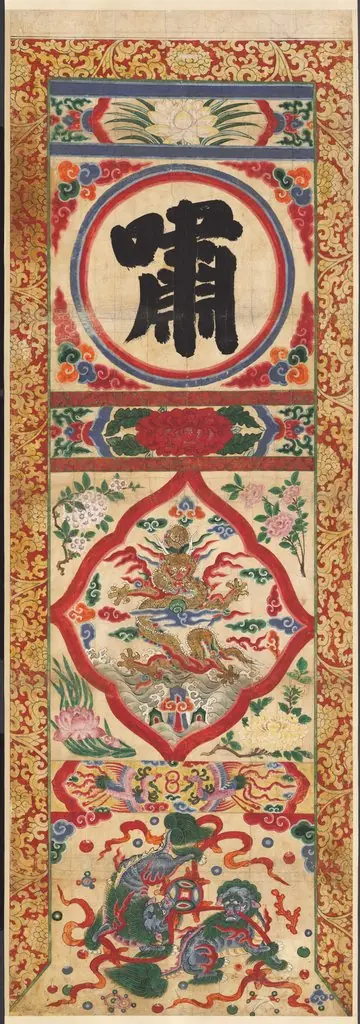
Painted Panel of Character "Whistle"
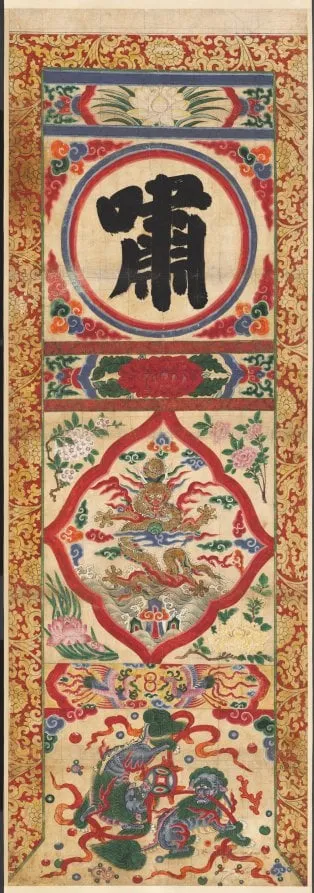
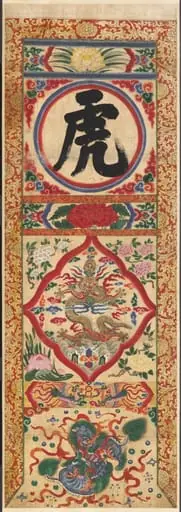
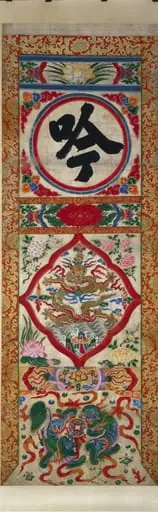
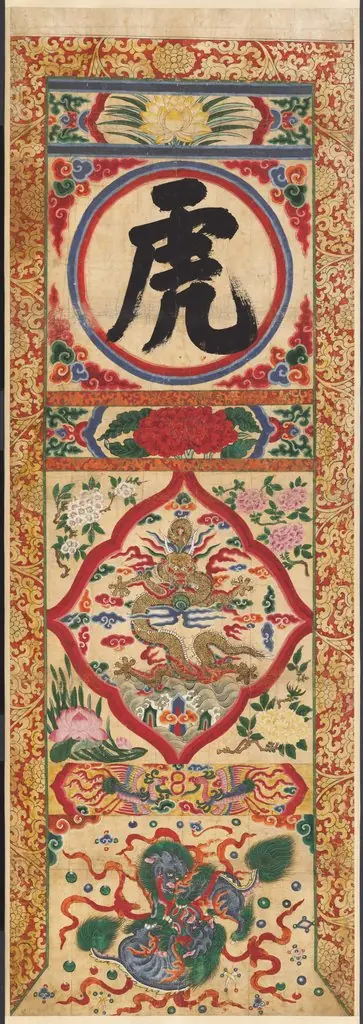
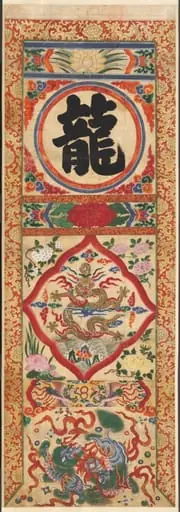
Painted Panel of Character "Whistle" is an unspecified painting by the Art Brut artist Unknown. It dates from 1904 and is held in the collection of the Cleveland Museum of Art. The work consists of a quartet of painted hanging scrolls, each featuring a single Chinese character rendered in vivid, flat colors.
- Accession no.
- 1998.119.3
About this work
If you like this, look up more about korea, joseon dynasty (1392–1910) to see how everyday objects became part of spiritual art.
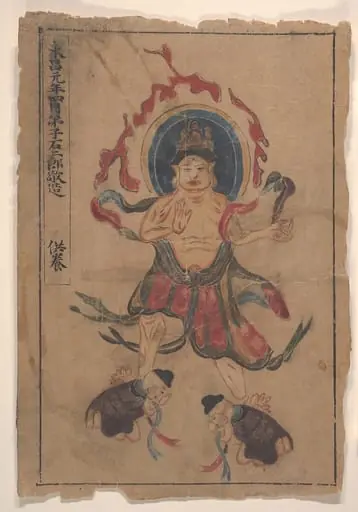
You see a bright, cartoon-like man blowing a long whistle, floating against a plain background. His robes swirl in bold reds and blues, and his face is simple, almost like a child’s drawing.
This panel was part of a set used in outdoor Buddhist rituals, meant to call down blessings. The whistle character isn’t a god or saint, just a playful figure tied to protection. The colors are flat, with no shading, so the image pops like a sign.
If you like this, look up more about korea, joseon dynasty (1392–1910) to see how everyday objects became part of spiritual art.
Overview
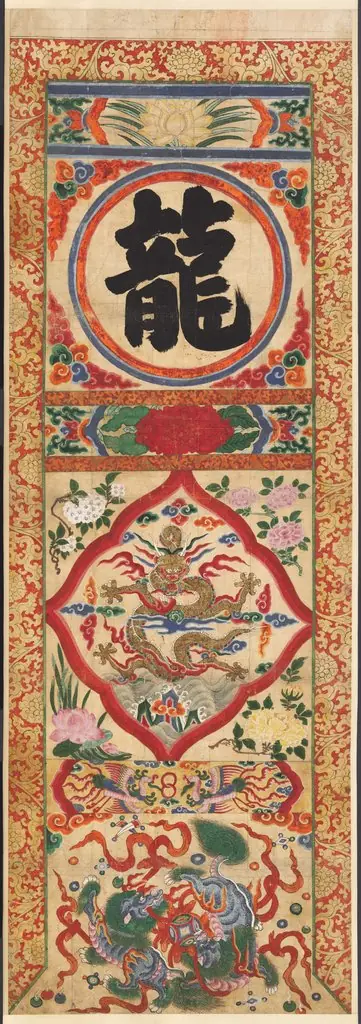
The work consists of a quartet of painted hanging scrolls, each featuring a single Chinese character rendered in vivid, flat colors. Designed for use in Buddhist rites performed outdoors, the scrolls functioned as visual summons for protective blessings. The set includes the characters for tiger, dragon, whistle, and recite, each presented on a plain background without gradated shading.
Subject & Meaning
The tiger and dragon figures correspond to traditional guardians of the west and east, respectively, embodying directional protection in Buddhist cosmology. The whistle character, unlike the other two, does not represent a deity; it depicts a playful, child‑like figure blowing a long whistle, symbolizing a lighthearted aspect of safeguarding rituals.
Technique & Style
Executed in bold reds and blues, the images employ a flat, decorative palette characteristic of Korean folk painting. The figures are outlined with clear lines and lack chiaroscuro, giving the composition a sign‑like immediacy. The stylization resembles a naïve, cartoonish drawing, emphasizing clarity over realism.
History & Provenance
Created during Korea’s Joseon Dynasty (1392–1910), the scrolls were likely produced for temple use in communal ceremonies. Their portable hanging‑scroll format allowed them to be displayed in open spaces, where they could be seen by participants invoking divine favor.
Context
In the Joseon period, everyday motifs and objects were frequently incorporated into religious art, reflecting a syncretic blend of popular culture and Buddhist practice. The inclusion of a whimsical whistle figure alongside traditional guardian symbols illustrates this integration of the mundane with the sacred.
Artist & collection