Artwork
Sri Nathaji
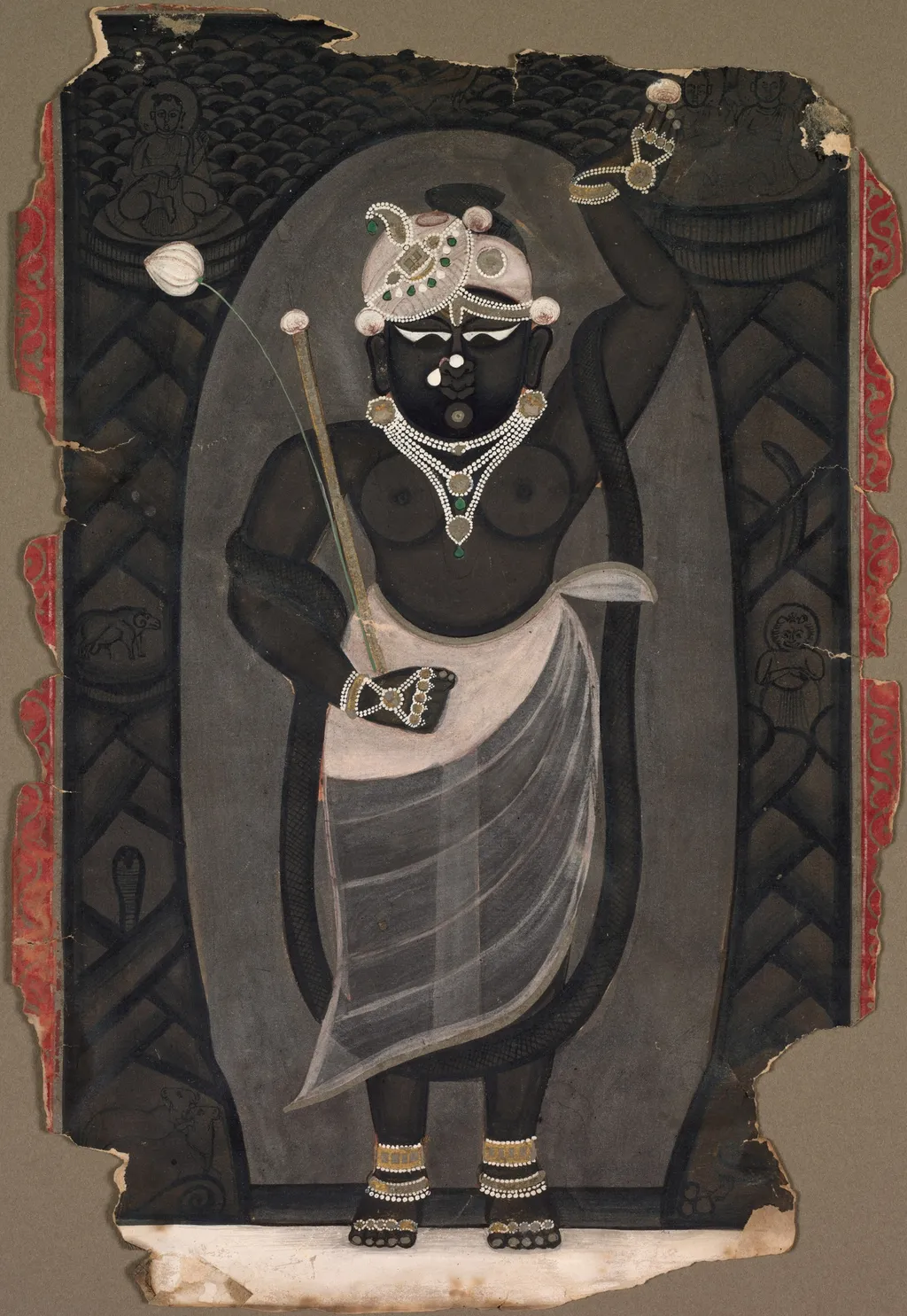
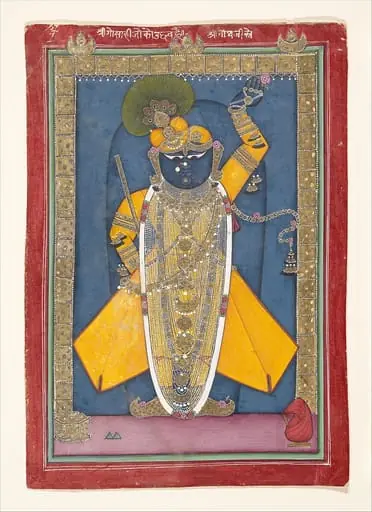
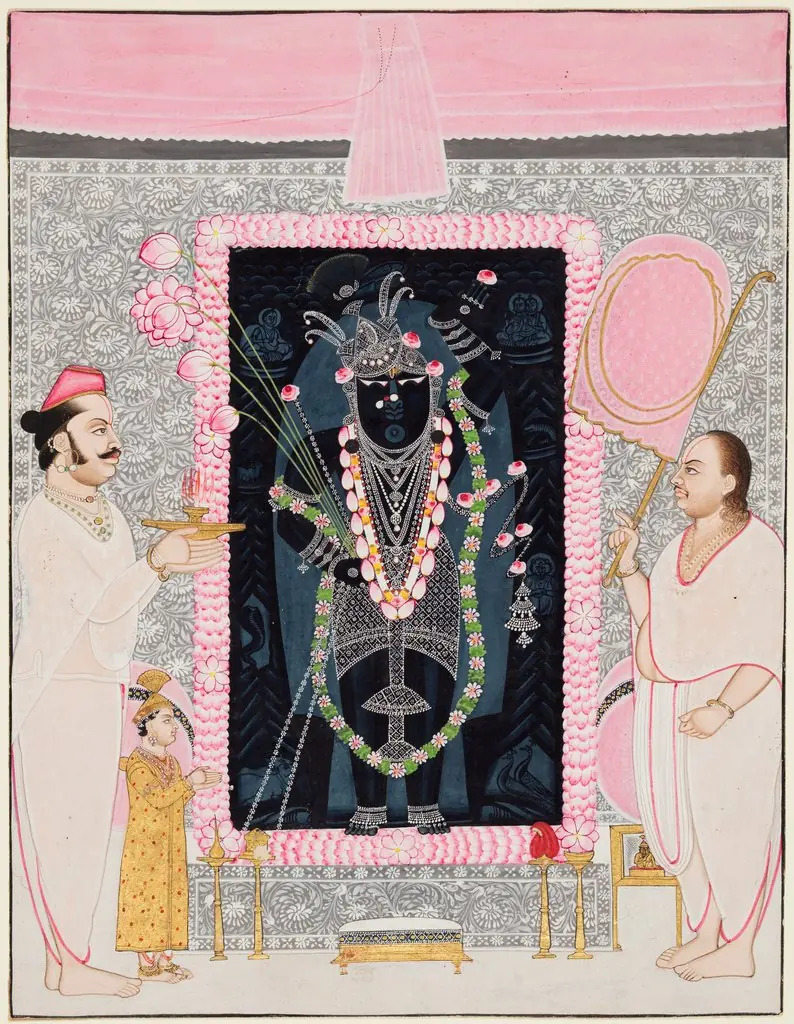
Sri Nathaji is an unspecified painting. It dates from 1900 and is held in the collection of the Cleveland Museum of Art.
About this work
History & Provenance
Sri Nathaji was created in 1900 in Udaipur and entered the collection of the Cleveland Museum of Art, where it remains accessioned as 2001.
Sri Nathaji was created in 1900 in Udaipur and entered the collection of the Cleveland Museum of Art, where it remains accessioned as 2001.162. The work is classified as a painting and was accessioned on 1900-01-01 according to the museum's records.
Sri Nathaji is held in the collection of the Cleveland Museum of Art in Cleveland, Ohio. It was accessioned under the inventory number 2001.162 and first exhibited as part of the museum's holdings in 1900, with its provenance tied to Udaipur as the place of origin.
Legacy
Sri Nathaji has been recognized as a seminal work within early 20th-century Indian painting, influencing subsequent artists through its stylistic synthesis of regional traditions. Its inclusion in the collection of the Cleveland Museum of Art since 1900 has contributed to scholarly attention on modernist developments in Indian art, particularly in relation to patronage and artistic identity in Udaipur. The painting’s provenance and preservation have informed curatorial practices regarding South Asian modernism in Western institutions.
Overview
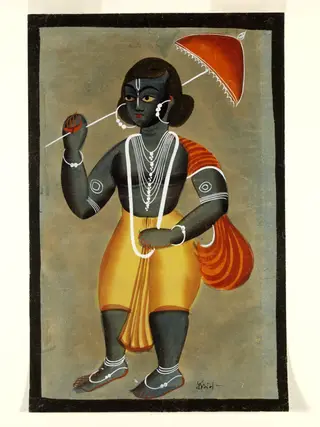
The work portrays a dark‑skinned individual standing directly facing the viewer, adorned in opulent jewelry and a white garment draped over one shoulder. A tall, bejeweled headdress crowns the figure, who grips a curved staff. The surrounding field is filled with repetitive geometric motifs in black, red and gold, while the painted edges show signs of wear and fading.
Subject & Meaning
The central figure appears to be a deity or high‑ranking personage, indicated by the elaborate ornaments, headdress and staff, symbols traditionally associated with authority and ritual. The white facial markings and the patterned backdrop suggest a ceremonial context, possibly linked to a specific cultural or religious tradition where such visual cues denote status, protection or divine presence.
Technique & Style
Executed with meticulous attention to detail, the painting employs fine brushwork to render the intricate jewelry, necklaces, earrings and armbands. The use of a limited palette, black, red, gold and white, creates a striking contrast against the muted background pattern. The repeated geometric designs are rendered in flat planes, reflecting a stylized, symbolic aesthetic rather than naturalistic representation.
Context
The composition reflects a formal visual language common in courtly or devotional art of South Asian traditions, where richly dressed figures are set against abstract patterned fields. The emphasis on ornamentation and symbolic motifs aligns with artistic conventions used to convey power, sanctity and cultural identity in works intended for elite patrons or sacred spaces.
Artist & collection