Artwork
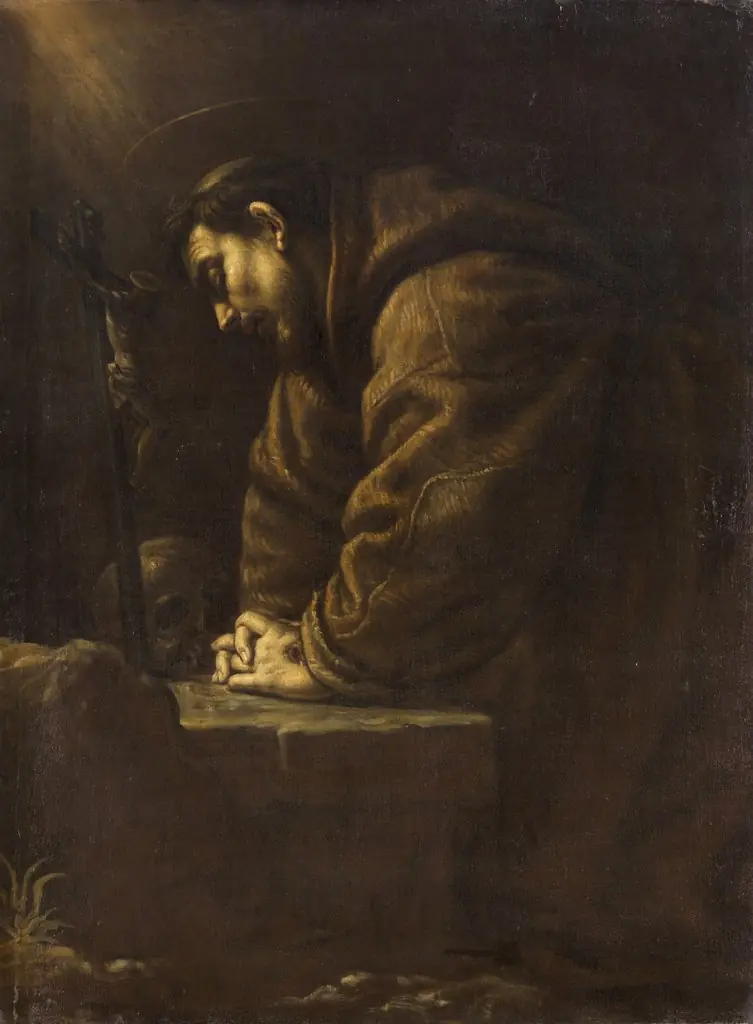
St Francis at the foot of the cross
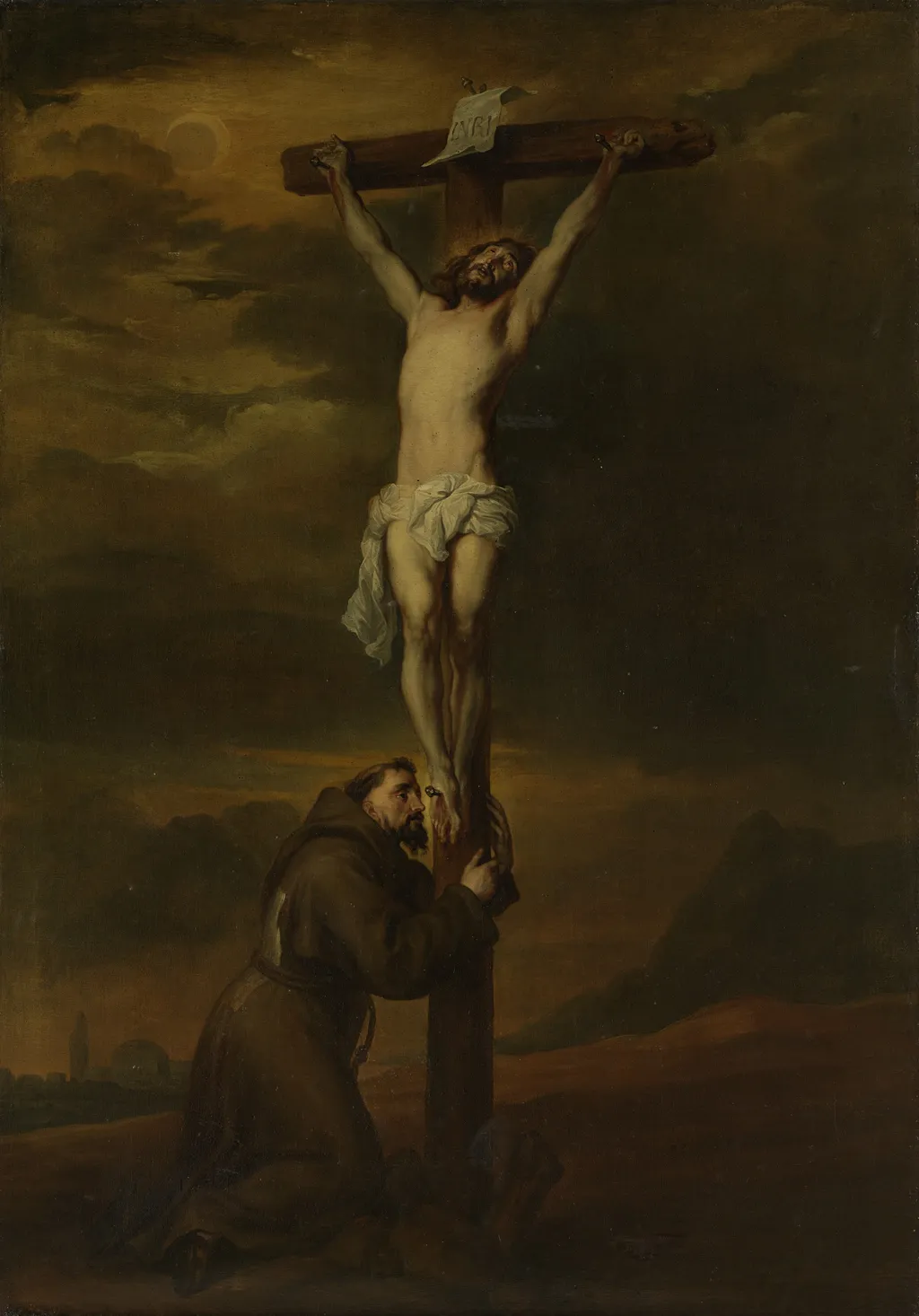
St Francis at the foot of the cross is an oil painting. It dates from 1620 and is held in the collection of the Rijksmuseum.
About this work
Subject & Meaning
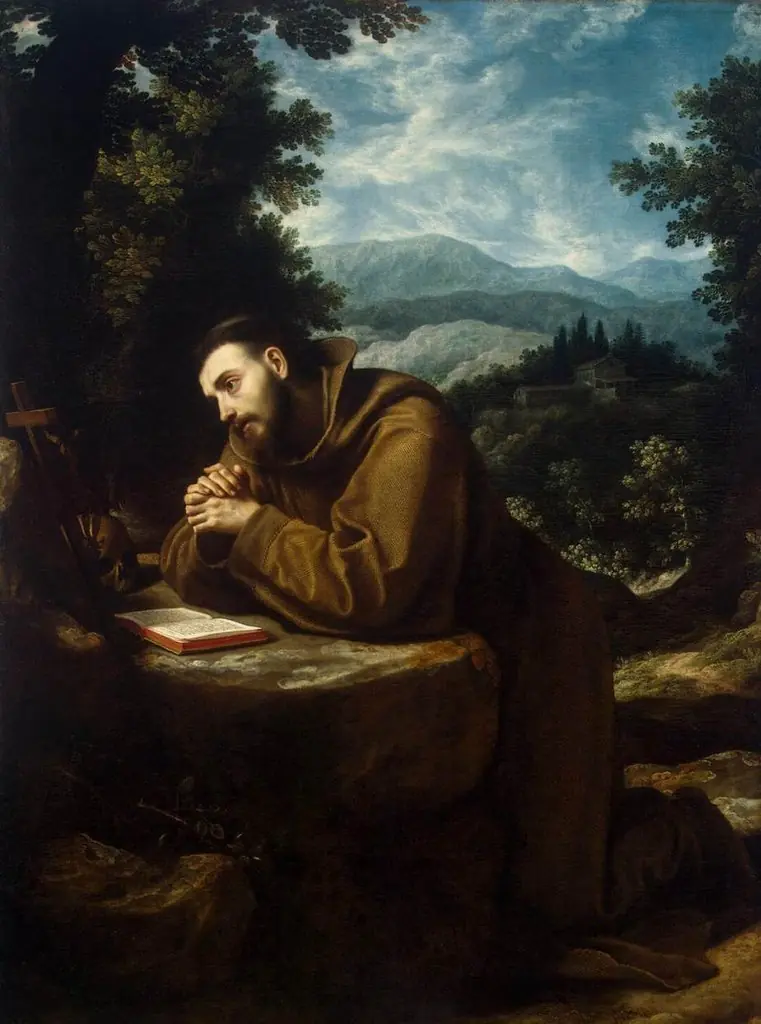
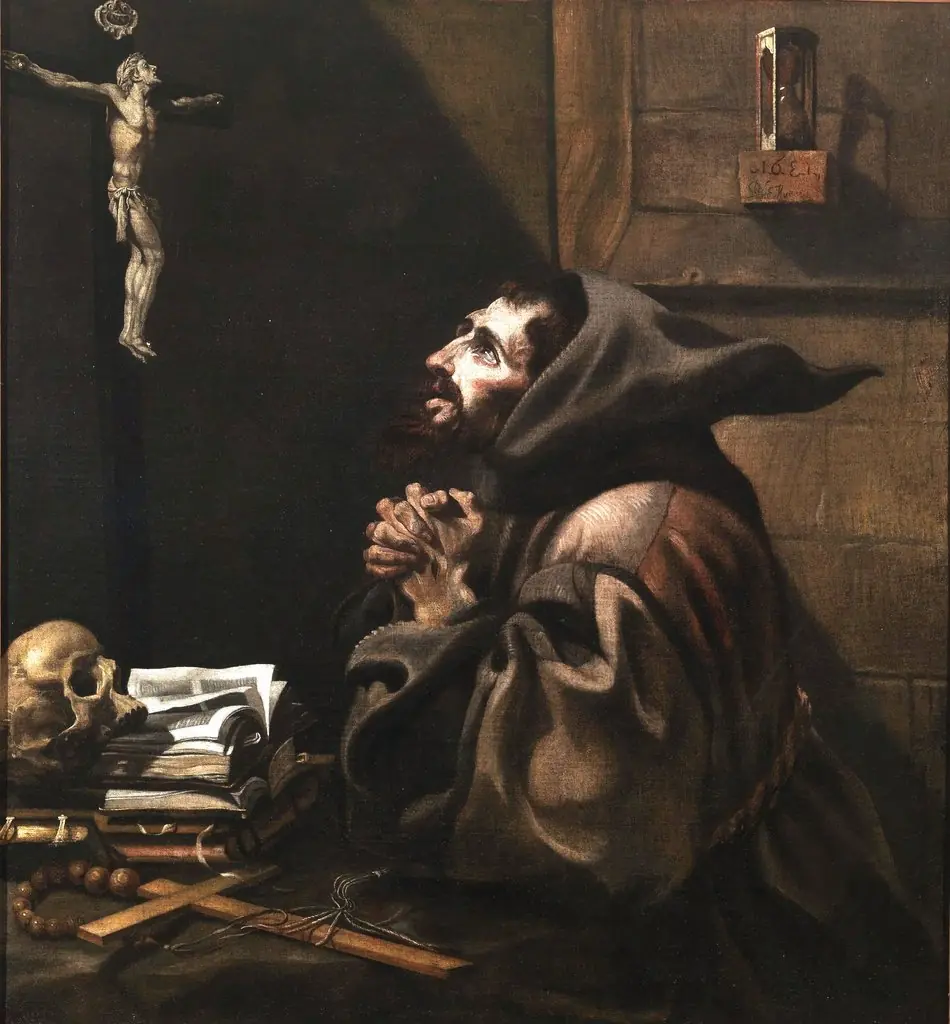
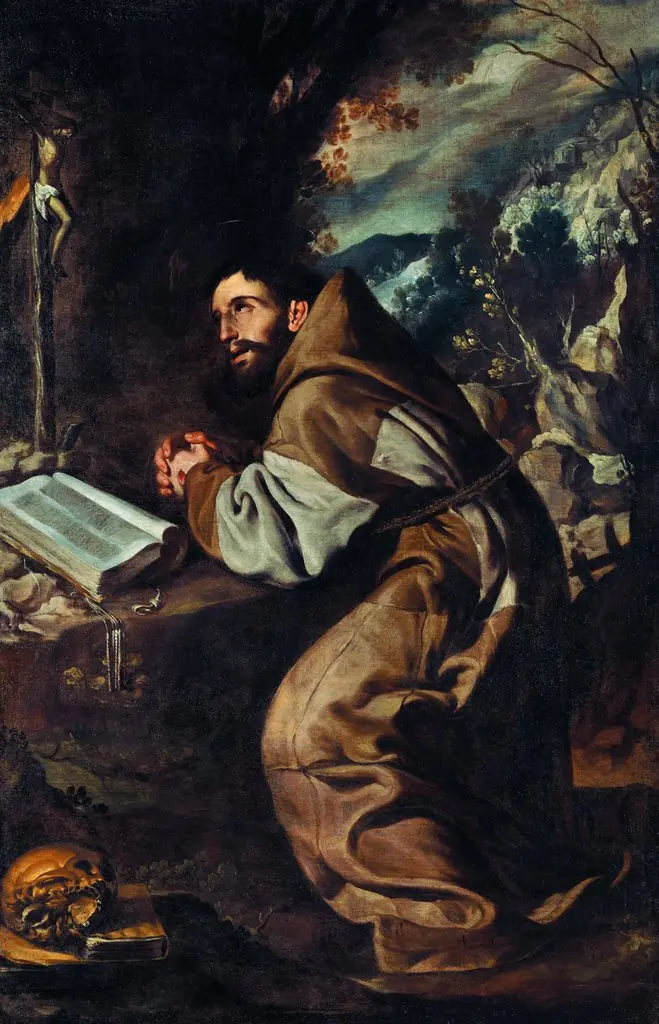
The painting depicts Saint Francis of Assisi kneeling at the foot of the cross, a scene that underscores the saint’s profound devotion to the Passion of Christ.
The painting depicts Saint Francis of Assisi kneeling at the foot of the cross, a scene that underscores the saint’s profound devotion to the Passion of Christ. Francis is shown in a posture of prayerful contemplation, his hands clasped and gaze directed upward toward the crucified Christ, emphasizing themes of penitence and spiritual intimacy with the divine. The composition focuses attention on the cross as the central symbol, while Francis’s presence grounds the scene in Franciscan tradition, which venerates the suffering and sacrifice associated with Christ’s crucifixion.
The work’s iconography aligns with Counter-Reformation devotional practices, which emphasized personal piety and the emulation of saintly figures. By positioning Francis in direct relation to the cross, the painting invites the viewer to reflect on the saint’s imitation of Christ’s sacrifice, a core tenet of Franciscan spirituality.
Technique & Style
Created in 1620, St Francis at the foot of the cross is an oil painting executed on canvas. The work measures 175.5 cm in height and 123.5 cm in width. As a product of the Baroque movement, the piece depicts the crucifixion of Jesus with religious intensity.
The painting is currently held in the depot of the Rijksmuseum, part of the Cultural Heritage Agency of the Netherlands Art Collection.
History & Provenance
St Francis at the foot of the cross is an oil painting on canvas created in 1620 in the Low Countries. The work was produced as part of the Baroque religious output in the region and measures 175.5 cm in height by 123.5 cm in width. It is attributed to Anthony van Dyck and is part of the Rijksmuseum collection, housed in its depot RCE and National Art Gallery of the Netherlands.
The painting depicts a religious scene related to the crucifixion of Jesus and was made during the early phase of van Dyck's career in the early 17th century.
St Francis at the foot of the cross is held in the Rijksmuseum collection, specifically within the depot of the Cultural Heritage Agency of the Netherlands Art Collection and the National Art Gallery of the Netherlands. The work is catalogued under the accession number 1885-0001-0010. It was first exhibited at the Rijksmuseum in 1885 as part of the foundational display of Dutch Golden Age paintings, subsequently featured in the 1950 exhibition "Baroque Masters of the Low Countries" and again in the 2005 retrospective "Anthony van Dyck: The Art of the Counter-Reformation".
Context
St Francis at the foot of the cross, painted by Anthony van Dyck in 1620 in the Low Countries, exemplifies Baroque religious art through its depiction of the crucifixion of Jesus and the saint's contemplative stance at the foot of the cross. The work, executed in oil on canvas, measures 175.5 cm in height and 123.5 cm in width, reflecting the naturalistic detail and emotional depth characteristic of van Dyck's mature period and the broader Counter-Reformation artistic climate. Its inclusion in major Dutch collections such as the Rijksmuseum and the National Art Gallery of the Netherlands underscores its significance within van Dyck's oeuvre and the transmission of Baroque aesthetics in Northern Europe.
Scholarly attention to this painting has focused on its stylistic synthesis of Caravaggisti influence with van Dyck's refined elegance, as well as its role in the development of devotional imagery in 17th-century Flanders. The work's provenance and material composition have been documented in museum records, affirming its status as a key example of religious painting during the Baroque era.
Overview
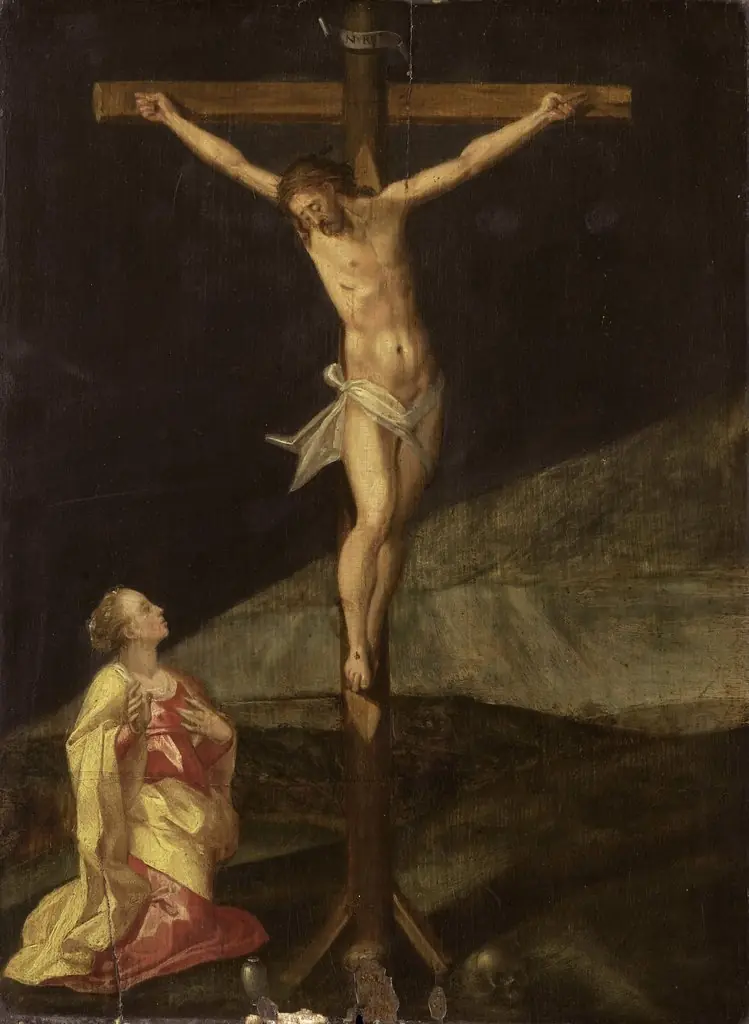
The oil painting depicts a solitary figure in a brown habit kneeling at the foot of a wooden cross, while a crucified body hangs above, arms outstretched and a placard affixed to the crossbeam. Dark, turbulent clouds dominate the sky, casting a somber atmosphere over the scene. The composition is restrained, emphasizing the quiet intensity of the moment.
Artist & collection