Artwork
Saint Agnes
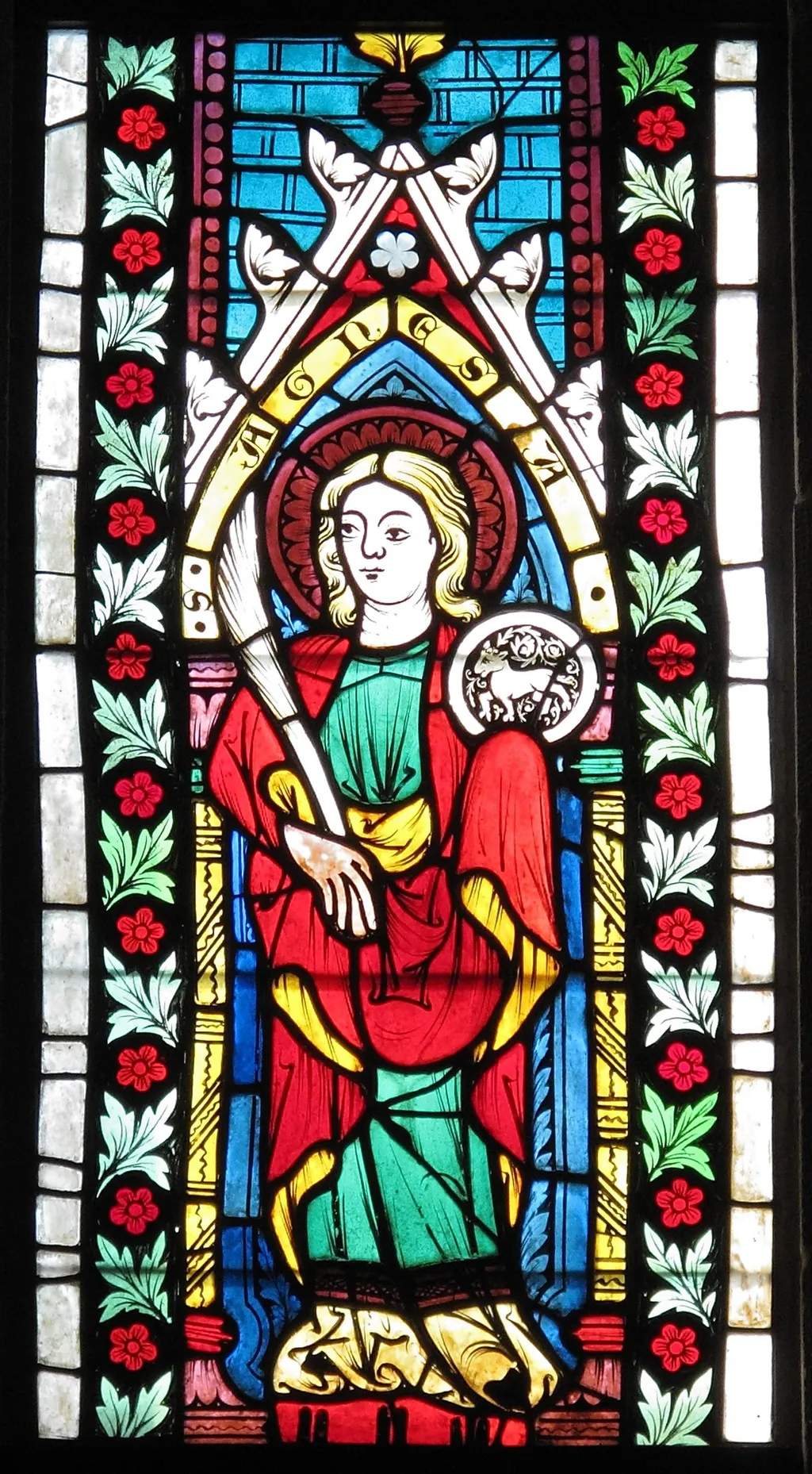
Saint Agnes is an unspecified painting. It dates from 1350 and is held in the collection of the Metropolitan Museum of Art.
About this work
History & Provenance
No further details regarding its original commission, early ownership history, or specific acquisition path by the museum are provided in current documentation.
The painting known as Saint Agnes was created around 1350. The work is attributed to an anonymous artist, with no specific creator identified in available records. Classified as a religious painting, it depicts a woman representing the saint.
The artwork is currently held in the collection of the Metropolitan Museum of Art. No further details regarding its original commission, early ownership history, or specific acquisition path by the museum are provided in current documentation.
Context
The painting, dated to 1350, is documented as an anonymous religious work in the collection of the Metropolitan Museum of Art. Its iconography of a virgin martyr embodies the hagiographic devotion characteristic of 14th-century art. Because it is housed in a major museum, the work has been examined in technical studies that inform broader narratives of early Italian panel painting and its evolution toward naturalism.
Scholars treat it as a key example for understanding the devotional practices and stylistic developments of the period preceding the Renaissance.
Overview
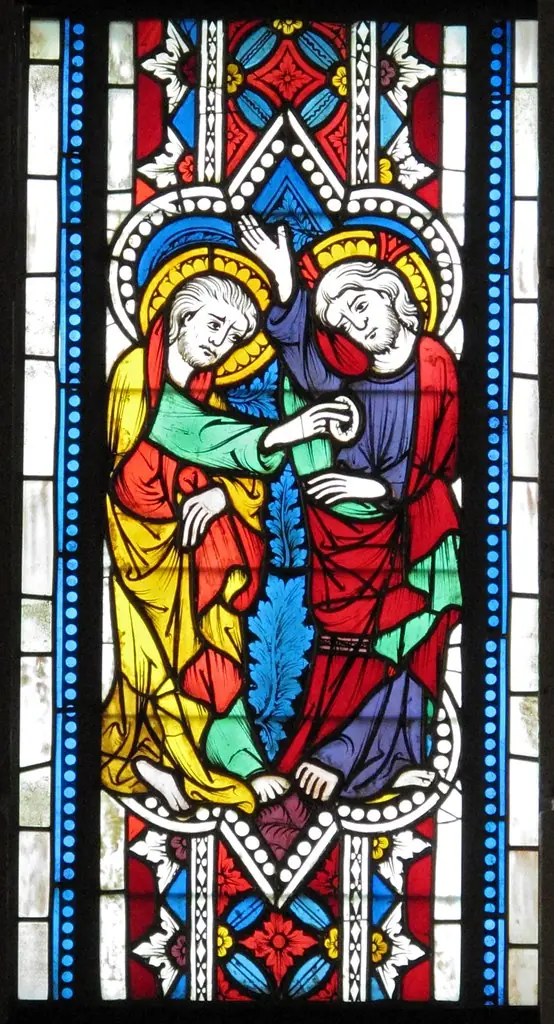
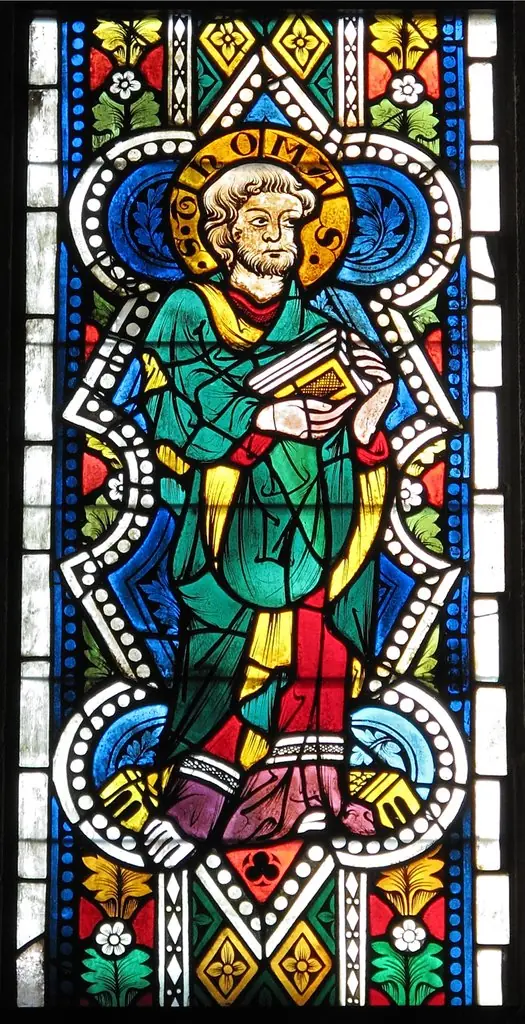
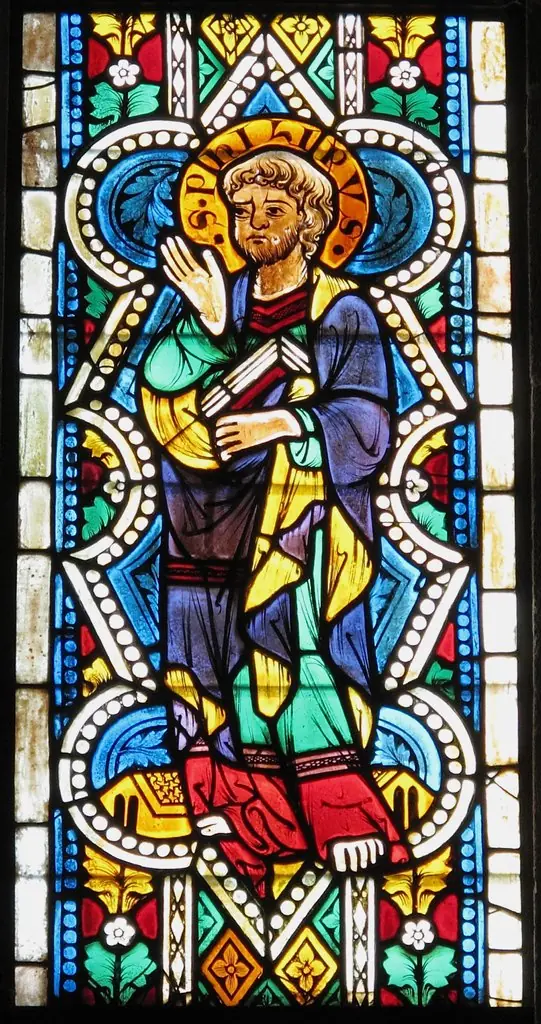
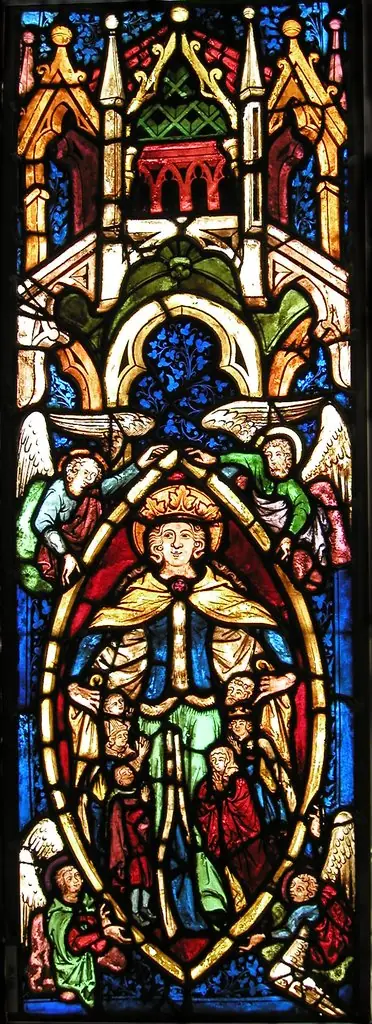
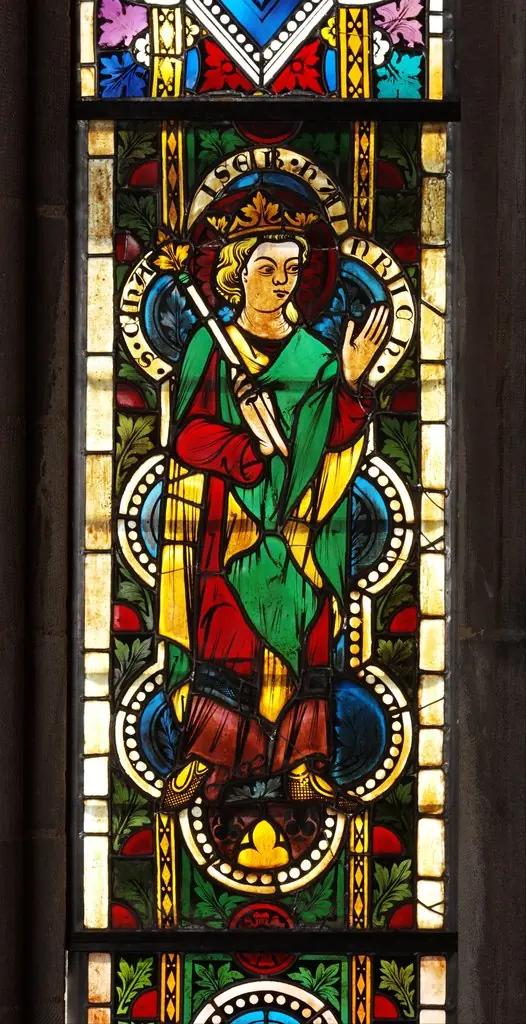
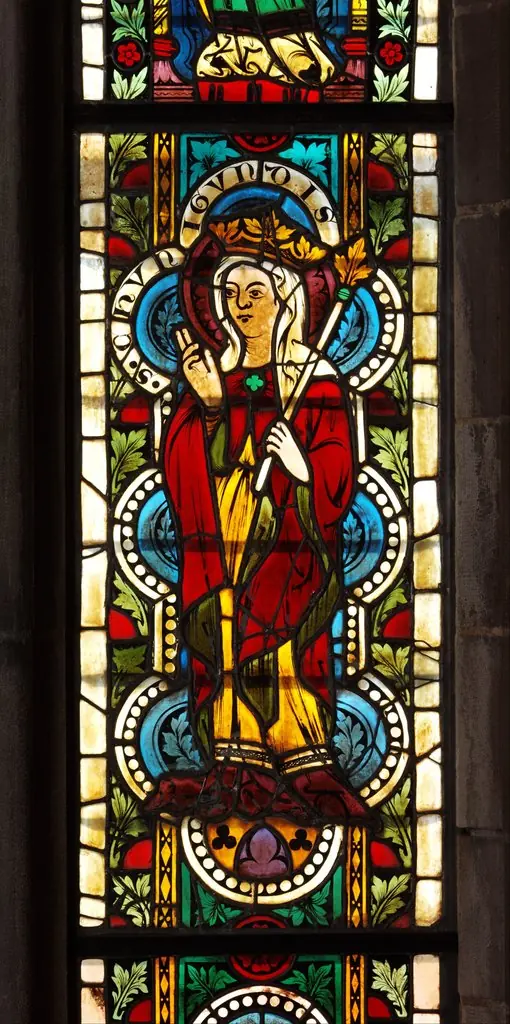
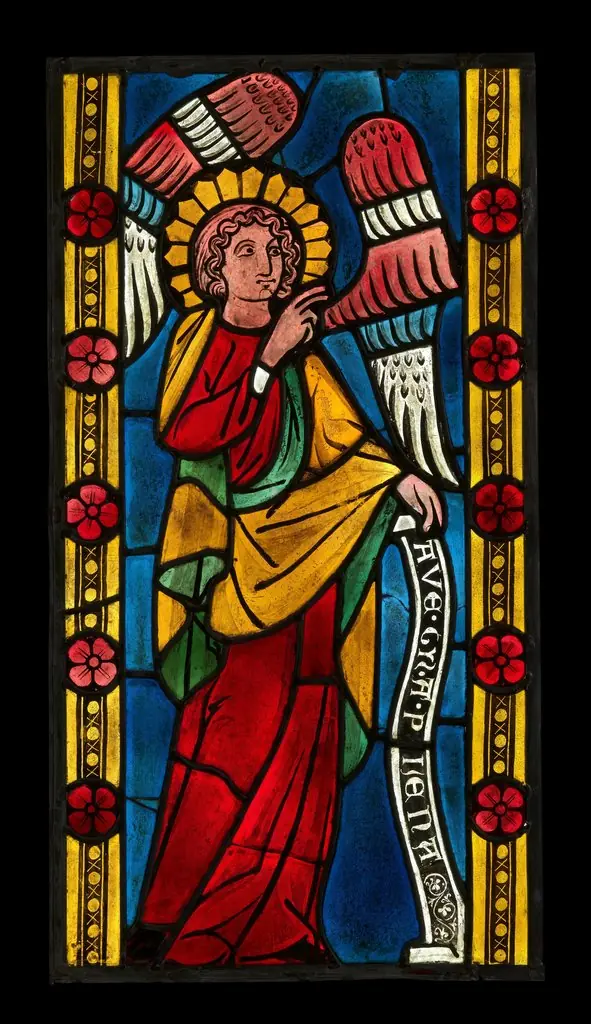
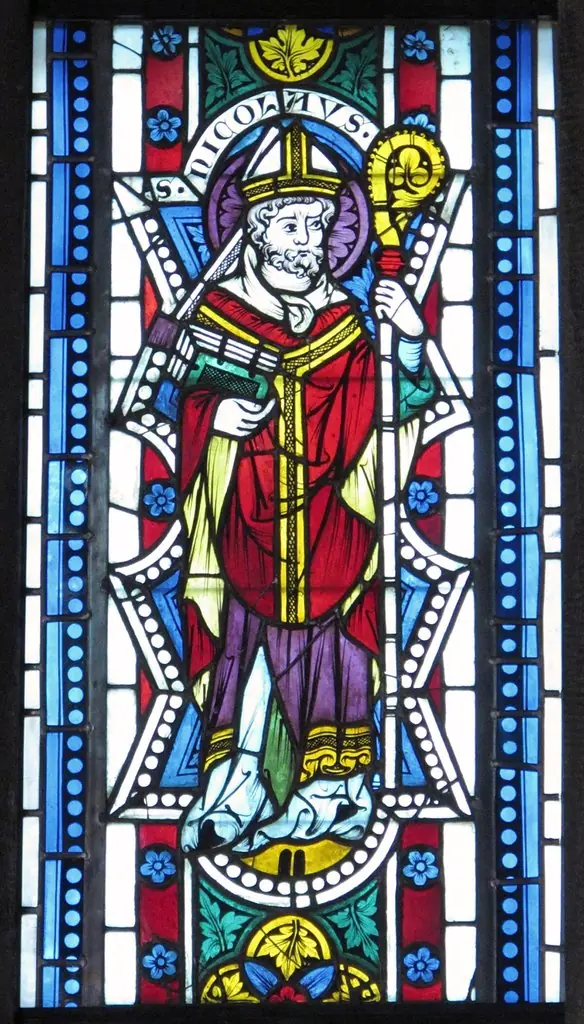
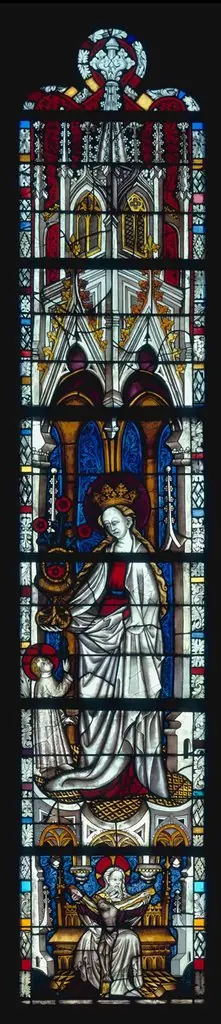
This artwork depicts Saint Agnes, rendered in stained glass. The composition features a central female figure, distinguished by a golden halo and a serene expression. She is dressed in a vibrant red robe layered over a green tunic, holding a white lamb and a staff.
The piece is framed by a pointed arch, adorned with geometric patterns in blue and yellow, and further embellished with floral and leaf motifs along its borders.
Subject & Meaning
The central figure is identified as Saint Agnes, a revered Christian martyr. Her attributes include the lamb, a traditional symbol of innocence and purity, often associated with her story. The staff she carries further signifies her role or status within religious iconography.
These elements collectively convey her virtuous character and her significance within Christian narratives, as interpreted through visual art.
Technique & Style
The artwork employs the medium of stained glass, characterized by its luminous quality. The figure's attire is rendered in bold, contrasting colors, a bright red robe over a green tunic, which would have allowed light to filter through dramatically. Decorative elements, such as the intricate blue and yellow patterns of the pointed arch and the red floral designs along the edges, contribute to the piece's ornamental style, typical of religious art designed for architectural settings.
Artist & collection