Artwork
Still life with ham, mustard pot, and stoneware jug
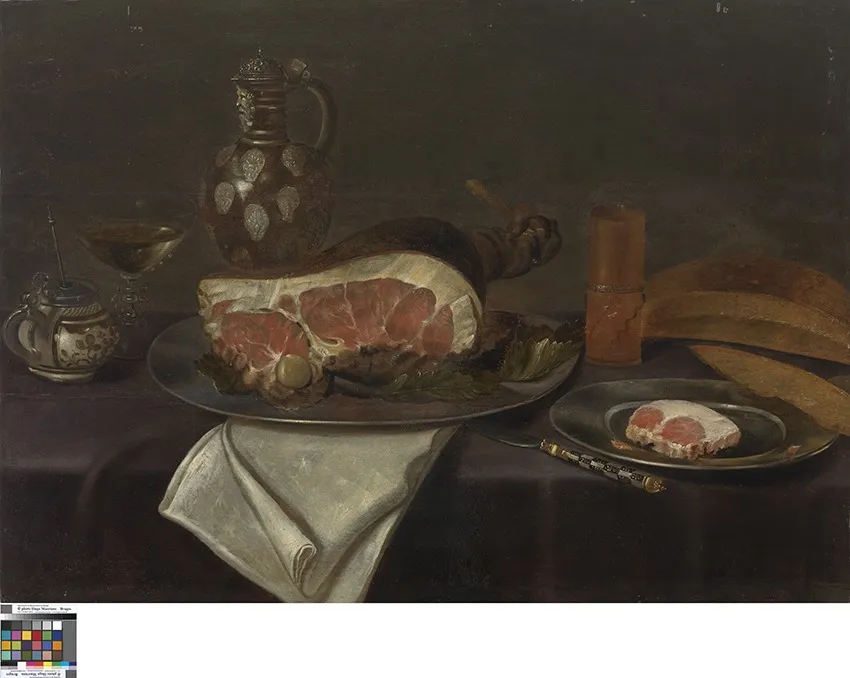
Still life with ham, mustard pot, and stoneware jug is an oil painting by the Dutch Golden Age artist Unknown. It dates from 1601 and is held in the collection of the Groeningemuseum.
About this work
History & Provenance
While often associated with an anonymous master from the Southern Netherlands active in the first half of the 17th century, the work is dated to 1601.
The painting dates to 1601, executed in oil paint as a still life. It is held in the collection of the Groeningemuseum, where it remains located. No further details about commission, prior ownership, or acquisition history are documented in the available sources.
The painting Still life with ham, mustard pot, and stoneware jug is held in the collection of the Groeningemuseum in Bruges, Belgium. While often associated with an anonymous master from the Southern Netherlands active in the first half of the 17th century, the work is dated to 1601. The provided sources do not list a specific inventory or accession number for the piece, nor do they record any exhibition history.
Overview
The oil painting presents a modest banquet scene: a dark‑clothed table bears a sizeable ham on a platter, a knife, a small plate with a ham slice, a mustard pot, a stoneware jug, and a wine glass. The composition is dominated by deep shadows, with illumination focused on the food items, creating a clear sense of volume.
Subject & Meaning
The work depicts a simple yet abundant spread, emphasizing everyday nourishment and the material culture of the kitchen. By isolating the ham and its accompaniments, the artist invites contemplation of the tactile qualities of food and the ritual of the communal table.
Technique & Style
Employing chiaroscuro, the painter contrasts stark light against a dark background and tablecloth, rendering the objects with pronounced three‑dimensionality. The careful modeling of the ham’s surface and the reflective glaze of the jug demonstrate a mastery of oil’s capacity for subtle tonal gradations.
Context
Still‑life compositions of this type were common in periods when artists explored the visual potential of everyday objects, using them to display technical skill and to reflect on themes of abundance and mortality.
Artist & collection









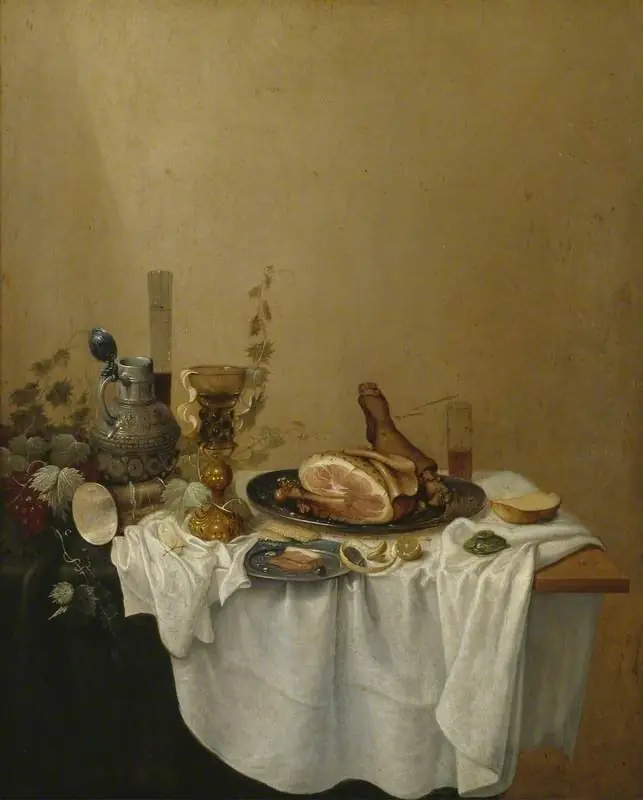
- Still life with stoneware jug, bekerschroef, glassware and a leg of ham
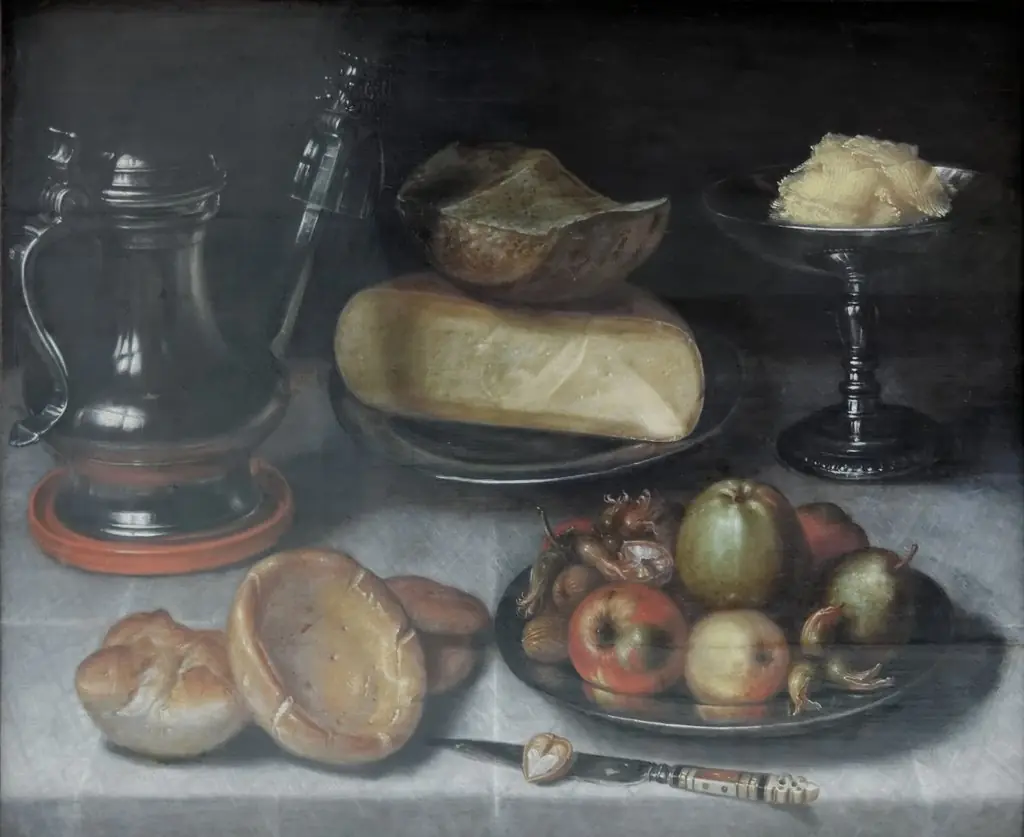 Still Life with Pewter Jug, Fruit and Cheese
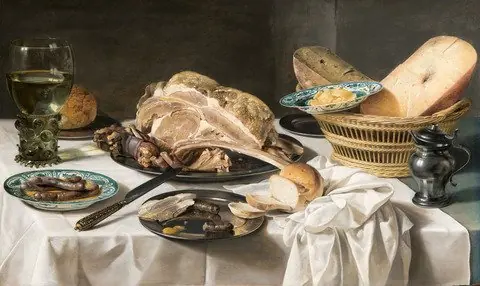 Breakfast Still Life with a Ham and a Basket of Cheese
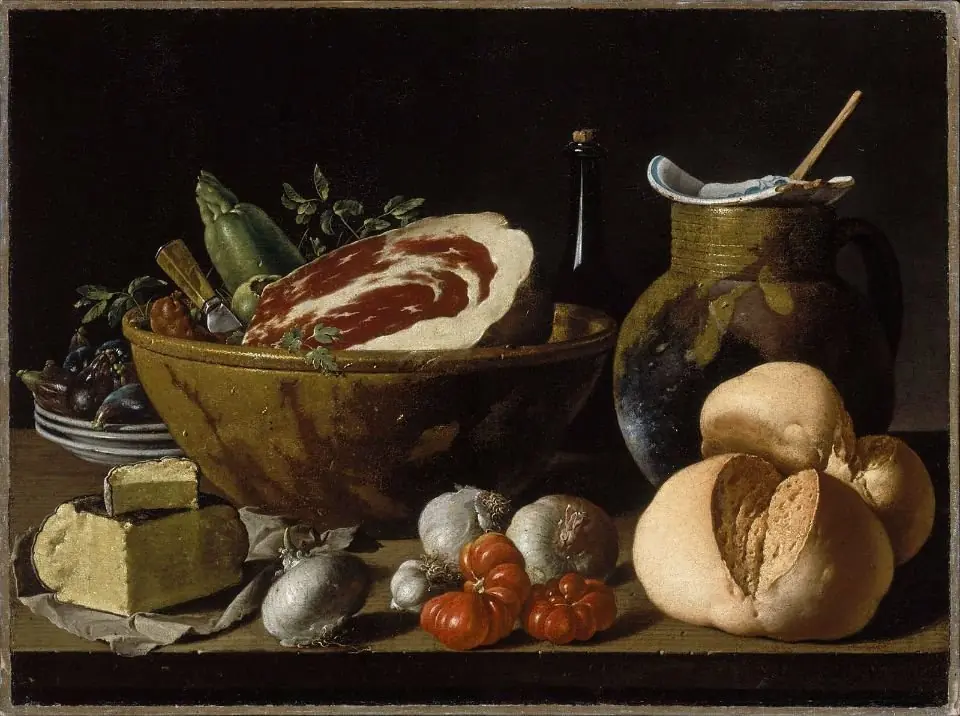 Still Life with Bread, Ham, Cheese, and Vegetables.Museum of Fine Art Boston
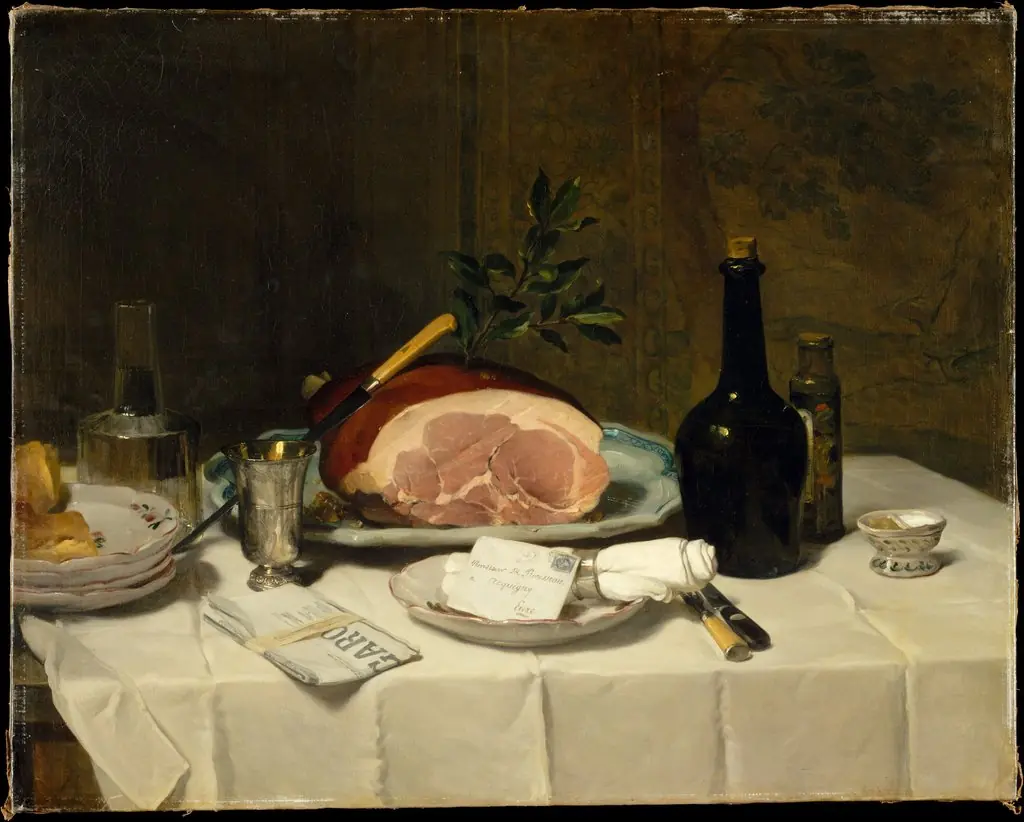 Still Life with Ham
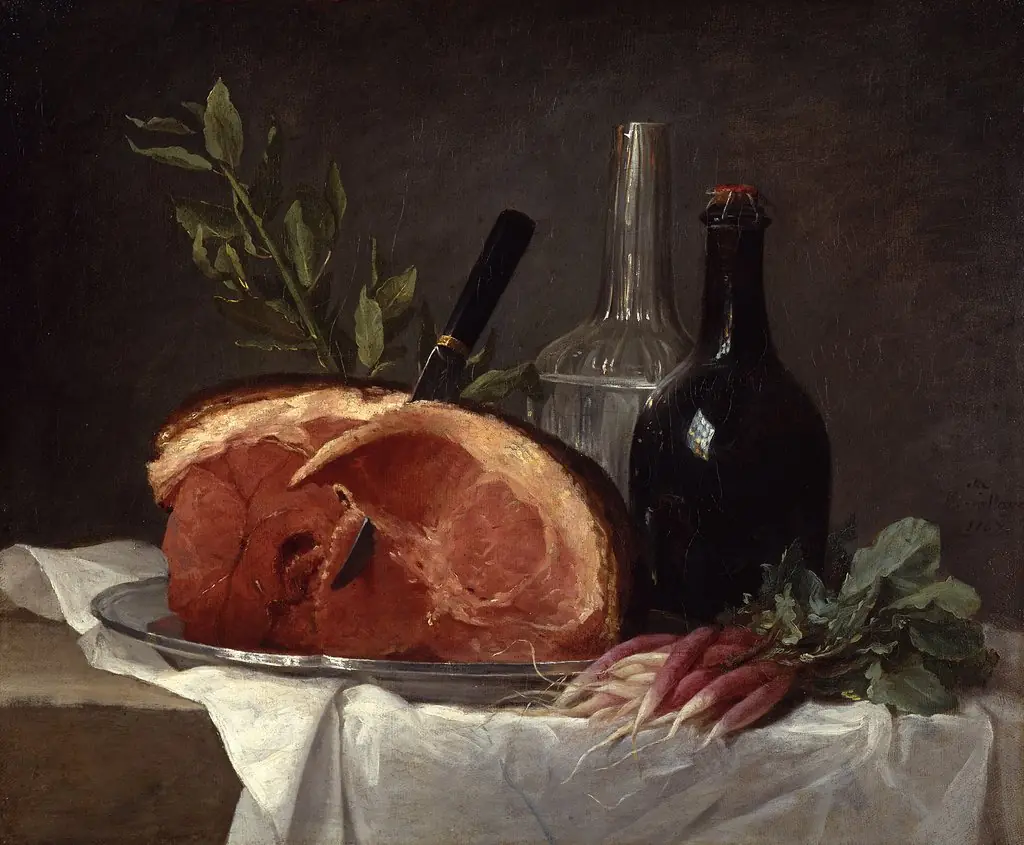 Still Life with a Ham
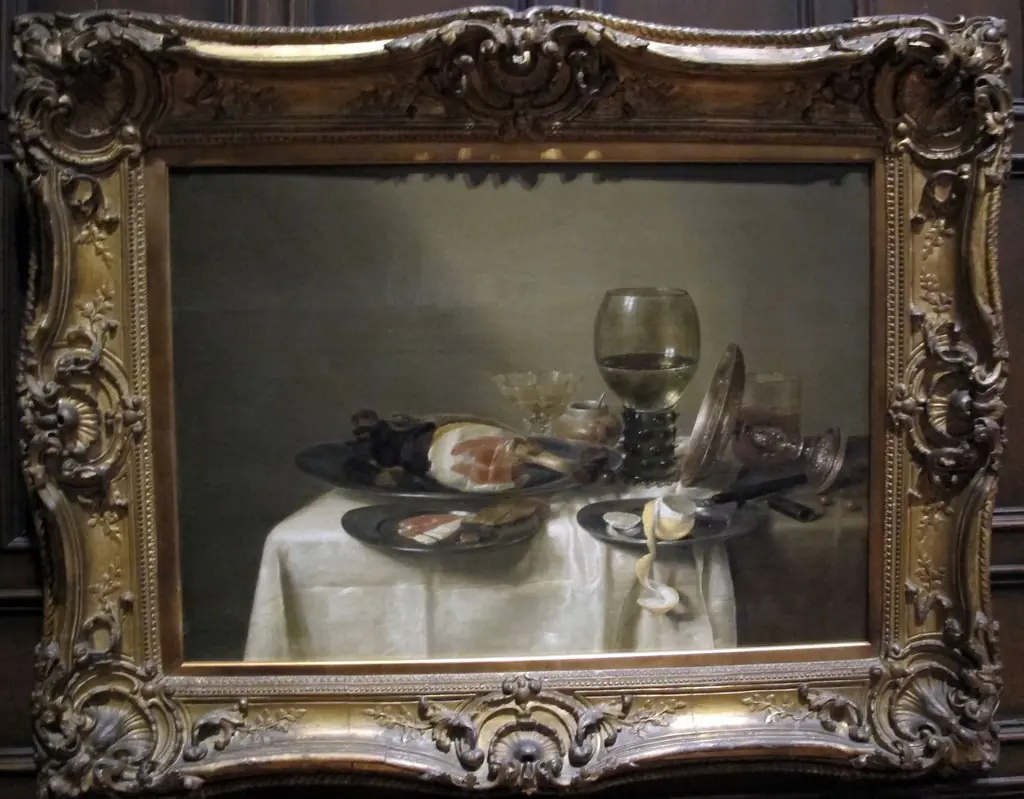 Still Life with a Ham and a Roemer