Artwork
strachină cu două torți
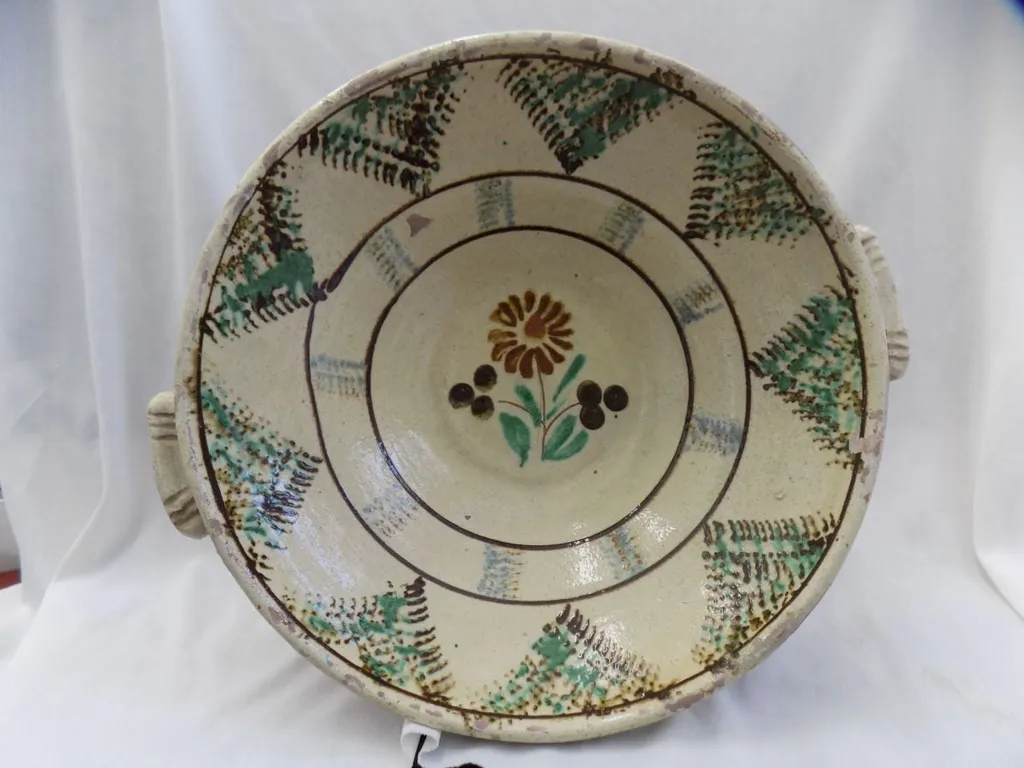
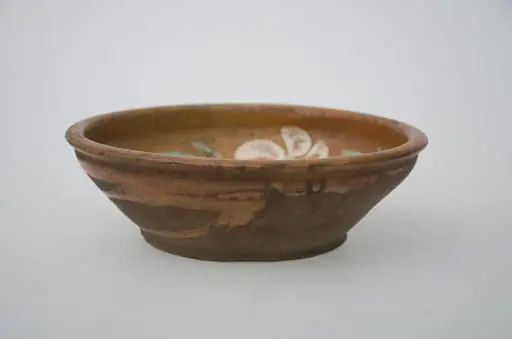
strachină cu două torți is a photography by Unknown. It dates from 1850 and is held in the collection of the Moldova National Museum Complex. A circular ceramic dish with two small handles, this object is a functional vessel likely used in domestic settings.
About this work
Overview
Its surface bears a modest floral motif in the center, surrounded by a border of stylized ferns and swirling patterns.
A circular ceramic dish with two small handles, this object is a functional vessel likely used in domestic settings. Its surface bears a modest floral motif in the center, surrounded by a border of stylized ferns and swirling patterns. The palette, green, brown, and blue, has faded over time, lending the piece a subdued, weathered appearance. The design avoids ornamentation, emphasizing symmetry and restraint.
Subject & Meaning
The central motif, a single flower with three dark berries and green leaves, suggests a connection to natural cycles, possibly symbolizing growth or seasonal change. The surrounding ferns and abstract swirls may reflect local botanical knowledge or decorative traditions tied to rural life. No overt religious or ceremonial symbols are present, indicating its use in everyday contexts rather than ritual.
Technique & Style
The decoration was applied by hand using slip painting or glaze techniques common in regional ceramics. Lines are deliberate but unrefined, with no evidence of mold use or mass production. The balanced composition and lack of excess detail point to a functional aesthetic, where form and decoration serve utility without embellishment. Fading suggests prolonged use and exposure to elements.
History & Provenance
Though specific origins are unrecorded, the form and decoration align with folk pottery traditions in Eastern Europe, particularly among rural communities in the 19th to early 20th centuries. Its preservation in a museum collection implies it was collected as an example of vernacular material culture, possibly during ethnographic fieldwork or regional cataloging efforts.
Context
This dish belongs to a broader category of utilitarian ceramics produced for household use in agrarian societies. Similar vessels, often undecorated or minimally adorned, were made locally using earthenware and fired in simple kilns. Its presence in an ethnographic museum underscores efforts to document everyday objects that reflect the material lives of non-elite populations.
Legacy
As a representative of domestic craft, the dish contributes to understanding how ordinary people engaged with aesthetics in daily life. It stands as a quiet testament to handmade traditions that persisted alongside industrialization, preserving regional patterns of design long after mass-produced alternatives became available.
Artist & collection








- strachină
 Talger
 Strachină cu toartă
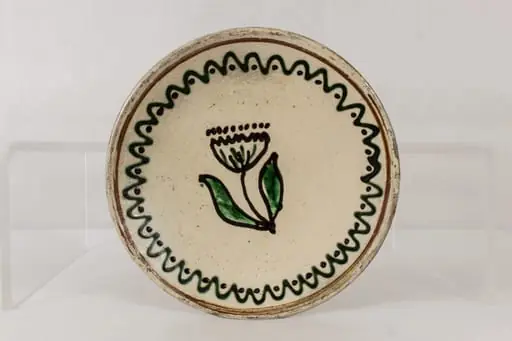 Vas de formă rotundă, smălțuit în interior, decorat pe suprafața interioară prin pictare astfel: motivul floarea de mac în centru, cercul vălurit, dublat de motive punctiforme, și un motiv circular cărămiziu (spre margini). Cromatică: negru, verde, alb, maro, cărămiziu.
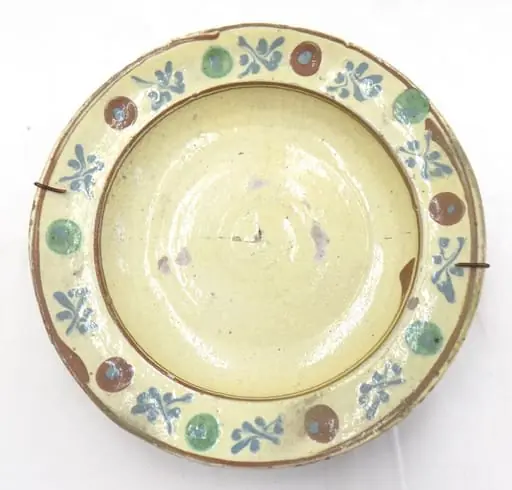
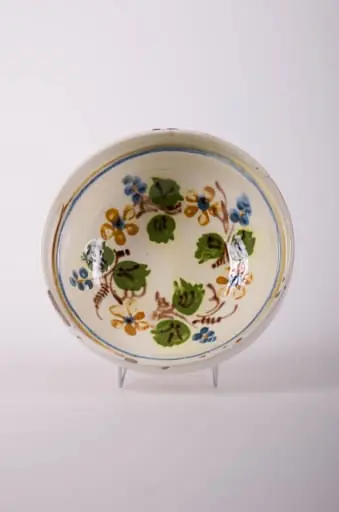 Farfurie de formă tronconică, adâncită, cu buza foarte înaltă; pe fund are găuri pentru agățare. Este smălțuit în interior și exterior (buza). Decorat cu motive geometrice: linie; motive fitomorfe; motive florale. Cromatică: fond: alb; motive: verde; maro; albastru.
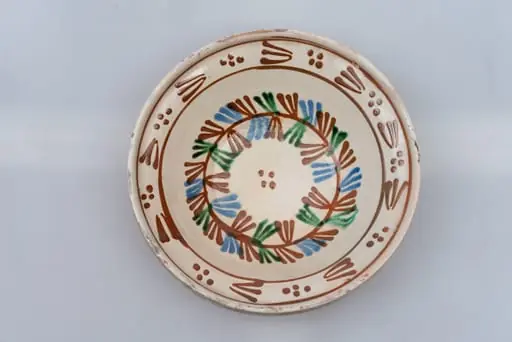 Farfurie adâncă de tip castron, cu corp tronconic și buză îngustă verticală. Este acoperită pe fața interioară și pe exteriorul buzei cu un strat de humă albă, peste care este pictat cu cornul decorul format din motive geometrice: centrul farfuriei este decorat cu o linie circulară de culoare maro, decorată cu grupuri de câte trei linii drepte dispuse în formă de V, de culoare maro, verde, albastru și un grup de patru puncte în centru. Un al doilea registru decorativ, situat sub buza farfuriei și încadrat între două linii circulare, se compune din motive formate din grupuri de câte trei linii maro dispuse în formă de V, intercalate de grupuri de câte patru puncte maro. Cromatica: alb, verde, albastru, maro. Suprafața ornamentată a farfuriei este acoperită cu un strat de smalț transparent.
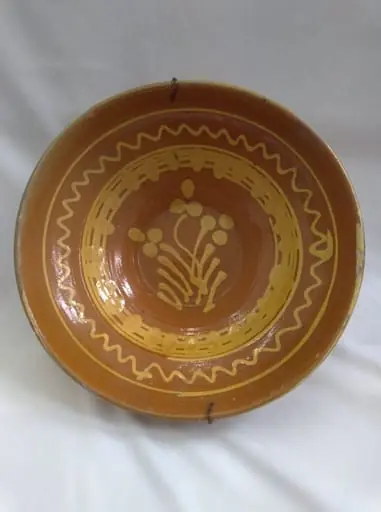
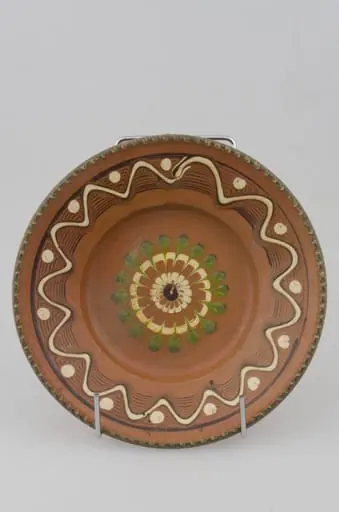 Farfurie cu pereții rotunjiți, marginea oblică lată și buza crestată. Prezintă decor geometric pe margine: linii frânte și curbe; pete de culoare; central avem o floare stilizată. Cromatică: fond: maro; motive: verde; alb.
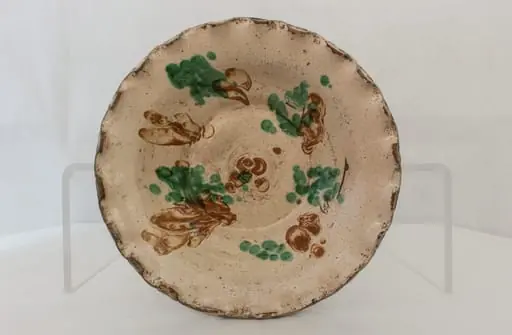 Vas de formă rotundă, cu pereții ușor evazați, smălțuit în interior, cu marginea vălurită, decorat (în mod unic) pe suprafața interioară cu motive punctiforme și neregulate, dispuse aleatoriu, realizate cu pensula. Cromatică: verde, maro, bej.
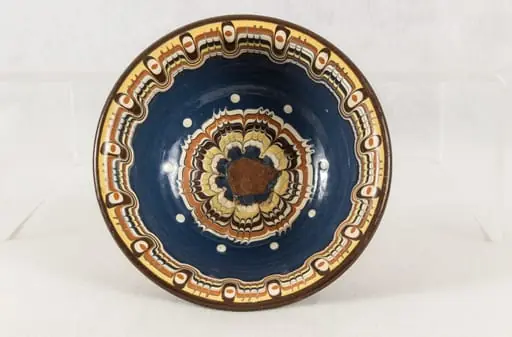 Vas de formă rotundă, adâncită, smălțuit în interior și exterior (cu excepția fundului), decorat pe suprafața interioară și exterioară astfel: în interior, un motiv floral central, realizat prin tehnica jirăvitului cu gaița, încadrat de nouă motive punctiforme, iar pe margine, un brâu maro și un registru de motive diverse (ochiul, linii curbe) realizare prin pictare și jirăvit; la exterior, un registru mai lat cu motive jirăvite și pictate cu pensula. Cromatică: albastru, alb, galben, maro, cărămiziu.
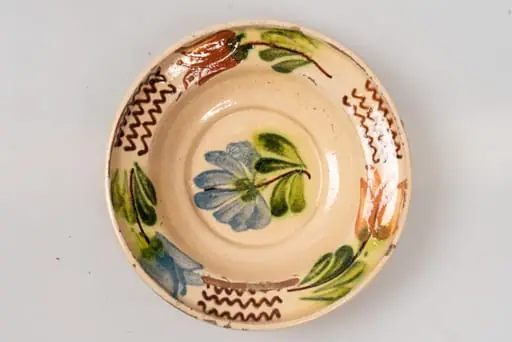 Farfurie adâncă, cu buza evazată și muchia buzei ridicată. Piesa este acoperită pe suprafața interioară cu un strat de angobă albă peste care este pictat cu pensula și cu cornul decorul format din motive florale și geometrice: fundul farfuriei conține o floare cu petale alungite de culoare albastră și frunze verzi. Alte trei flori (una cu petale de culoare albastră, a doua de culoare maro-roșcat iar cea de-a treia de culoare siena arsă), cu tulpină maro și frunze verzi, decorează buza farfuriei. Între cele trei flori, sunt pictate trei motive aproximativ identice, formate din trei linii vălurite paralele, de culoare maro. Suprafața ornamentată a farfuriei este acoperită cu un strat de smalț transparent. Cromatica: alb, verde, siena arsă, maro, maro-roșcat, albastru.
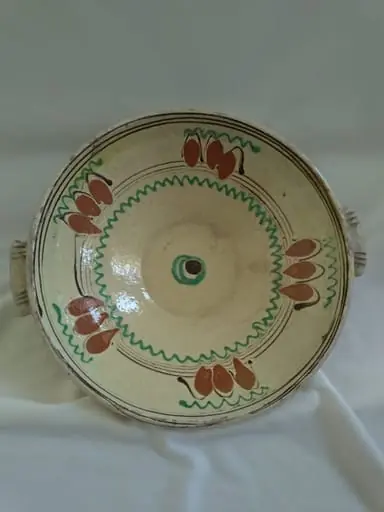
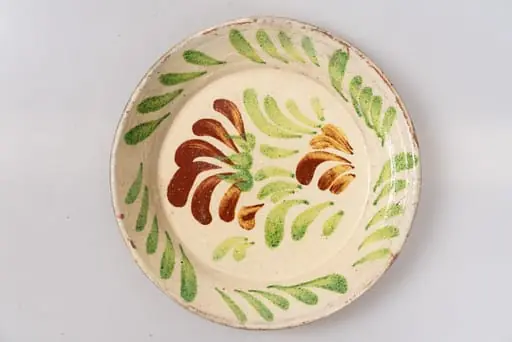 Farfurie semi-adâncă, cu fund întins, corp îngust și buză evazată; este angobată pe fața interioară cu un strat de humă albă și decorată prin pictare cu pensula cu motive florale și fitomorfe stilizate: central pe fundul farfuriei este reprezentată o floare cu petale alungite de culoare maro și frunze verzi și maro. Buza este ornamentată cu un șir de frunze verzi foarte stilizate. Cromatica: alb, verde, maro. Suprafața ornamentată a farfuriei este acoperită cu un strat de smalț transparent.
 Blid de formă tronconică, smălțuit în interior cu buza larg rasfrântă. Prezintă decor floral fundul șu corpul vasului. Cromatică: fond: maro; motive: alb; verde; albastru.