Artwork
Tabernacle frame
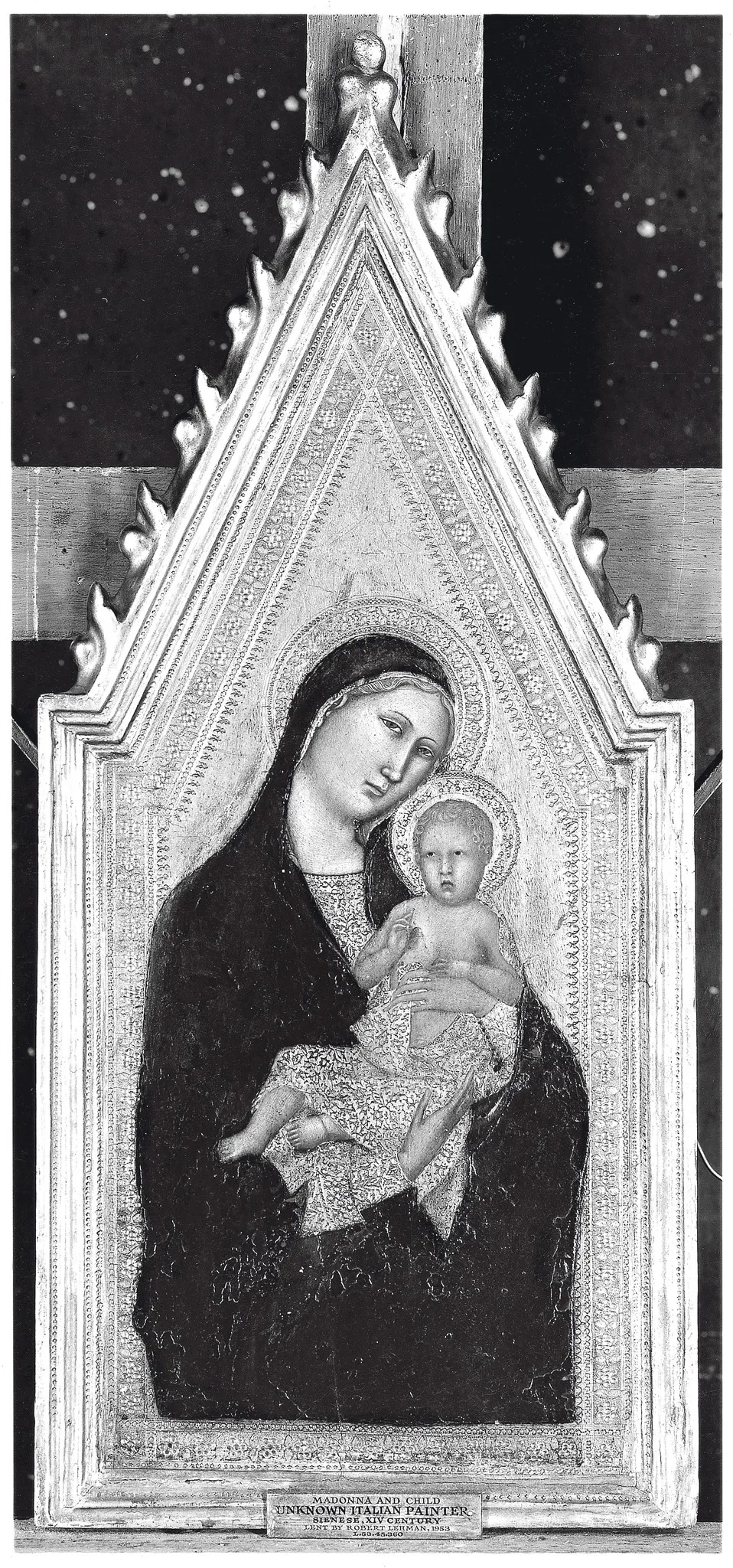
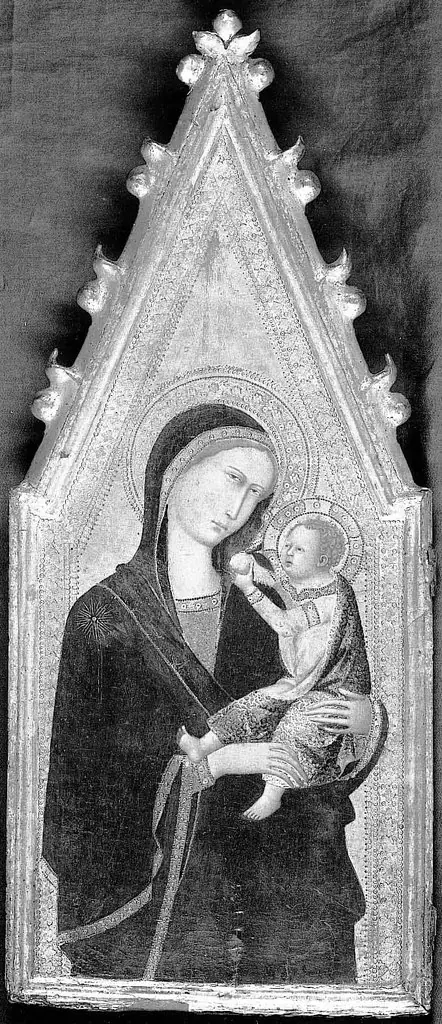
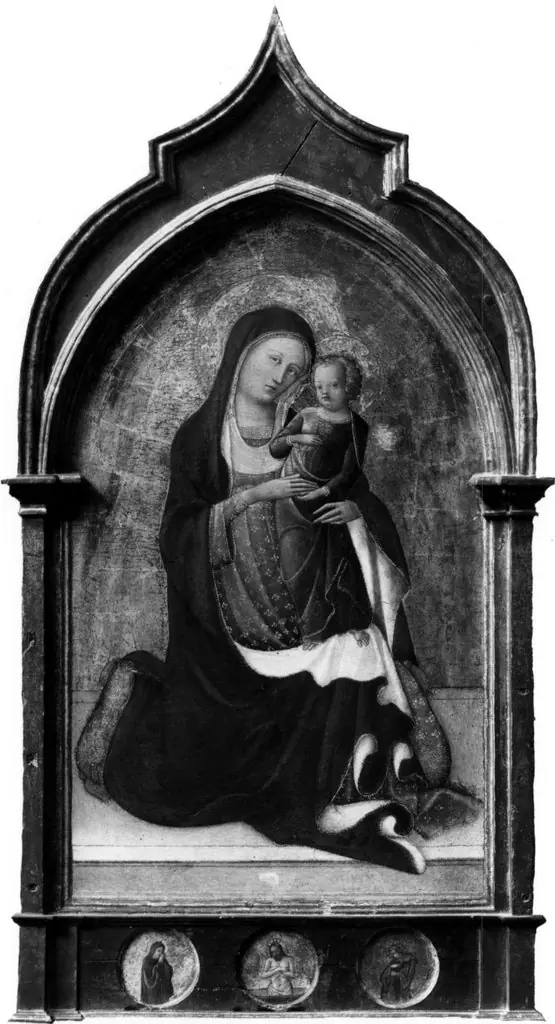
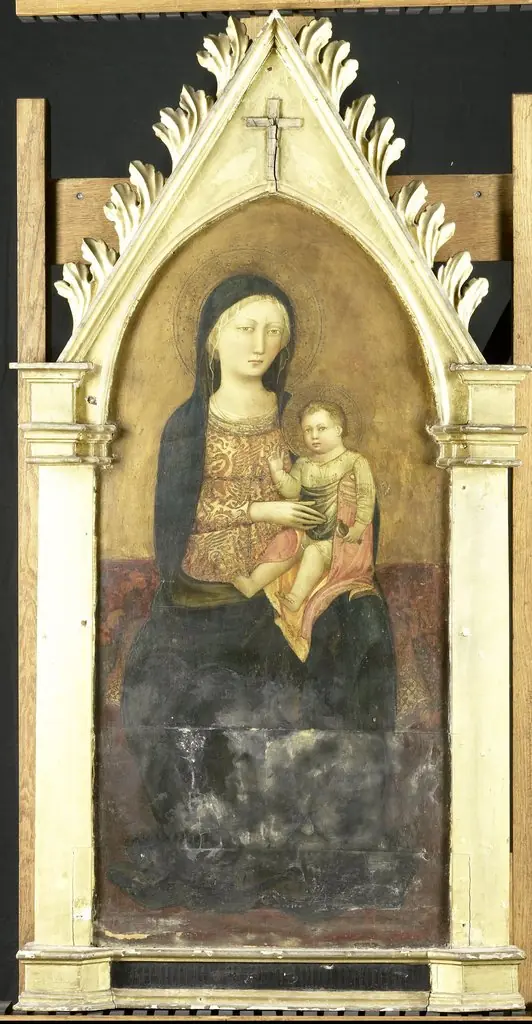
Tabernacle frame is an unspecified painting. It dates from 1350 and is held in the collection of the Metropolitan Museum of Art.
About this work
History & Provenance
No specific details regarding the original commission or the precise circumstances of its creation are provided in the available documentation.
The Tabernacle frame, a religious painting dated to 1350, was created by an anonymous artist. The work was formerly owned by Robert Lehman before entering the collection of the Metropolitan Museum of Art, where it was acquired in 1975 under accession number 1975.1.10b. No specific details regarding the original commission or the precise circumstances of its creation are provided in the available documentation.
Overview
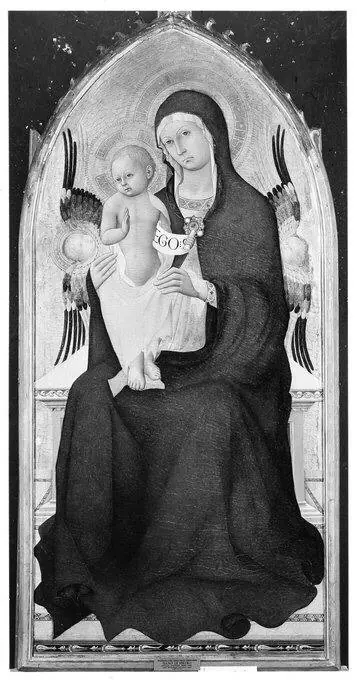
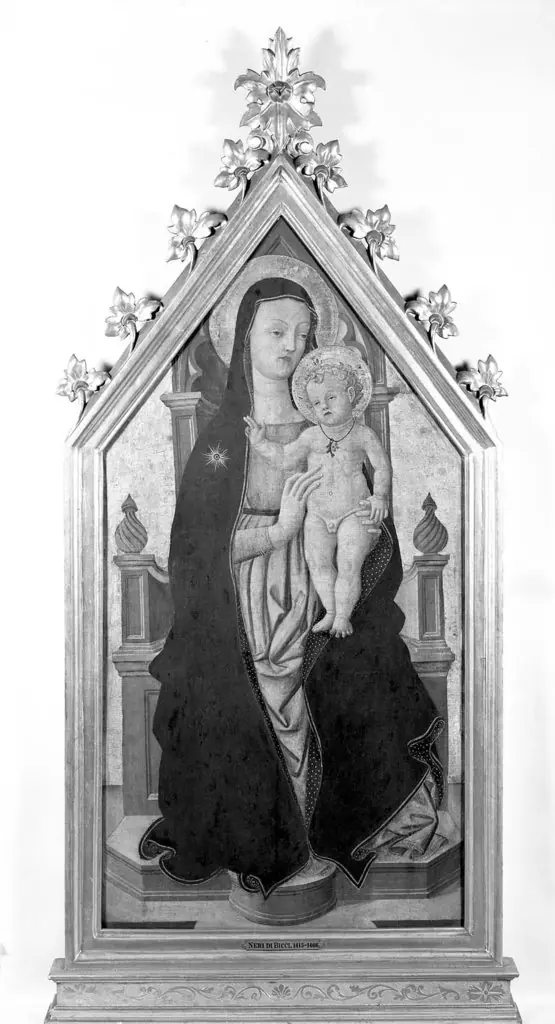
The work, titled Tabernacle Frame, depicts a seated woman cradling a small child. She is clothed in a dark robe topped with a light‑blue mantle that falls across her shoulders, while the infant wears a plain white garment. Behind them arches a pointed, vaulted opening adorned with gold stars against a deep, night‑like sky. The surrounding frame is gilded, showing signs of age and wear.
Subject & Meaning
The intimate scene suggests a devotional or familial theme, with the mother’s serene expression and the child’s gaze directed toward the viewer, inviting contemplation. The juxtaposition of the modest clothing and the celestial backdrop may allude to a sacred narrative, positioning the figures within a symbolic sanctuary.
Technique & Style
The painter employs chiaroscuro, contrasting the illuminated figures with the surrounding darkness to model form and convey volume. Soft shadows on the woman’s cheeks and the gentle modeling of the child’s hand create a three‑dimensional presence. The gold‑studded arch and the dark sky serve as a decorative yet atmospheric setting, characteristic of late‑Renaissance or early Baroque sensibilities.
Context
The composition reflects a tradition of religious or domestic imagery common in European art from the 16th to 18th centuries, where maternal figures are often placed within architectural niches that evoke sacred spaces. The use of a pointed arch and celestial motifs aligns with contemporary iconography linking earthly motherhood to divine protection.
Legacy
While the piece lacks a widely recorded exhibition history, its continued presence on display and the preservation of its gilded frame indicate ongoing appreciation for its technical execution and emotive quietude within museum or institutional collections.
Artist & collection