Artwork
The Annunciation
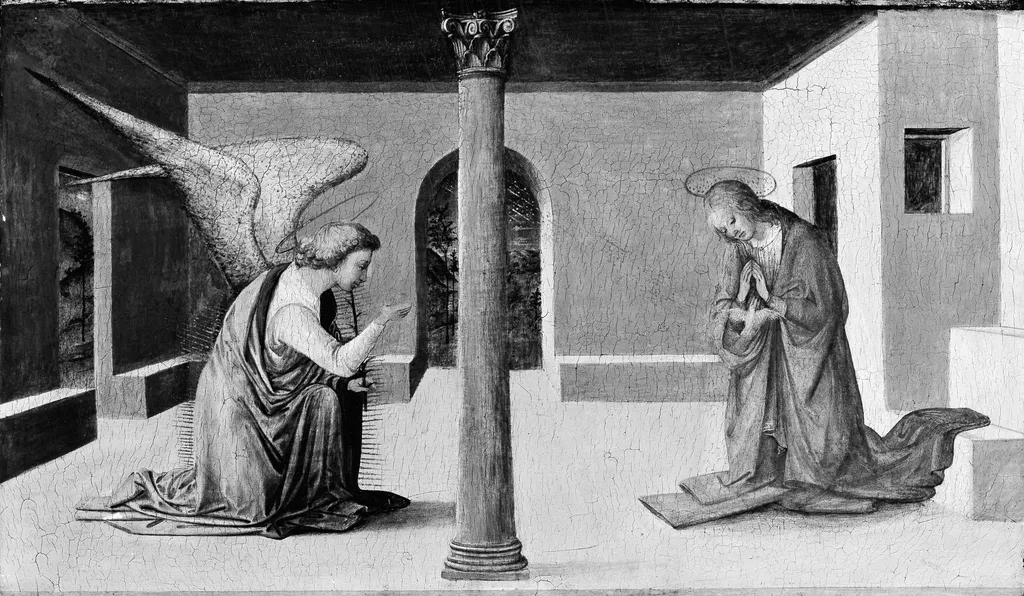
The Annunciation is a tempera painting. It dates from 1500 and is held in the collection of the Metropolitan Museum of Art.
About this work
Subject & Meaning
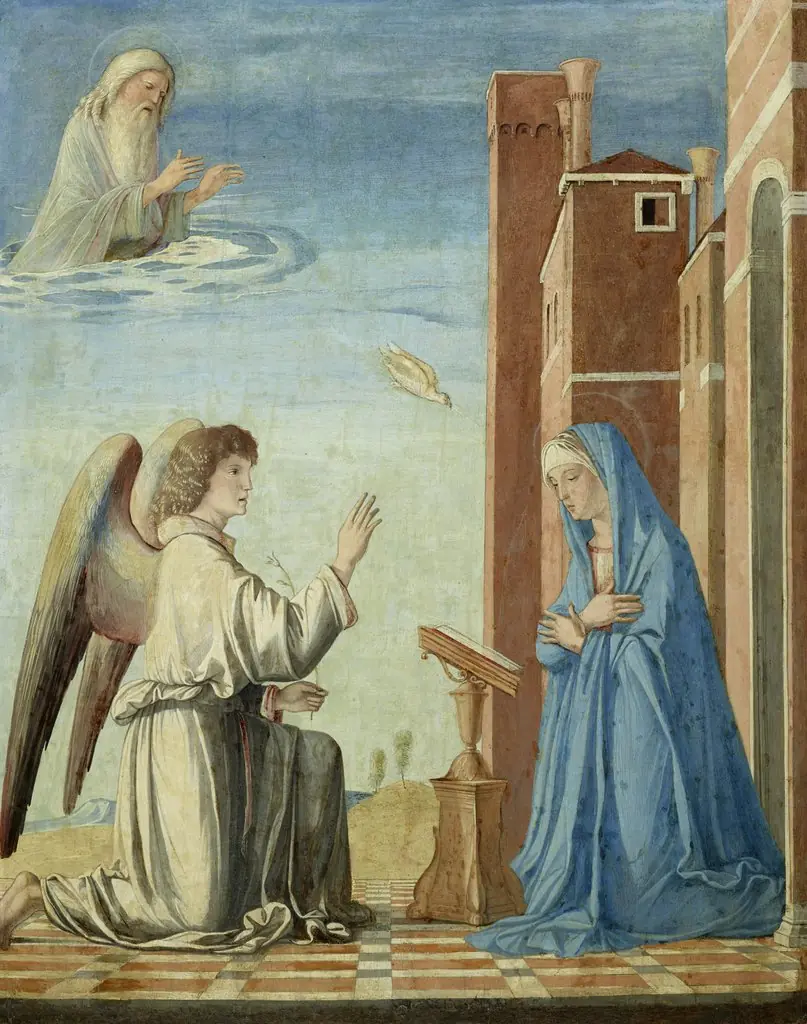
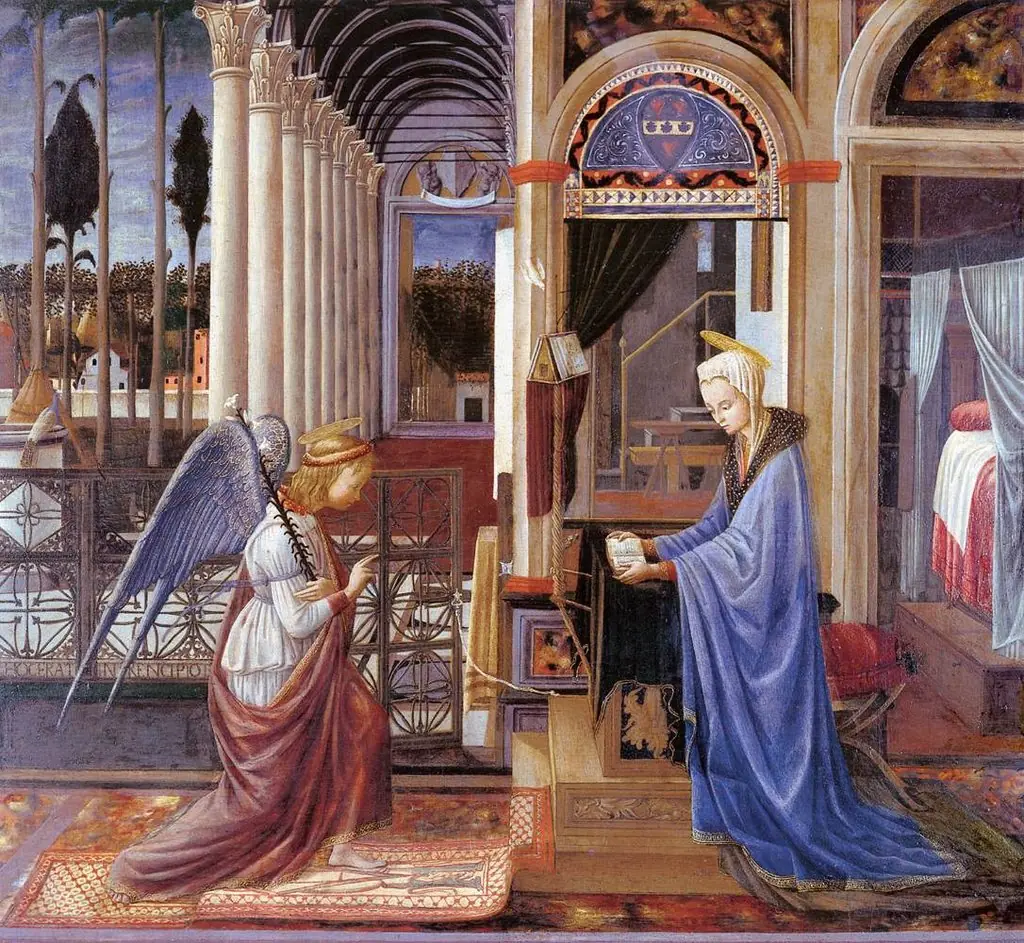
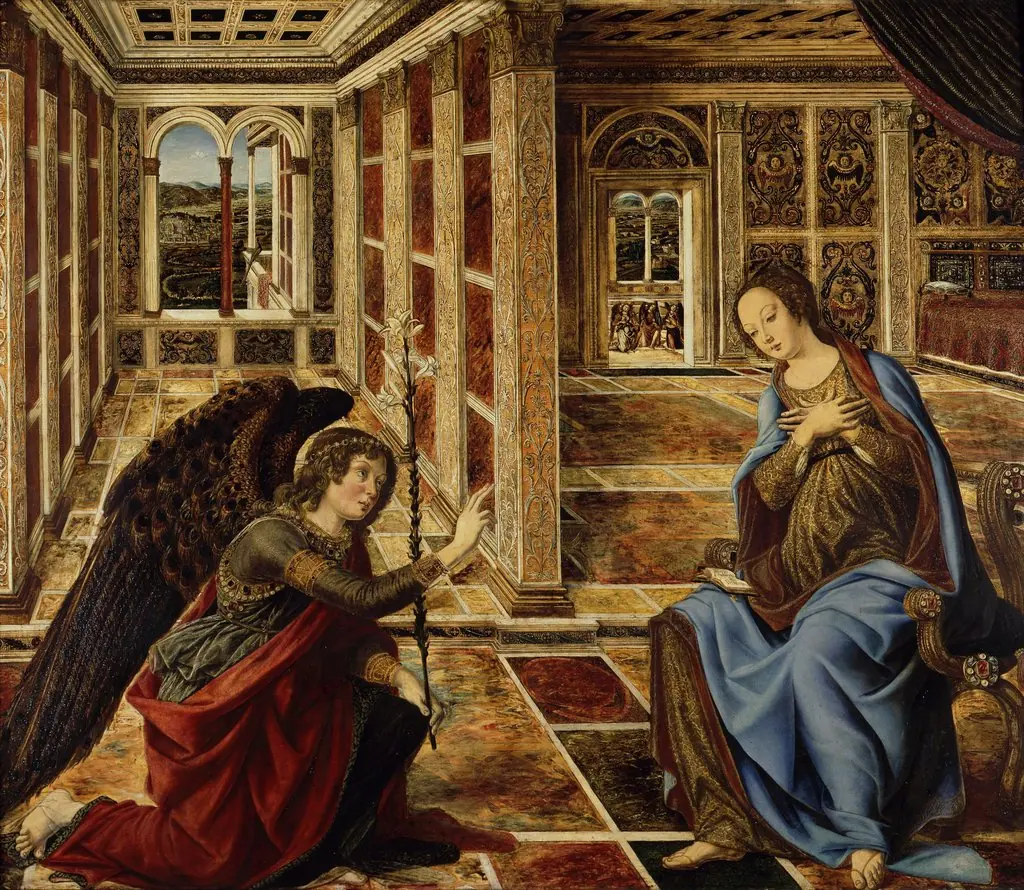
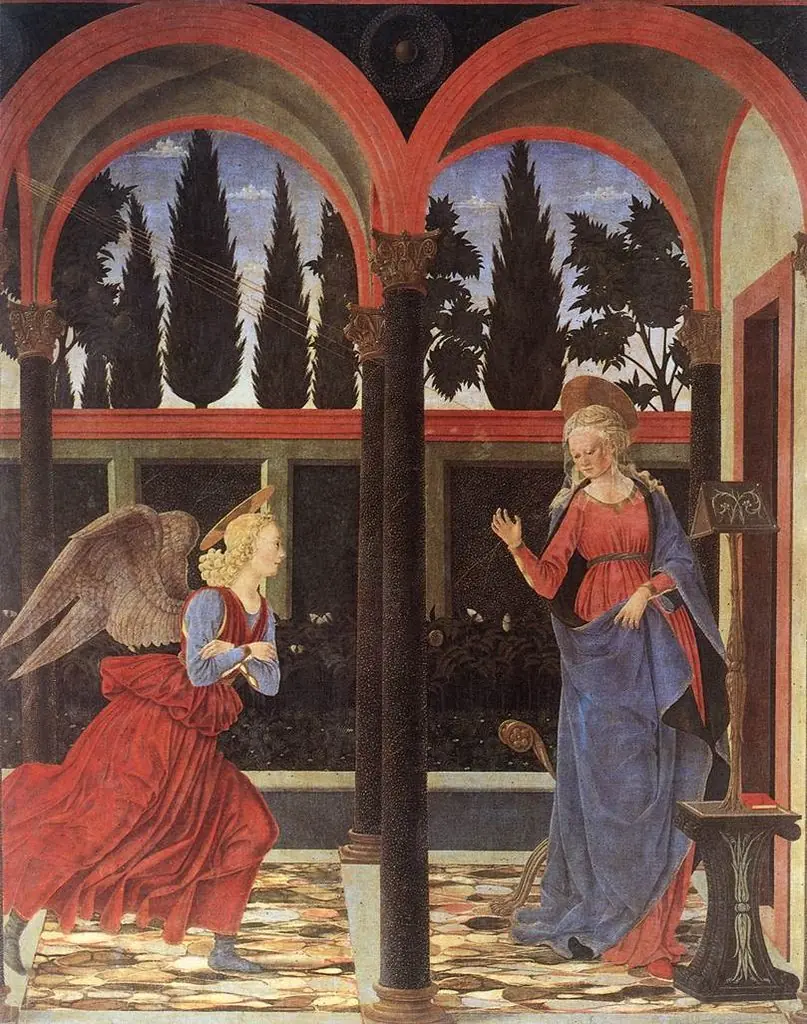
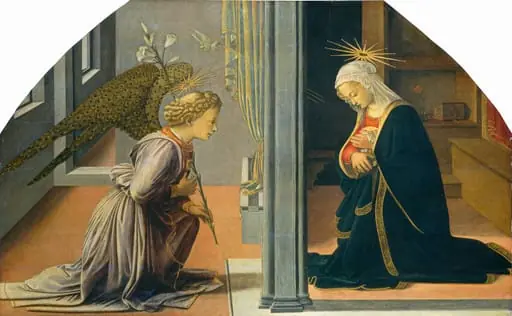
The painting titled The Annunciation, created around 1500 using tempera on panel, illustrates the biblical moment when the Angel Gabriel announces to the Virgin Mary the forthcoming birth of Christ; the work belongs to the religious genre and is housed in the Metropolitan Museum of Art; its iconography includes the figures of Gabriel and Mary, traditional symbols of the divine announcement, and reflects the theological theme of the Incarnation; the composition follows established visual conventions of the period, emphasizing the sacred encounter; the piece measures approximately 40.3 cm by 69.9 cm and was produced in the early 16th century.
Technique & Style
The Annunciation is executed in tempera on a wooden panel, a traditional support for religious paintings of this period.
The Annunciation is executed in tempera on a wooden panel, a traditional support for religious paintings of this period. The work measures 40.3 cm in height and 69.9 cm in width, presenting a rectangular format typical for devotional images. Stylistically, the painting is attributed to the Workshop of Fra Filippo Lippi, reflecting the artistic conventions of early 16th-century Florentine religious art.
The medium of tempera allows for precise, linear detail and vibrant coloration, suitable for depicting the sacred encounter between the Archangel Gabriel and the Virgin Mary. As a product of a workshop rather than a single master, the handling of the figures and drapery demonstrates the collaborative production methods common in Renaissance Italy. The piece remains part of the Metropolitan Museum of Art's collection, preserving its physical integrity as a significant example of tempera panel painting from around 1500.
History & Provenance
The Annunciation is a tempera-on-panel painting dated to 1500 and attributed to the Workshop of Fra Filippo Lippi. The work entered the collection of the Metropolitan Museum of Art, where it remains held. Its current location is the Metropolitan Museum of Art, consistent with its institutional collection record.
The sources document the object's inception year, medium, and current custodianship, but they do not record the original commissioner, earlier owners, intermediate provenance, or circumstances of its creation prior to its accession at the Metropolitan Museum of Art.
Context
The Annunciation, executed in tempera around 1500, exemplifies early Renaissance religious painting within the oeuvre of the Workshop of Fra Filippo Lippi. Its composition, depicting the angel Gabriel announcing to the Virgin Mary, reflects the devotional emphasis of the period and demonstrates the workshop’s role in disseminating Lippi’s stylistic influence. The work’s provenance at the Metropolitan Museum of Art has facilitated scholarly attention to the technical execution of tempera on panel and the socio‑political context of patronage in Florentine‑derived circles. Contemporary reception emphasizes its significance as a transitional piece bridging late Gothic iconography and emerging naturalistic detail.
Overview
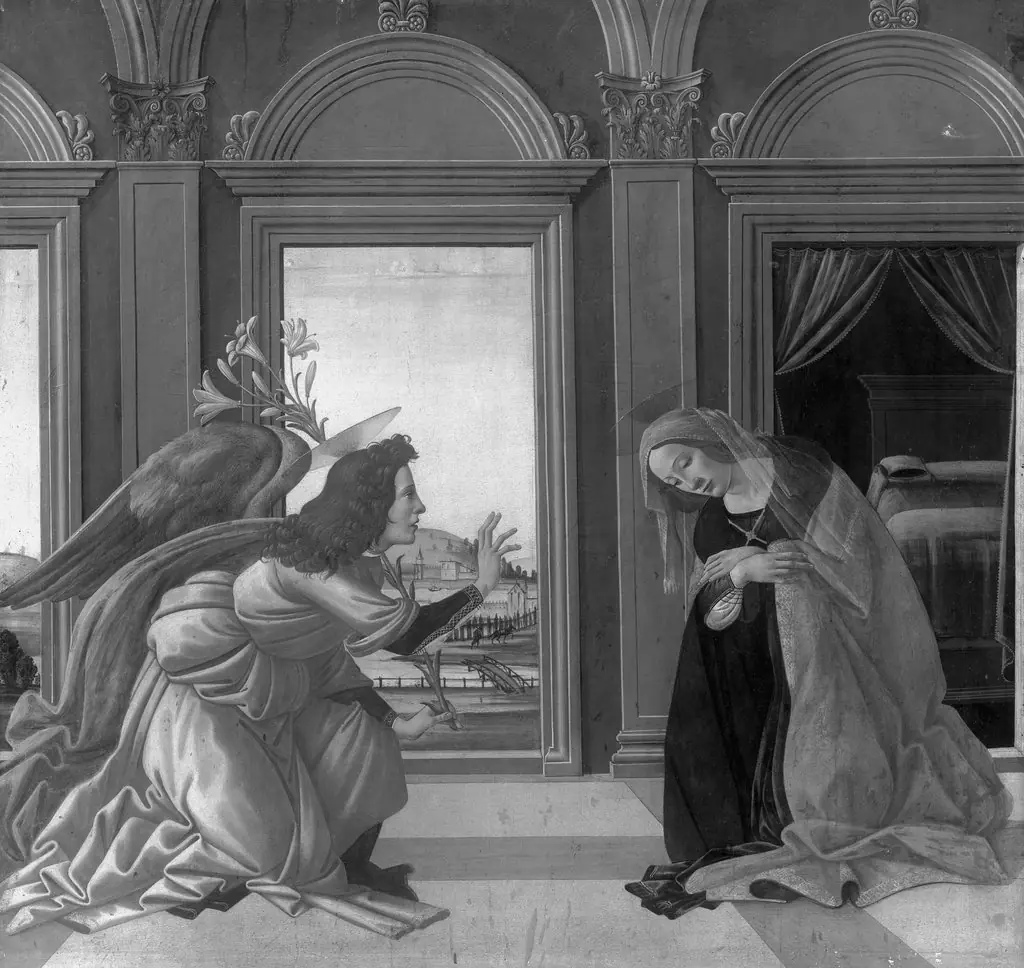
This tempera painting, titled The Annunciation, depicts a sacred moment within a domestic interior. Two female figures occupy a simply furnished room, defined by a tall column and a draped bed. The artist renders a quiet, serious encounter between the kneeling figure on the left, who holds a book, and the standing figure on the right, shown in a posture of prayer, conveying a sense of solemnity and spiritual gravity.
Artist & collection