Artwork
The Third Avenue Railroad Depot
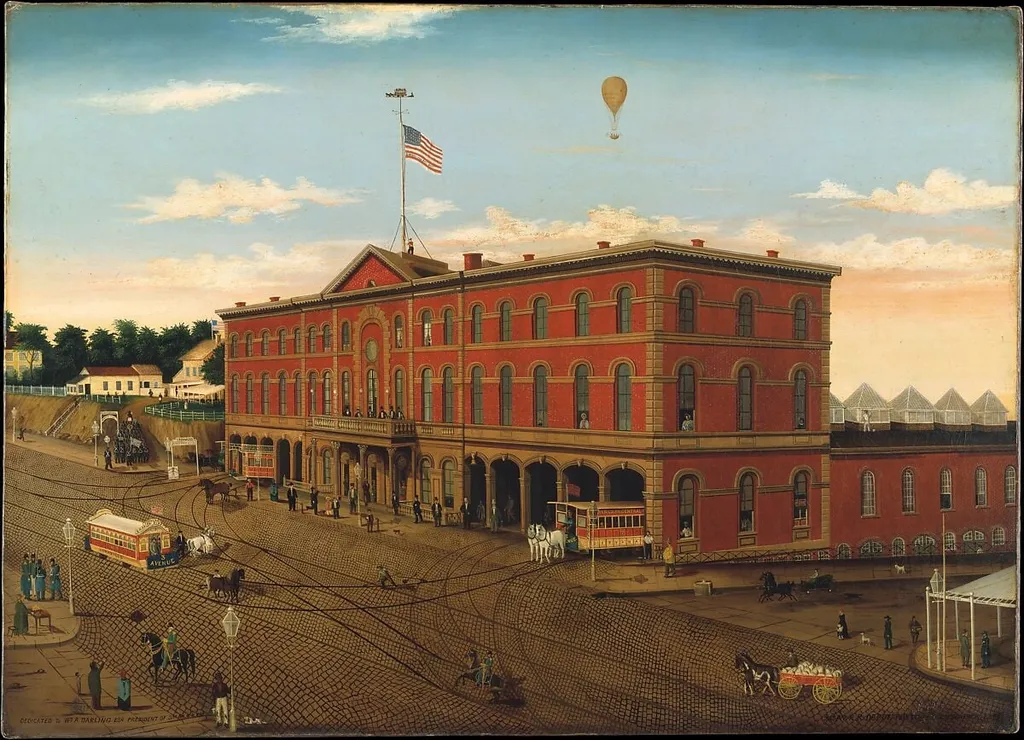
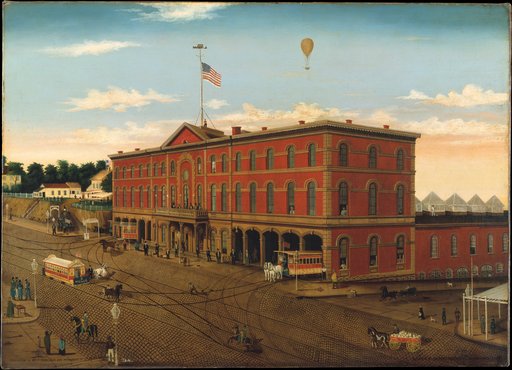
The Third Avenue Railroad Depot is an oil painting by the American Folk Art artist William H. Schenck. It dates from 1860 and is held in the collection of the Metropolitan Museum of Art. William H.
About this work
Subject & Meaning
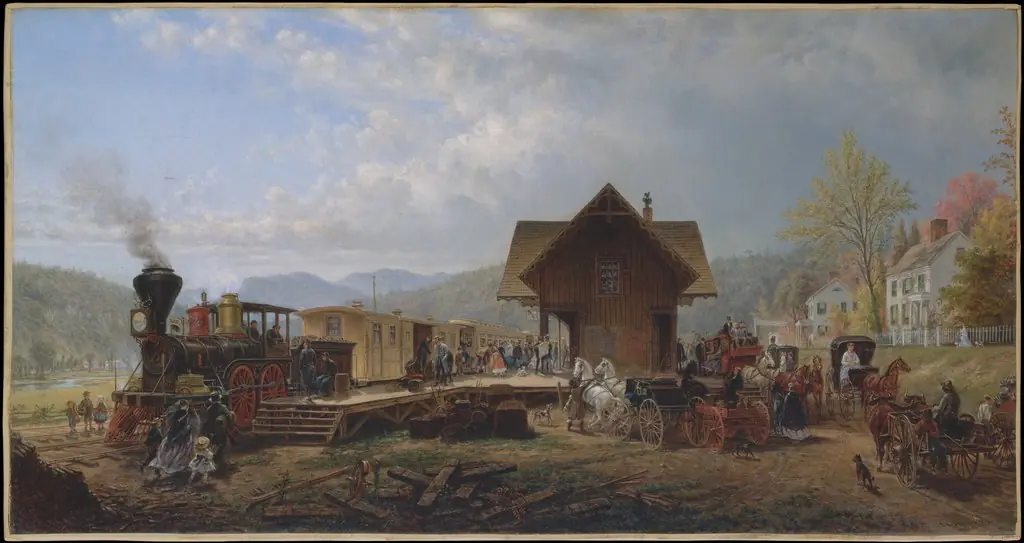
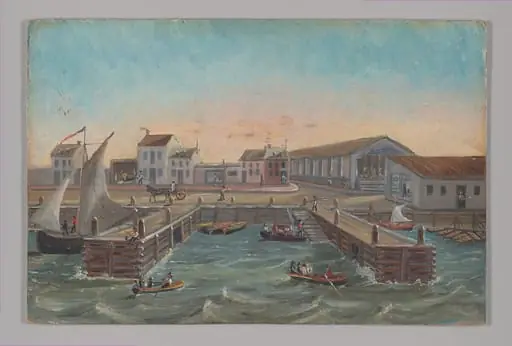
Schenck's work functions as a cityscape centered on a railway station, specifically identified as the Third Avenue Railroad Depot.
Painted in 1859, William H. Schenck's work functions as a cityscape centered on a railway station, specifically identified as the Third Avenue Railroad Depot. The composition integrates distinct elements of mid-19th-century urban life and technology, prominently featuring a horse alongside the industrial infrastructure of the station. A hot air balloon is also depicted within the scene, appearing in conjunction with the terrestrial transport methods.
By juxtaposing the animal power of the horse with the mechanical innovation of the railway and the aerial novelty of the balloon, the painting captures a specific moment of technological transition and expansion in the American urban environment.
Technique & Style
The Third Avenue Railroad Depot is executed in oil paint on canvas, a standard mid-nineteenth-century medium for ambitious urban views. The painting's physical dimensions, 91.4 cm in height by 127 cm in width, indicate a horizontal format suited to depicting the broad sweep of a depot scene. As a cityscape, the work presents a documentary-style rendering of the railway station, populated with horses and accented by a hot air balloon in the sky, suggesting careful attention to contemporary transportation motifs.
The classification within The American Wing reflects its stylistic alignment with nineteenth-century American urban genre painting. Specific information regarding the painting's current condition, conservation history, or handling notes is not documented in the available sources.
History & Provenance
The Third Avenue Railroad Depot is an oil on canvas cityscape created by William H. Schenck in 1859. The work documents a specific urban railway station scene, incorporating a horse, a railway station, and a hot air balloon among its depicted subjects. The painting entered the Metropolitan Museum of Art's collection and is classified within the museum's American Wing.
No additional provenance details, ownership chain prior to the museum's acquisition, commissioning circumstances, or intermediate custodial history are documented in the available records.
The Third Avenue Railroad Depot is held in the collection of the Metropolitan Museum of Art, classified within The American Wing. According to Wikidata records, the painting is inventoried as part of the museum's holdings, with documented dimensions of 91.4 cm in height and 127 cm in width. No specific accession number is recorded in the available sources.
The sources do not document any exhibition history for the work beyond its presence in the Metropolitan Museum of Art's collection.
Overview
William H. Schenck's oil on canvas, The Third Avenue Railroad Depot, dates to approximately 1860. This cityscape captures a vibrant New York scene centered around a busy railway station. The composition integrates various modes of transport, from traditional horse-drawn vehicles to modern steam engines, with the unexpected inclusion of a hot air balloon floating overhead, reflecting the dynamic urban environment of its time.
Context
Created on the eve of the American Civil War, around 1860, Schenck's work offers insight into a nation experiencing significant industrial growth. Rail travel was still a relatively new phenomenon, revolutionizing transportation and shaping cityscapes. The detailed depiction of the Third Avenue Railroad Depot thus captures a specific moment in American history, highlighting the excitement and complexity of a society embracing modernity while retaining elements of its past.
Artist & collection