Artwork
The Descent from the Cross
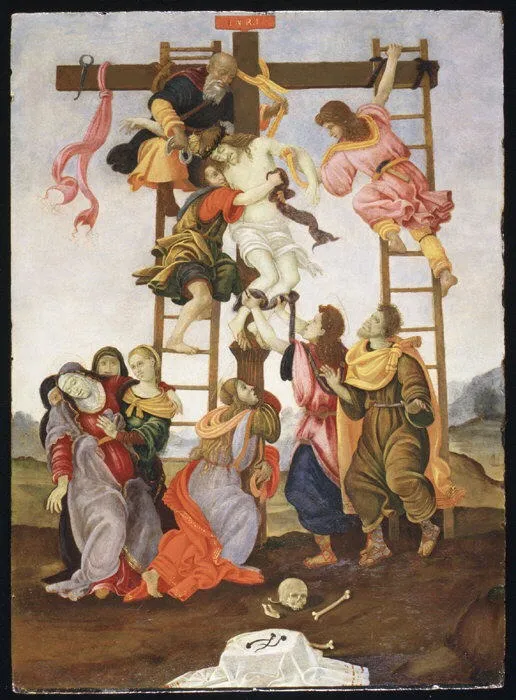
The Descent from the Cross is a tempera painting. It dates from 1500 and is held in the collection of the Metropolitan Museum of Art.
About this work
Subject & Meaning
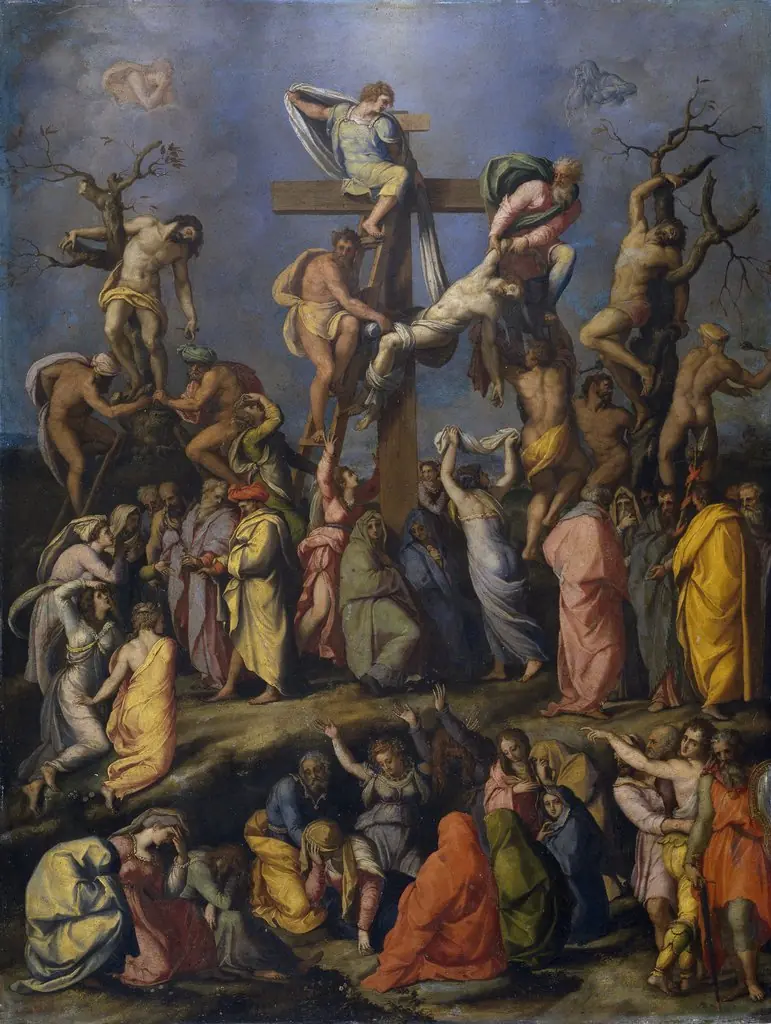
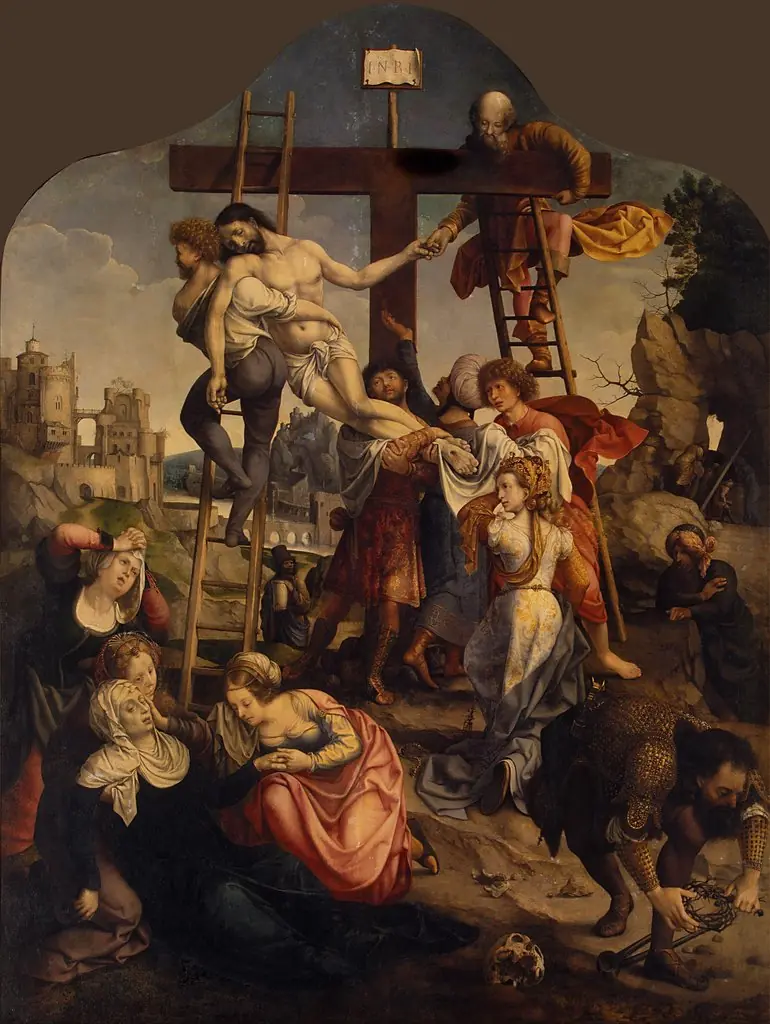
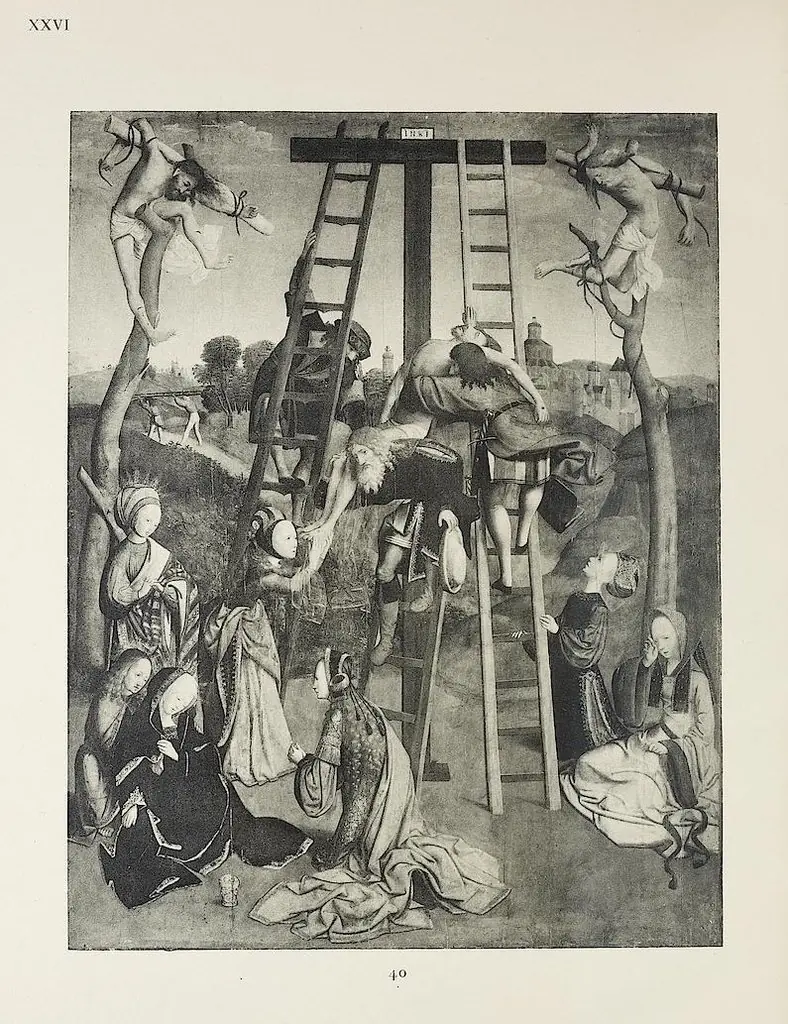
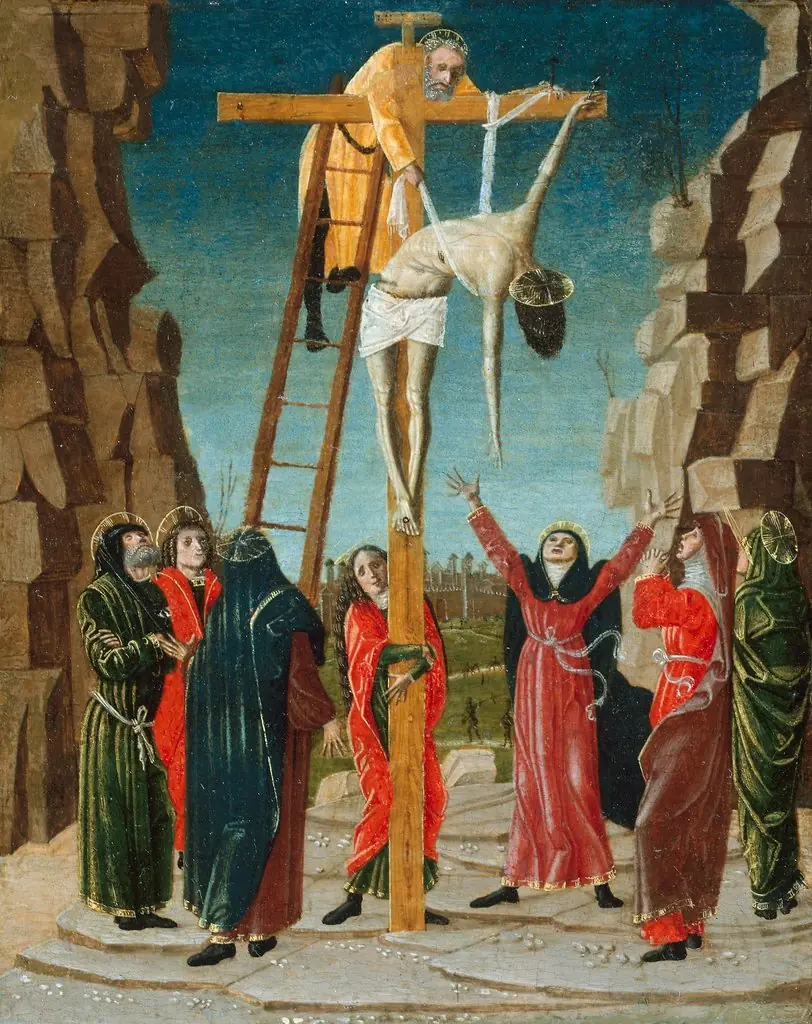
The work depicts the biblical Descent from the Cross, showing Christ’s body being lowered from the cross by a ladder while the Virgin Mary, John the Evangelist, and Mary Magdalene grieve; a skull rests at the foot of the cross. These figures and symbols together emphasize the sorrow of the moment and highlight themes of mortality and redemption central to the religious subject.
Technique & Style
The Descent from the Cross is a tempera painting executed on a wooden panel circa 1500, likely by the workshop of Filippino Lippi in Florence.
The Descent from the Cross is a tempera painting executed on a wooden panel circa 1500, likely by the workshop of Filippino Lippi in Florence. The work measures 55.9 cm in height by 40.6 cm in width and is classified as a painting within the religious genre. Its surface bears the characteristic matte finish of tempera, applied in thin, layered strokes that define the figures of Christ, the Virgin, Mary Magdalene, John the Evangelist, and supporting motifs such as a skull and ladder.
The composition follows a pyramidal arrangement that emphasizes the lowering of the body, while the muted palette and precise detailing are typical of early 16th‑century devotional imagery.
History & Provenance
Created circa 1500, this tempera painting on panel is attributed to the Workshop of Filippino Lippi. The work depicts the Descent from the Cross, featuring figures such as Christ, Mary, John the Evangelist, and Mary Magdalene. Currently held in the collection of the Metropolitan Museum of Art, the piece measures 55.9 by 40.6 centimeters.
While the specific original commission and the detailed ownership chain prior to its arrival at the museum are not delineated in the available records, the work's inception is firmly established at the turn of the sixteenth century. It remains classified as a religious genre painting within the museum's holdings.
The Descent from the Cross, a tempera panel painting attributed to the workshop of Filippino Lippi, is housed in the Metropolitan Museum of Art in New York. The work is recorded in the museum’s collection, but the catalogue does not disclose an explicit accession or inventory number. No exhibition history for the piece is documented in the sources provided.
The painting measures 55.9 cm by 40.6 cm and depicts the biblical scene of the Descent from the Cross, classified within the museum’s European paintings and religious art categories.
Context
The Descent from the Cross is a early‑16th‑century tempera panel painted circa 1500, attributed to the Workshop of Filippino Lippi and housed in the Metropolitan Museum of Art. As a religious work, it exemplifies devotional imagery circulating in Florence at the turn of the century, combining narrative clarity with symbolic details such as the skull, ladder and figures of John the Evangelist, Mary Magdalene, and the Virgin. Scholarship situates the composition within the transitional phase of Lippi’s workshop, noting its influence on subsequent depictions of the Crucifixion and its role in the evolution of narrative altarpieces in Renaissance art.
Overview
This tempera painting, titled "The Descent from the Cross," captures the solemn moment of Christ's body being removed from the crucifixion. The composition emphasizes the lifeless figure of Jesus, surrounded by a group of mourners. The overall atmosphere is one of profound reverence and sorrow, conveyed through the subdued palette and the emotional intensity of the scene.
Artist & collection