Artwork
The Descent from the Cross
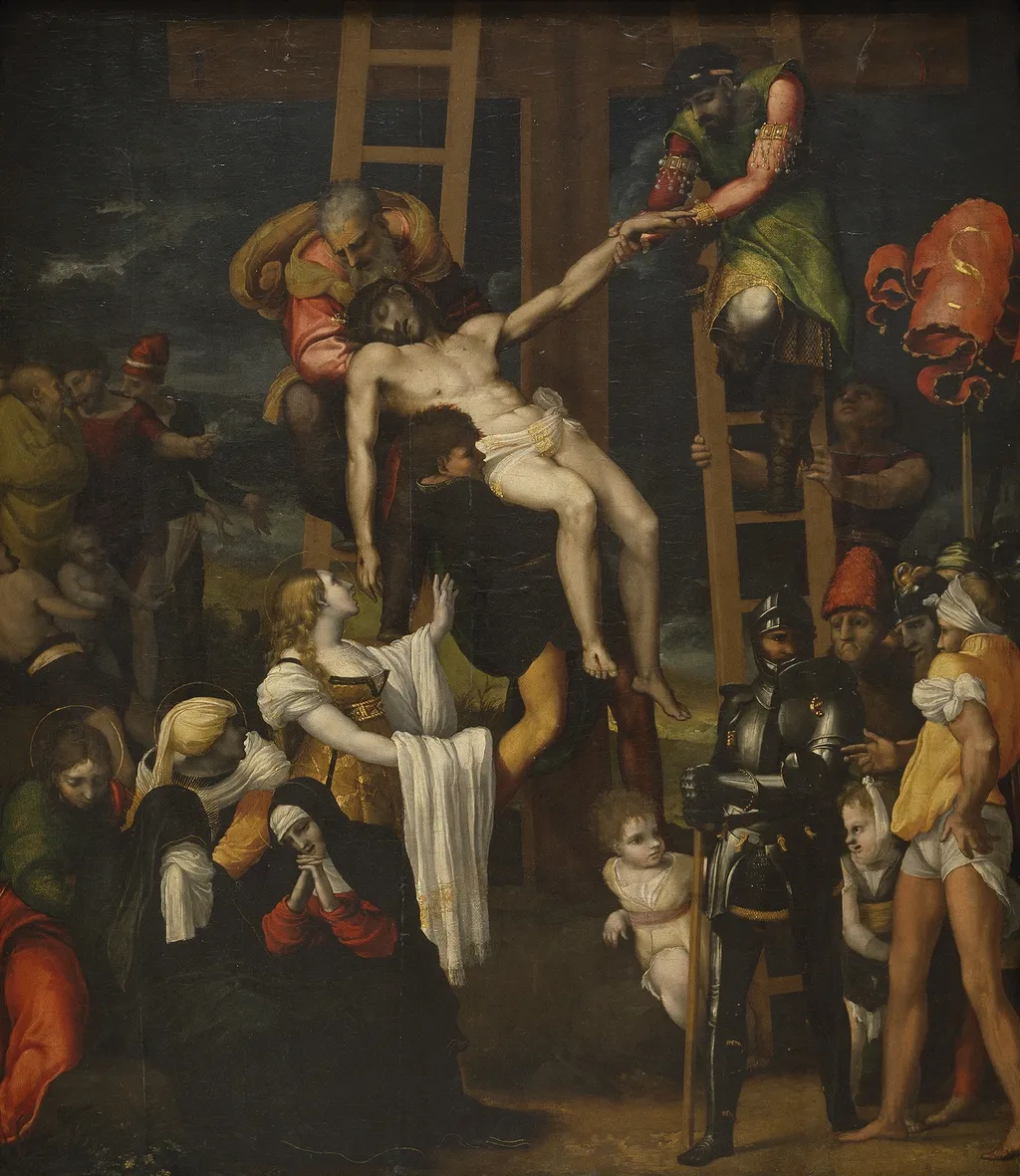
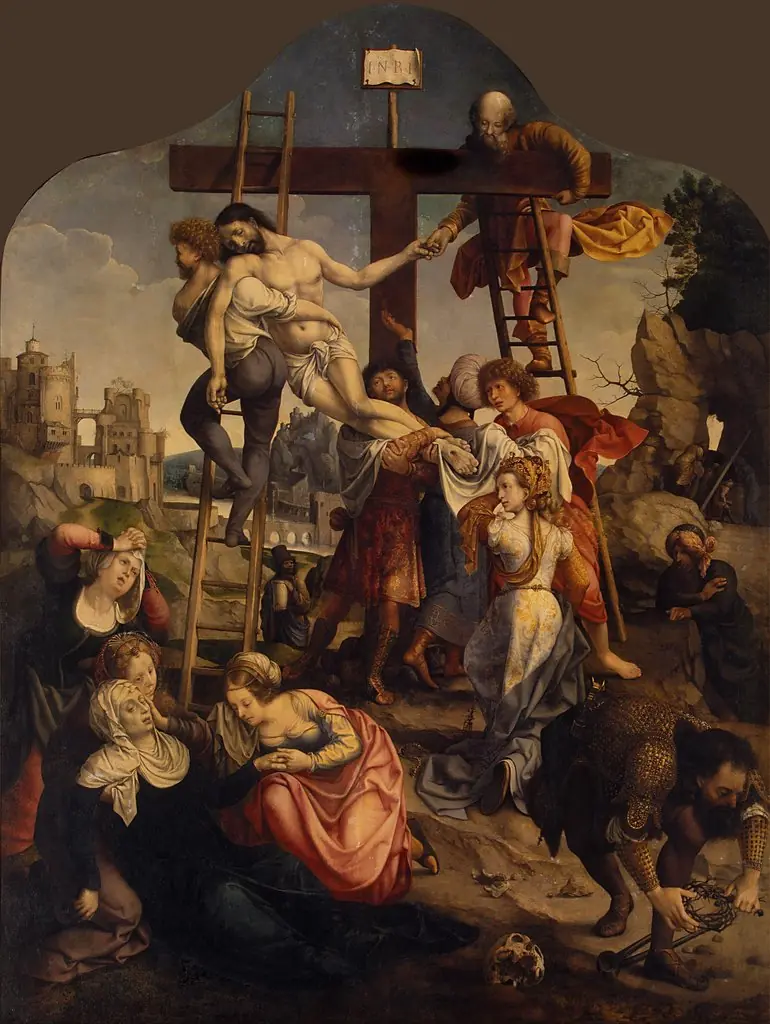
The Descent from the Cross is an oil painting by the Mannerist artist Pedro Machuca. It dates from 1547 and is held in the collection of the Museo del Prado.
About this work
Subject & Meaning
The painting portrays the biblical moment of Christ being lowered from the cross, a scene drawn from the Gospel accounts of the crucifixion and widely used in Counter‑Reformation imagery to emphasize sacrifice and redemption. Machuca arranges the figures in a pyramidal composition that highlights the lifeless body of Jesus, surrounded by mournful disciples and supportive angels, symbolizing both the humanity of Christ and the hope of salvation. The work’s iconography combines traditional elements such as the crown of thorns with a naturalistic treatment of drapery and anatomy, reflecting the influence of Italian Renaissance models on Spanish art of the mid‑sixteenth century.
The subject therefore serves as a visual meditation on suffering and divine grace, inviting viewers to contemplate the theological significance of the Passion within the devotional practices of the era.
Technique & Style
The Descent from the Cross is an oil painting executed on panel, reflecting the religious subject matter typical of 16th‑century Spanish art.
The Descent from the Cross is an oil painting executed on panel, reflecting the religious subject matter typical of 16th‑century Spanish art. Its composition demonstrates a balanced arrangement of figures, with careful attention to spatial depth and chiaroscuro that highlights the emotional gravity of the scene. The work measures 141 cm in height and 128 cm in width, characteristic dimensions for a large devotional panel painting of its period.
History & Provenance
The painting The Descent from the Cross was created in 1547 by Pedro Machuca as an oil on panel work. It entered the collection of the Museo del Prado, where it remains on display. The work depicts the moment of Christ’s body being lowered from the cross and is classified within the religious genre. Its dimensions are 141 cm in height and 128 cm in width.
Overview
The Descent from the Cross, painted by Pedro Machuca in 1547, is a religious oil painting depicting the moment after Christ's crucifixion. The scene is characterized by a mix of dynamic movement and emotional contemplation, set against a somber backdrop.
Context
Painted during the Renaissance, the work reflects the period's emphasis on emotional intensity and realistic depiction of the human form. The use of armor and 'old-fashioned' clothing suggests a blend of historical and contemporary (to the artist) elements.
Own this work as a print
Artist & collection
Artist
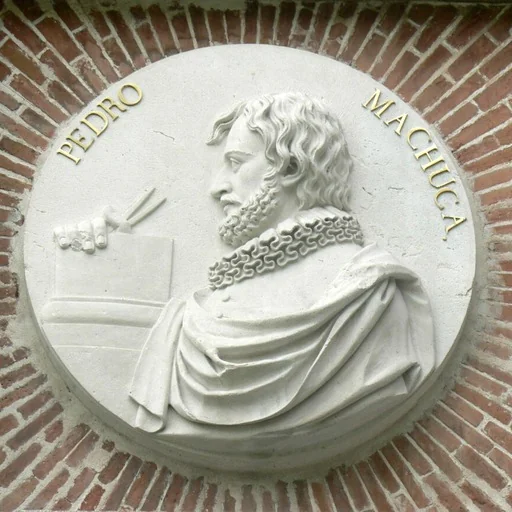
Pedro Machuca (c. 1490 in Toledo, Spain – 1550 in Granada) is mainly remembered as the Spanish architect responsible for the design of the Palace of Charles V (begun 1528) adjacent to the Alcazar in Granada. The…