Artwork
The fourth man digs at the spot where he dropped the shell, expecting jewels, but discovering mere iron, from a Tuti-nama (Tales of a Parrot): Forty-seventh Night
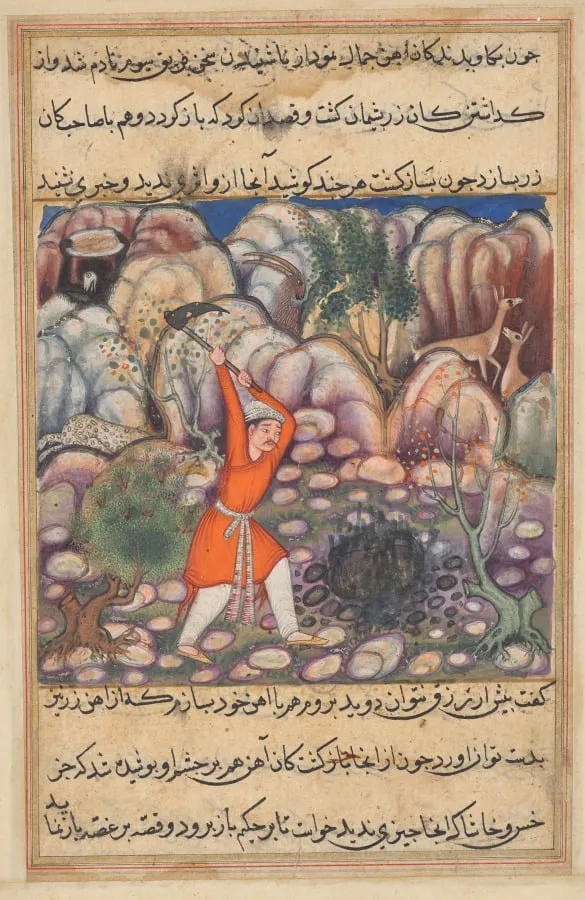
The fourth man digs at the spot where he dropped the shell, expecting jewels, but discovering mere iron, from a Tuti-nama (Tales of a Parrot): Forty-seventh Night is an unspecified painting by the Mughal Painting artist Unknown. It dates from 1560 and is held in the collection of the Cleveland Museum of Art. The miniature depicts a solitary figure in a turban wielding a pickaxe against a stark, rocky backdrop.
About this work
To see more stories from Akbar’s court, look up mughal india, court of akbar (reigned 1556–1605).
A man in a turban swings a pickaxe at bare rock. Behind him, three friends hold copper, silver, and gold. The fourth man only found iron—and he’s furious.
This tiny painting comes from a book of parrot tales told to Emperor Akbar. Each night, the parrot’s story taught a lesson. Here, the lesson is clear: greed backfires.
To see more stories from Akbar’s court, look up mughal india, court of akbar (reigned 1556–1605).
Overview
The miniature depicts a solitary figure in a turban wielding a pickaxe against a stark, rocky backdrop. Behind him stand three companions each clutching a metal—copper, silver and gold—while the central figure clutches a piece of iron, his expression one of frustration. The scene illustrates a moment of discovery and disappointment within a narrative sequence.
Subject & Meaning
The composition narrates a parable from a 16th‑century collection of stories told to Emperor Akbar. Four men receive shells that promise treasure; three uncover precious metals, while the fourth finds only iron. His ensuing greed and anger serve as a moral warning about the perils of covetousness, emphasizing that desire for wealth can lead to ruin.
Technique & Style
Executed in the Mughal miniature tradition, the painting employs fine brushwork and a limited palette of earth tones and metallic highlights. Delicate line work defines the figures and the rugged terrain, while the use of gold leaf on the copper, silver and gold objects creates a visual hierarchy that underscores the contrast between the valuable and the mundane.
History & Provenance
The work originates from a Tuti‑nama, a manuscript of parrot tales compiled for the court of Emperor Akbar (reigned 1556–1605). Such illustrated books were produced in imperial workshops, where artists blended Persian influences with emerging Indian aesthetics. The miniature has remained within collections of Mughal manuscripts, illustrating courtly didactic literature.
Context
Mughal court culture valued moral instruction through storytelling, often employing animal narrators like the parrot to convey ethical lessons. This particular tale, presented on the forty‑seventh night, reflects the broader imperial project of using art and literature to reinforce virtues such as humility and restraint among the elite.
Artist & collection

 Domestic Scene
 Giacomo and Cardinal Marco, investing Andrea, Abbot of San Zeno, with his Benefice
 The Nymph of Fontainebleau
 Portrait of a Woman
 Madonna and Child with Saints in the Enclosed Garden
 Venus and Minerva
 Family Group of Four on Sofa
 Wall painting from Room H of the Villa of P. Fannius Synistor at Boscoreale
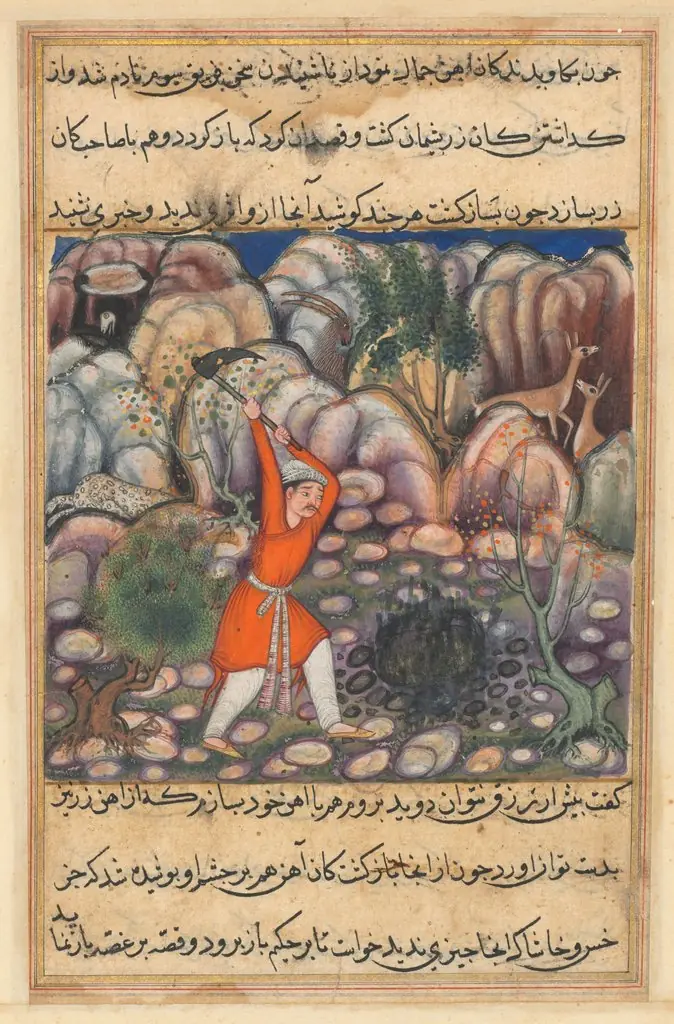 The fourth man digs at the spot where he dropped the shell, expecting jewels, but discovering mere iron, from a Tuti-nama (Tales of a Parrot): Forty-seventh Night
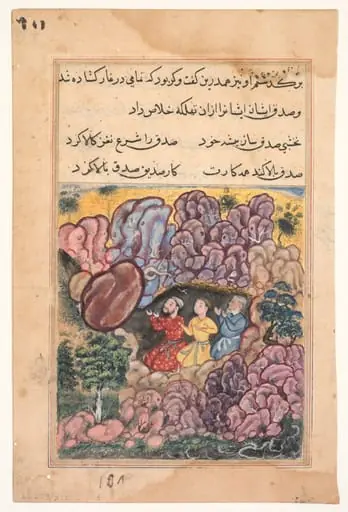 The tale of the three men trapped in a cave by a rolling boulder, from a Tuti-nama (Tales of a Parrot): Thirty-second Night
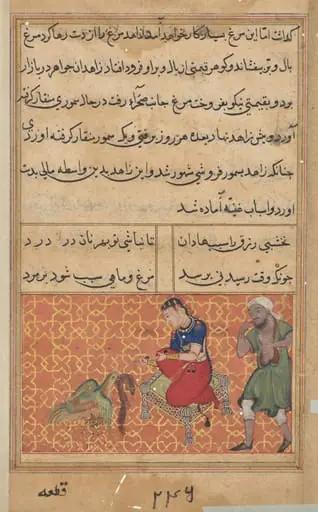 The bird of seven colors brings a sable to the pious man, from a Tuti-nama (Tales of a Parrot): Fifty-second Night
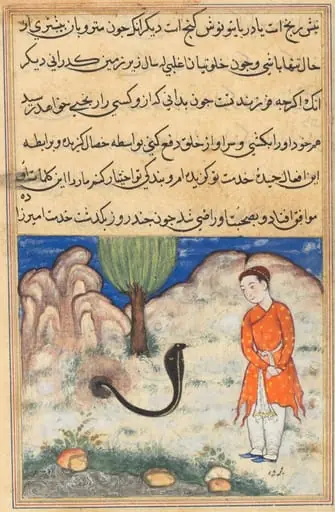 The prince, a son of the ruler of Sistan, enters the service of a snake, from a Tuti-nama (Tales of a Parrot): Thirty-seventh Night
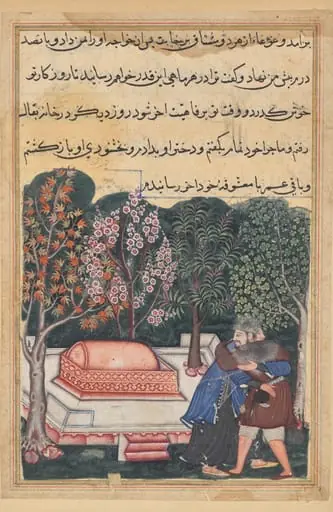 The young man of Baghdad reunited with his slave-girl, from a Tuti-nama (Tales of a Parrot): Forty-eighth Night
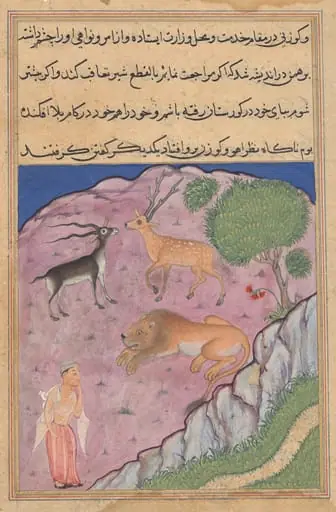 The Brahman comes upon a lion who has a deer and a gazelle as his viziers, from a Tuti-nama (Tales of a Parrot): Twenty-first Night
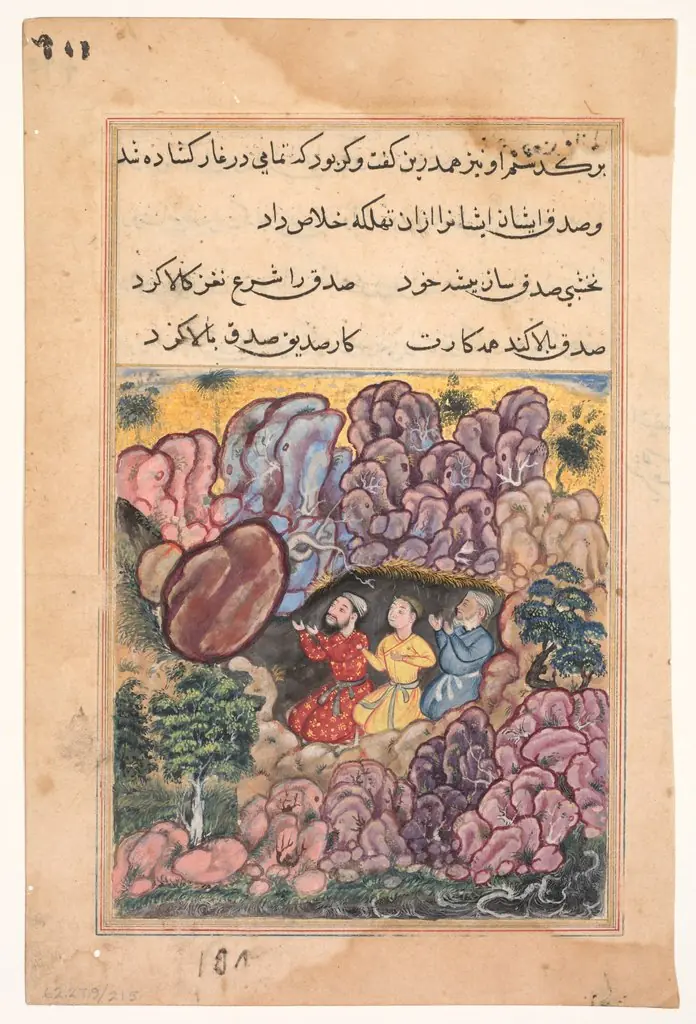 The tale of the three men trapped in a cave by a rolling boulder, from a Tuti-nama (Tales of a Parrot): Thirty-second Night
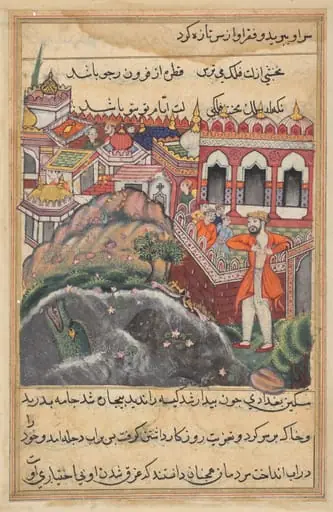 The bag of gold which he received for the slave girl being stolen in a mosque, the young man of Baghdad tears his cloths and is about to fling himself into the Tigris, from a Tuti-nama (Tales of a Parrot): Forty-eighth Night
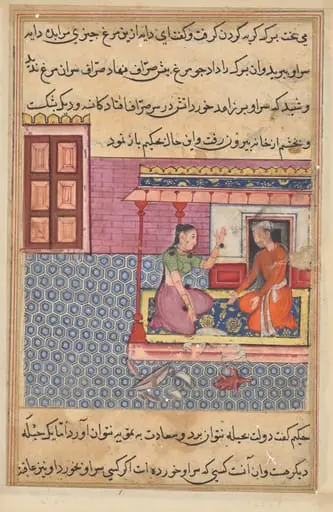 The pious man’s wife offers the seven-colored bird as food to her lover, but not finding its head, he breaks the pot and bowl in anger, from a Tuti-nama (Tales of a Parrot): Fifty-second Night