Artwork
The bird of seven colors brings a sable to the pious man, from a Tuti-nama (Tales of a Parrot): Fifty-second Night
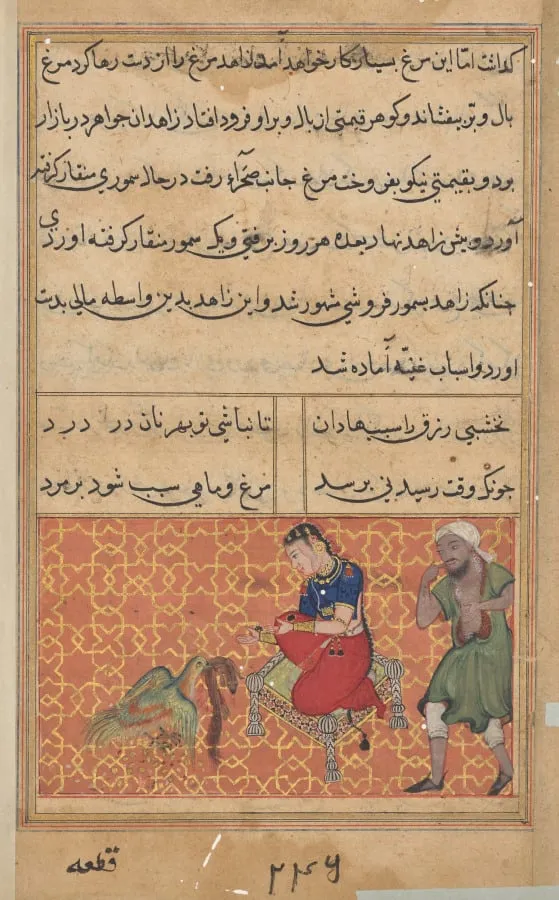
The bird of seven colors brings a sable to the pious man, from a Tuti-nama (Tales of a Parrot): Fifty-second Night is an unspecified painting by the Mughal Painting artist Unknown. It dates from 1560 and is held in the collection of the Cleveland Museum of Art. This painting illustrates a scene from the Tuti-nama, a collection of tales told by a parrot, specifically from the Fifty-second Night.
- Accession no.
- 1962.279.333.b
- Credit line
- Gift of Mrs. A. Dean Perry
About this work
Look up more paintings from Mughal India, court of Akbar (reigned 1556–1605) to see how artists pictured these tales.
You see a man and woman staring up at a giant, rainbow-feathered bird in their home. The bird clutches a dark fur pelt in its claws.
This painting comes from a book of parrot tales told in Mughal India. The bird isn’t just pretty, it’s a magical helper that brings wealth. Every day it flies off and returns with a sable pelt, which the man sells to become rich. The story was meant to entertain and teach lessons.
Look up more paintings from Mughal India, court of Akbar (reigned 1556–1605) to see how artists pictured these tales.
Overview
This painting illustrates a scene from the Tuti-nama, a collection of tales told by a parrot, specifically from the Fifty-second Night. It depicts a pious man, his wife, and a fantastical bird with seven colors.
Subject & Meaning
The scene shows the man and his wife reacting in surprise to the bird, which has brought a sable pelt. The bird's daily delivery of such pelts enables the man to become a prosperous merchant, symbolizing the arrival of unexpected wealth.
Technique & Style
The painting features a vibrant, rainbow-feathered bird dominating the domestic scene, indicating a blend of realism and fantasy characteristic of Mughal Indian art.
Context
Created for the Mughal court, likely during Akbar's reign (1556–1605), this work is part of a tradition of illustrating entertaining and instructive tales.
History & Provenance
The painting is from a Tuti-nama manuscript, a text known for its stories told by a parrot, suggesting it was produced for an elite audience interested in such literary works.
Artist & collection









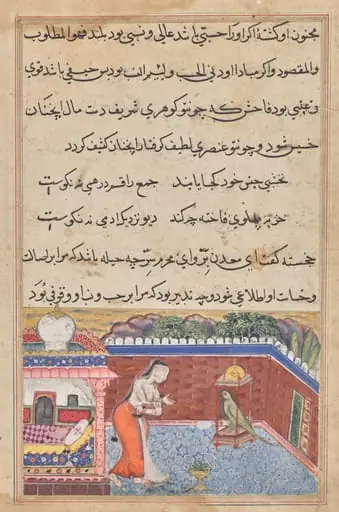
- The parrot addresses Khujasta at the beginning of the thirty-first night, from a Tuti-nama (Tales of a Parrot)
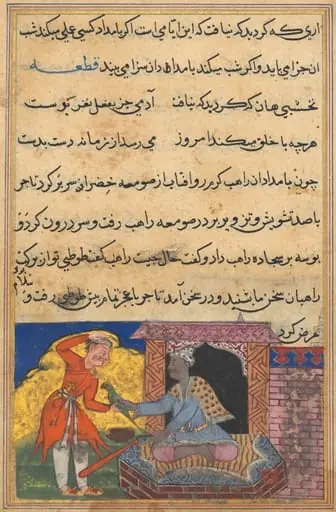 The monk returns the magic parrot to its rightful owner, the merchant, from a Tuti-nama (Tales of a Parrot): Tenth Night
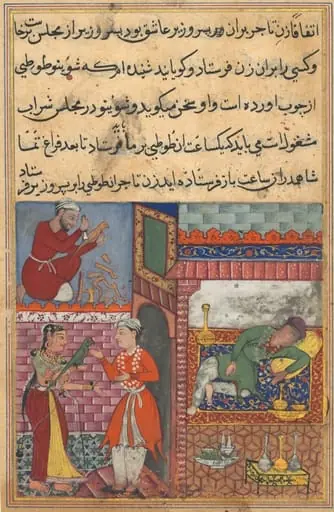 The vizier’s son receives the magic wooden parrot from the wife of the merchant, who is drunk, and has a replica made by a carpenter, from a Tuti-nama (Tales of a Parrot): Tenth Night
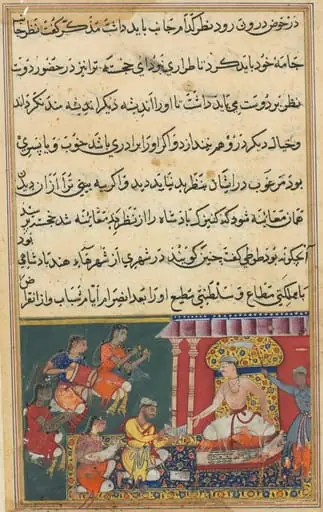 The astrologer predicts a calamity for the newly born prince in his thirteenth year, but one which he would be able to overcome, from a Tuti-nama (Tales of a Parrot): Eighth Night
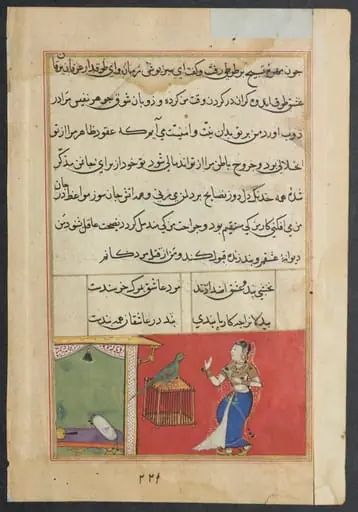 The parrot addresses Khujasta at the beginning of the forty-seventh night, from a Tuti-nama (Tales of a Parrot): Forty-seventh Night
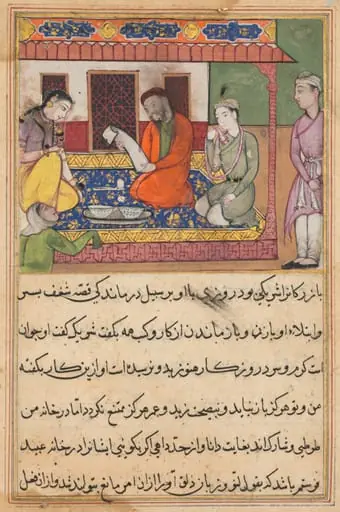 The marriage of ‘Ubaid, son of a merchant of Tirmiz, from a Tuti-nama (Tales of a Parrot): Forty-second Night
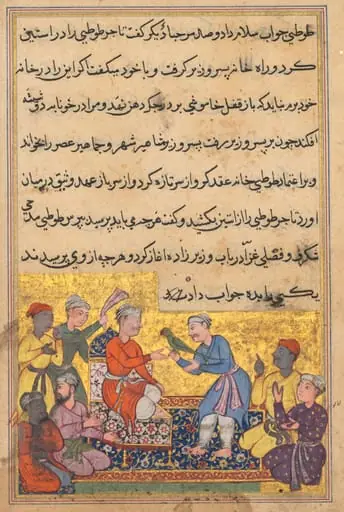 The magic parrot of the merchant talks to the vizier’s son, from a Tuti-nama (Tales of a Parrot): Tenth Night
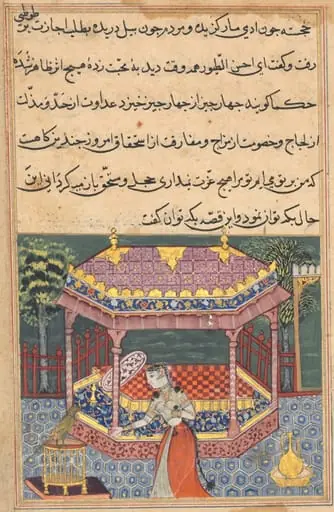 The parrot addresses Khujasta at the beginning of the thirty-seventh night, from a Tuti-nama (Tales of a Parrot)
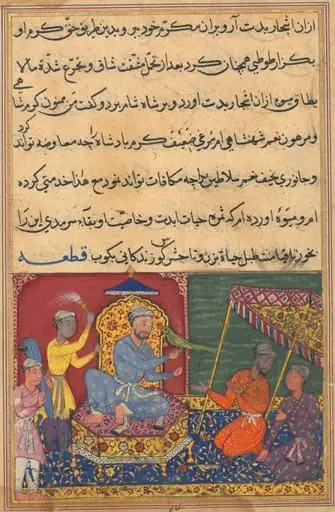 The parrot brings a fruit from the Tree of Life to the king of Syria, from a Tuti-nama (Tales of a Parrot): Ninth Night
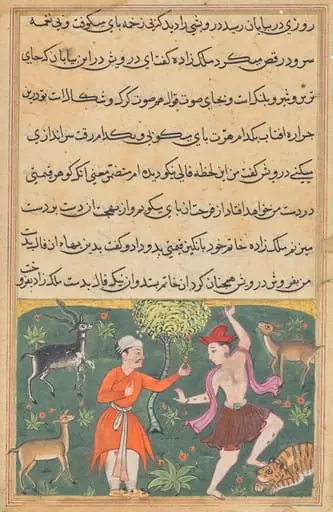 The prince meets a carefree dancing dervish whose good fortune he purchases for his ring, from a Tuti-nama (Tales of a Parrot): Eighteenth Night
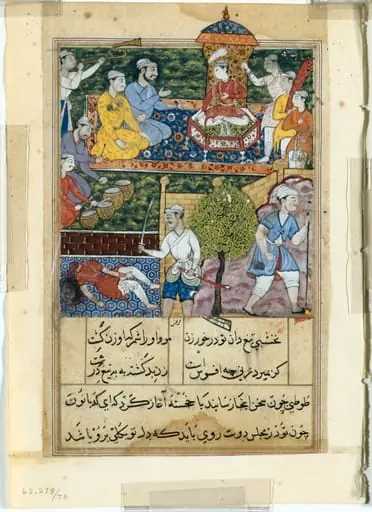 The young prince is crowned and the wicked handmaiden is executed, from a Tuti-nama (Tales of a Parrot): Eighth Night