Artwork
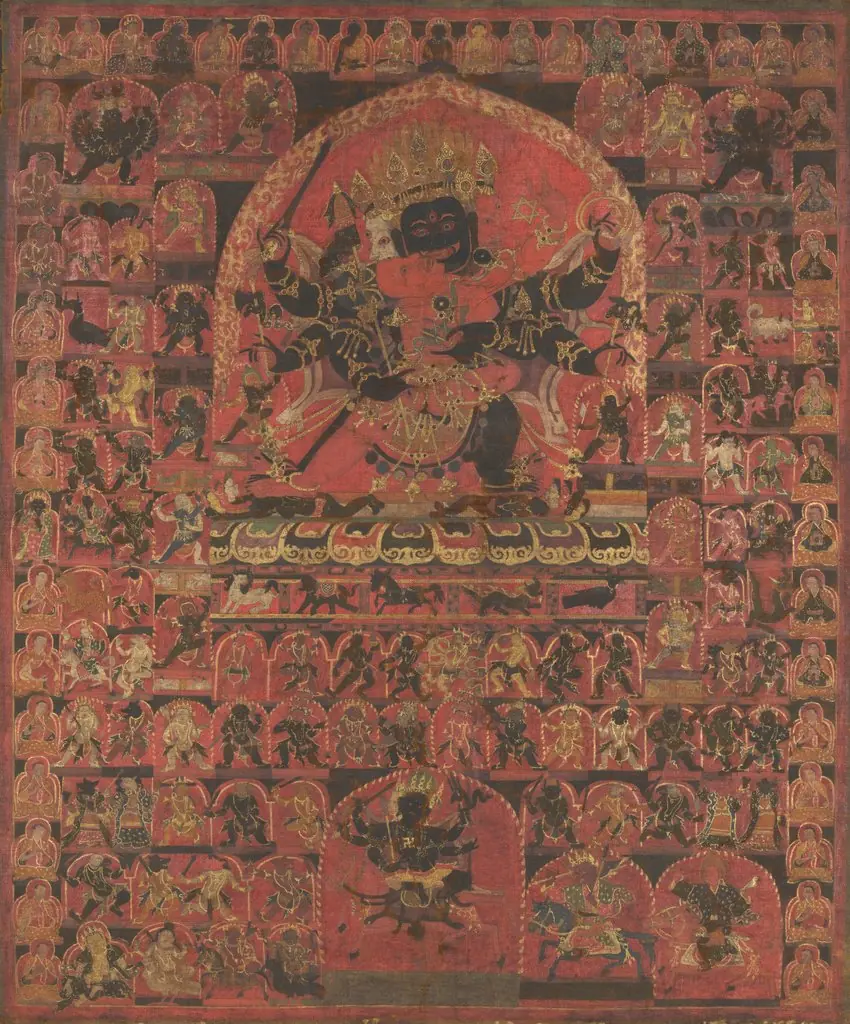
The Goddess Kurukulla
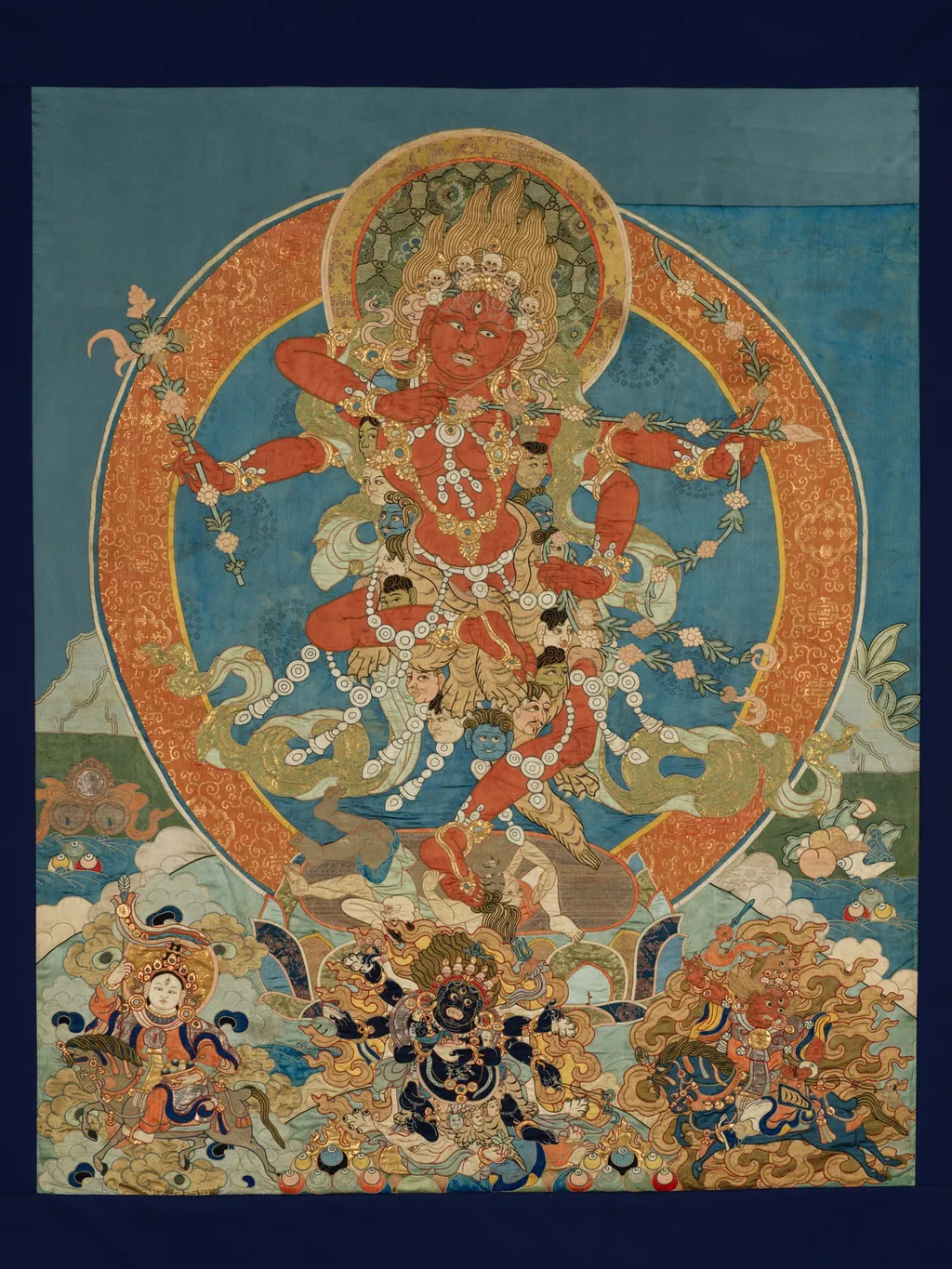
The Goddess Kurukulla is an unspecified painting. It dates from 1849 and is held in the collection of the Metropolitan Museum of Art.
About this work
Subject & Meaning
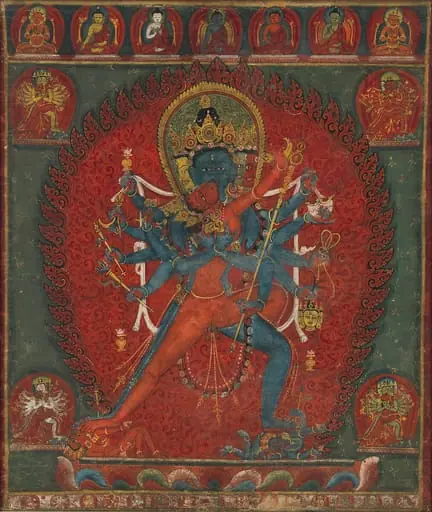
The Goddess Kurukulla is depicted as a fierce yet alluring figure, embodying both divine power and sensual attraction.
The Goddess Kurukulla is depicted as a fierce yet alluring figure, embodying both divine power and sensual attraction. Her iconography includes a red complexion, a garland of skulls, a staff topped with a skull cup, and a lotus pedestal, all symbols of tantric transformation and spiritual conquest. The work signifies the triumph of enlightened wisdom over desire and ignorance, serving as a tantric meditation on the transmutation of passion into enlightened action. Held in the collection of the Metropolitan Museum of Art, the painting was created in 1849.
History & Provenance
The painting titled The Goddess Kurukulla was created in 1849 by an anonymous artist. It entered the collection of the Metropolitan Museum of Art, where it remains on view today. The work was commissioned as part of a series exploring tantric Buddhist deities and was produced during a period when the artist was active in the mid-nineteenth century. Its provenance is documented through the museum's acquisition records, linking it directly to the institution's holdings.
The painting The Goddess Kurukulla, created in 1849 by an anonymous artist, is held in the collection of the Metropolitan Museum of Art. The institution lists the work's inception date as January 1, 1849. While the museum's ownership and location are established, the provided records do not contain specific inventory or accession numbers for this piece. Furthermore, no information regarding the artwork's exhibition history is available in the current sources.
Context
The work titled The Goddess Kurukulla was painted in 1849 by an anonymous artist, as documented in its classification record and held in the collection of the Metropolitan Museum of Art. Its creation date and provenance are corroborated by archival records identifying it as a painting in the museum's holdings from that year. This piece situates within the broader context of 19th-century artistic practices, though specific scholarly analysis of its reception or influence remains limited in available documentation.
The work's attribution to an anonymous hand and its presence in a major institutional collection contribute to ongoing discussions about authorship and anonymity in art history.
Overview
The work depicts a deity identified as Kurukulla, rendered with a vivid palette that foregrounds a red complexion and a surrounding orange halo. The figure stands atop a male figure’s back, surrounded by a host of attendants, and is set against a blue sky punctuated by green and white cloud forms at the lower edge of the composition.
Technique & Style
The painting employs a flat, decorative approach typical of South Asian religious art, using bold color blocks and defined outlines rather than realistic modeling. The orange circle that encircles the deity functions as a radiant aura, and the contrast between the red skin and the blue background enhances the visual impact of the central figure.
Legacy
While specific provenance details are not recorded, the painting exemplifies the iconographic conventions that have circulated in devotional contexts across the Indian subcontinent, serving as a visual reference for worshippers and as an instructional aid for the attributes and stories linked to Kurukulla.
Artist & collection

 Untitled
 愛染明王像|Aizen Myōō
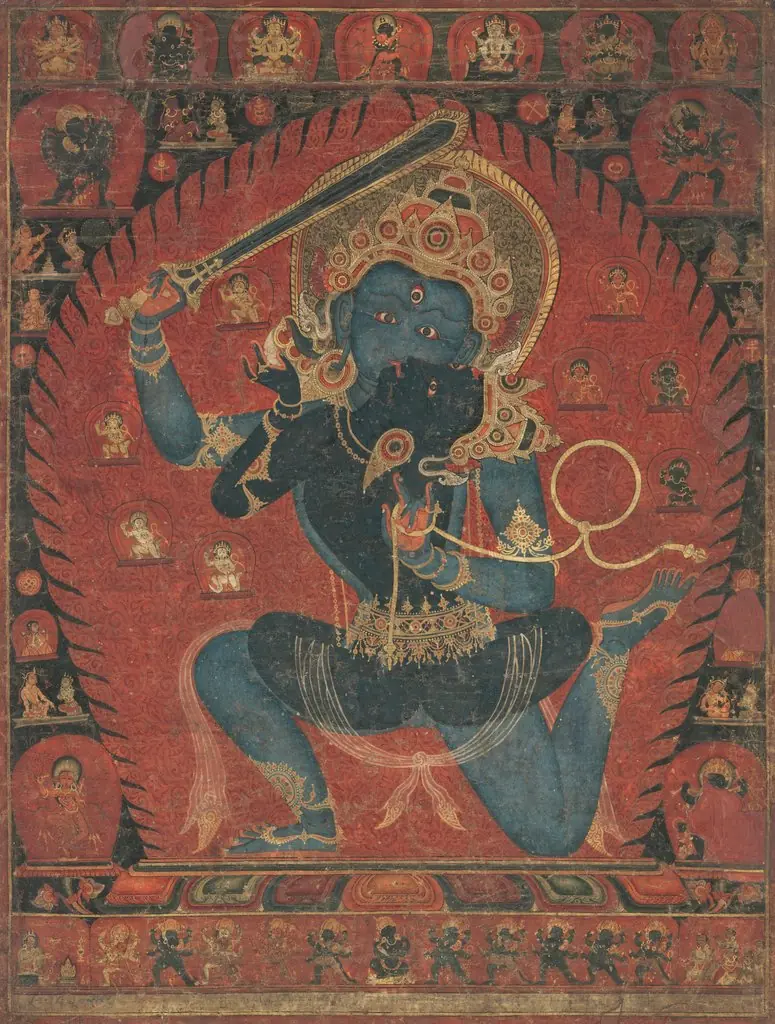 Achala with His Consort Vishvavajri
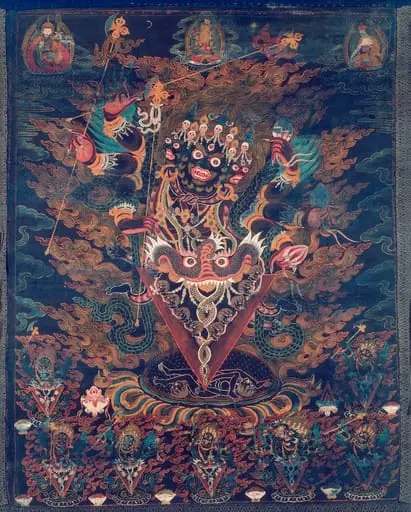 Painted Banner (Thangka) with Guru Dragpur, a Wrathful Form of Padmasambhava
 Untitled
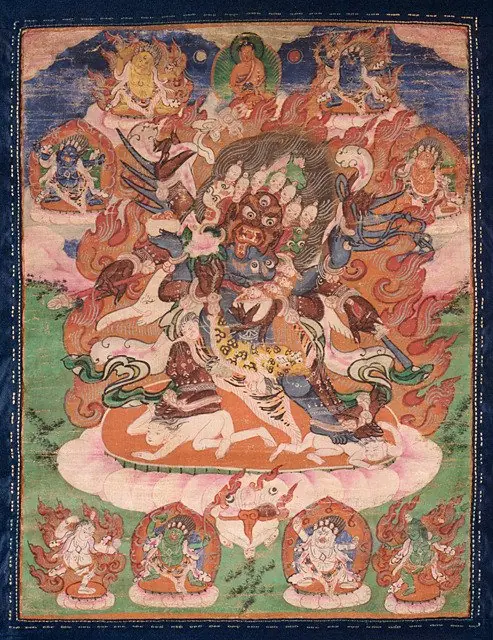 Garuda-Feathered Hayagriva and Consort
 Untitled
 Yama and Yami
 Painted Banner (Thangka) with Guru Dragpur or Vajrakila, a Wrathful Form of Guru Padmasambhava
 Untitled
 Bon Deity Trowo Tsochog Khagying
- The Goddess Sarasvati