Artwork
Yama and Yami
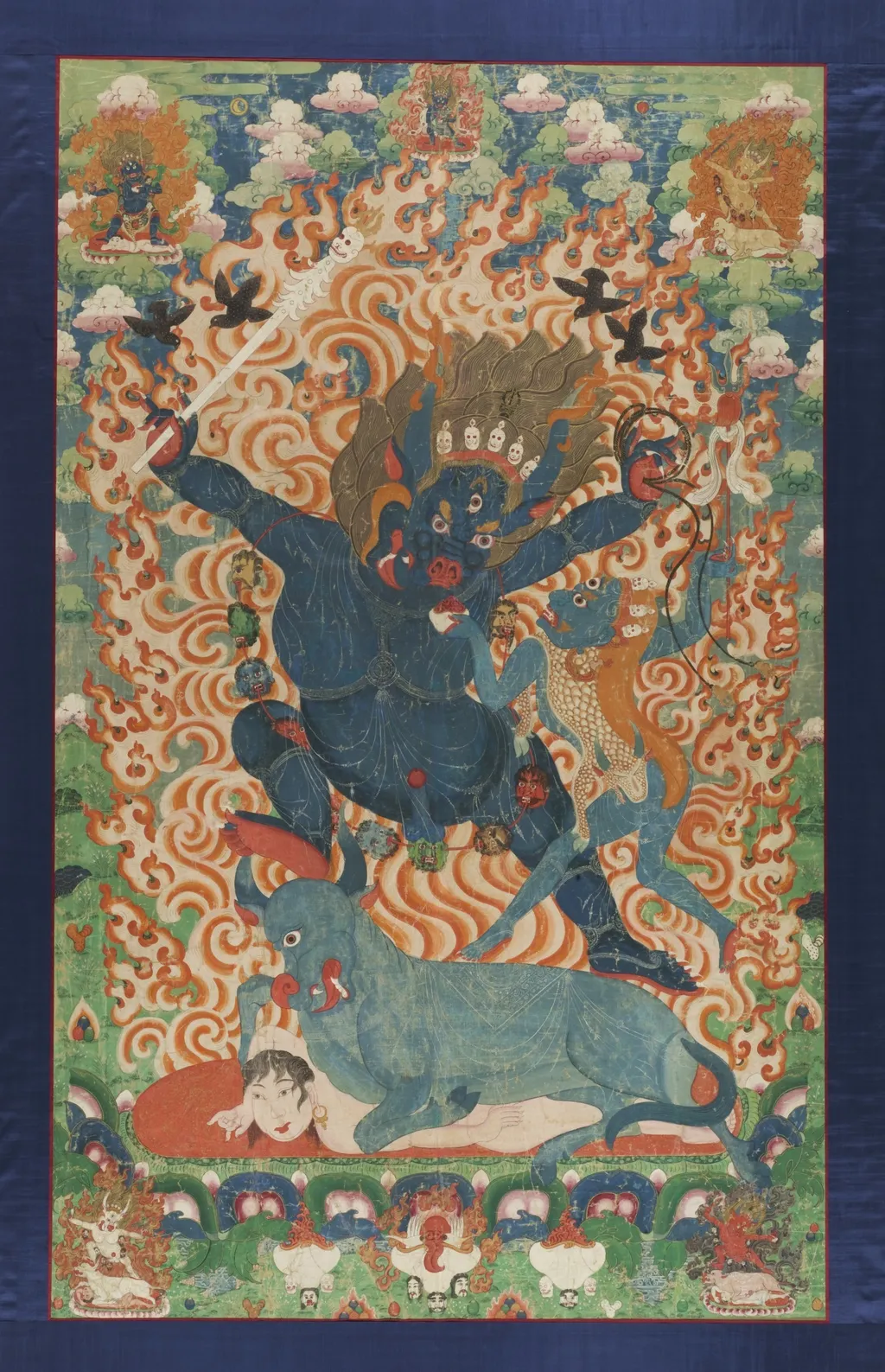
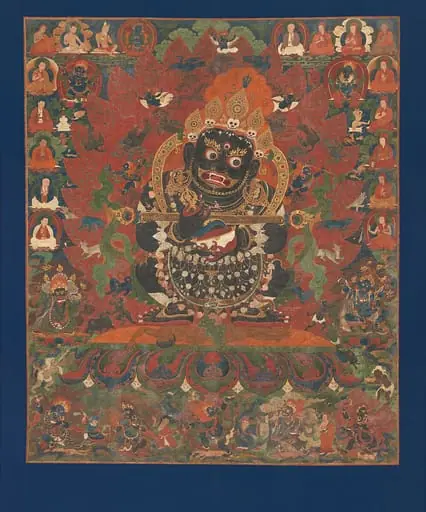
Yama and Yami is an unspecified painting by the Rococo painting artist Unknown. It dates from 1700 and is held in the collection of the Los Angeles County Museum of Art.
About this work
Overview
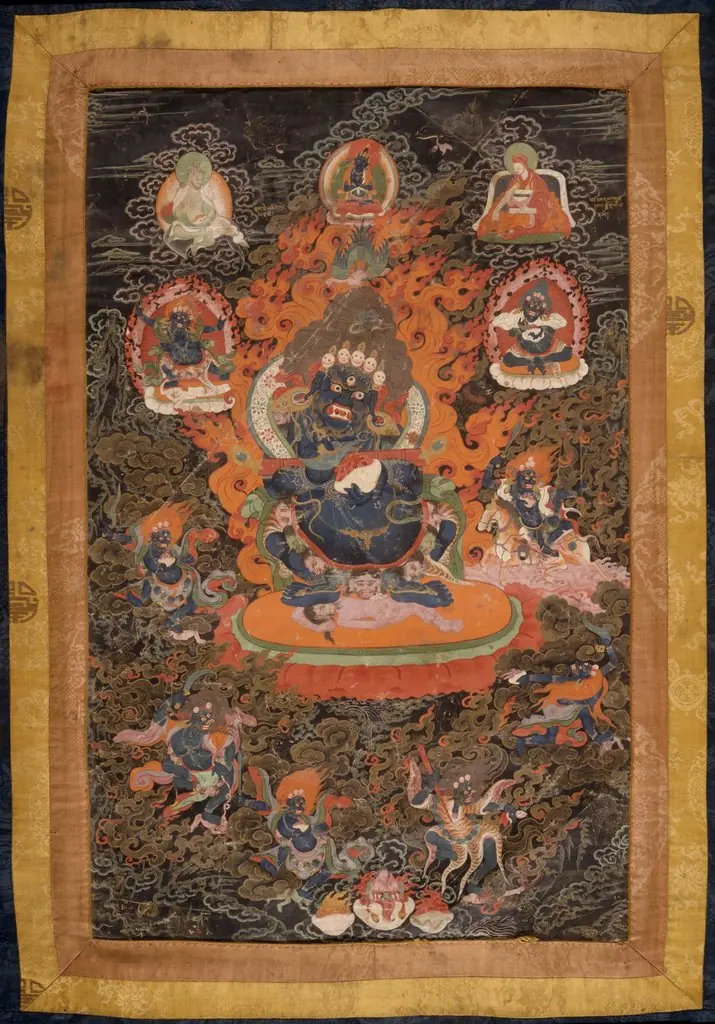
The figure is positioned dynamically, arms outstretched and legs bent, set against a swirling backdrop of orange and white clouds.
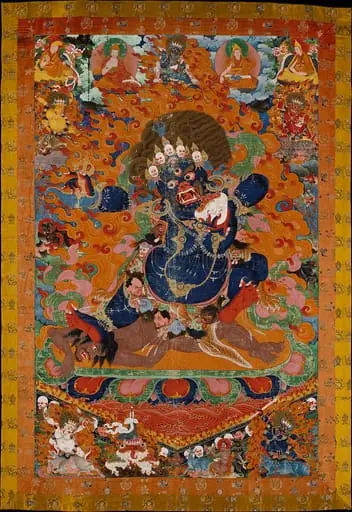
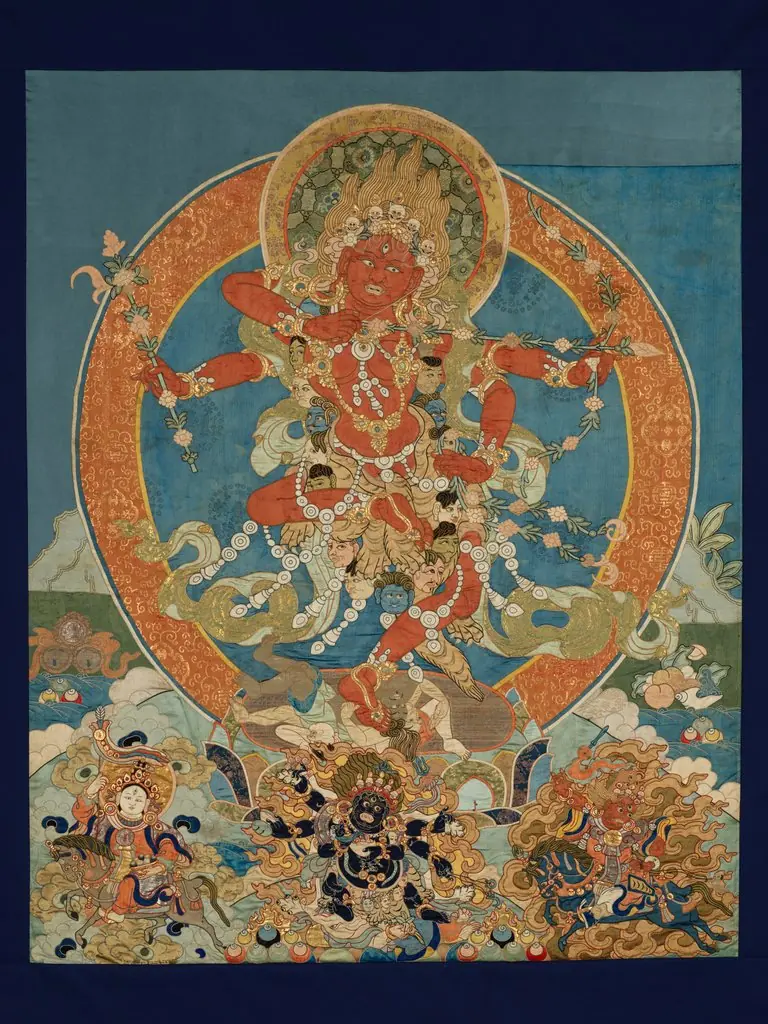
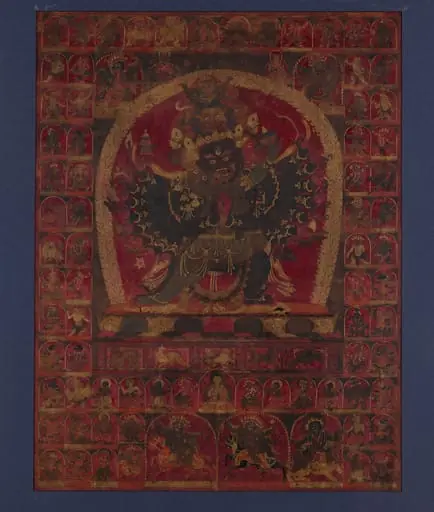
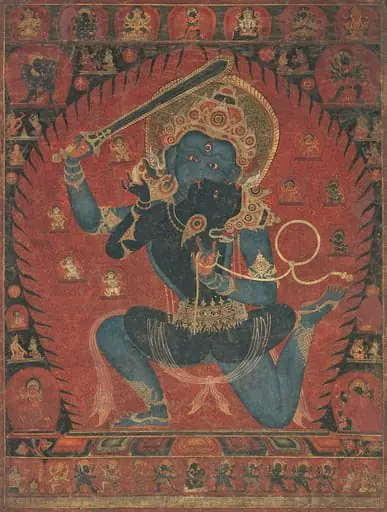
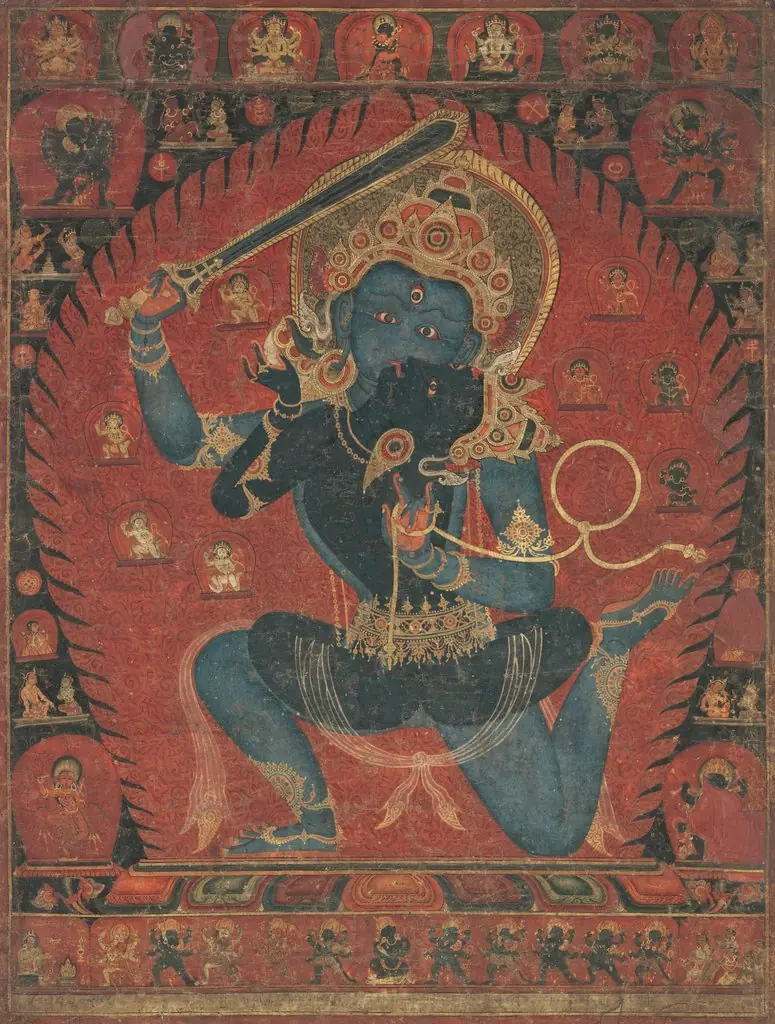
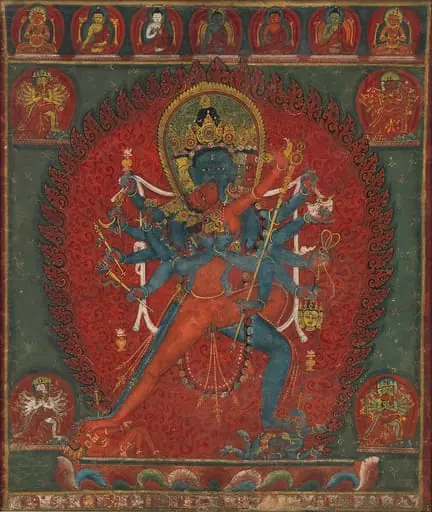
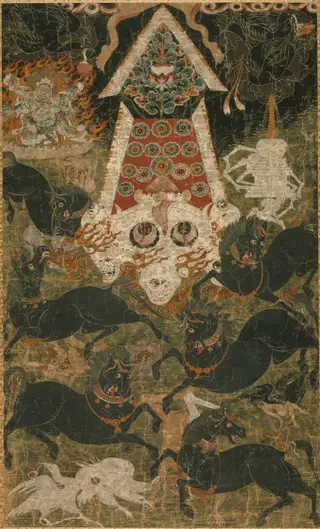
Yama and Yami is a painting that presents a chaotic scene dominated by a dark, demonic entity with multiple limbs. The figure is positioned dynamically, arms outstretched and legs bent, set against a swirling backdrop of orange and white clouds. In the foreground a blue, long‑tailed creature with sharp teeth confronts a distressed woman in a red robe lying on the ground, while the deep blue background is filled with intricate patterns that heighten the sense of movement.
Subject & Meaning
The central demonic figure, often interpreted as a personification of darkness or chaos, is juxtaposed with a vulnerable female figure, suggesting a narrative of conflict or suffering. The blue creature may represent an opposing force or guardian, while the woman's posture and attire convey distress or sacrifice. Together the elements evoke themes of struggle between opposing powers and the human condition under threat.
Technique & Style
The composition relies on bold, contrasting colors, dark tones for the demon, vivid orange and white for the surrounding clouds, and striking blues for the background and secondary creature. Dynamic lines and exaggerated limb positions create a sense of kinetic energy. Detailed patterns in the deep blue backdrop add texture, while the overall arrangement emphasizes tension through diagonal movement and overlapping forms.
Context
Although specific provenance is not recorded, the painting’s dramatic subject matter and vivid palette align with traditions that explore mythological or supernatural themes. Its visual intensity and complex figure groupings suggest an influence from both Eastern depictions of demonic beings and Western baroque dynamism, situating it within a cross‑cultural dialogue on the portrayal of chaos and human vulnerability.
Artist & collection