Artwork
Untitled
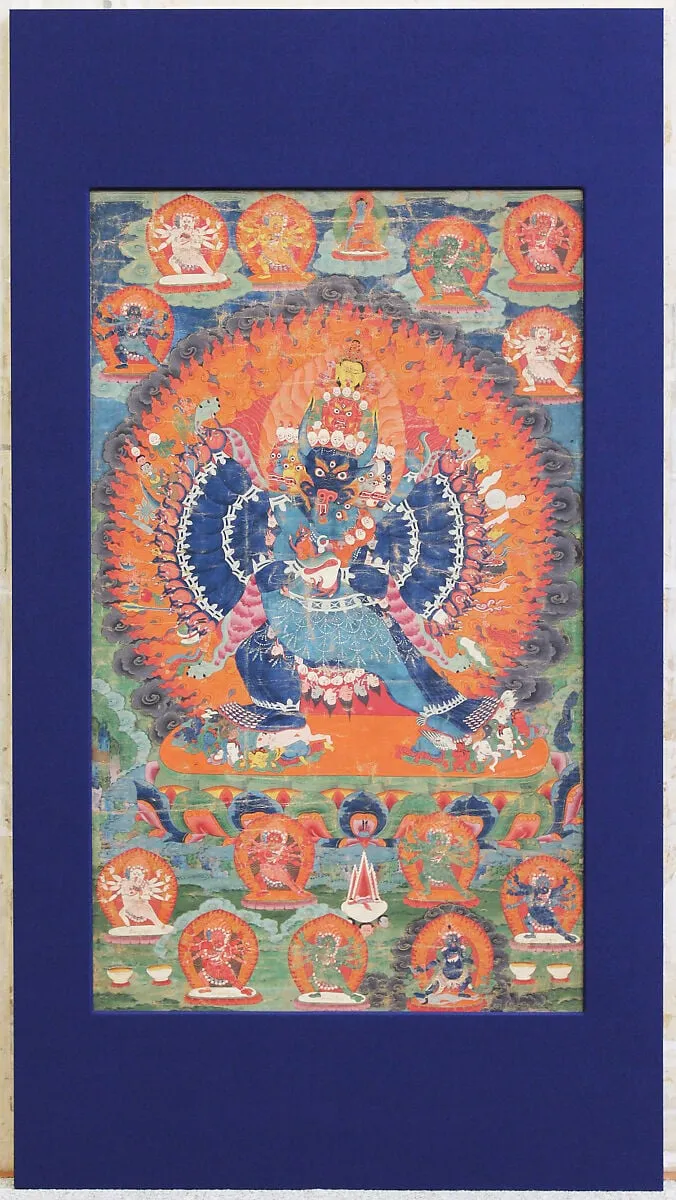
Untitled is a distemper painting. It dates from 1749 and is held in the collection of the Metropolitan Museum of Art.
About this work
Subject & Meaning
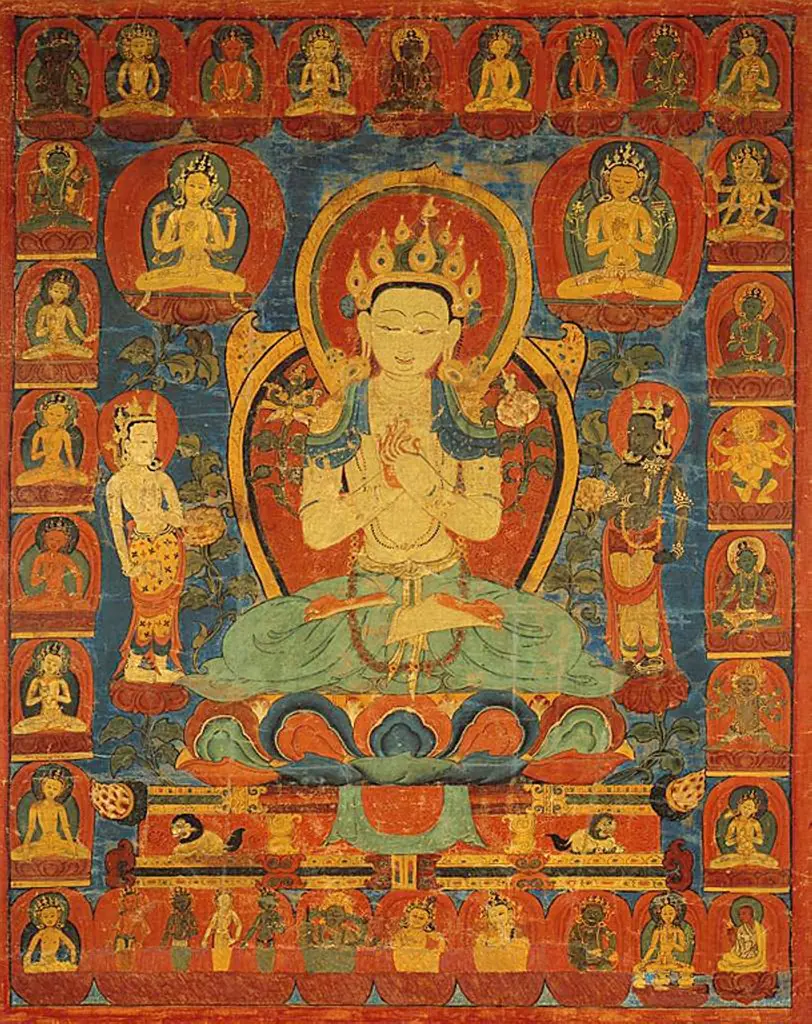
This 1749 distemper-on-cloth painting is classified as a religious work and depicts the Buddha accompanied by a dog.
This 1749 distemper-on-cloth painting is classified as a religious work and depicts the Buddha accompanied by a dog. The pairing of the Buddha with a canine figure is a recurring motif in Tibetan and Himalayan Buddhist iconography, where dogs often appear as guardians or companions in scenes drawn from the life of the Buddha and from Jataka tales recounting his former births. In such imagery, the dog can function as a symbol of fidelity, watchfulness, and the protective presence that surrounds the enlightened teacher, while also signaling the narrative context of a specific story in which a dog figures as a devotee or witness.
The religious genre designation underscores the work's devotional function, presenting the Buddha as the central subject of veneration rather than as a portrait or historical figure. The inclusion of the dog enriches the iconographic program, inviting the viewer to read the image within a hagiographic tradition in which animals play meaningful roles in the Buddha's story.
History & Provenance
The painting Untitled, executed in 1749, is a religious work created by an unknown artist. It was produced using distemper on cloth and depicts a Buddha alongside a dog. The work is currently held in the collection of the Metropolitan Museum of Art.
Overview
This untitled painting, rendered in distemper on cloth, depicts a vibrant blue ground populated by two white dogs, a small Buddha figure, and various other deities suspended amidst clouds. Likely intended for display within a Tibetan temple or private dwelling, the artwork exemplifies a common aesthetic from the 18th century.
Technique & Style
Executed using distemper, a technique involving pigments bound with glue rather than oil, the painting exhibits a distinctive soft and matte finish. This method contributes to the artwork's luminous, yet subdued, color palette. The stylistic characteristics align with those prevalent in Tibetan art during the 18th century, though the specific creator remains unidentified.
Artist & collection

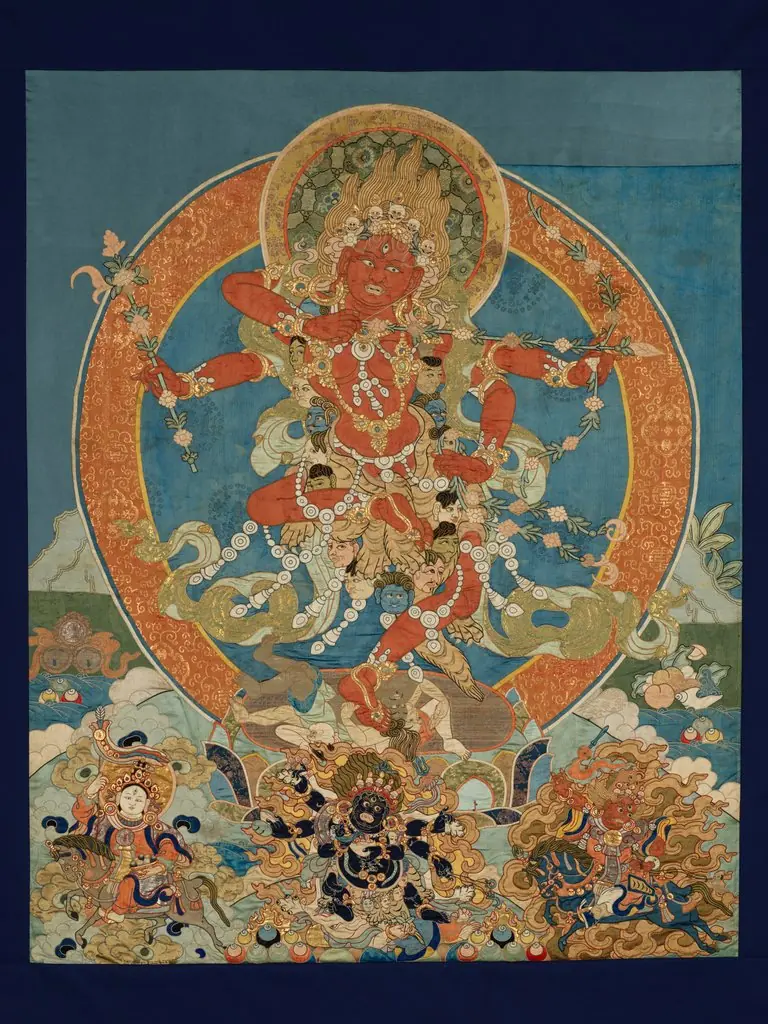 The Goddess Kurukulla
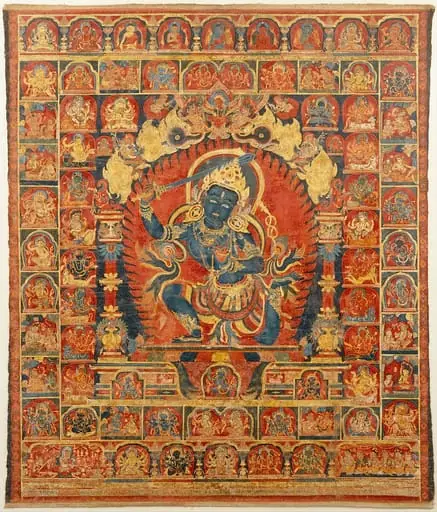 Untitled
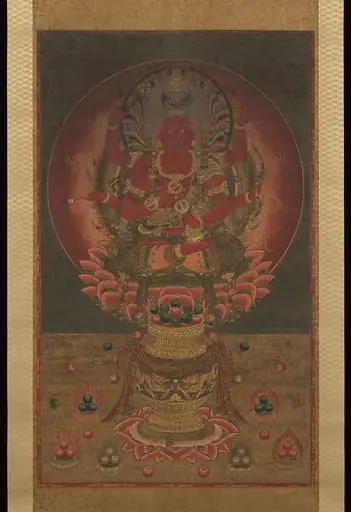 愛染明王像|Aizen Myōō
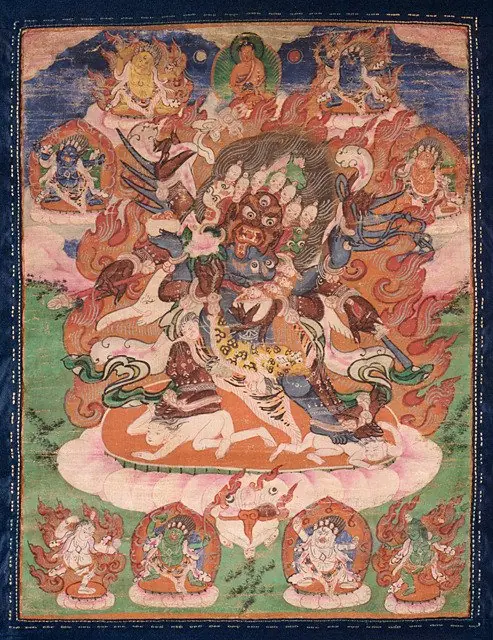 Garuda-Feathered Hayagriva and Consort
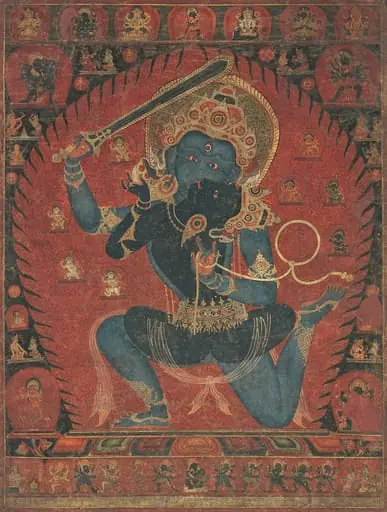 Untitled
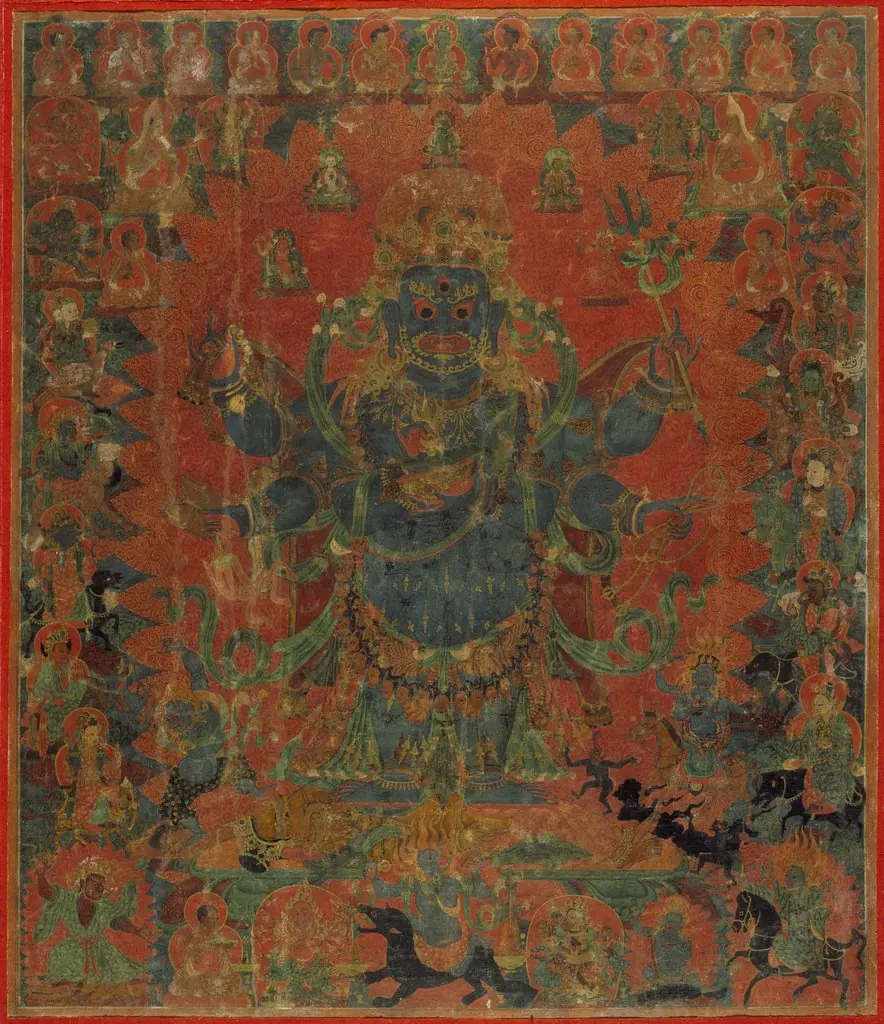 Mahakala and his Entourage
 Untitled
 Untitled
 Achala with His Consort Vishvavajri
 Bon Deity Trowo Tsochog Khagying
 Painted Banner (Thangka) of Bodhisattva Maitreya Surrounded by his Retinue
- Painted Banner (Thangka) with Guru Dragpur, a Wrathful Form of Padmasambhava