Artwork
The Good Thief (Saint Dismas)
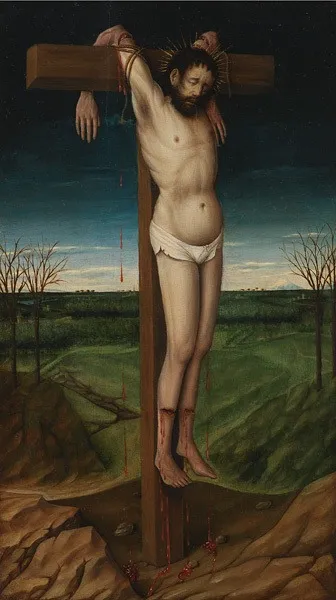
The Good Thief (Saint Dismas) is an oil painting by the Northern Renaissance artist Unknown. It dates from 1455 and is held in the collection of the Statens Museum for Kunst. The work depicts a crucified figure whose torso leans forward, his limbs bearing the marks of nails and a thorny crown encircling his head.
About this work
Subject & Meaning
The painting portrays the crucifixion of Jesus Christ, with the penitent thief traditionally identified as Saint Dismas shown alongside the Savior.
The painting portrays the crucifixion of Jesus Christ, with the penitent thief traditionally identified as Saint Dismas shown alongside the Savior. By labeling the work “The Good Thief (Saint Dismas)” and noting its principal subject as the crucifixion, the image underscores the theological theme of repentance and the promise of paradise granted to the thief who acknowledges Christ’s innocence. Executed in oil paint on panel around 1455, the work belongs to the religious genre and is housed in the Statens Museum for Kunst.
History & Provenance
The painting known as The Good Thief (Saint Dismas) is held in the collection of the Statens Museum for Kunst in Copenhagen. The work, created in 1455 by an unidentified Spanish master, is cataloged within the museum's holdings as a religious oil painting on panel. While specific inventory or accession numbers are not provided in the available records, the museum is the confirmed location for this depiction of the crucifixion of Jesus Christ.
No specific exhibition history is documented in the provided sources. The available data confirms the artwork's creation date, physical dimensions, and current institutional custody but does not list past or future display events.
Overview
The work depicts a crucified figure whose torso leans forward, his limbs bearing the marks of nails and a thorny crown encircling his head. He stands against a bleak, rocky slope populated by skeletal trees under a muted sky, creating a stark, somber atmosphere.
Technique & Style
The painter employs chiaroscuro, contrasting deep shadows with a focused illumination that sweeps across the figure’s face and chest. Layered oil applications build a subtle modeling of flesh, giving the skin a palpable volume against the dark background.
Context
Executed in oil on canvas, the piece aligns with Baroque sensibilities that favored dramatic lighting and emotional intensity. Its rugged landscape and stark lighting echo the period’s interest in evoking spiritual drama through naturalistic detail.
Artist & collection









 Crucifixion of Christ
 Crucifixion
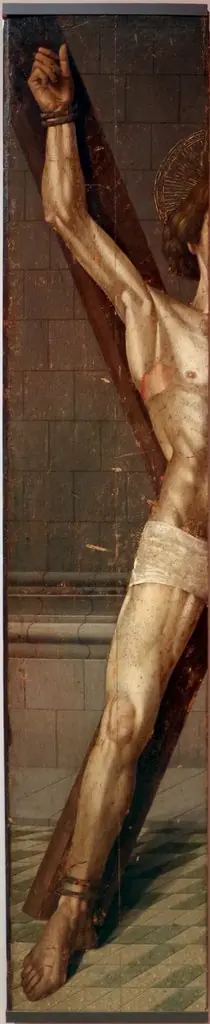 São Vicente na Cruz em Aspa
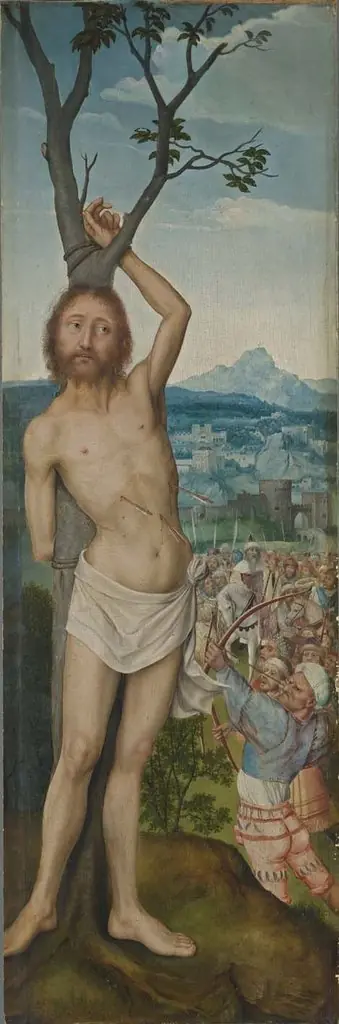 Rem-Altar: Martyrium des hl. Sebastian (Rückseite: Hl. Lukas)
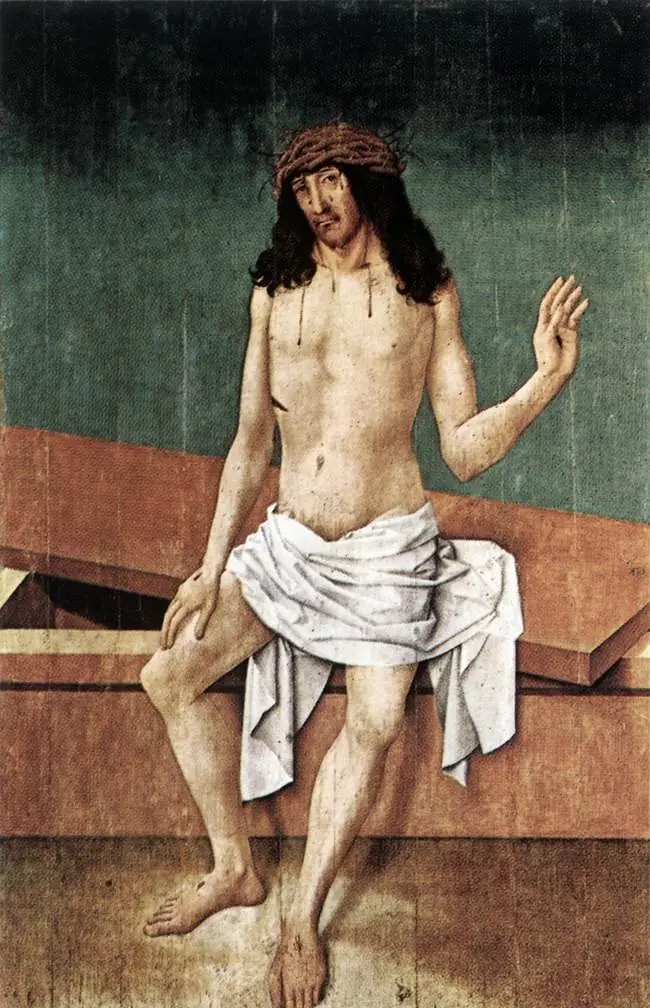 Christ as Man of Sorows
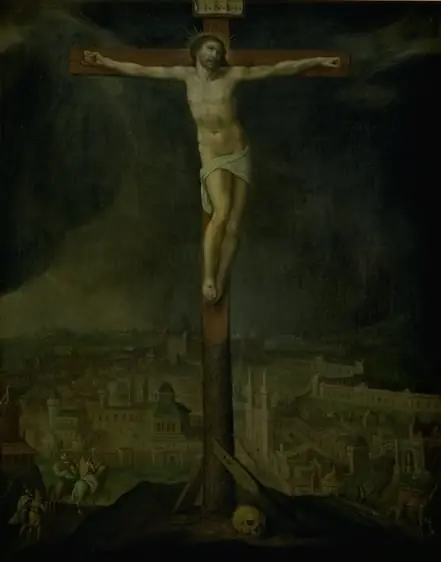 Christ on the Cross
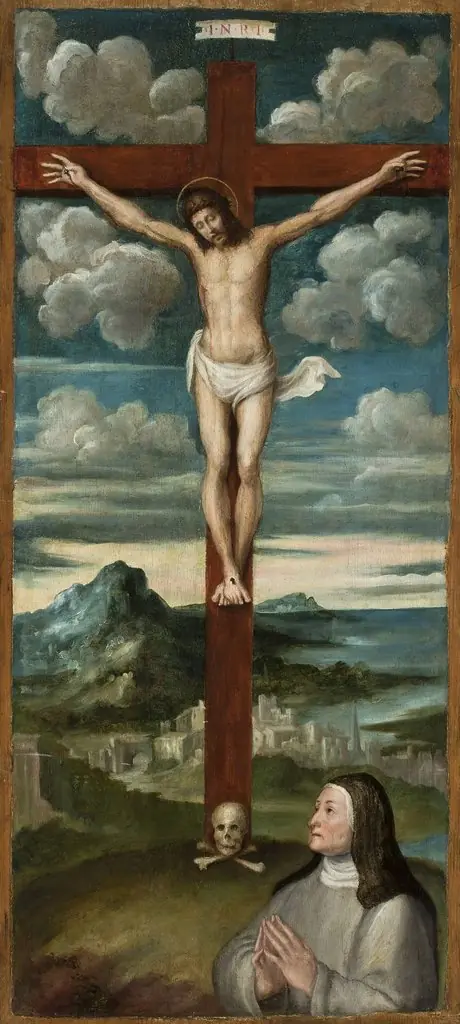 Crucifixion with the bust of a praying nun
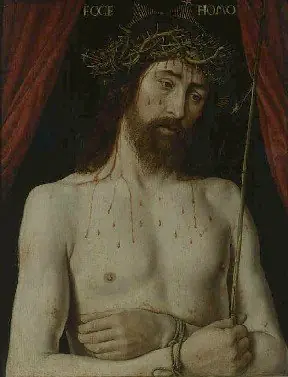 Christ with Crown of Thorns (Ecce Homo)
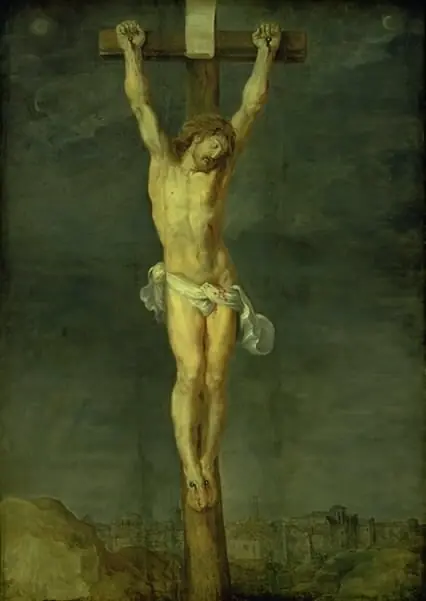 Christ on the Cross
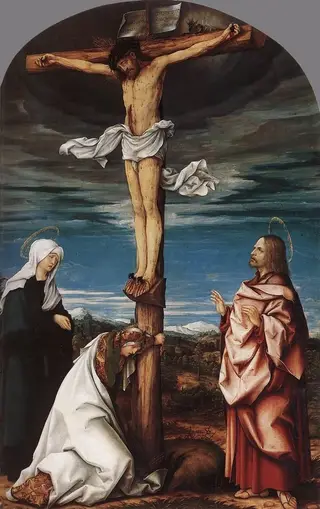 Crucifix with Mary, Mary Magdalen and St John the Evangelist