Artwork
The Marriage of Bacchus and Ariadne
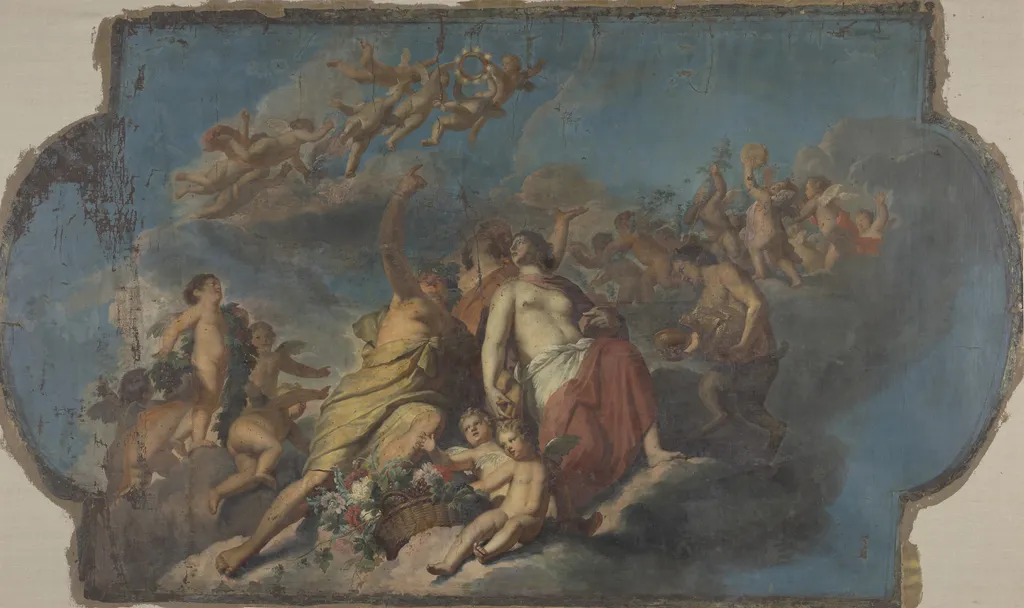
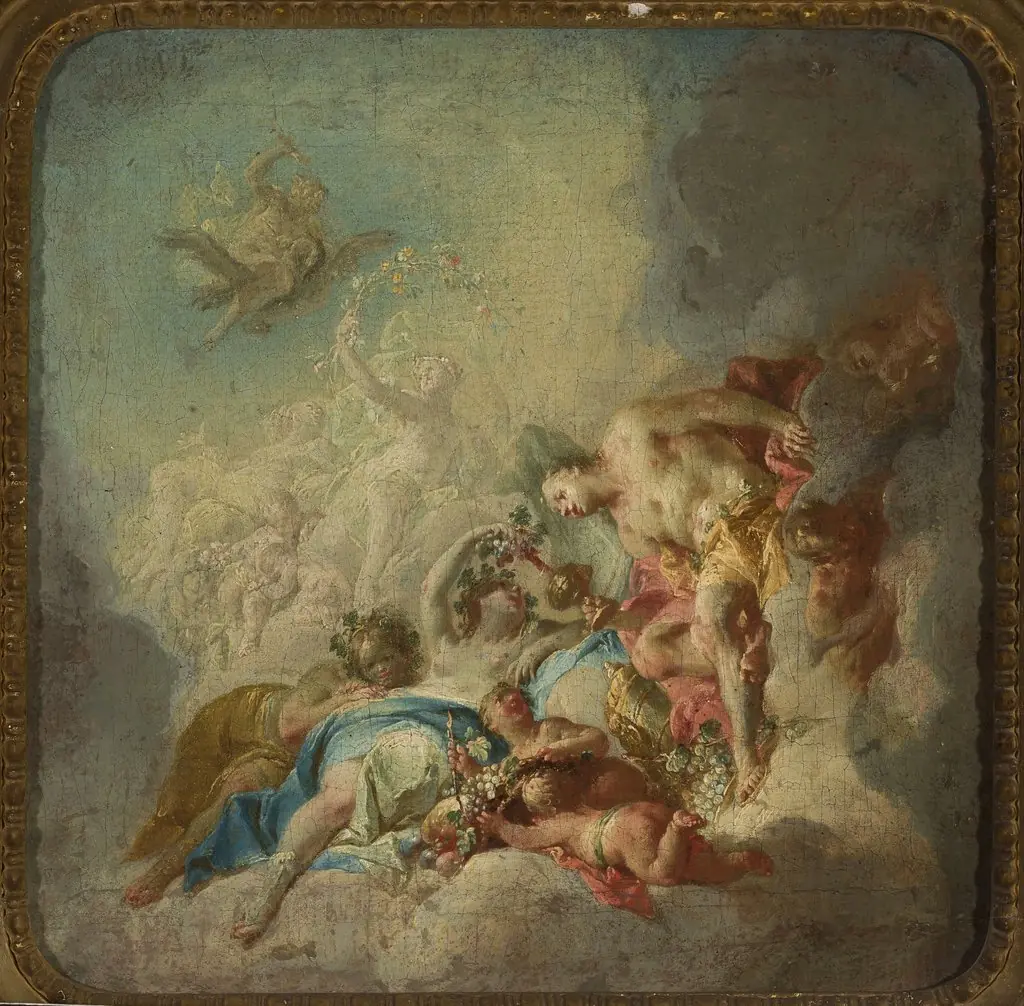
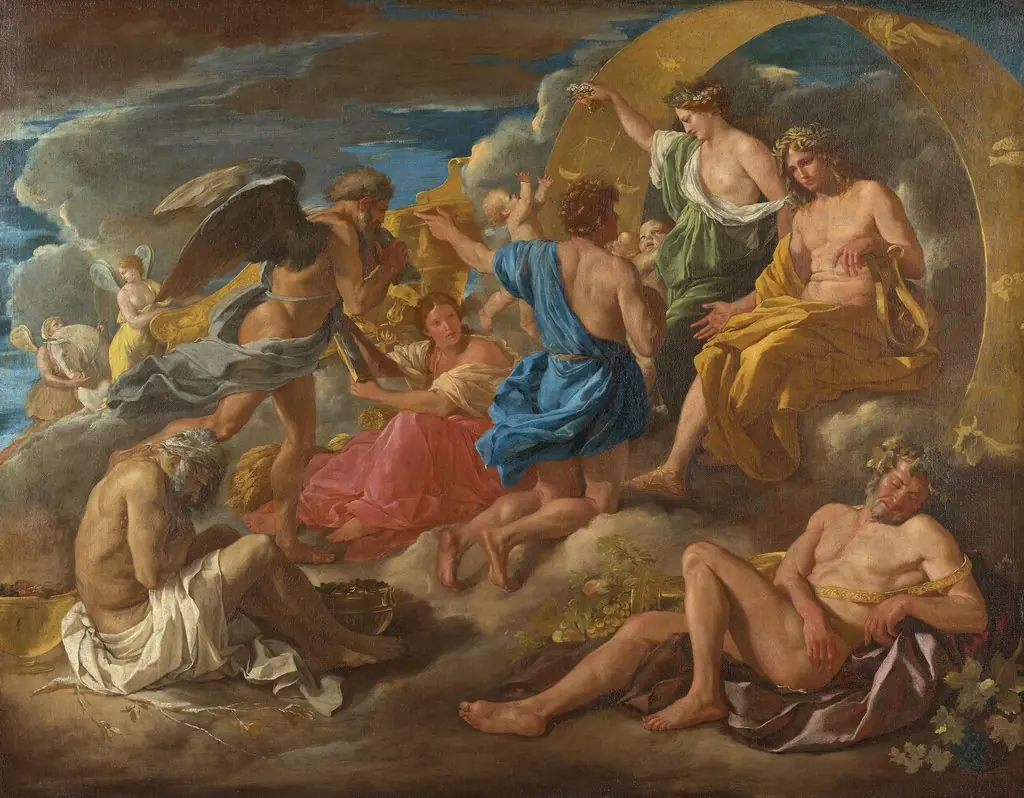
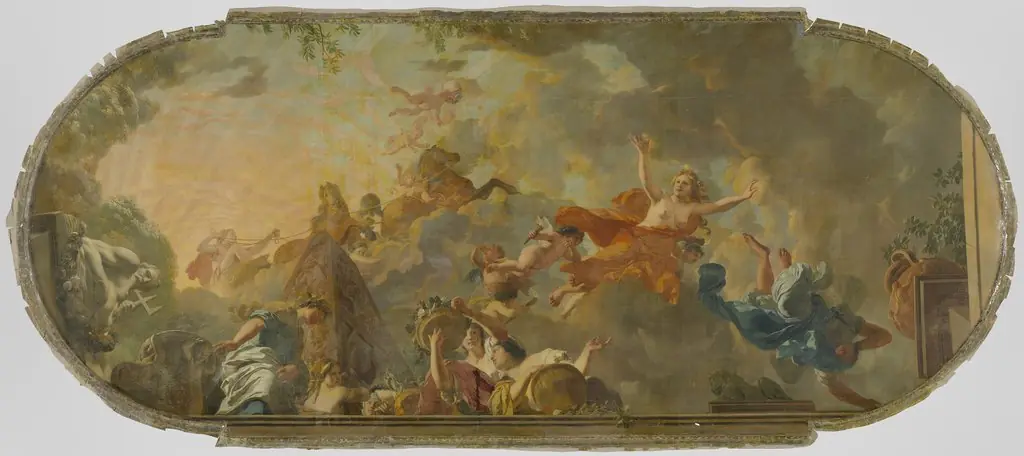
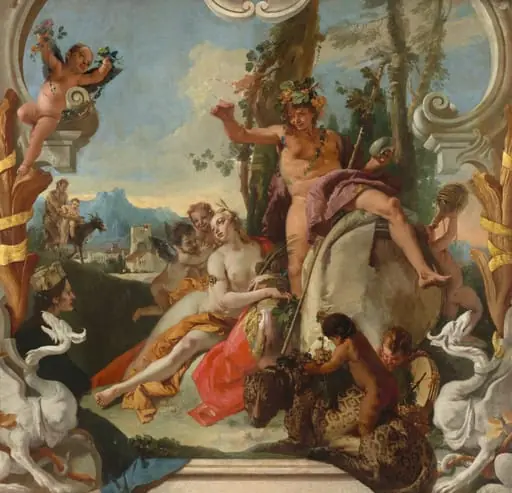
The Marriage of Bacchus and Ariadne is an oil painting. It dates from 1694 and is held in the collection of the Rijksmuseum. The canvas depicts a celestial gathering where figures drift amid clouds, robed in flowing garments and attended by cherubic children.
About this work
Subject & Meaning
As a genre painting focused on mythological subjects, the composition centers on these two figures to represent their legendary bond.
The work is a mythological painting that depicts the union of the deities Bacchus and Ariadne. Created in 1687, the piece illustrates the narrative moment of their marriage, a central theme in classical mythology. As a genre painting focused on mythological subjects, the composition centers on these two figures to represent their legendary bond.
The artwork serves as a visual recounting of the story where Bacchus marries Ariadne, elevating her to divine status.
Technique & Style
The Marriage of Bacchus and Ariadne is an oil painting executed on canvas, created in 1687 by an anonymous artist from the Northern Low Countries. The work measures 205 cm in height and 360 cm in width, presenting a large-scale mythological scene depicting the figures of Bacchus and Ariadne. Classified as a mythological painting, the piece utilizes oil paint to render its narrative content. It is currently held in the collection of the Rijksmuseum.
History & Provenance
The work is held at the Rijksmuseum in Amsterdam. Its accession number is not specified in the sources. It was created in 1687 in the Northern Low Countries. The painting has been part of the Rijksmuseum's collection since its inception and was featured in the exhibition "Dutch Masters of the Golden Age" in 1998.
Overview
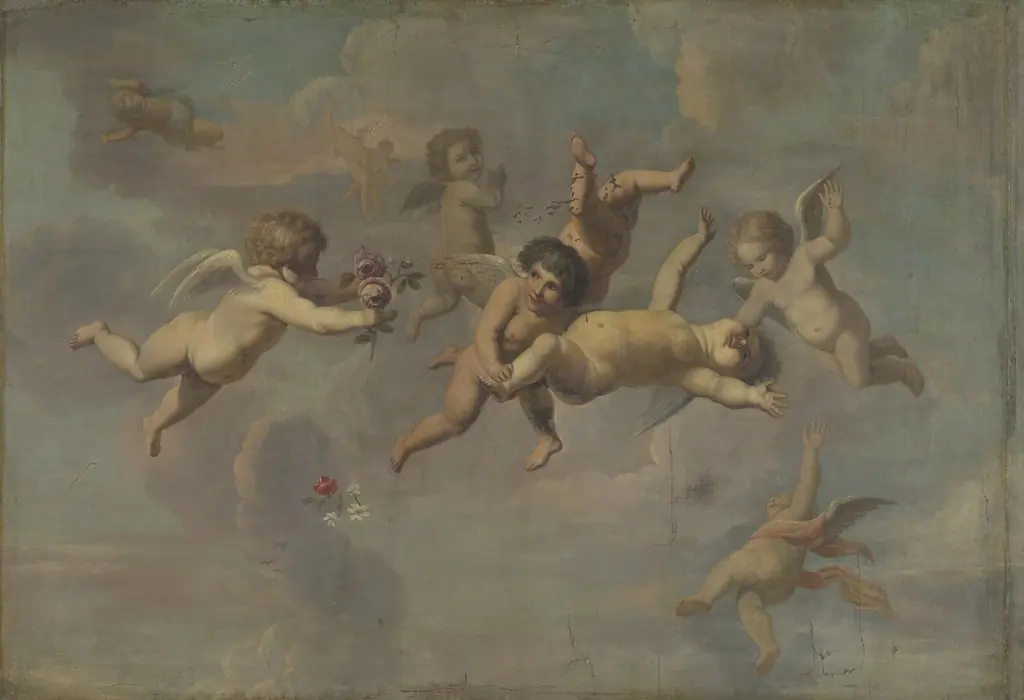
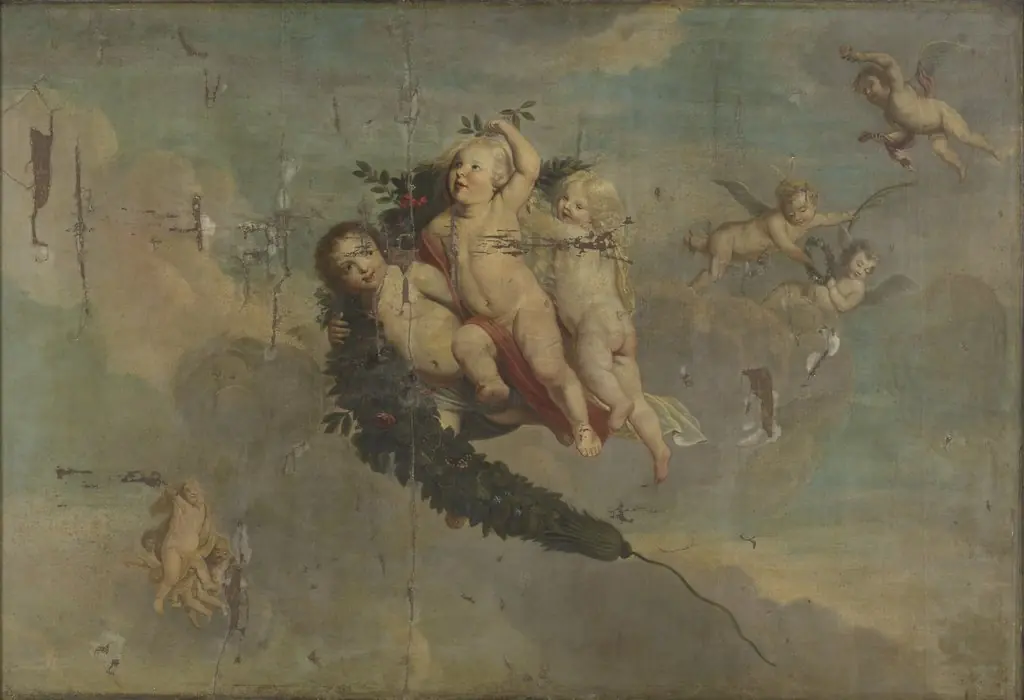
The canvas depicts a celestial gathering where figures drift amid clouds, robed in flowing garments and attended by cherubic children. Central to the scene are a man and a woman standing upon a cloud, accompanied by an infant and a basket of blossoms, while winged youths with instruments and a wreath hover above.
Context
Set within the tradition of mythological representation, the artwork aligns with Baroque sensibilities that favored dynamic compositions, dramatic lighting, and the integration of allegorical figures to convey narrative and emotional resonance.
Artist & collection