Artwork
Bacchus and Ariadne
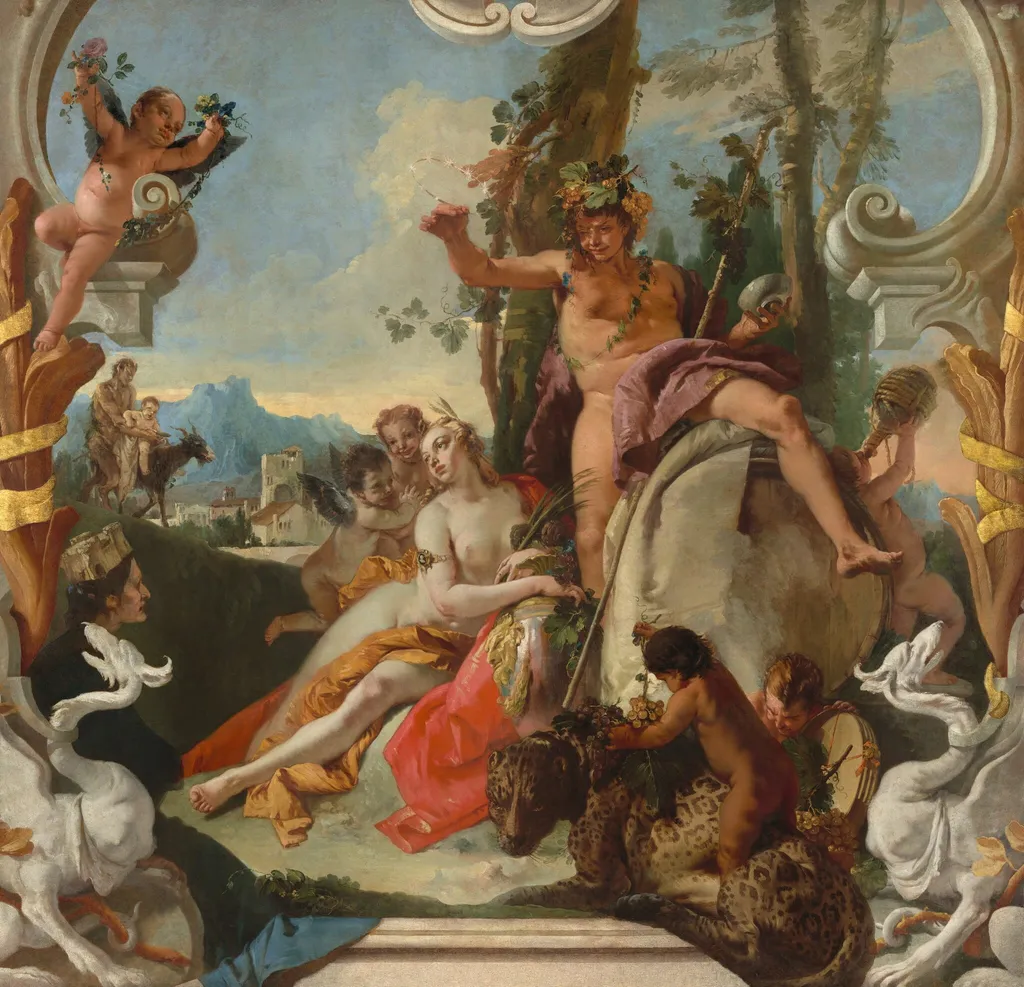
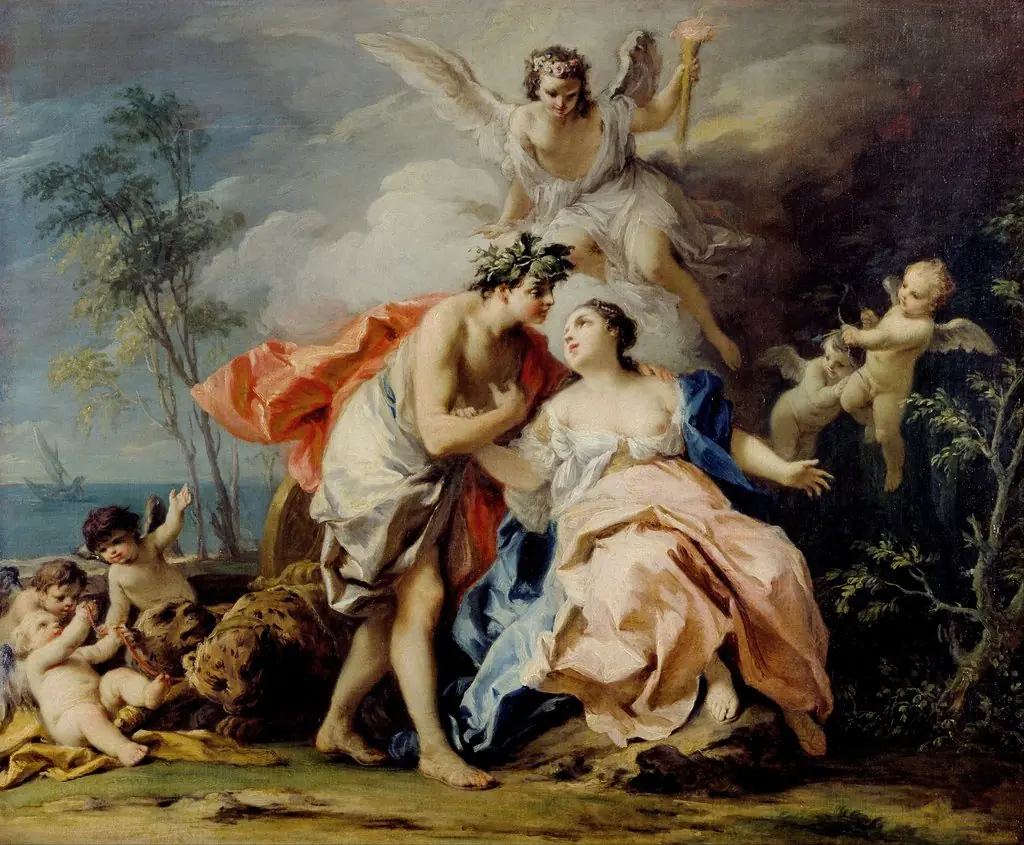
Bacchus and Ariadne is an oil painting by the Baroque artist Giovanni Battista Tiepolo. It dates from 1744 and is held in the collection of the National Gallery of Art.
About this work
Subject & Meaning
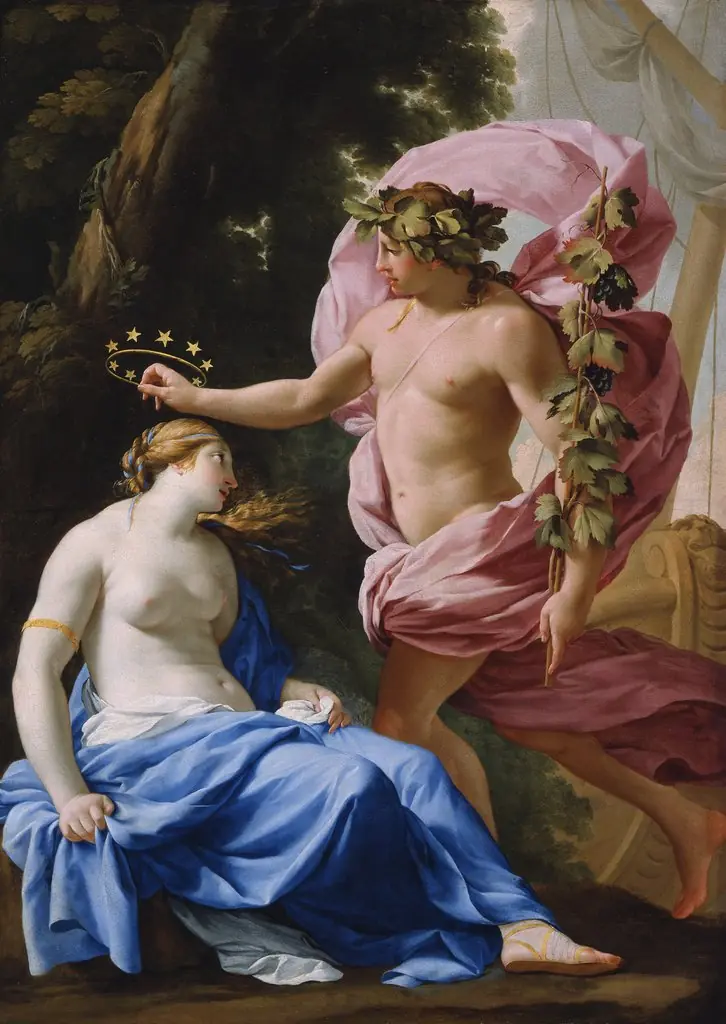
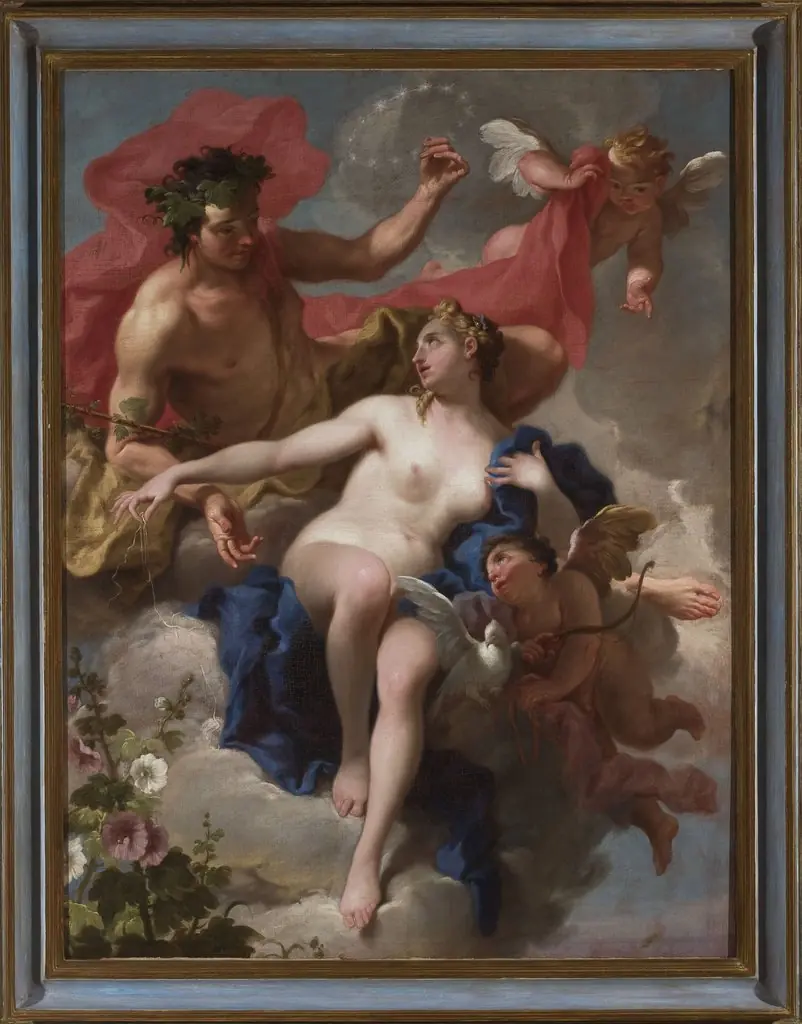
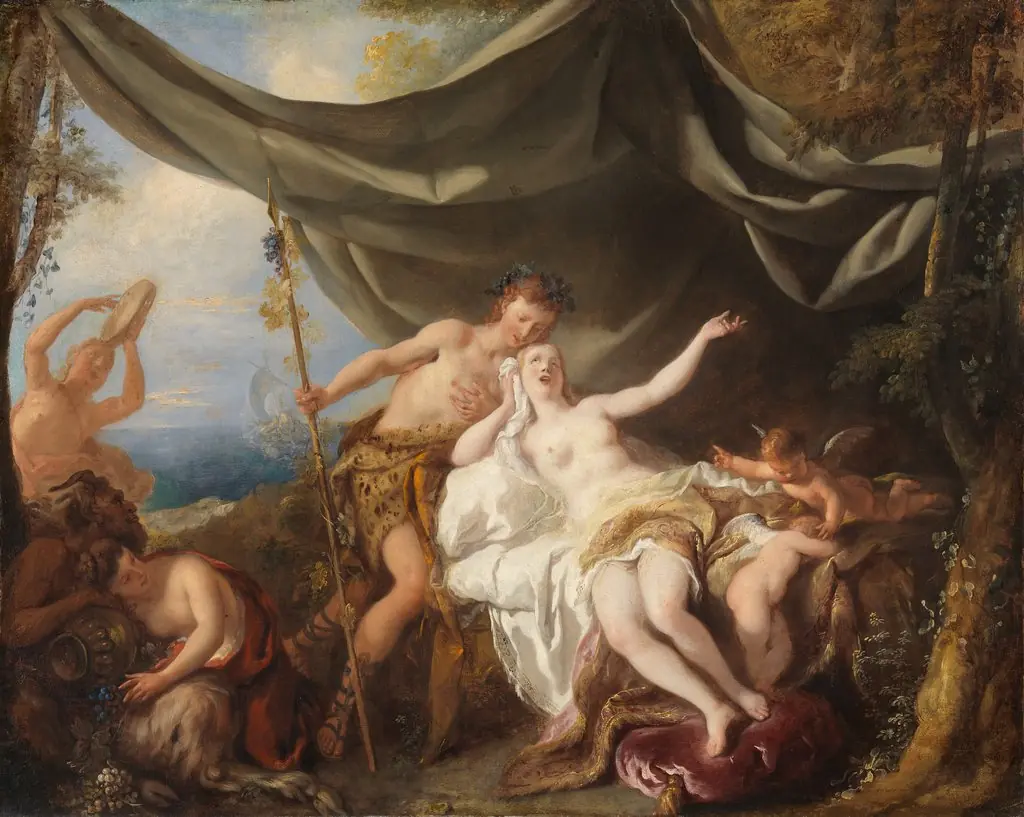
The painting shows the mythological figures of Bacchus and Ariadne, a scene drawn from classical mythology that was popular in 18th‑century European art.
The painting shows the mythological figures of Bacchus and Ariadne, a scene drawn from classical mythology that was popular in 18th‑century European art. Executed in oil on canvas in 1743, it exemplifies the Rococo movement through its dynamic composition and ornamental treatment. As a mythological subject, the work reflects the period’s interest in narratives of love and divine intervention, with Bacchus representing the god of wine and Ariadne depicted in a moment of sudden encounter. The composition underscores the dramatic interaction between the two characters, emphasizing themes of surprise and celebration.
History & Provenance
The work titled Bacchus and Ariadne, an oil on canvas painted in 1743 by Giovanni Battista Tiepolo, was likely executed for a Venetian palace staircase as part of a decorative program, according to scholarly speculation based on a lost 1764 letter. Its early ownership passed through the Artaria family: after the death of Francesco Artaria, the piece remained in the Villa Giròla collection, later moving to August Artaria, who stored it in Vienna until its rediscovery in 1900. It was sold in 1911 to Charles Sedelmeyer, then to Galerie Van Dieman, and finally to William and Lillian Timken in 1927, before being bequeathed to the National Gallery of Art in 1960.
Giovanni Battista Tiepolo's 1743 painting Bacchus and Ariadne is currently held by the National Gallery of Art in Washington, D.C., having entered the museum's collection via a bequest in 1960 from William Robert Timken and Lillian Guyer Timken. Prior to its acquisition by the gallery, the work was sold through Galerie Van Dieman to a private New York collector in 1927 or 1928, and earlier passed through the possession of Paris dealer Charles Sedelmeyer in 1911. During the 19th century, the painting remained in the warehouse of the Artaria & Co. firm in Vienna starting in 1870, following August Artaria's relocation of the work from Villa Giròla.
It was rediscovered in that Vienna warehouse in 1900. The canvas measures 213.4 cm in height and 231.8 cm in width.
Context
The mythological canvas Bacchus and Ariadne (1743) exemplifies Tiepolo’s late Rococo synthesis of dynamism and sensuality. Art historians view it as part of a decorative program for a Venetian staircase, a hypothesis supported by correspondence from 1764 and reinforced by Posse’s 1920s documentation of its provenance. The work’s oil on canvas format, grand scale, and dramatic composition reflect Tiepolo’s mastery of illusionistic space, situating it within the broader Venetian tradition of mythological painting.
Its journey from a Venetian palace to the National Gallery of Art, passing through collectors such as Charles Sedelmeyer, underscores its recognized artistic significance.
Overview
Giovanni Battista Tiepolo's painting, "Bacchus and Ariadne," rendered in oil on canvas, captures a dramatic moment from classical mythology. The artwork depicts the wine god Bacchus encountering Ariadne, who has been abandoned on an island. Tiepolo's characteristic style employs vibrant hues and dynamic composition to animate this pivotal interaction between the deities, making the scene feel alive.
Technique & Style
Tiepolo's artistic approach in "Bacchus and Ariadne" is characterized by its vivacity and luminous quality. He utilizes loose brushstrokes to create a sense of movement and energy, particularly in the swirling forms around the figures. The composition is further enhanced by the use of bright colors and glowing light, which collectively imbue the mythological narrative with a sense of immediacy and theatrical drama.
Own this work as a print
Artist & collection

Artist
Giovanni Battista Tiepolo, also known as Giambattista Tiepolo, was an Italian painter and printmaker from the Republic of Venice who painted in the Rococo style, considered an important member of the 18th-century Venetian school.