Artwork
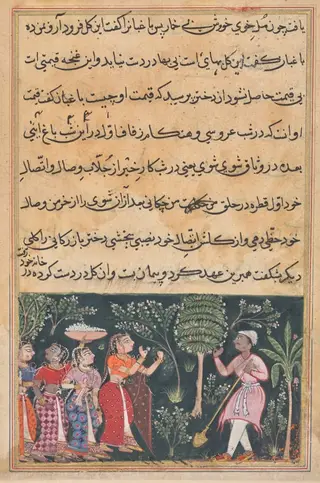
The merchant’s daughter meets the gardener, from a Tuti-nama (Tales of a Parrot): Twelfth Night
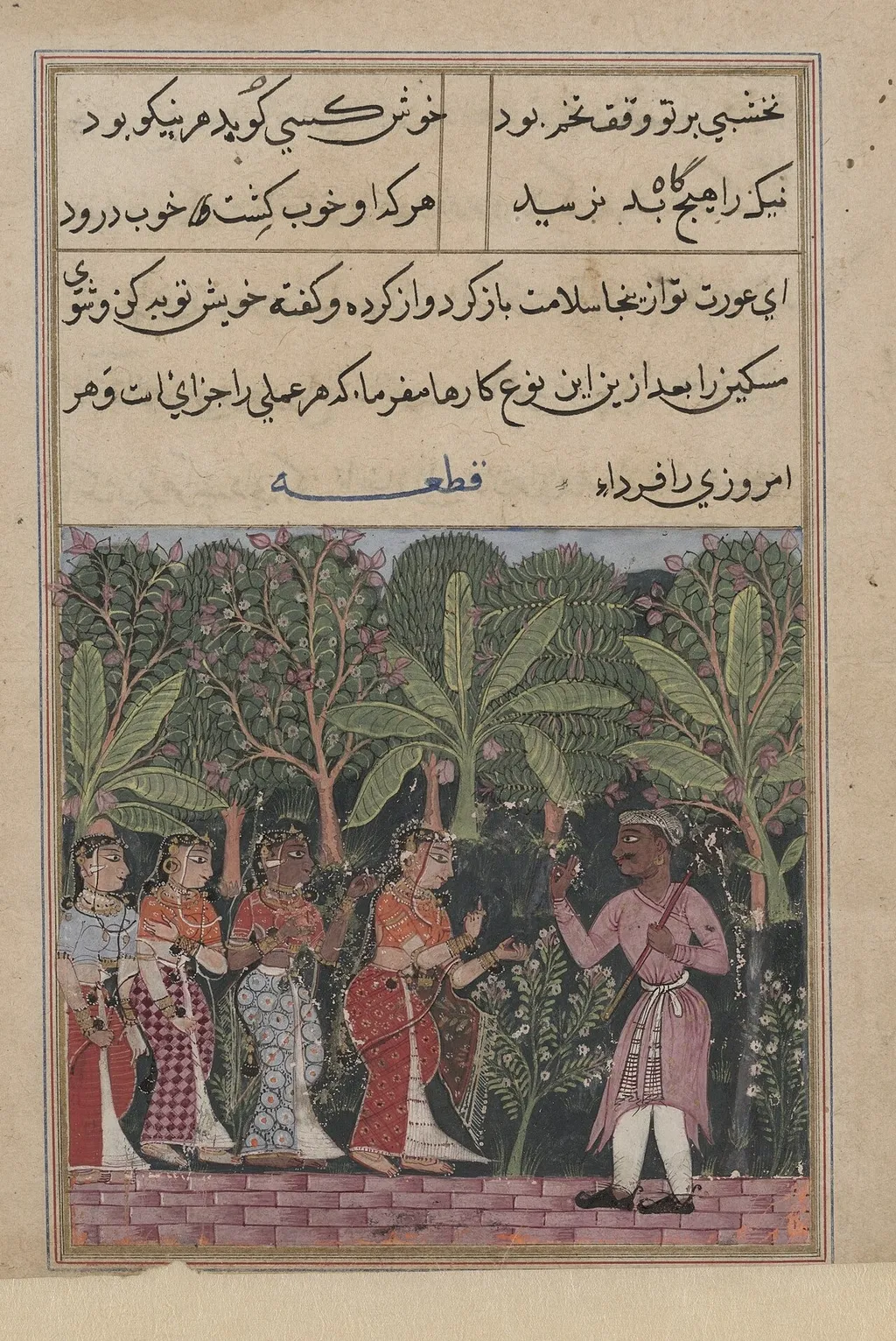
The merchant’s daughter meets the gardener, from a Tuti-nama (Tales of a Parrot): Twelfth Night is an unspecified painting. It dates from 1560 and is held in the collection of the Cleveland Museum of Art.
About this work
History & Provenance
The painting is held in the collection of the Cleveland Museum of Art, where it is recorded under the inventory number 1962.279.100.b. Produced in 1560 within the Mughal Empire, the work entered the museum's holdings and has remained there as part of its collection of South Asian painting. No exhibition history is documented in the available sources.
Context
The piece contributes to understanding the stylistic synthesis that defined courtly art in 16th-century India.
The painting titled The merchant’s daughter meets the gardener, from a Tuti-nama (Tales of a Parrot): Twelfth Night was created in 1560 in the Mughal Empire and is housed in the Cleveland Museum of Art. It is attributed to an unknown artist and forms part of the Tuti-nama manuscript tradition, reflecting the cross-cultural transmission of Persian narrative painting into Indian artistic production. Scholarly attention to the work emphasizes its role in illustrating how European narrative forms were adapted within Mughal visual culture, situating it within broader discussions of transregional artistic exchange.
Its reception has been shaped by both its technical execution and its narrative complexity, with recent research highlighting its significance in the study of early modern manuscript illumination. The piece contributes to understanding the stylistic synthesis that defined courtly art in 16th-century India.
Overview
The work depicts a small group gathered beneath a leafy canopy, featuring five women in vivid, patterned garments and a man in a pink shirt with white trousers. One woman in red extends her hand, another in blue holds a fan, while the male figure steadies a flowering branch. A low brick wall and dense foliage frame the scene, giving it the appearance of a narrative illustration.
Subject & Meaning
The composition illustrates a moment from the Persian literary collection known as the Tuti‑nama, specifically a scene titled “The merchant’s daughter meets the gardener” from the tale of Twelfth Night. The characters are engaged in a courteous encounter, suggesting themes of social interaction and courtship within the story’s broader moral framework.
Technique & Style
Rendered in a bright palette, the painting employs flat areas of color and intricate decorative patterns on the women’s attire, characteristic of manuscript illustration traditions. The figures are outlined with fine lines, and the background foliage is stylized rather than naturalistic, emphasizing narrative clarity over spatial realism.
Artist & collection

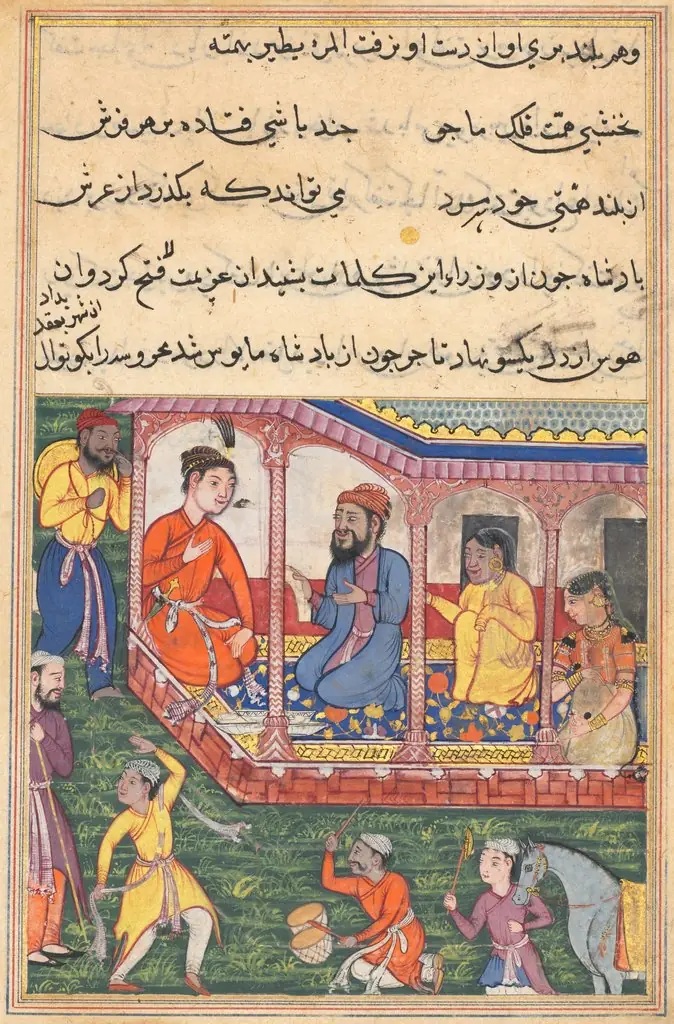 Mahrusa’s marriage to the prefect of the city, from a Tuti-nama (Tales of a Parrot): Thirty-sixth Night
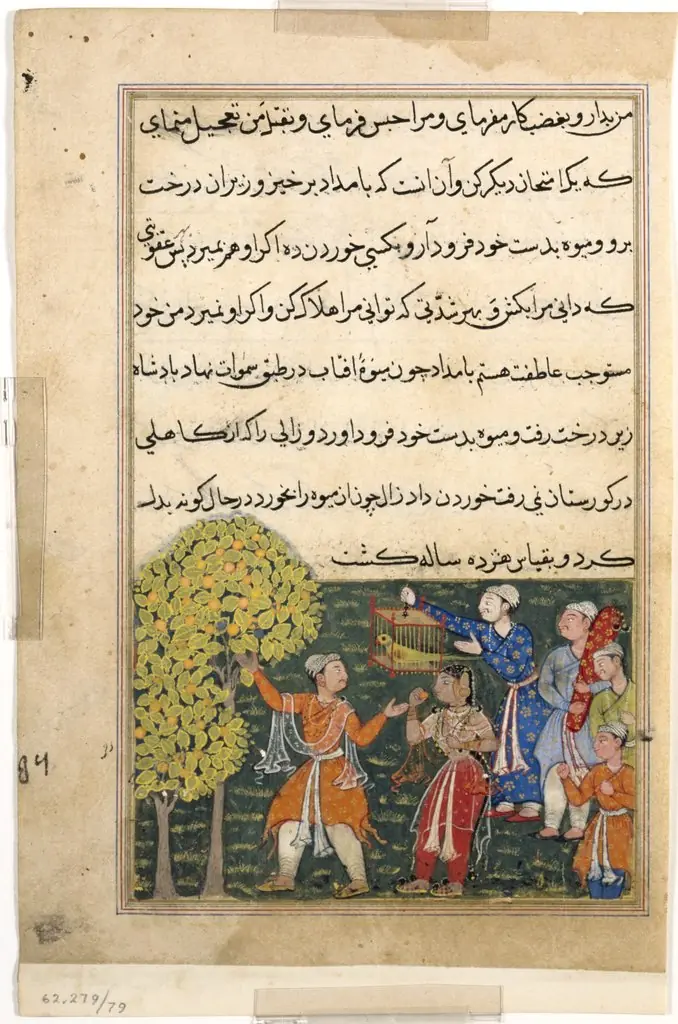 The king plucks fruit from the Tree of Life with his own hands and feeds it to a lady, from a Tuti-nama (Tales of a Parrot): Ninth Night
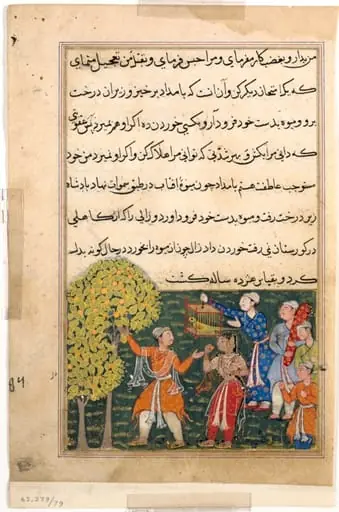 The king plucks fruit from the Tree of Life with his own hands and feeds it to a lady, from a Tuti-nama (Tales of a Parrot): Ninth Night
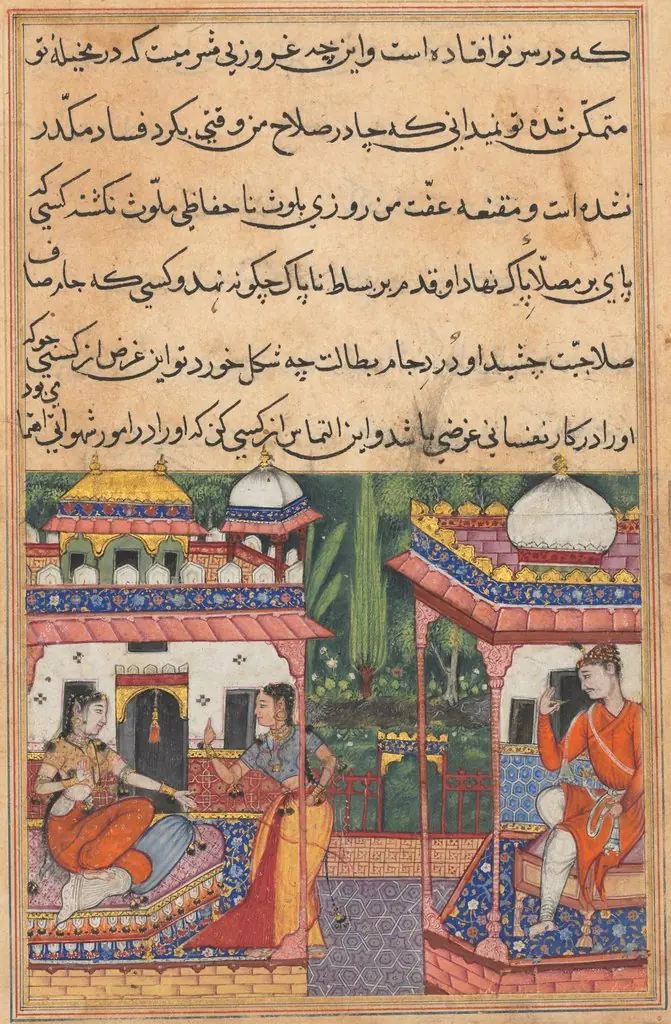 Kaiwan sends a message of love to Khurshid, wife of his brother Utarid who is away on a journey, from a Tuti-nama (Tales of a Parrot): Thirty-second Night
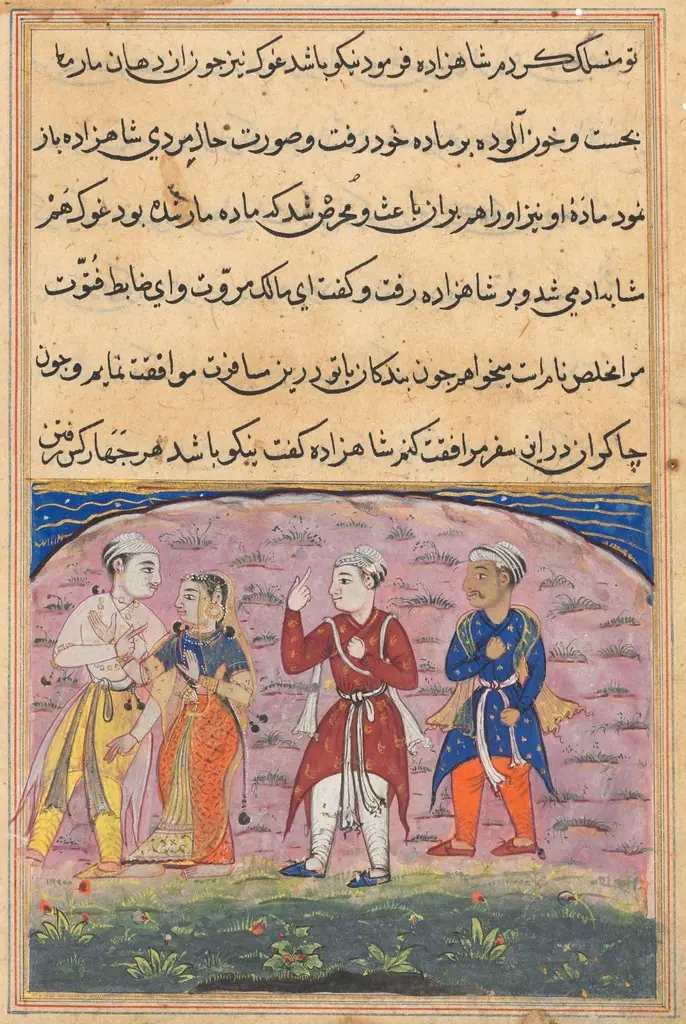 The prince and Nikfal are joined by Khalis and the Mukhlis who are the grateful snake and frog in human form, from a Tuti-nama (Tales of a Parrot): Eighteenth Night
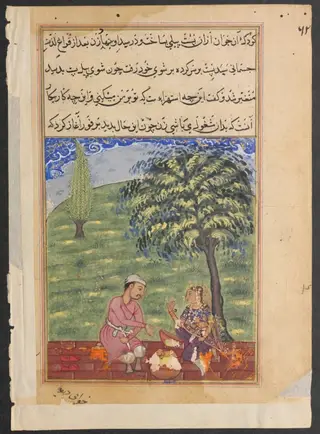 The unfaithful wife explaining away the presence of the dough elephant, from a Tuti-nama (Tales of a Parrot): Eighth Night
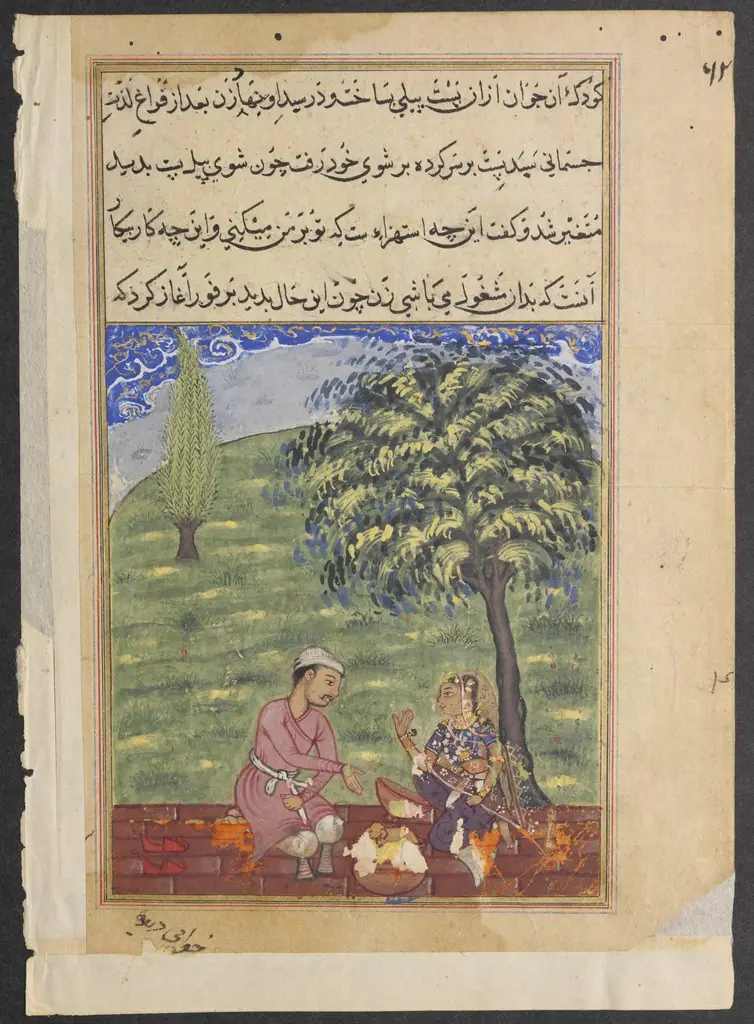 The unfaithful wife explaining away the presence of the dough elephant, from a Tuti-nama (Tales of a Parrot): Eighth Night
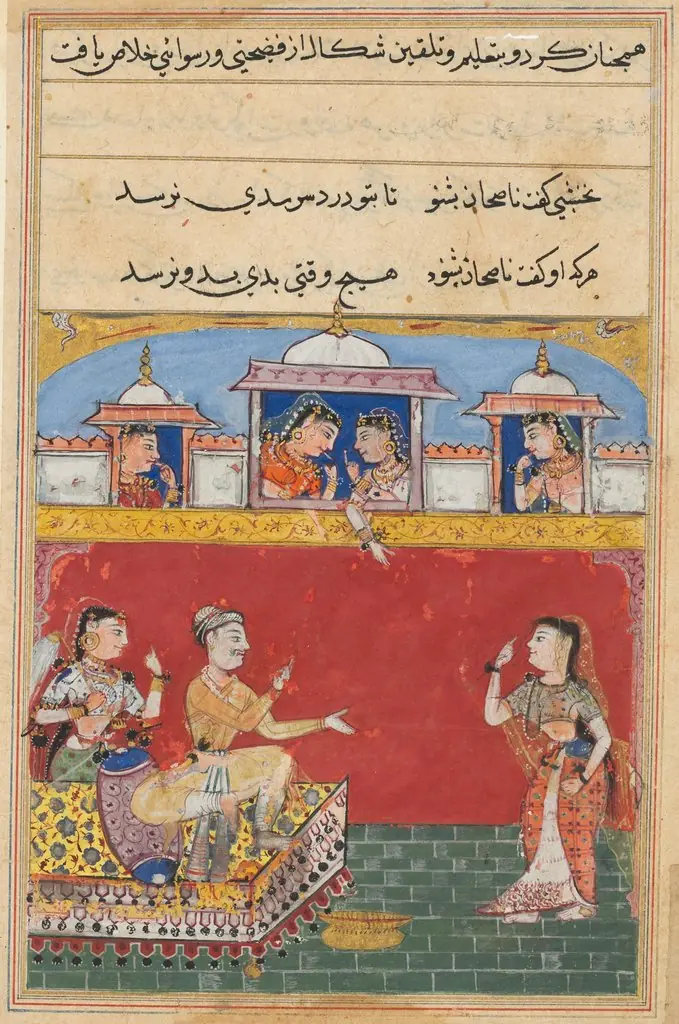 The daughter-in-law returns from her misadventure, feigning insanity, from a Tuti-nama (Tales of a Parrot): Sixteenth Night
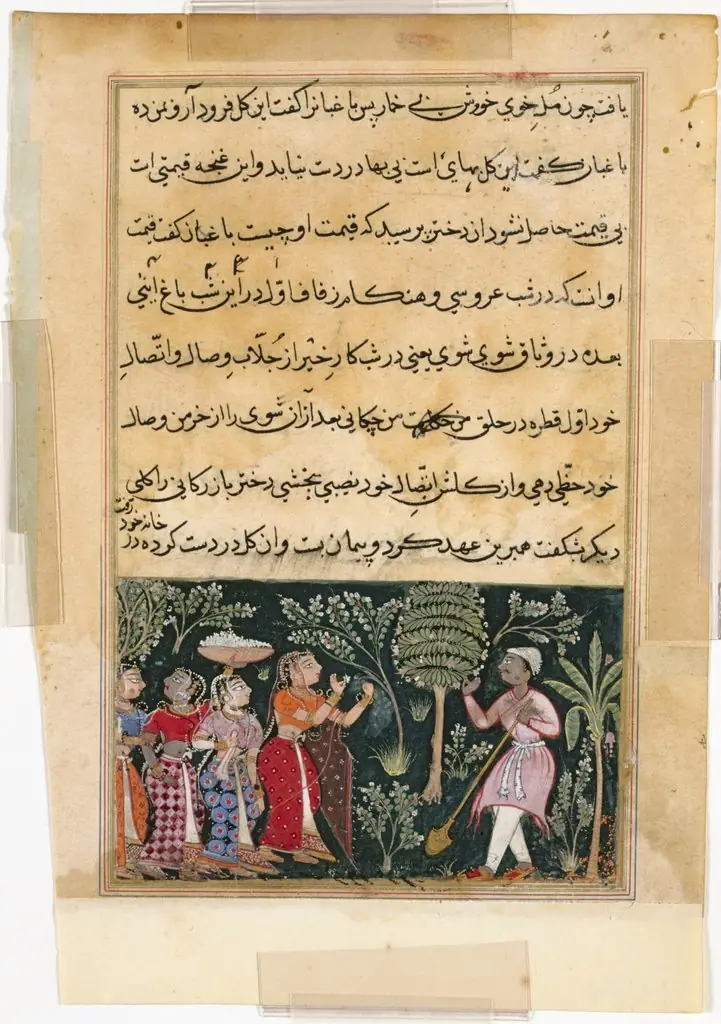
- The daughter of the merchant of Mazanderan asks the gardener for the rose, from a Tuti-nama (Tales of a Parrot): Twelfth Night
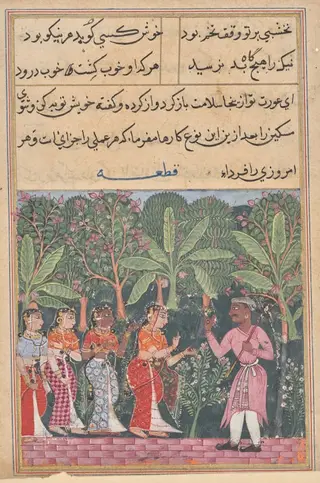 The merchant’s daughter meets the gardener, from a Tuti-nama (Tales of a Parrot): Twelfth Night
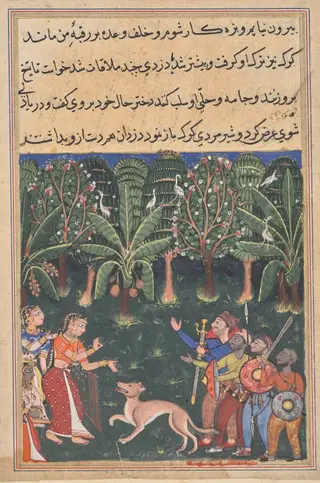 The merchant’s daughter encounters a wolf and bandits on her way to meet the gardener in order to keep her promise, from a Tuti-nama (Tales of a Parrot): Twelfth Night
 The daughter of the merchant of Mazanderan asks the gardener for the rose, from a Tuti-nama (Tales of a Parrot): Twelfth Night