Artwork
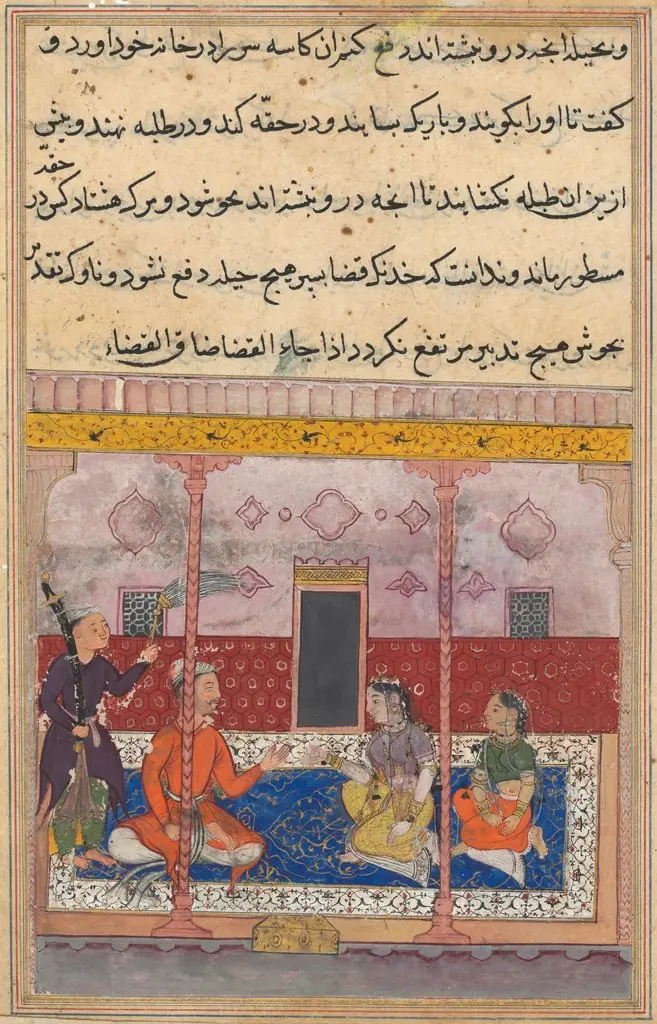
The prince and Nikfal are joined by Khalis and the Mukhlis who are the grateful snake and frog in human form, from a Tuti-nama (Tales of a Parrot): Eighteenth Night
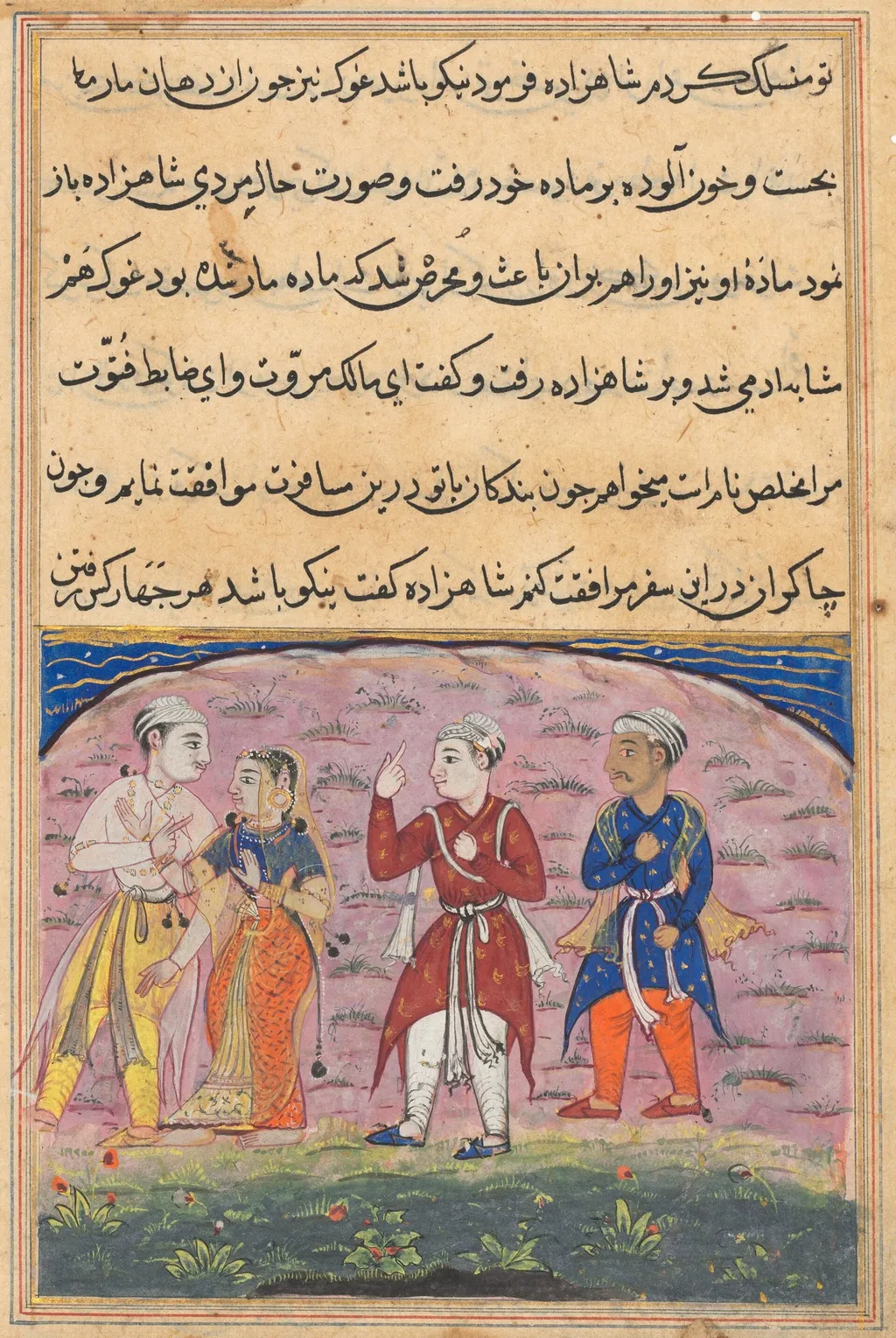
The prince and Nikfal are joined by Khalis and the Mukhlis who are the grateful snake and frog in human form, from a Tuti-nama (Tales of a Parrot): Eighteenth Night is an unspecified painting. It dates from 1560 and is held in the collection of the Cleveland Museum of Art.
About this work
Overview
It depicts a narrative moment where a prince and Nikfal encounter Khalis and Mukhlis, who appear in human form, having previously been a snake and a frog.
This painting, titled "The prince and Nikfal are joined by Khalis and the Mukhlis who are the grateful snake and frog in human form," illustrates a scene from the Eighteenth Night of the Tuti-nama (Tales of a Parrot). It depicts a narrative moment where a prince and Nikfal encounter Khalis and Mukhlis, who appear in human form, having previously been a snake and a frog. The artwork is a single page from a larger illuminated manuscript.
Subject & Meaning
The painting portrays a pivotal moment from the Tuti-nama, a collection of Indian fables. It features a prince and Nikfal alongside Khalis and Mukhlis, who are depicted as humans. These latter figures represent a snake and a frog, transformed, suggesting a narrative of gratitude or reward within the larger story cycle. Their presence highlights themes of interspecies connection and the consequences of benevolent actions.
Technique & Style
The artist employs a vibrant palette, notably pink and blue hues, to create an elegant and visually engaging composition. A sense of depth is achieved through the arrangement of figures against a simple pink background, contrasted with a detailed grassy foreground. This naturalistic element, complete with plants and flowers, grounds the scene while the traditional Indian attire of the characters provides cultural specificity.
History & Provenance
This painting is currently housed within the collection of The Cleveland Museum of Art. Its presence there contributes to the museum's holdings of South Asian art, offering insight into the visual storytelling traditions and artistic practices prevalent during the period of its creation. The artwork serves as a testament to the rich history of illustrated manuscripts.
Artist & collection

- The prince and Nikfal are joined by Khalis and the Mukhlis who are the grateful snake and frog in human form, from a Tuti-nama (Tales of a Parrot): Eighteenth Night
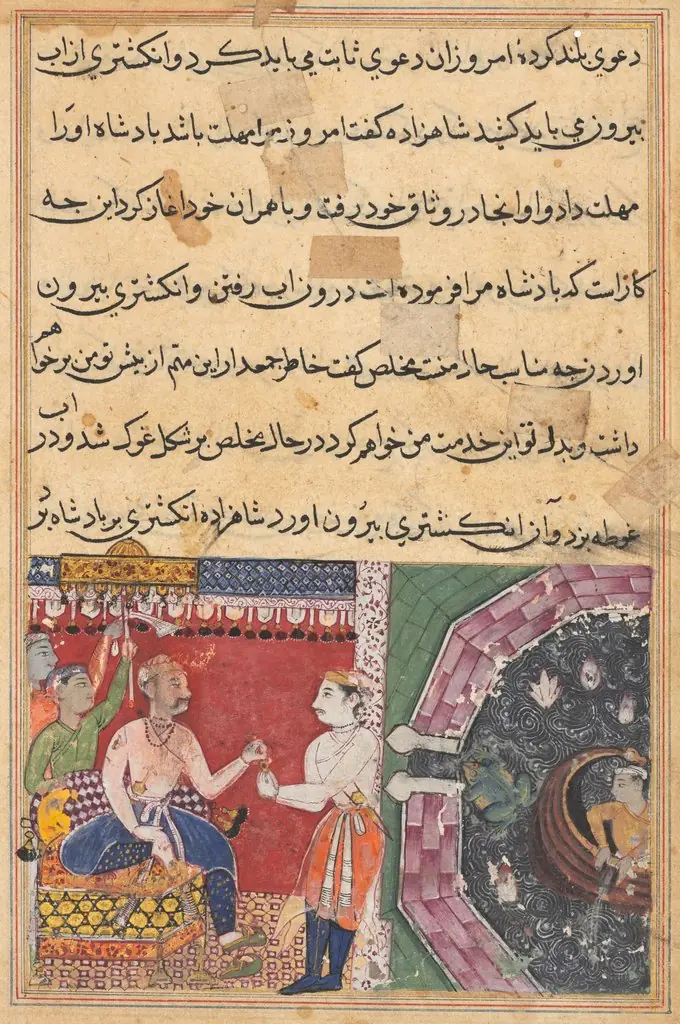 The prince, with the help of Mukhlis who changes into a frog, recovers the ring lost in the sea, and returns it to the king, from a Tuti-nama (Tales of a Parrot): Eighteenth Night
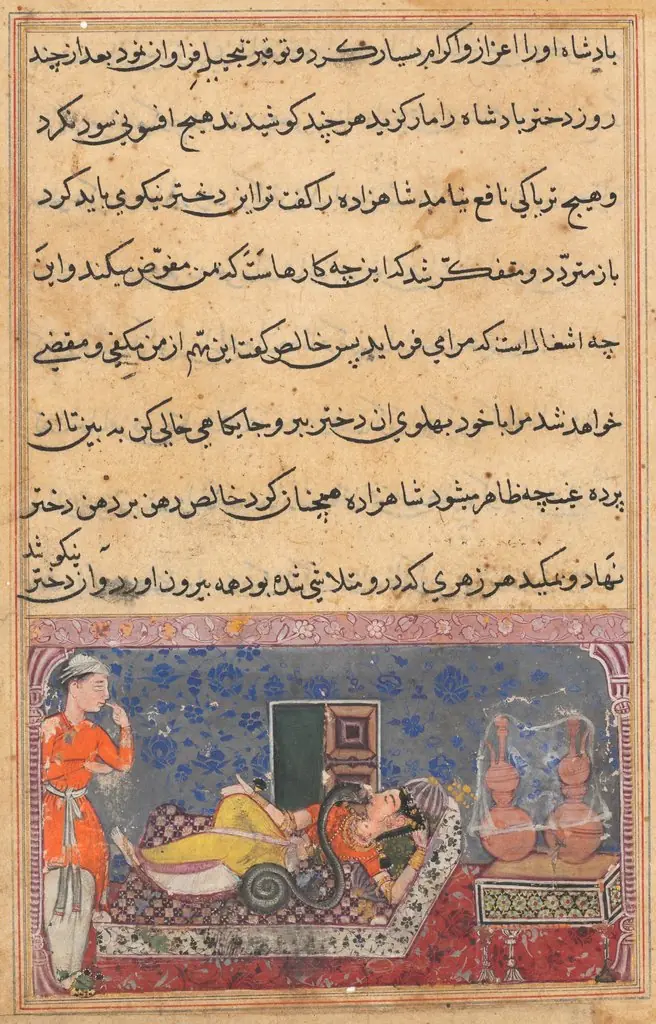 Khalis repays the prince for his kindness by changing into a snake and sucking the poison from the king’s daughter, from a Tuti-nama (Tales of a Parrot): Eighteenth Night
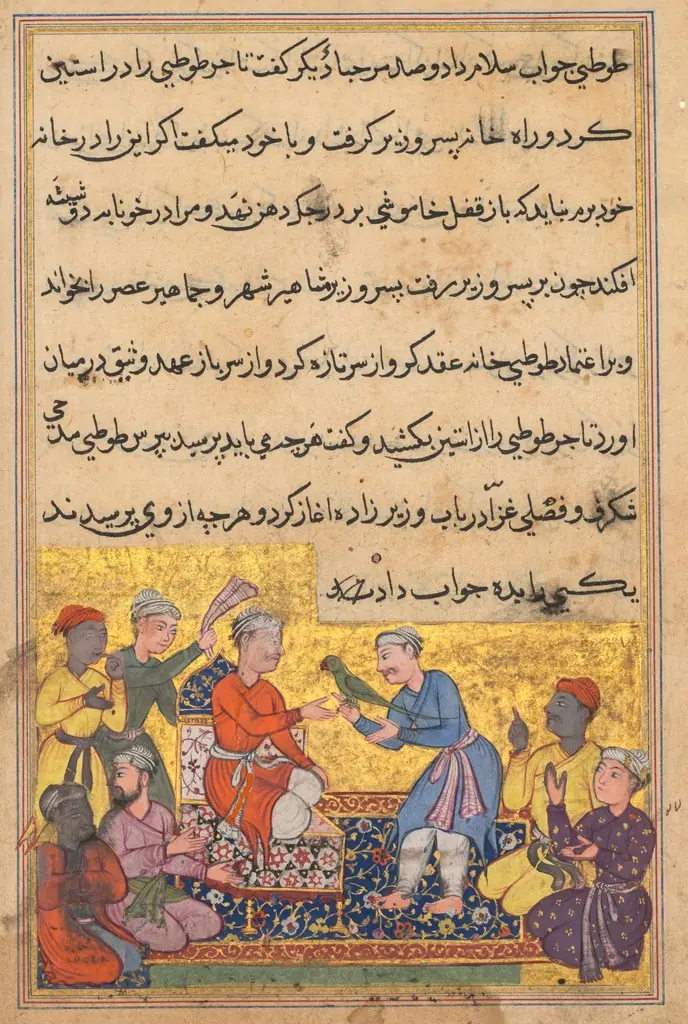 The magic parrot of the merchant talks to the vizier’s son, from a Tuti-nama (Tales of a Parrot): Tenth Night
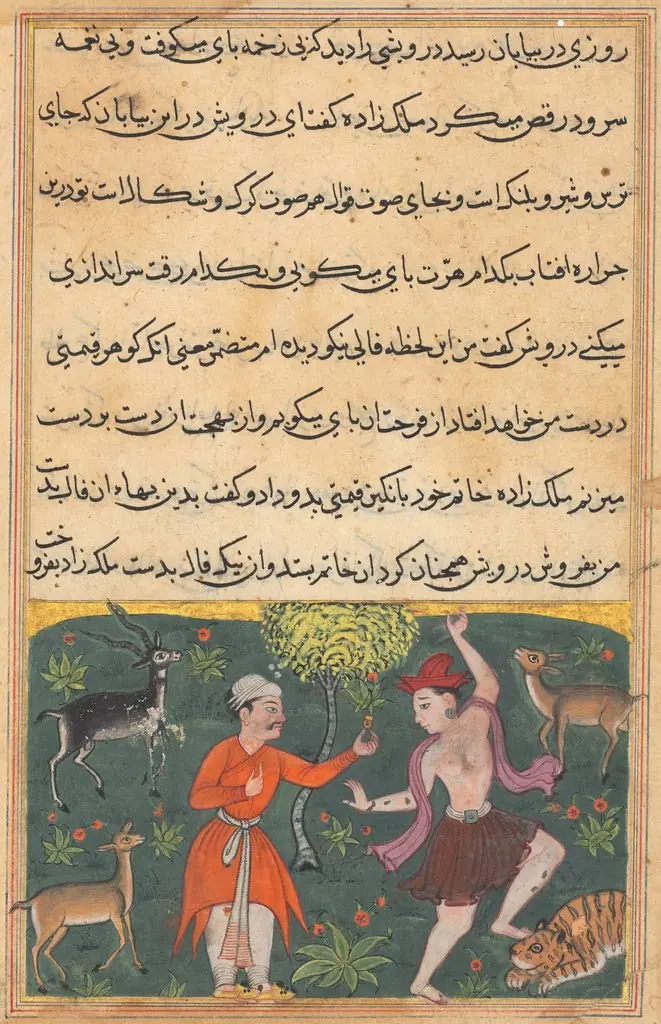 The prince meets a carefree dancing dervish whose good fortune he purchases for his ring, from a Tuti-nama (Tales of a Parrot): Eighteenth Night
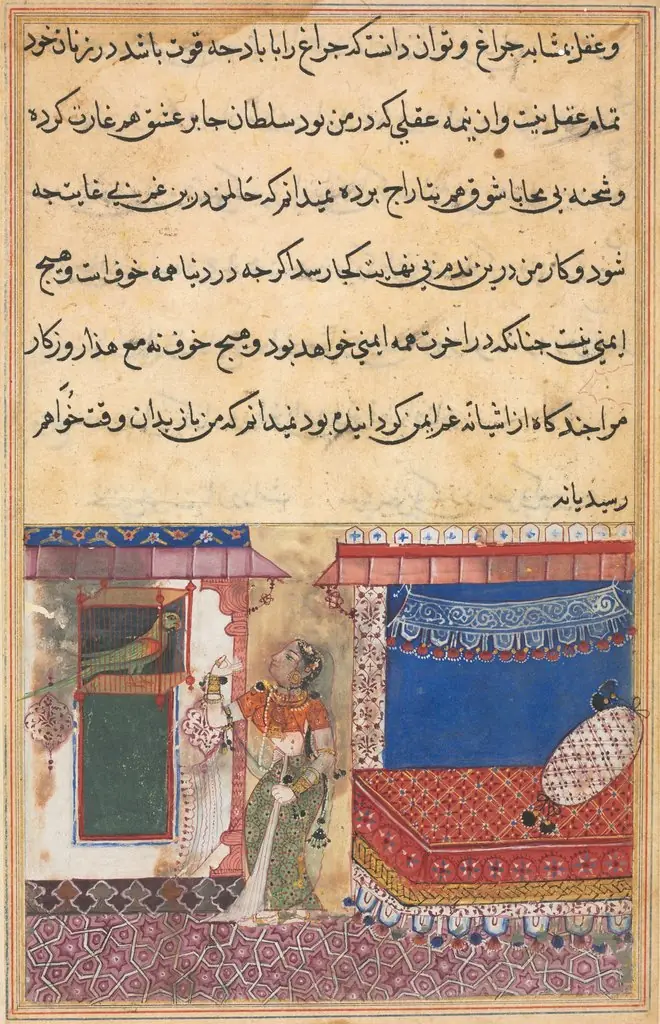 The Parrot Addresses Khujasta at the Beginning of the Eighteenth Night, from a Tuti-nama (Tales of a Parrot)
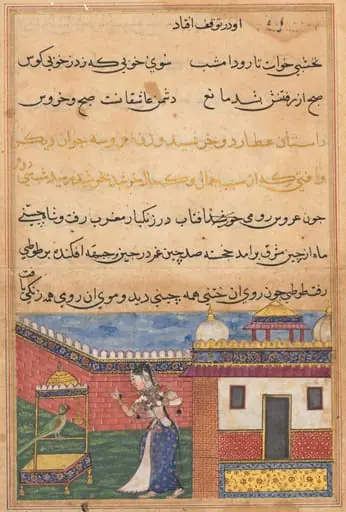 The parrot addresses Khujasta at the beginning of the thirty-second night, from a Tuti-nama (Tales of a Parrot)
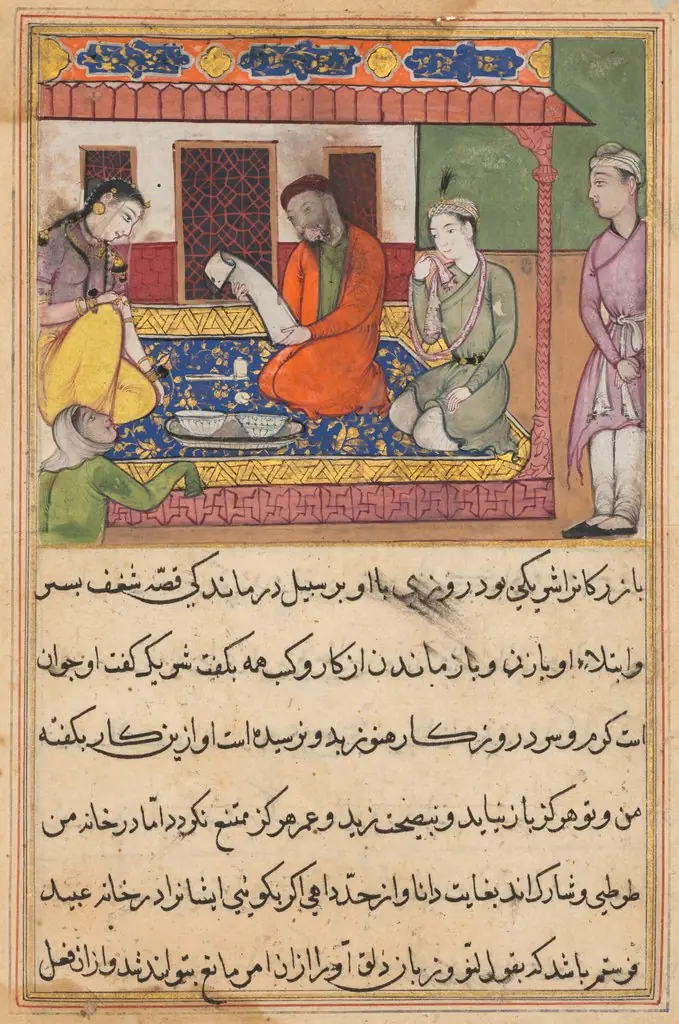 The marriage of ‘Ubaid, son of a merchant of Tirmiz, from a Tuti-nama (Tales of a Parrot): Forty-second Night
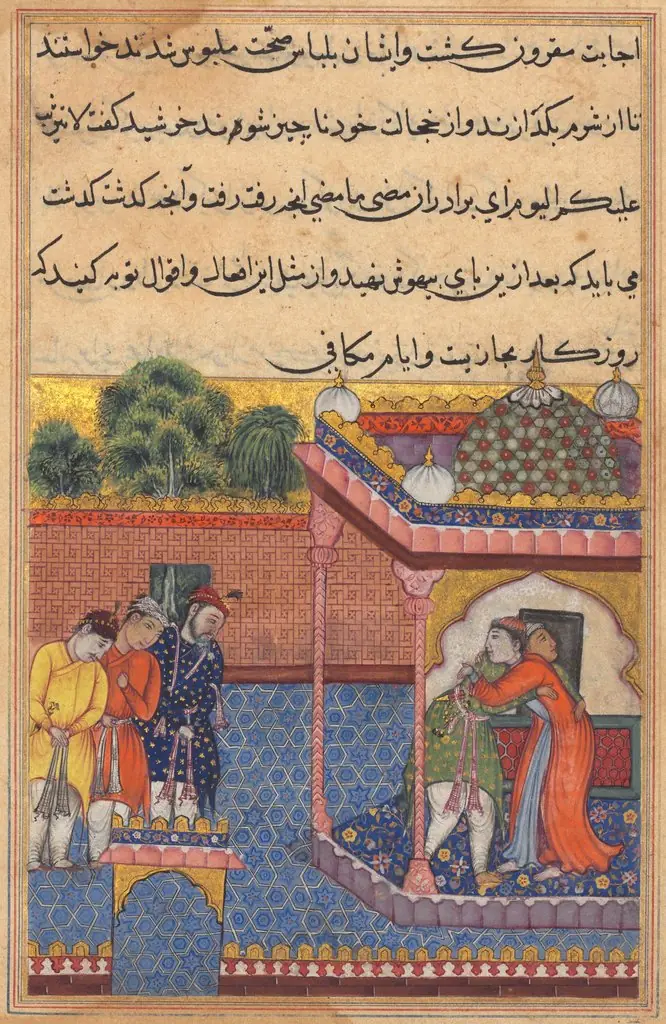 Khurshid reunited with her husband Utarid, from a Tuti-nama (Tales of a Parrot): Thirty-second Night
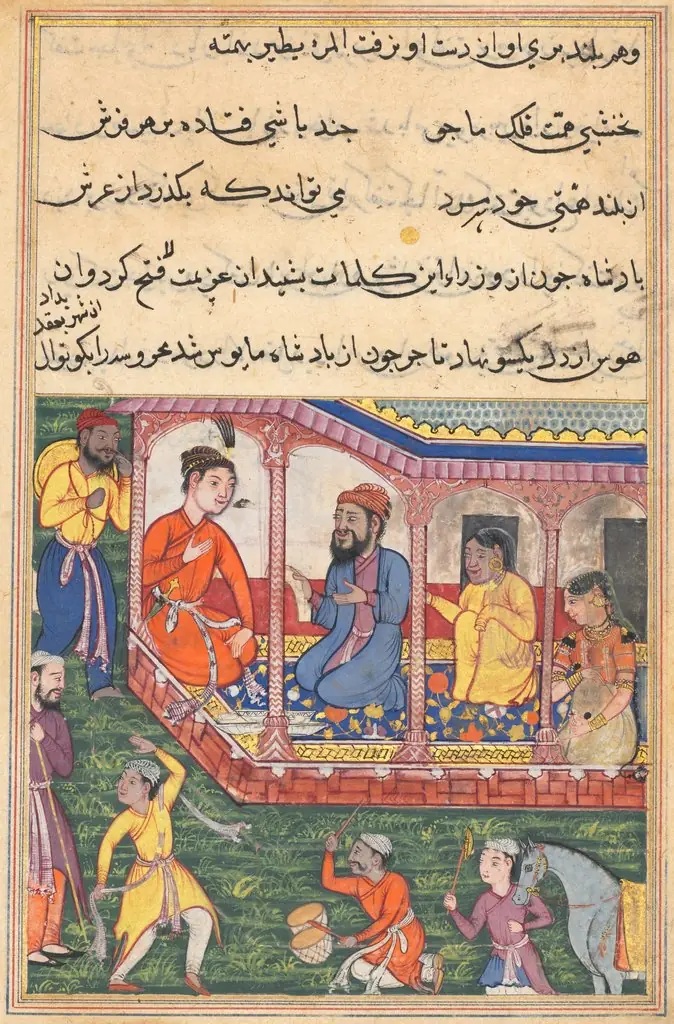 Mahrusa’s marriage to the prefect of the city, from a Tuti-nama (Tales of a Parrot): Thirty-sixth Night
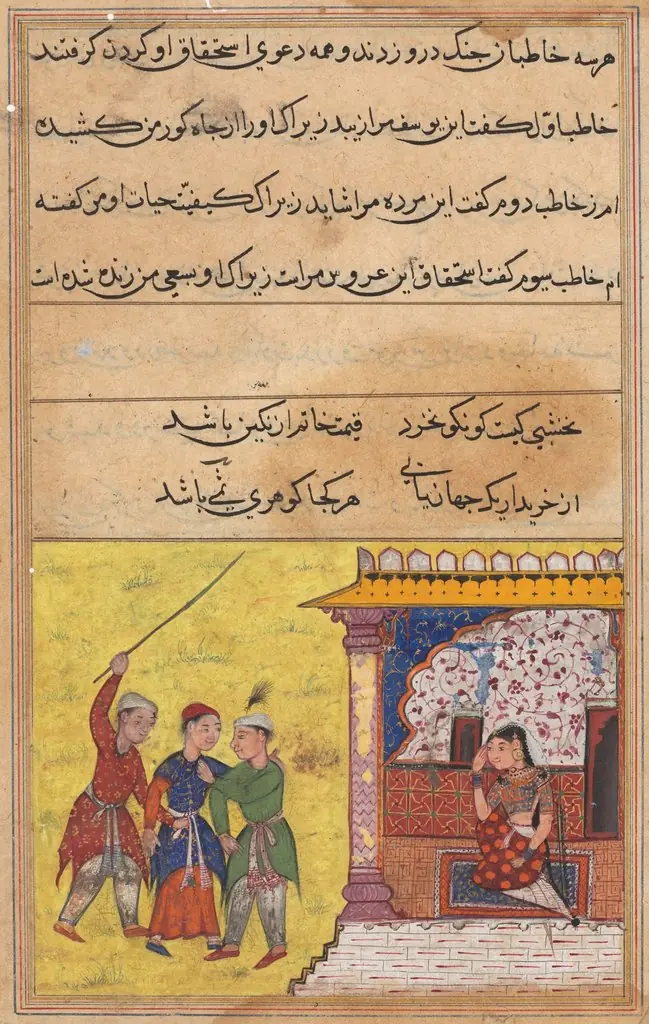 The three suitors again begin to quarrel among themselves for the hand of the devotee’s daughter, from a Tuti-nama (Tales of a Parrot): Twentieth Night
 The merchant has the hateful skull ground and put into a box, from a Tuti-nama (Tales of a Parrot): Twenty-third Night