Artwork
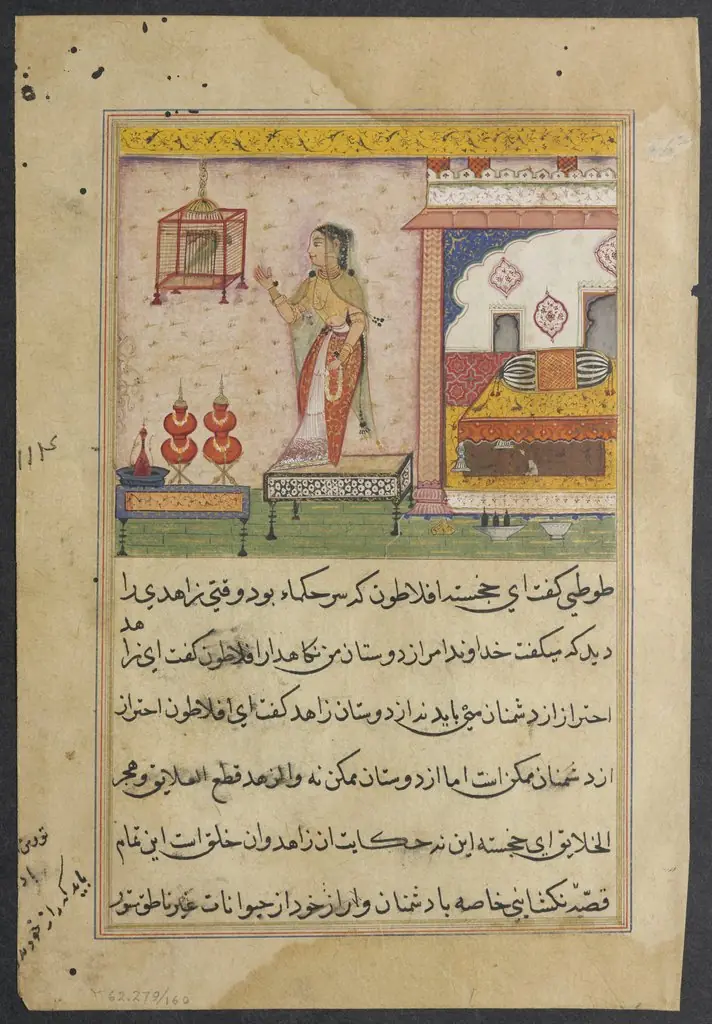
The unfaithful wife explaining away the presence of the dough elephant, from a Tuti-nama (Tales of a Parrot): Eighth Night
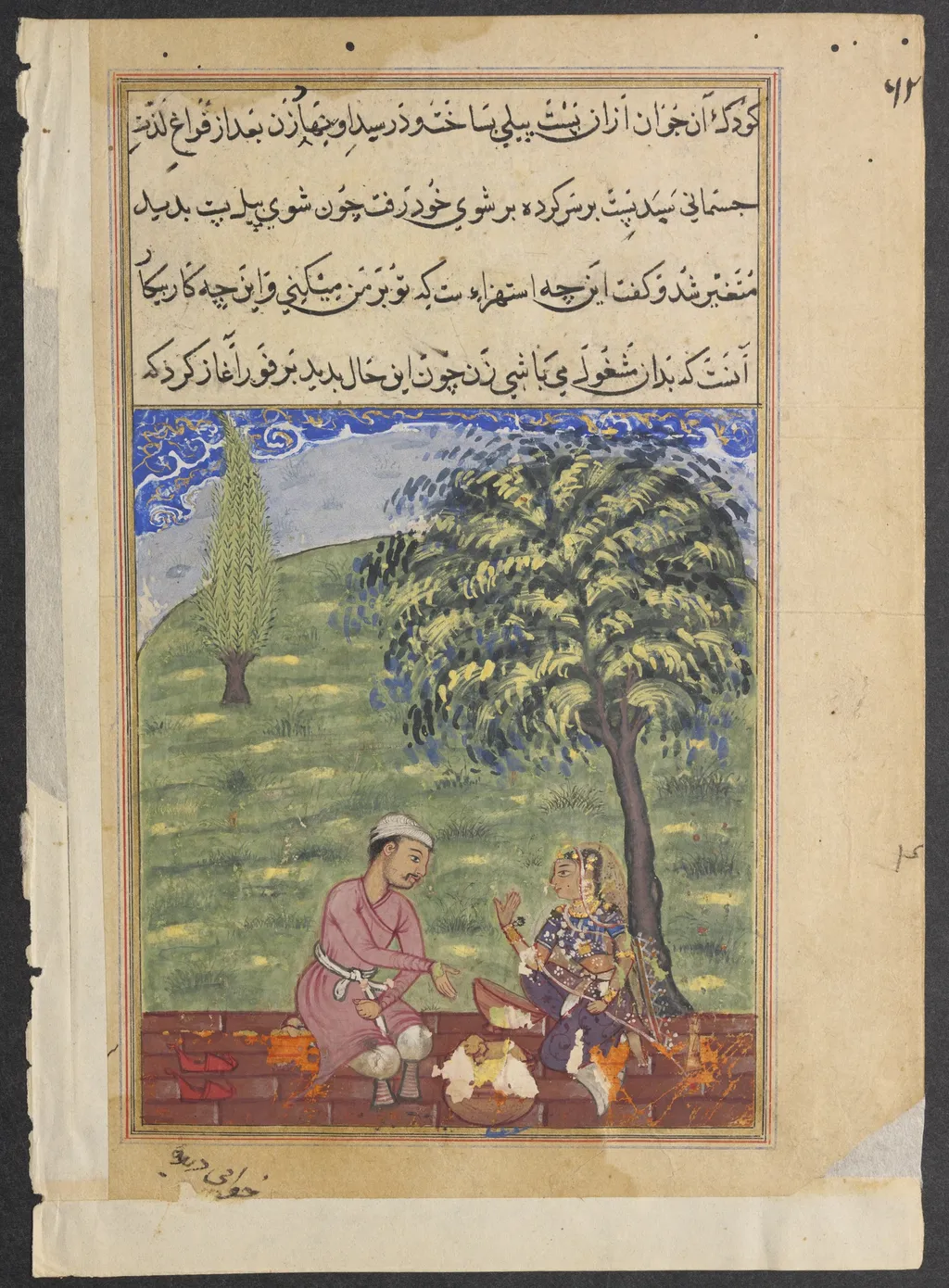
The unfaithful wife explaining away the presence of the dough elephant, from a Tuti-nama (Tales of a Parrot): Eighth Night is an unspecified painting. It dates from 1560 and is held in the collection of the Cleveland Museum of Art.
About this work
History & Provenance
The painting is dated to 1560 and was produced in the Mughal Empire as part of a Tuti-nama (Tales of a Parrot) manuscript.
The painting is dated to 1560 and was produced in the Mughal Empire as part of a Tuti-nama (Tales of a Parrot) manuscript. Both the artist and any original commission remain unidentified in the available sources. The work entered the Cleveland Museum of Art’s collection and is recorded there under accession number 1962.279.62.b. No further details about its earlier ownership chain or subsequent provenance are provided in the sources.
The painting The unfaithful wife explaining away the presence of the dough elephant, from a Tuti-nama (Tales of a Parrot): Eighth Night is held in the collection of the Cleveland Museum of Art in Cleveland. The work is cataloged under the accession number 1962.279.62.b. Created in 1560 within the Mughal Empire, this manuscript illumination is attributed to an unknown artist. The source material does not provide specific details regarding a history of public exhibitions for this particular folio.
Overview
The work is a miniature illustration from the Persian manuscript Tuti-nama ("Tales of a Parrot"), specifically the eighth night of the collection. It portrays a domestic scene in a garden where a kneeling man in pink offers an object to a seated woman in blue, while a lumpy white mass resembling dough is positioned between them. Arabic calligraphy occupies the upper half of the page, framing the narrative.
Subject & Meaning
The image visualizes a humorous anecdote in which the female figure attempts to explain the sudden appearance of a dough‑shaped "elephant" in her home. The tale, like many in the Tuti-nama, uses absurdity to convey a moral lesson about honesty and the consequences of deceit, reflecting the didactic purpose of the collection.
Technique & Style
Executed in the traditional Persian miniature style, the painting employs vibrant pigments and delicate brushwork to delineate figures and foliage. The composition balances text and image, with the arabic script integrated into the visual field. The use of bright clothing colors and stylized forms typifies the courtly aesthetic of 16th‑century manuscript illustration.
Artist & collection

- The unfaithful wife explaining away the presence of the dough elephant, from a Tuti-nama (Tales of a Parrot): Eighth Night
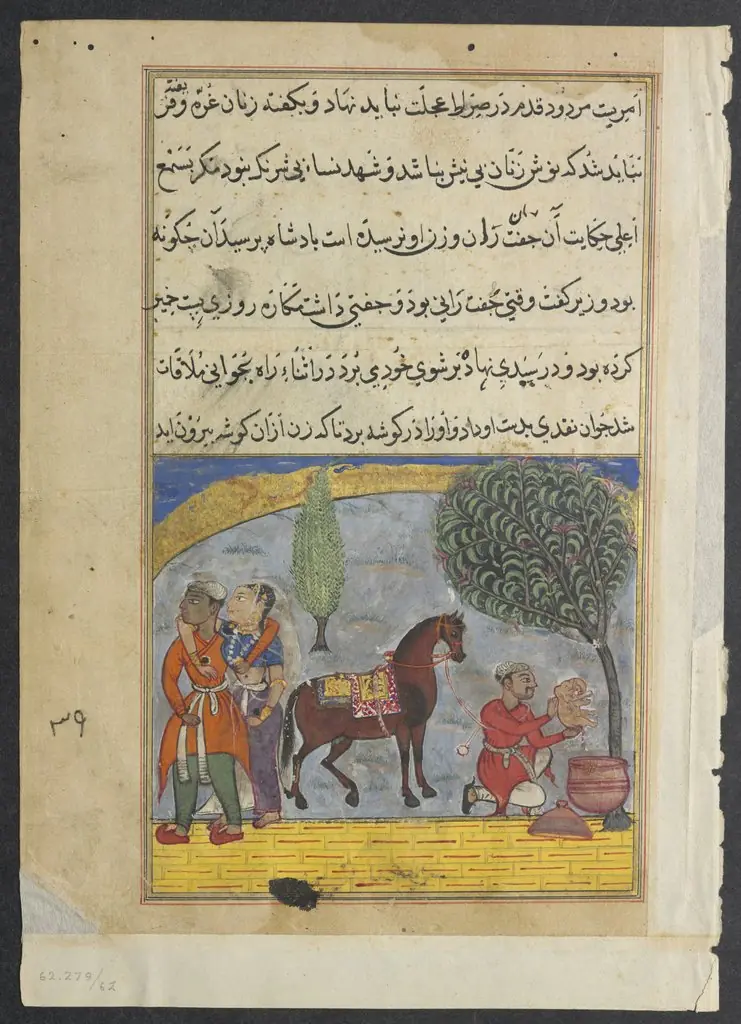 The lover’s son makes an elephant of the pastry dough carried by the unfaithful wife and puts it in her basket, from a Tuti-nama (Tales of a Parrot): Eighth Night
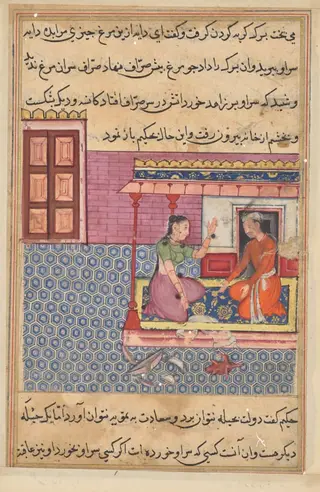 The pious man’s wife offers the seven-colored bird as food to her lover, but not finding its head, he breaks the pot and bowl in anger, from a Tuti-nama (Tales of a Parrot): Fifty-second Night
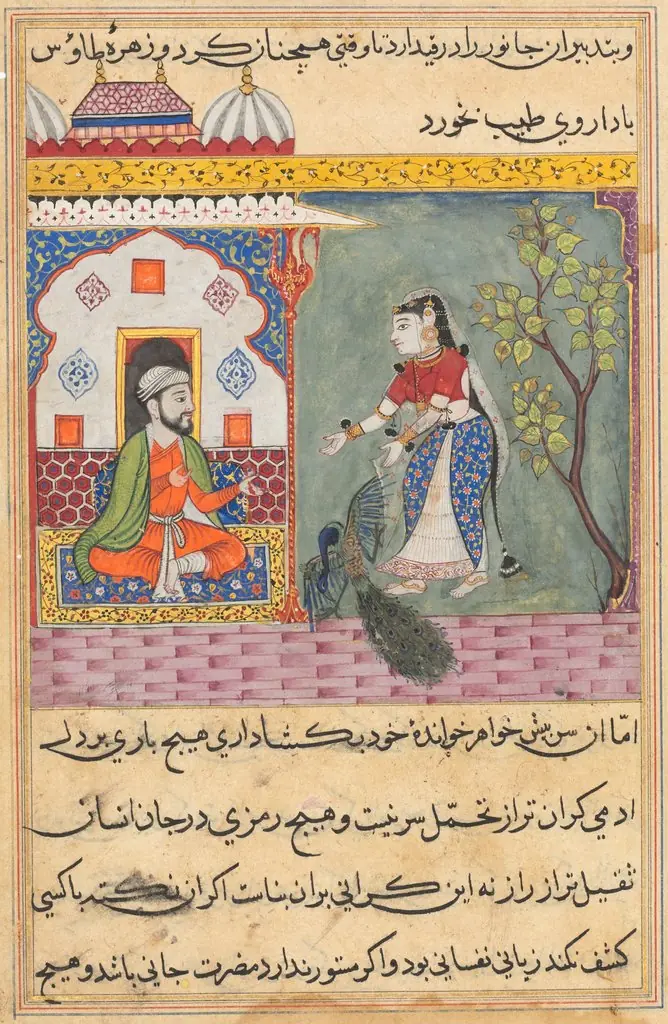 The Brahman’s wife who killed a peacock and ate its gallbladder on the physician’s advice, from a Tuti-nama (Tales of a Parrot): Nineteenth Night
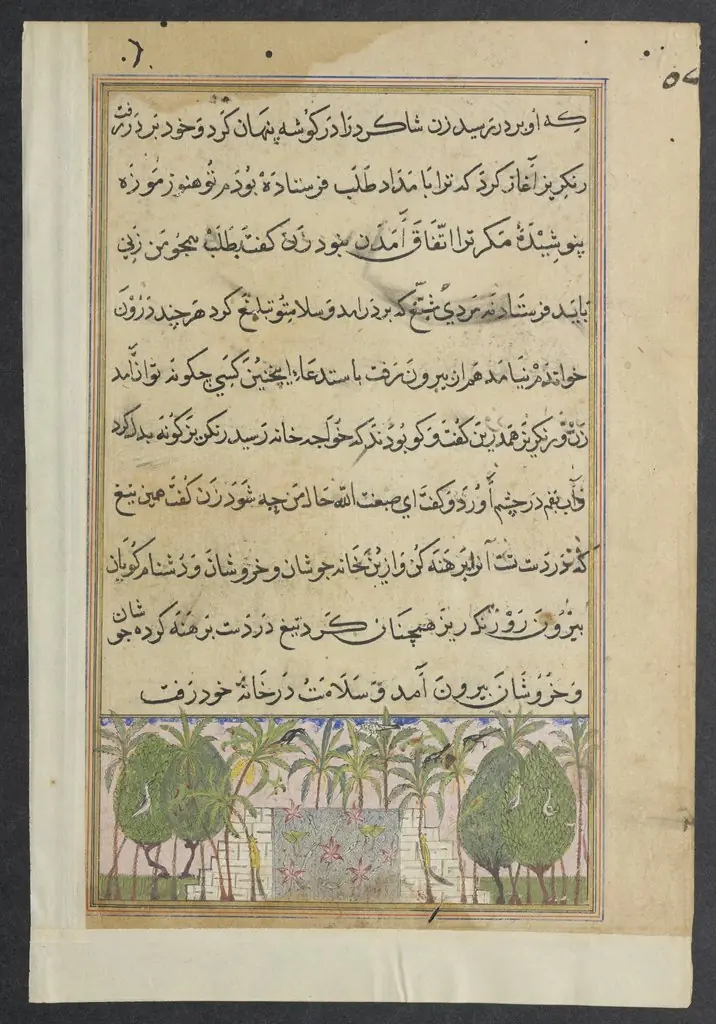 Landscape with a lotus pool, from a Tuti-nama (Tales of a Parrot): Eighth Night
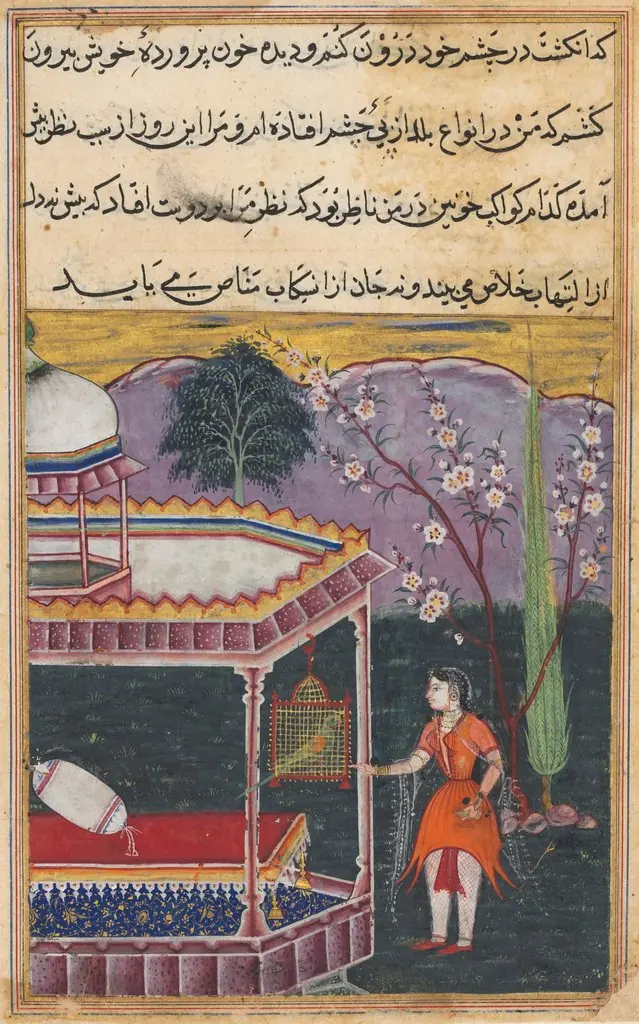 The Parrot Addresses Khujasta at the Beginning of the Eighth Night, from a Tuti-nama (Tales of a Parrot)
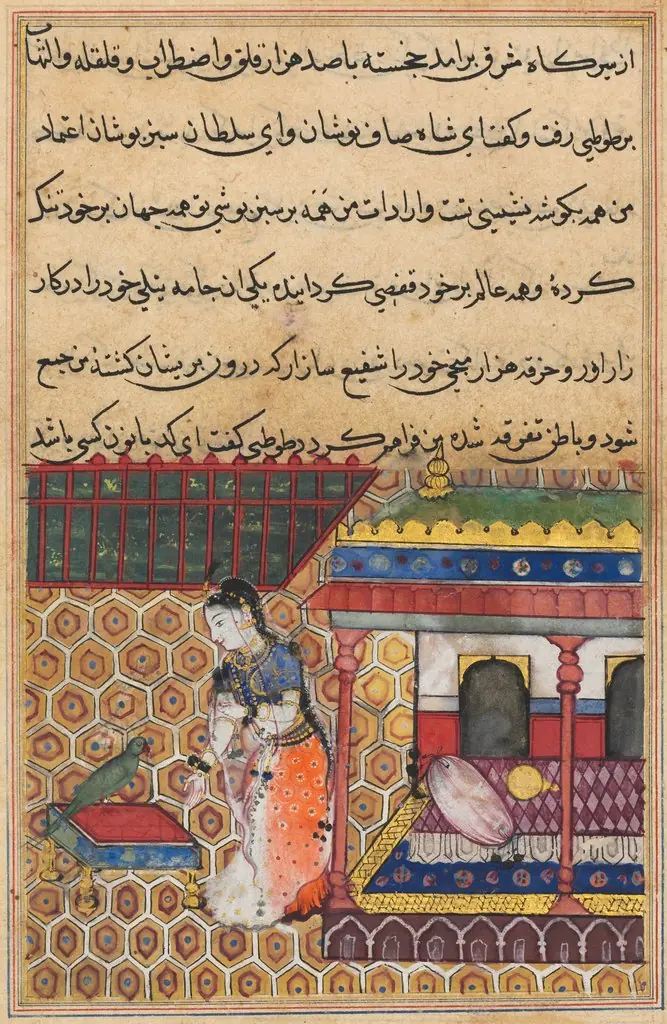 The parrot addresses Khujasta at the beginning of the thirty-eighth night, from a Tuti-nama (Tales of a Parrot)
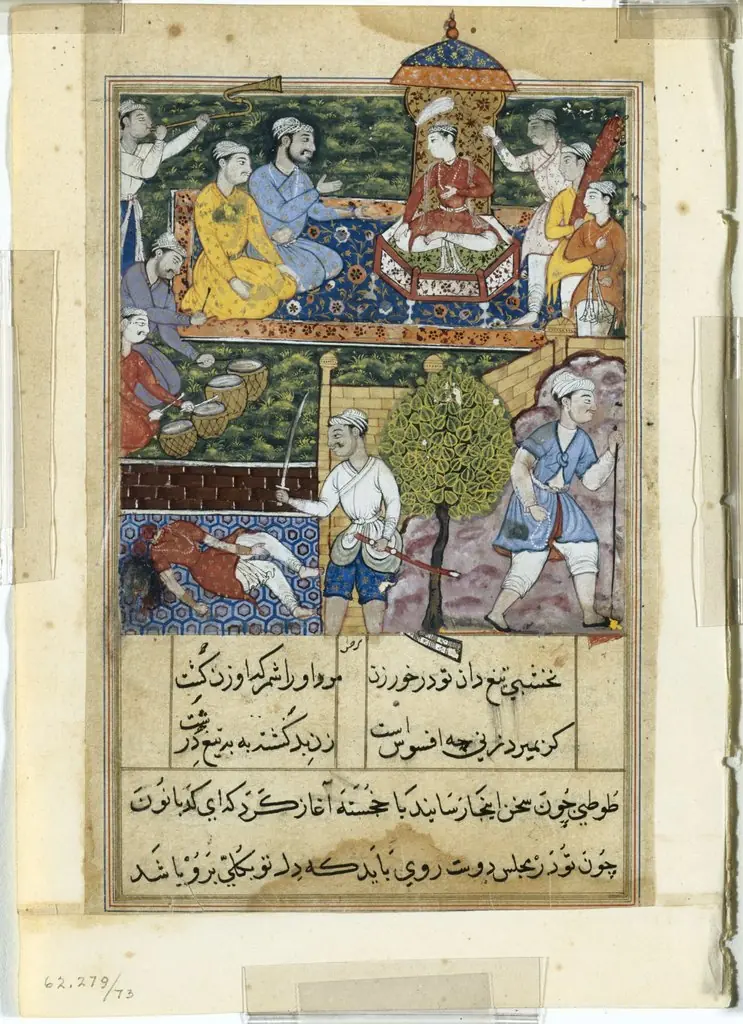 The young prince is crowned and the wicked handmaiden is executed, from a Tuti-nama (Tales of a Parrot): Eighth Night
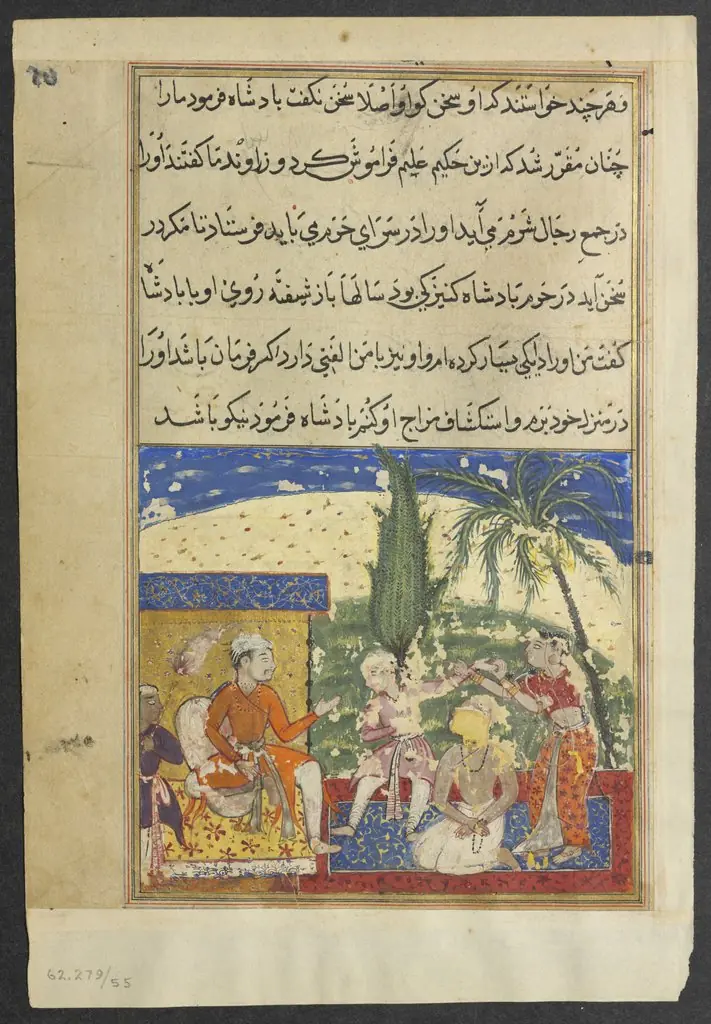 The king’s handmaiden takes the prince away to the harem, from a Tuti-nama (Tales of a Parrot): Eighth Night
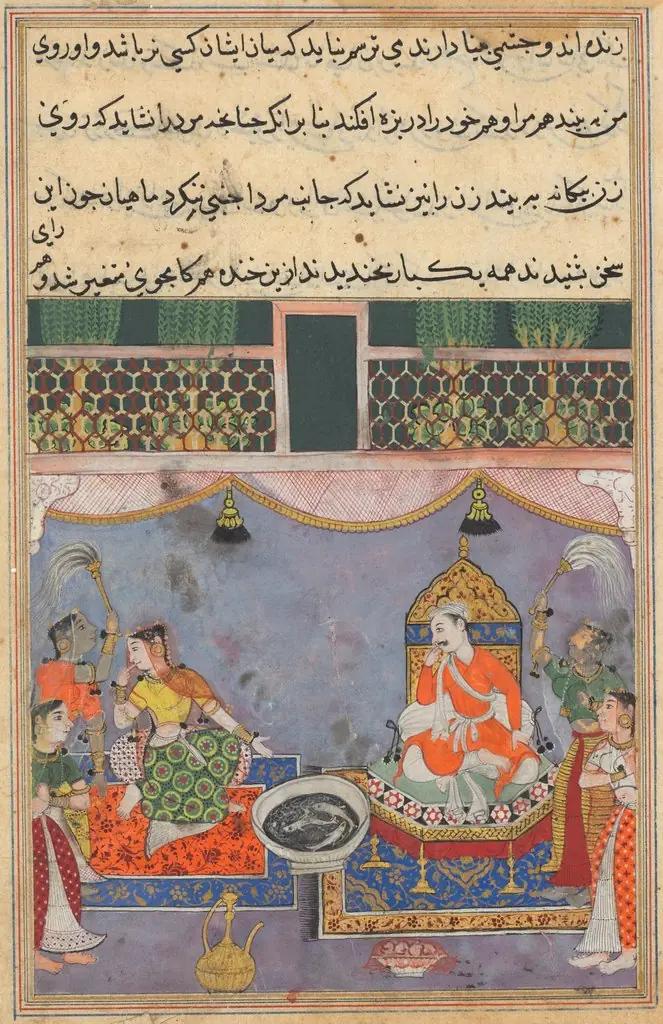 Kamjuy, the wife of the Raja, averts her face from the fishes, from a Tuti-nama (Tales of a Parrot): Twenty-third Night
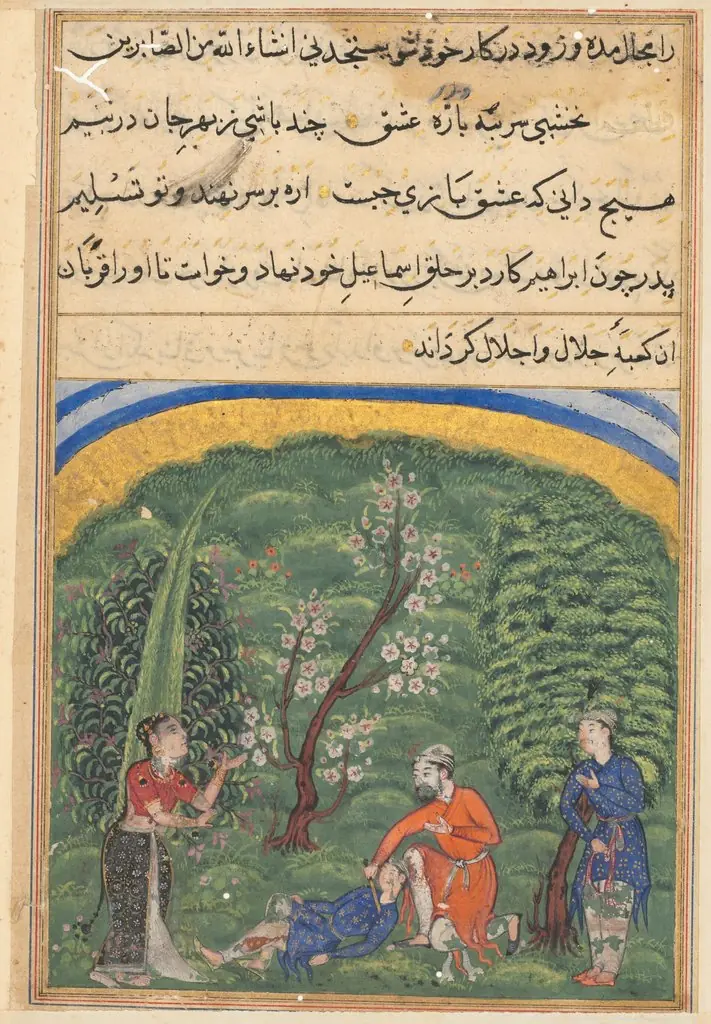 The sentinel in the employ of the Shah of Tabaristan prepares to sacrifice his son to the ghost of the Shah’s soul, from a Tuti-nama (Tales of a Parrot): Second Night
 The Parrot Addresses Khujasta at the Beginning of the Twenty-third Night, from a Tuti-nama (Tales of a Parrot)