Artwork
The Poet Kakinomoto no Hitomaro
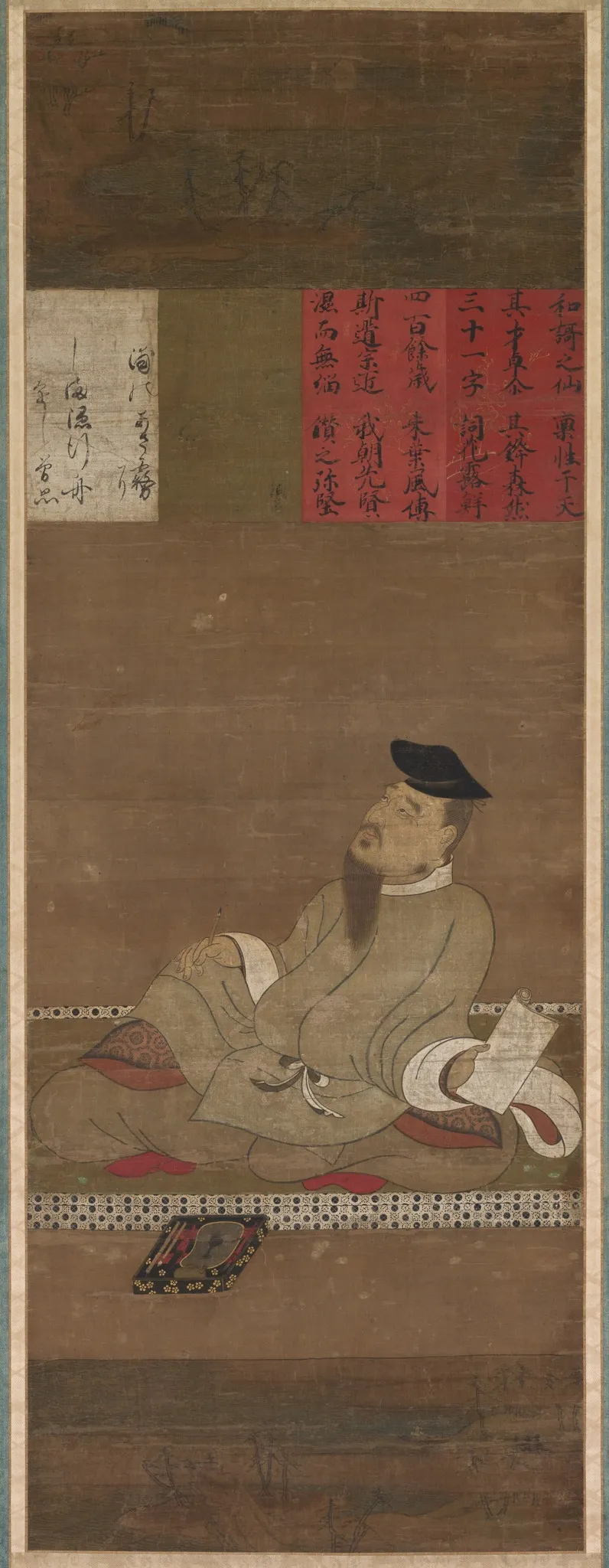
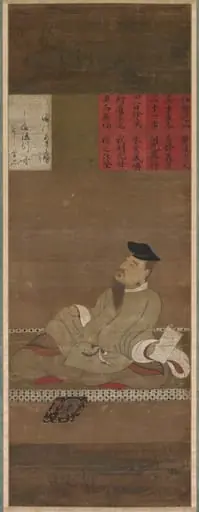
The Poet Kakinomoto no Hitomaro is an unspecified painting. It dates from 1325 and is held in the collection of the Cleveland Museum of Art.
About this work
Subject & Meaning
The painting portrays the Heian-period poet Kakinomoto no Hitomaro, a figure celebrated for his refined verses that embody courtly elegance and spiritual depth.
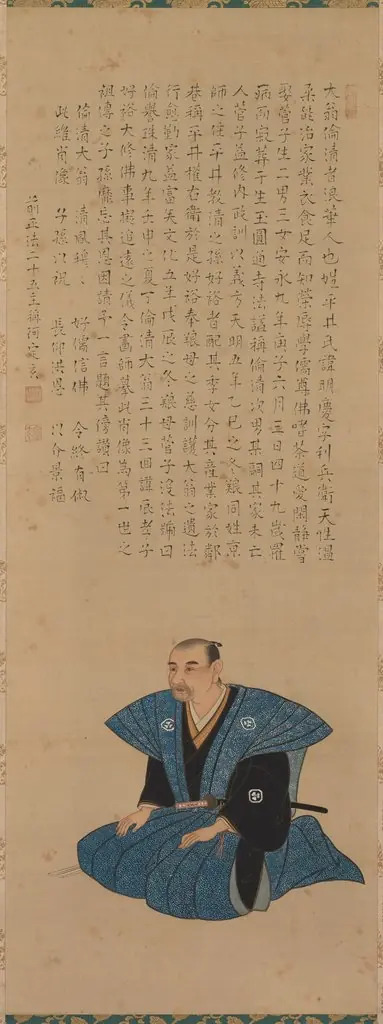
The painting portrays the Heian-period poet Kakinomoto no Hitomaro, a figure celebrated for his refined verses that embody courtly elegance and spiritual depth. Iconographically, the work situates the poet within a scholarly setting, emphasizing his role as a cultural exemplar through subtle attributes such as a writing brush and scroll. Symbolically, it reflects the Heian aristocracy's reverence for literary achievement and the transitory nature of poetic inspiration, linking personal genius to broader aesthetic ideals. The composition therefore conveys both historical significance and the timeless resonance of his poetic legacy.
The piece was created in 1325 in Japan and is housed in the Cleveland Museum of Art, underscoring its importance within the museum's collection of early Japanese paintings.
History & Provenance
The Poet Kakinomoto no Hitomaro is a Japanese painting dated to 1325, created by an unknown artist. The work entered the Cleveland Museum of Art’s collection, where it bears the accession number 1977.203, indicating its acquisition by the museum in 1977. Prior to that, its ownership history is not documented in the sources.
No record of a specific commission survives; the painting’s provenance before 1977 remains unknown. The piece has been housed continuously at the Cleveland Museum of Art since its arrival, where it is classified as a painting and made in Japan.
Context
The painting attributed to Kakinomoto no Hitomaro, created in 1325, holds a foundational place in Japanese art history as an early example of Yamato-e style. Its depiction of the poet reflects the Heian-period cultural emphasis on literary refinement and courtly aesthetics. The work's attribution to this canonical figure underscores scholarly discussions about poetic legacy in visual art, though its authorship remains debated.
The painting's presence in the Cleveland Museum of Art collection highlights its significance within Western art historical discourse, where it is studied as a representative of Heian-period narrative painting and its role in shaping East Asian artistic traditions.
Legacy
The Poet Kakinomoto no Hitomaro has been recognized as an influential figure in Japanese literary tradition, with his poetic legacy shaping later works in the waka and tanka forms. Scholars and collectors have examined his stylistic qualities, particularly the delicate brushwork and seasonal themes reflected in the painting attributed to him at the Cleveland Museum of Art. His reputation as a master poet continues to inform studies in classical Japanese art and literature, contributing to broader understandings of Heian-period aesthetics.
Overview
The work portrays a solitary figure seated on the floor, attired in traditional Japanese dress with a black cap and a flowing robe highlighted by a white collar and red detailing. He holds a brush in his right hand, poised over a scroll, his gaze directed inward. The muted brown backdrop, accented with subtle textures, reinforces an atmosphere of quiet concentration and literary creation.
Technique & Style
Executed in a restrained palette, the artist employs delicate brushwork to render the fabric’s folds and the poet’s serene expression. The background’s understated pattern provides depth without distracting from the central figure, while the use of chiaroscuro subtly models the three‑dimensional form against the flat plane, reflecting a synthesis of traditional Japanese ink techniques with a modest Western influence.
Artist & collection