Artwork
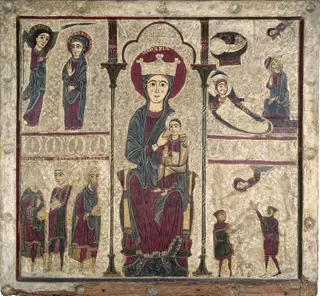
The Virgin and Child in Majesty and the Adoration of the Magi
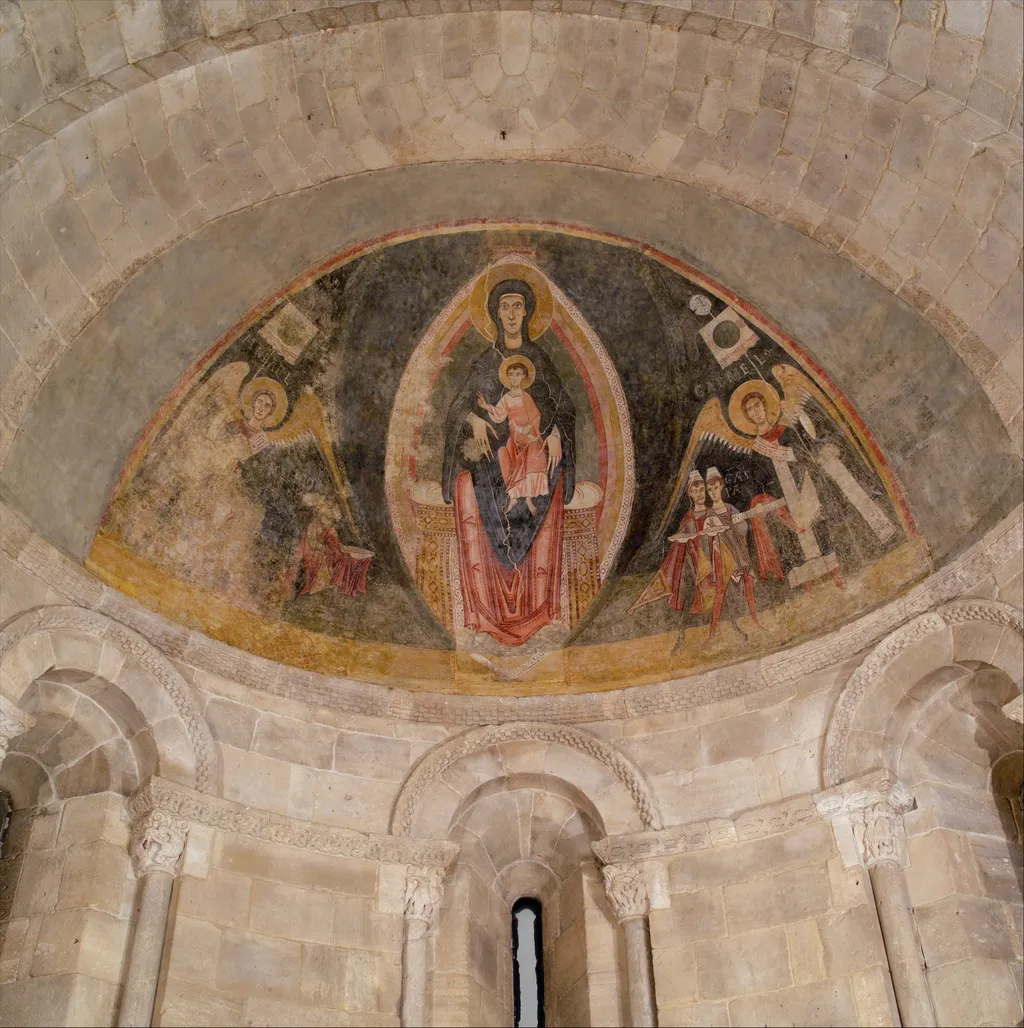
The Virgin and Child in Majesty and the Adoration of the Magi is an unspecified painting. It dates from 1100 and is held in the collection of the Metropolitan Museum of Art.
About this work
Subject & Meaning
This composition emphasizes Mary’s role as the throne of wisdom (Sedes Sapientiae), symbolizing her intercessory power and the divine authority of Christ.
The painting depicts the Virgin Mary enthroned in majesty, holding the Christ Child on her lap, a central theme in medieval Christian iconography known as the Maestà. This composition emphasizes Mary’s role as the throne of wisdom (Sedes Sapientiae), symbolizing her intercessory power and the divine authority of Christ. Below, the Adoration of the Magi unfolds, illustrating the Epiphany, the revelation of Christ to the Gentiles.
The Magi, representing the three known continents (Europe, Asia, and Africa), bow in reverence, offering gifts of gold, frankincense, and myrrh. These gifts carry symbolic weight: gold signifies Christ’s kingship, frankincense his divinity, and myrrh his mortality and future sacrifice.
The juxtaposition of the two scenes, Mary’s majesty and the Magi’s homage, reinforces the dual nature of Christ as both divine and human, while also underscoring the universal reach of Christianity.
History & Provenance
The Virgin and Child in Majesty and the Adoration of the Magi is dated to 1100, with the inception recorded as the year 1100.
The work is attributed to the Master of Pedret and is classified as a religious painting whose main subject is the Adoration of the Magi, also depicting the Christ Child. It is held in the collection of the Metropolitan Museum of Art, where it remains located. No details of a commission, prior ownership chain, or earlier provenance are documented in the available sources.
Context
The painting, dated to the early 12th century and attributed to the Master of Pedret, exemplifies Romanesque religious art through its formal composition and devotional focus on the Virgin, Child, and the visiting Magi. Its iconography reflects medieval theological emphasis on the manifestation of Christ to the Gentiles, a theme repeatedly examined in scholarship on early medieval panel painting. Held in the Metropolitan Museum of Art, the work serves as a key reference point for studies of devotional practices and stylistic developments within the broader corpus of Western sacred art.
Overview
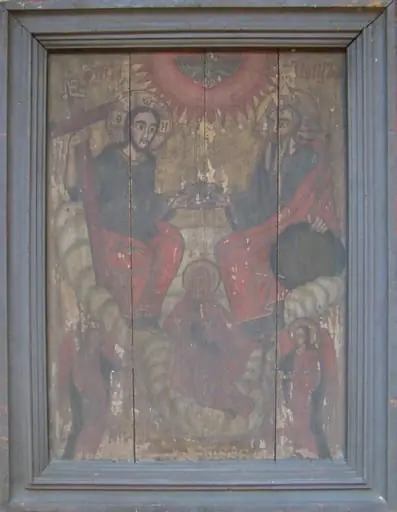
This painting, titled The Virgin and Child in Majesty and the Adoration of the Magi, depicts a central composition of a woman holding an infant, encircled by an architectural arch. Flanking these primary figures are two winged beings, while a smaller narrative scene unfolds below, featuring three kneeling individuals. Though the pigments have diminished over time, remnants of red garments, gilded halos, and deep backgrounds remain discernible, indicating its original visual richness.
Technique & Style
The composition employs a distinct half-circle arch to frame the central figures, lending a sense of enclosure and importance. Despite the fading of the original palette, the artwork retains indications of its initial splendor through visible traces of rich red drapery, luminous gold halos, and deep, contrasting backgrounds. The inclusion of winged figures further contributes to the painting's devotional and symbolic visual language.
Artist & collection

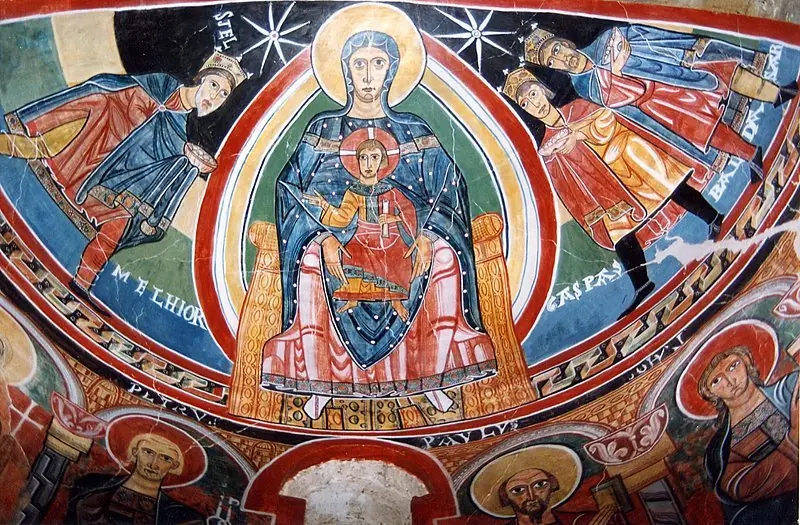
- Apse of Santa Maria de Taüll
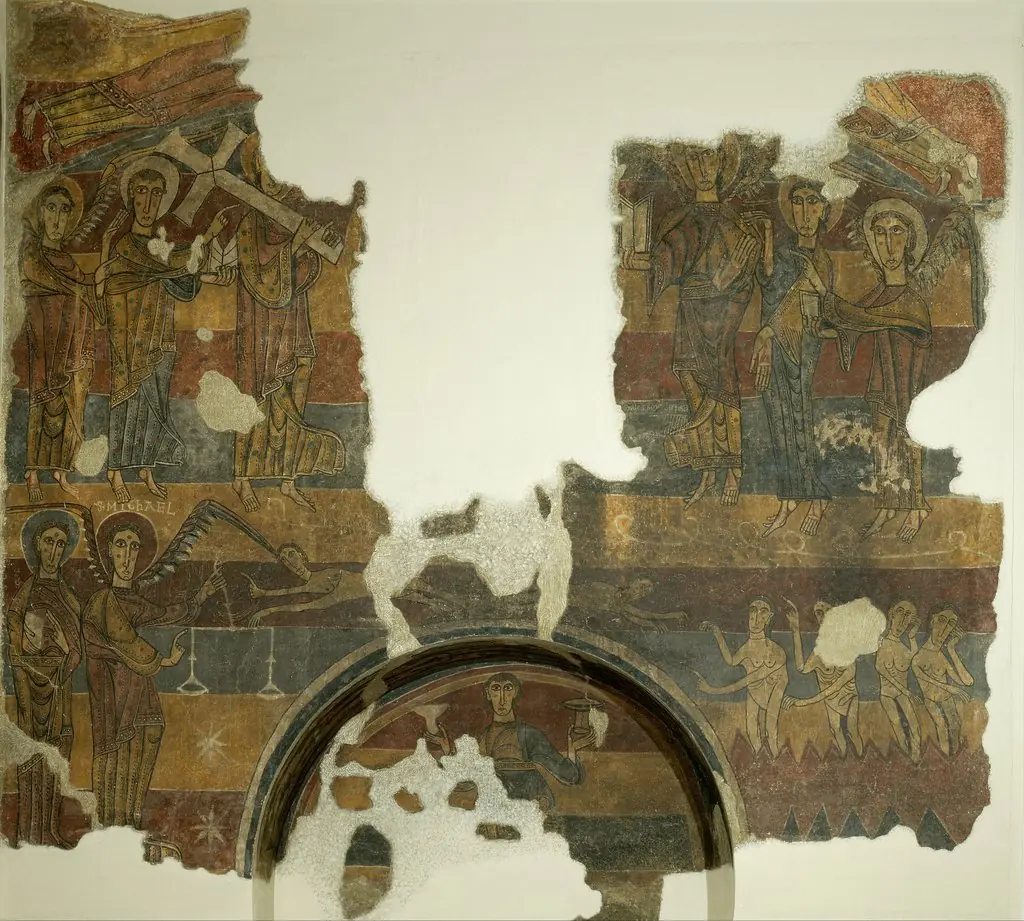 The Day of Judgement from Santa Maria de Taüll
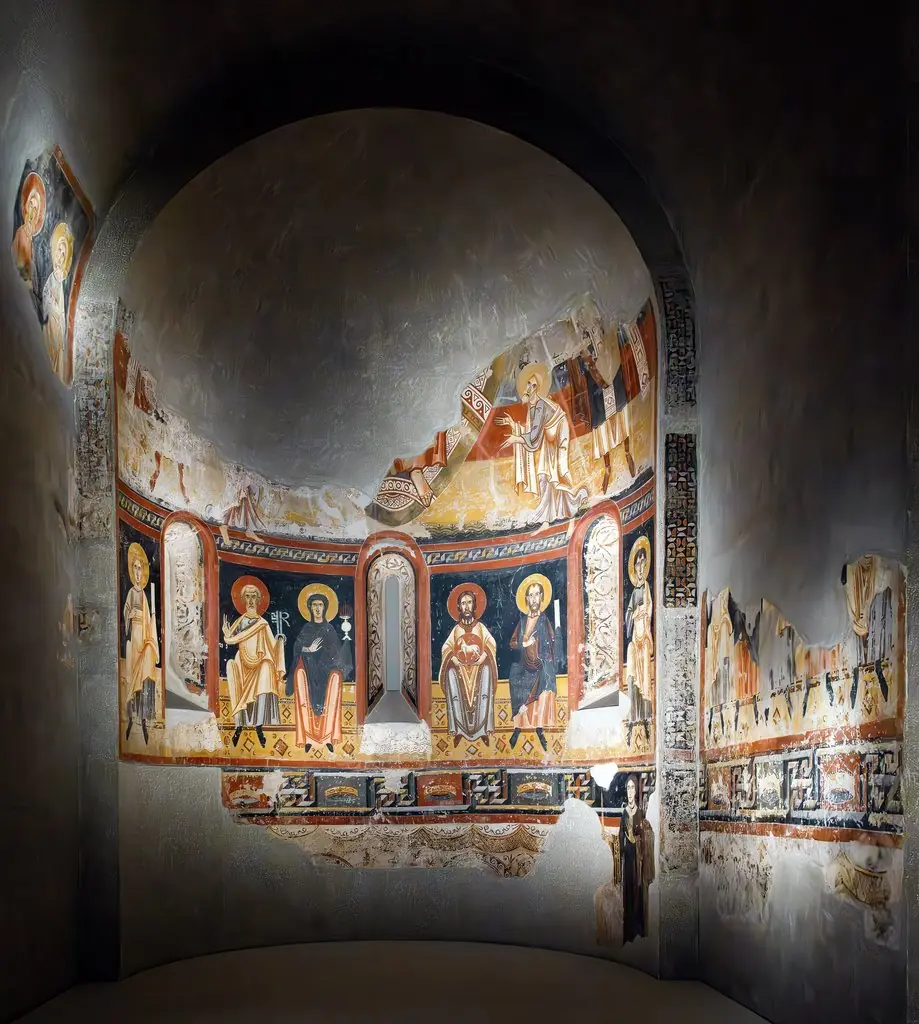 Apse of Burgal
 Altar frontal from Rigatell
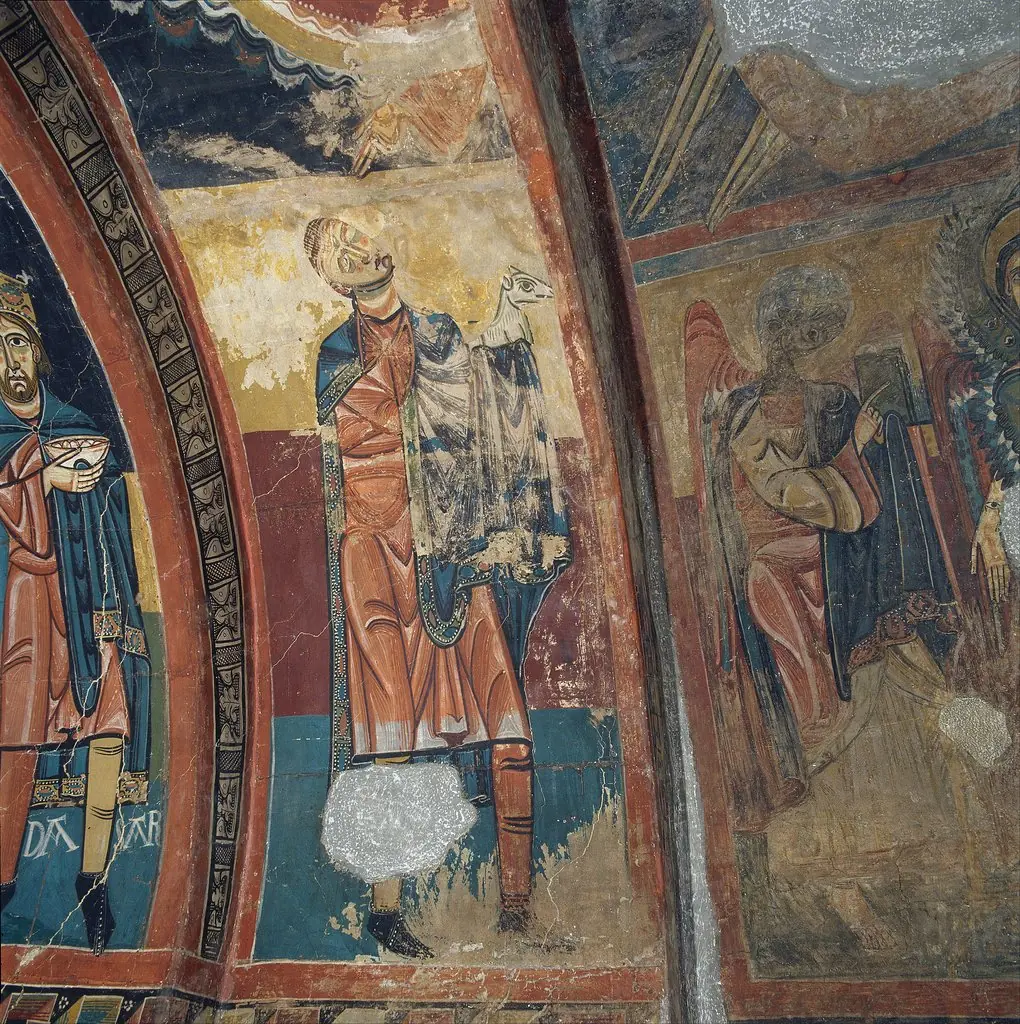 Arch of Abel's Offering from Santa Maria de Taüll
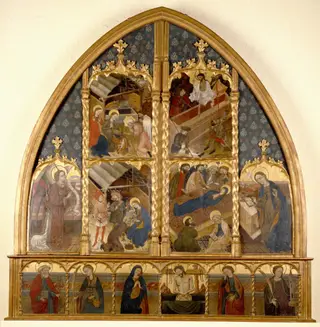 Nativity, Annunciatory Angel, Adoration of the Magi, Resurrection, Death of the Virgin, The Annunciate, Saints Peter and Lucy, Virgin Mary, Resurrected Christ, Saints John and Barbara
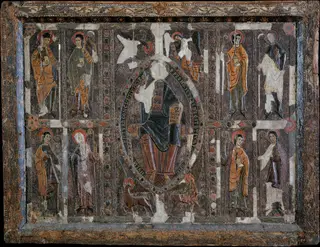 Altar frontal from Planès
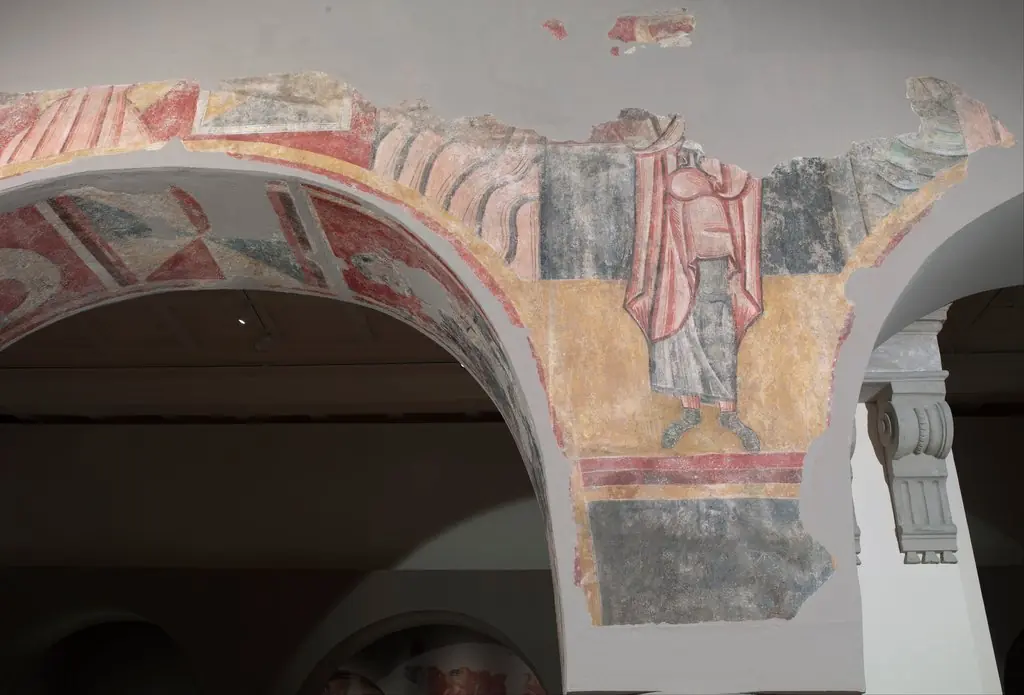 Saint from Boí
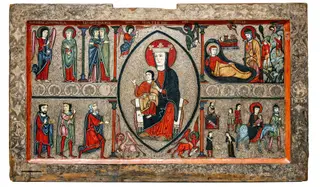 Altar frontal from Cardet
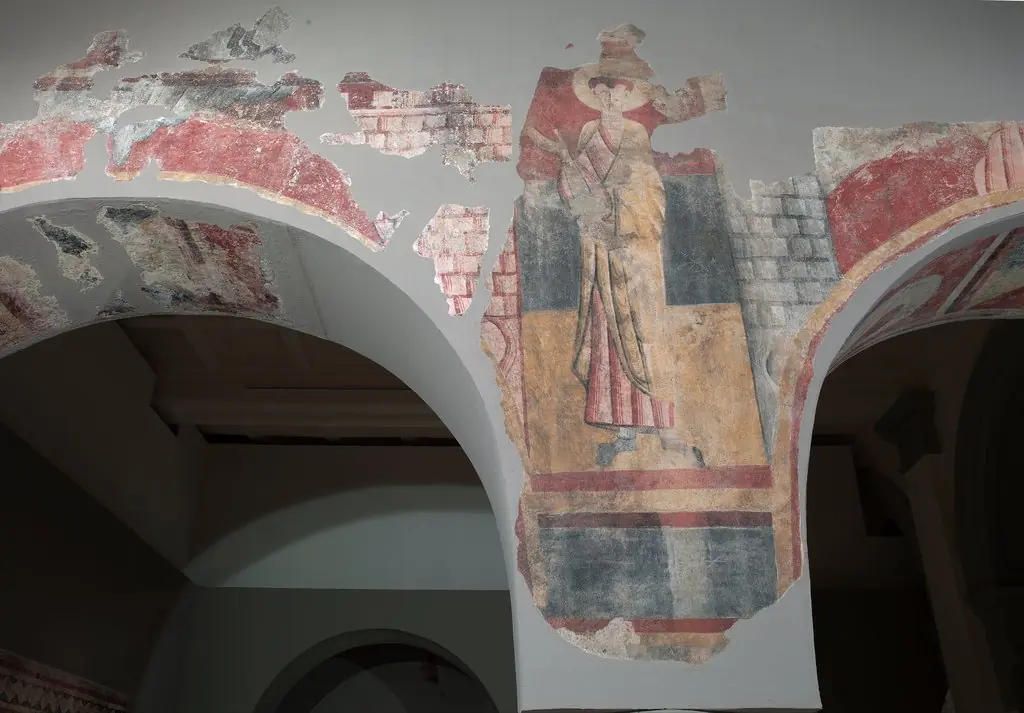 Saint between two towers from Boí
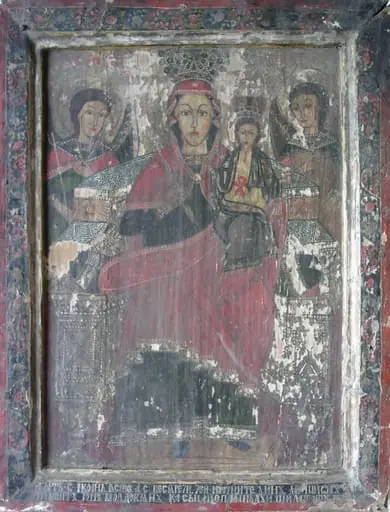 Maica Domnului cu Pruncul
 Încoronarea Fecioarei