Artwork
Altar frontal from Planès
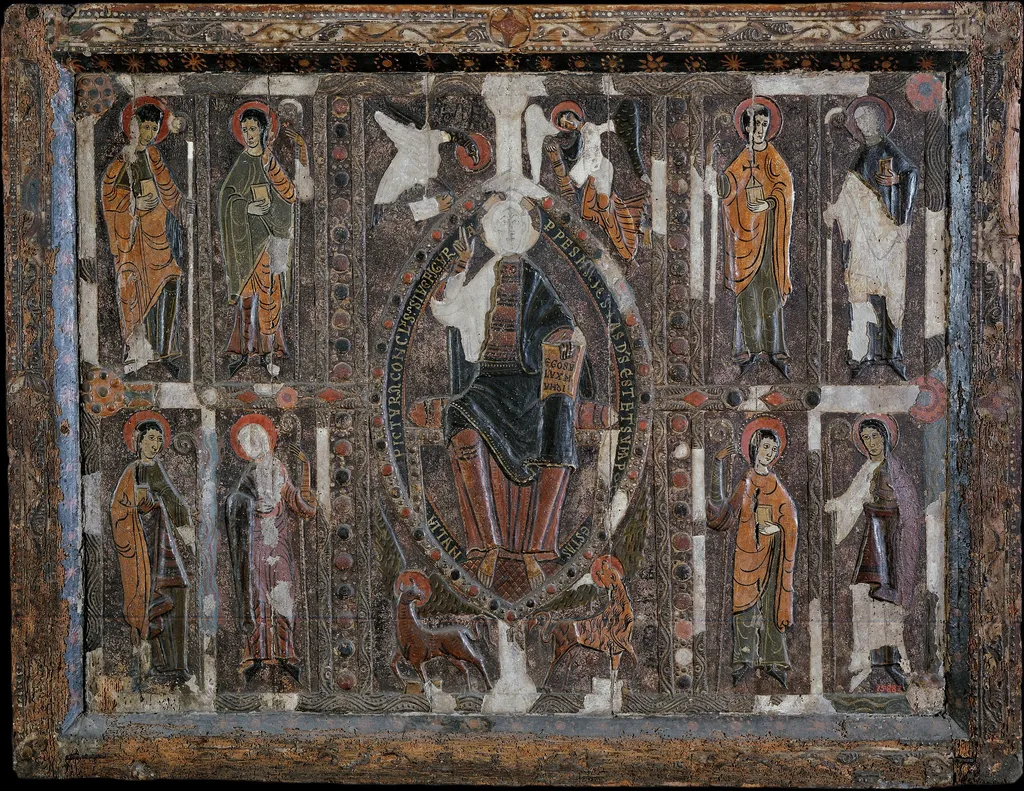
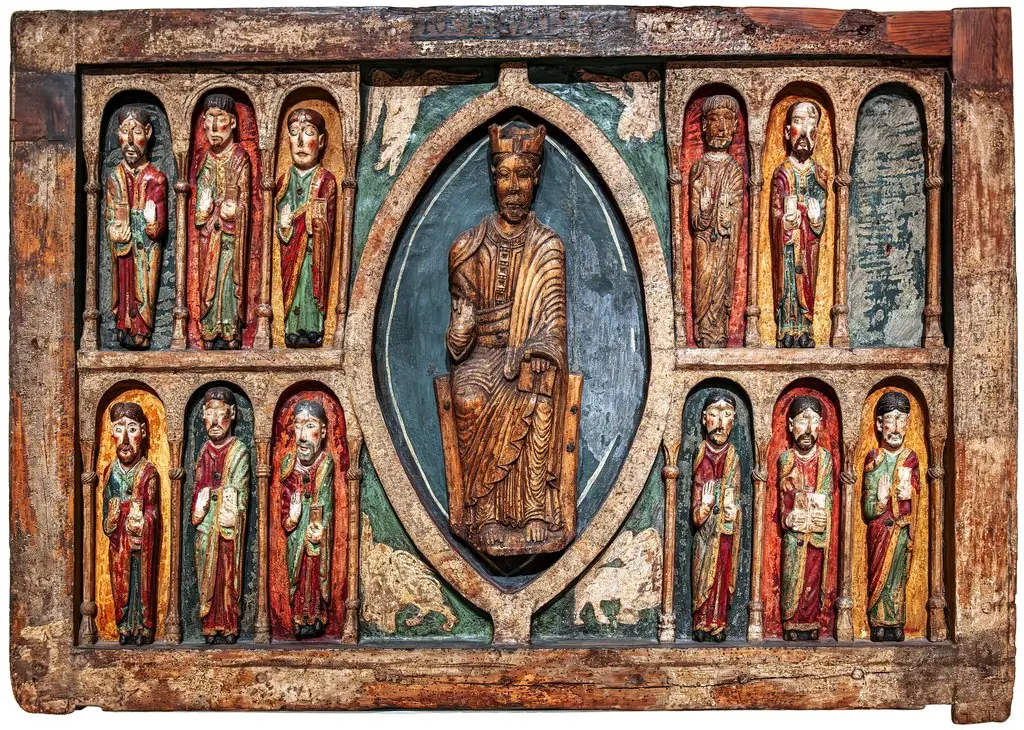
Altar frontal from Planès is an unspecified painting by the Romanesque artist Unknown. It dates from 1150 and is held in the collection of the Museu Nacional d'Art de Catalunya. This painted panel originates from the small Pyrenean village of Planès in Catalonia.
About this work
Overview
This painted panel originates from the small Pyrenean village of Planès in Catalonia. Designed as an altar frontal, it functioned liturgically to adorn the front of a church altar, likely during the late 12th or early 13th century. Made of wood and decorated with tempera paint, it reflects the devotional art traditions of rural Catalan churches in the Romanesque period.
Subject & Meaning
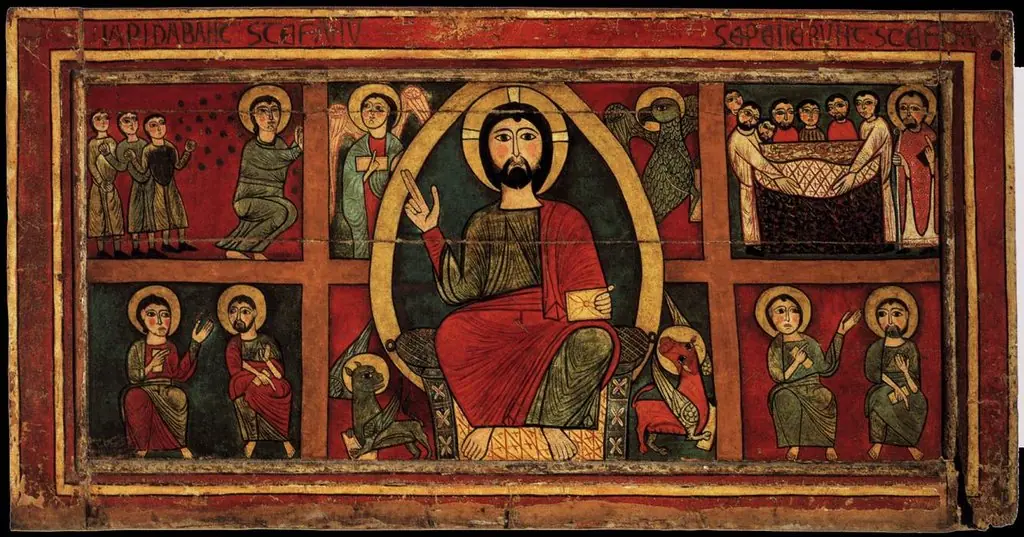
The central image depicts Christ in Majesty, seated on a throne within a mandorla, flanked by the symbols of the Four Evangelists. Below, the Virgin Mary and Saint John the Baptist are shown in supplicant poses, emphasizing intercession. The composition follows Byzantine iconographic models, reinforcing theological themes of divine authority and heavenly mediation.
Technique & Style
The painting employs tempera on wood, with bold outlines and flat, stylized forms typical of Romanesque art. Colors are restrained, ochres, earth reds, and muted blues, applied in even layers without shading. Figures are elongated and arranged hierarchically, prioritizing symbolic clarity over naturalistic depth, consistent with regional liturgical aesthetics of the time.
History & Provenance
The panel was discovered in the church of Sant Joan de Planès, where it remained in situ until the 20th century. It was later removed for preservation and is now held in a museum collection. Its survival is notable, as many similar altar frontals were destroyed during iconoclastic periods or replaced in later renovations.
Context
Created during a period of monastic expansion in the Catalan Pyrenees, the frontal reflects the influence of Cluniac reforms and the spread of Romanesque liturgical art from southern France. Its modest scale and local execution suggest it was commissioned by a small rural parish, blending broader ecclesiastical traditions with regional craftsmanship.
Legacy
As one of the few surviving altar frontals from its region and era, it provides insight into the visual culture of minor Catalan churches. It contributes to scholarly understanding of how standardized religious imagery was adapted locally, preserving a tangible link to medieval worship practices in a remote mountain community.
Artist & collection









- Altar frontal from Cardet
 Altar frontal from Alós d'Isil
 Altar frontal from Ix
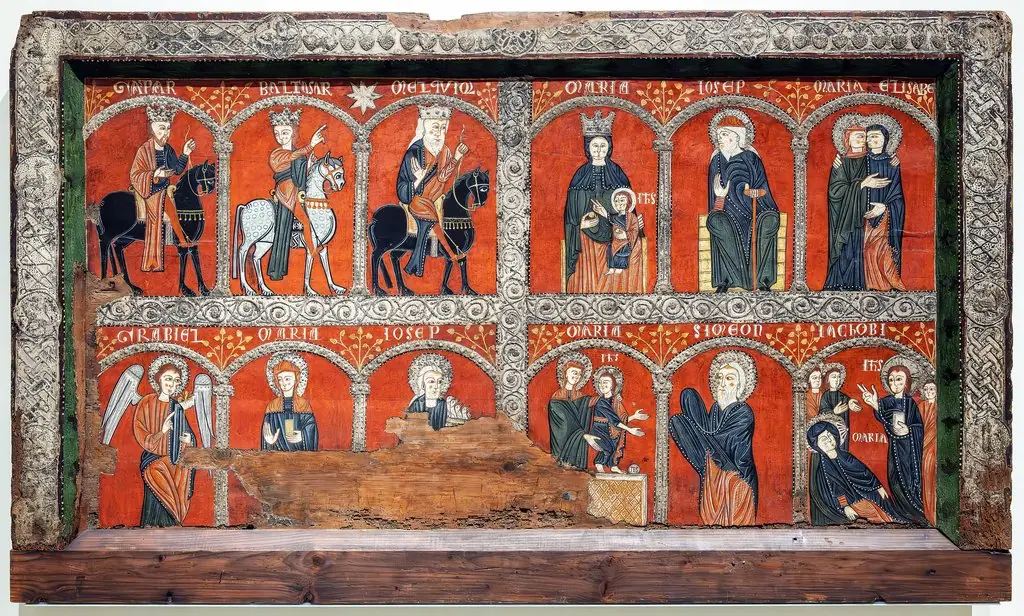 Altar frontal from Mosoll
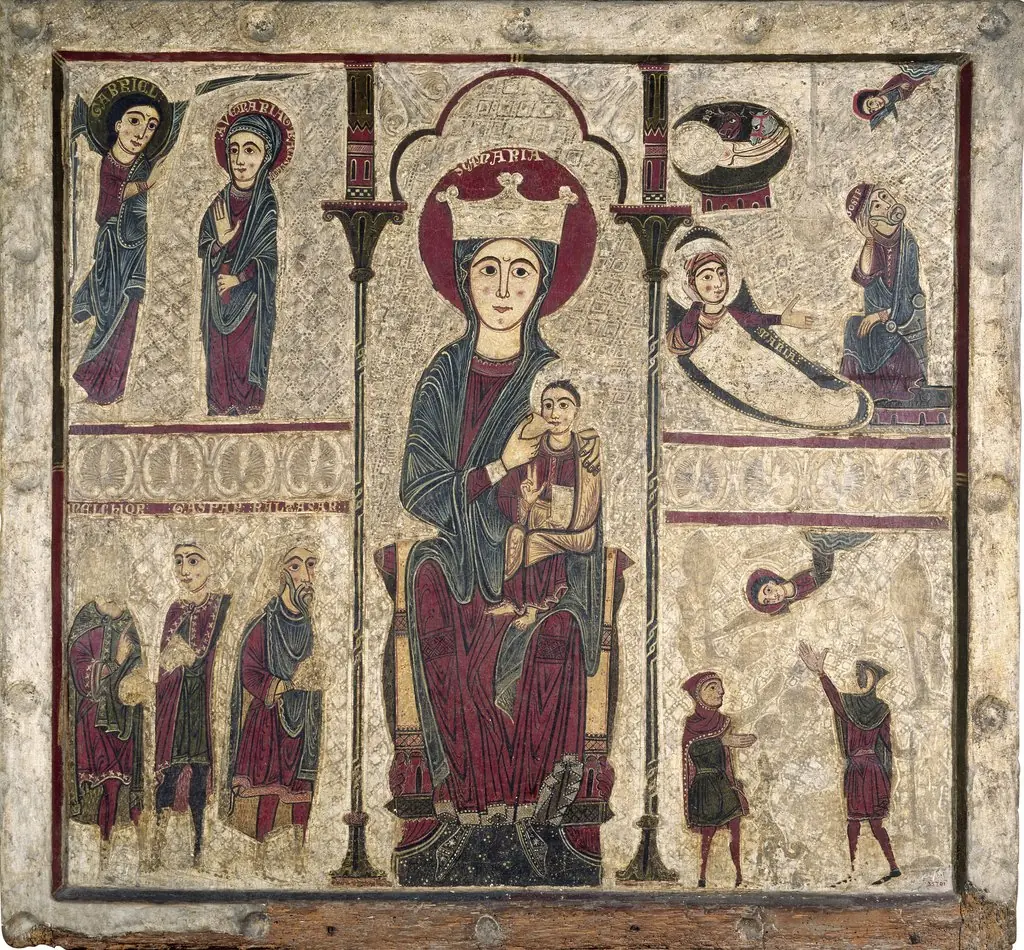 Altar frontal from Rigatell
 Altar frontal
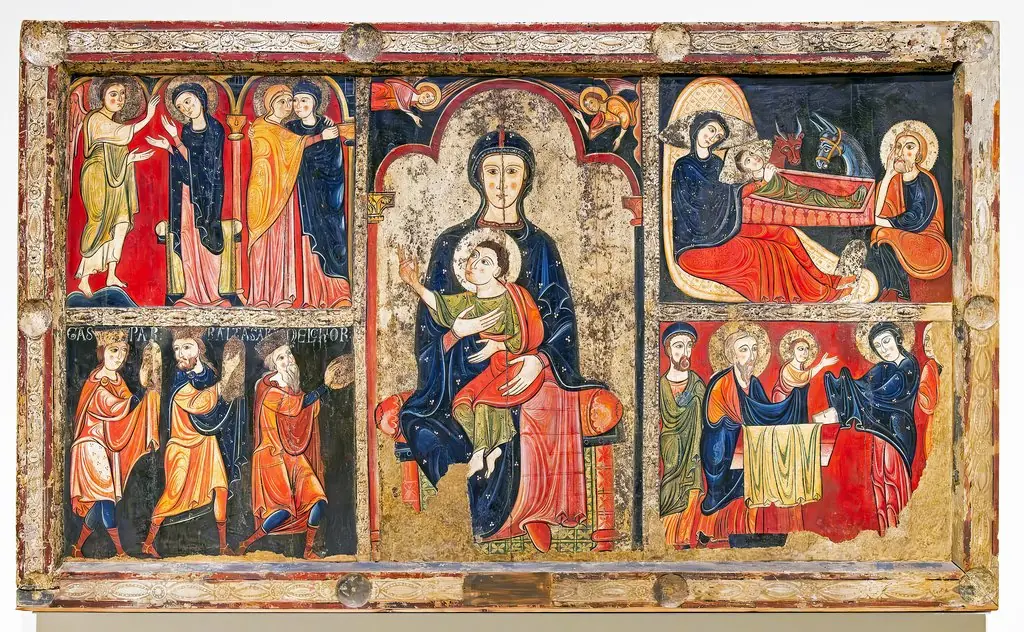 Altar frontal from Avià
 Altar frontal from Esquius
 Altar frontal from Esterri de Cardós
 Altar frontal of Jesus' childhood
 Altar frontal from Sant Romà de Vila
 Altar frontal from Santa Maria in Taüll