Artwork
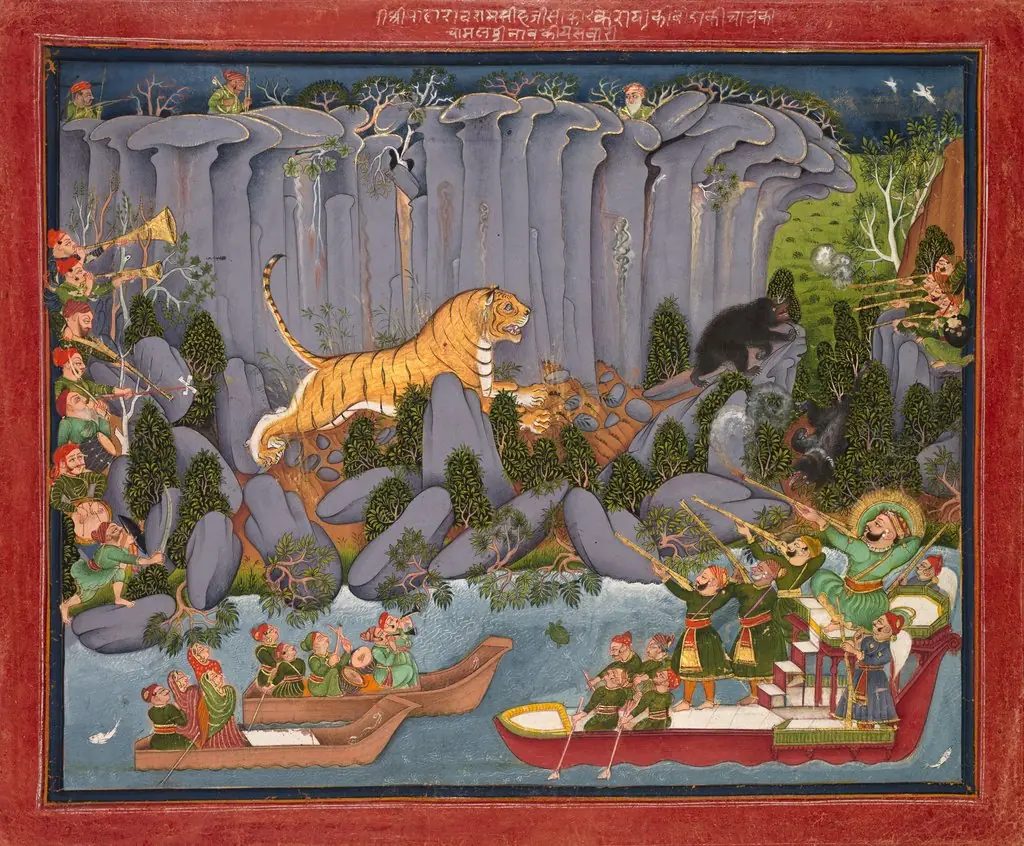
Tiger Hunt of Raja Ram Singh II
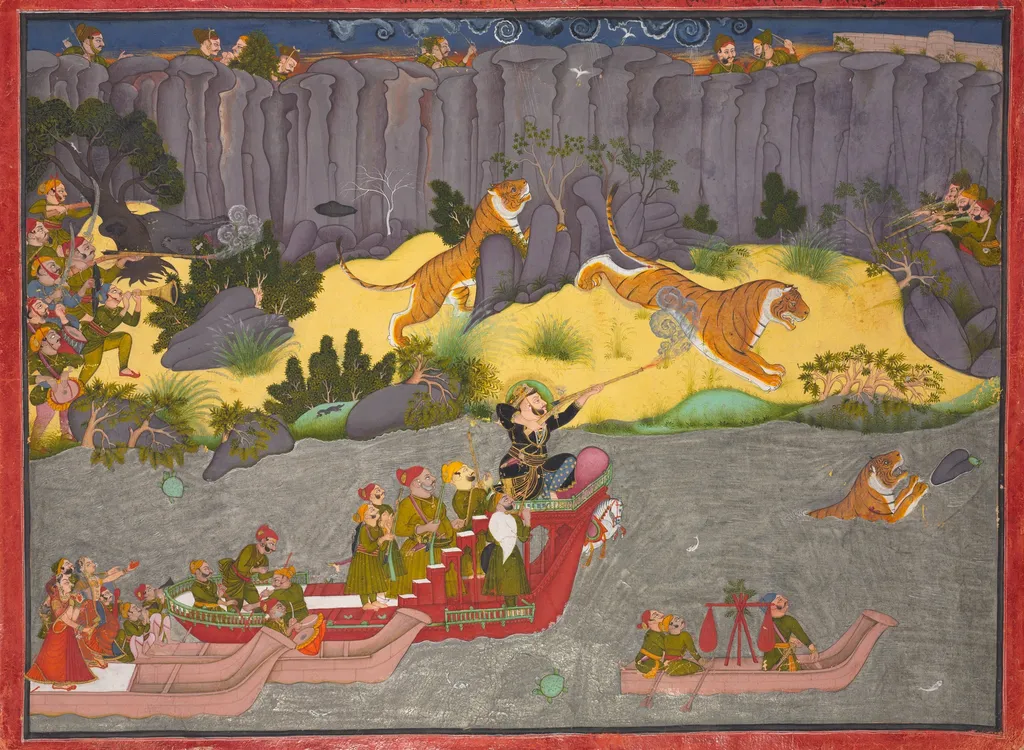
Tiger Hunt of Raja Ram Singh II is an unspecified painting. It dates from 1835 and is held in the collection of the Cleveland Museum of Art.
About this work
Overview
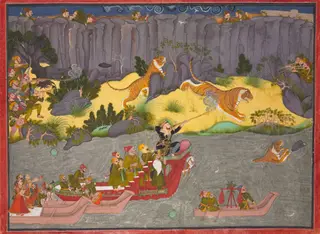
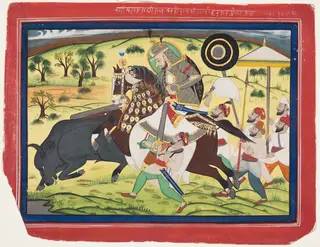
The work entitled Tiger Hunt of Raja Ram Singh II depicts a dramatic chase scene in which a mounted rider fires at a tiger amidst vivid, sun‑lit hills. Below, a flotilla of figures in brightly patterned attire observes from a river, while additional wildlife and distant figures populate the landscape, creating a layered narrative of royal sport and natural spectacle.
Subject & Meaning
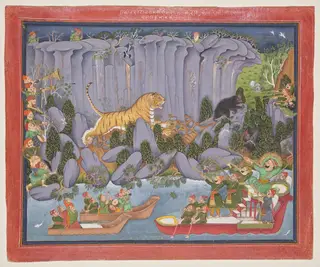
The composition centers on a royal hunting expedition, a traditional display of power and valor. The presence of onlookers in boats and on a rocky outcrop suggests communal participation and the ceremonial nature of the hunt, while the surrounding fauna underscores the ruler’s dominion over both land and animal realms.
Technique & Style
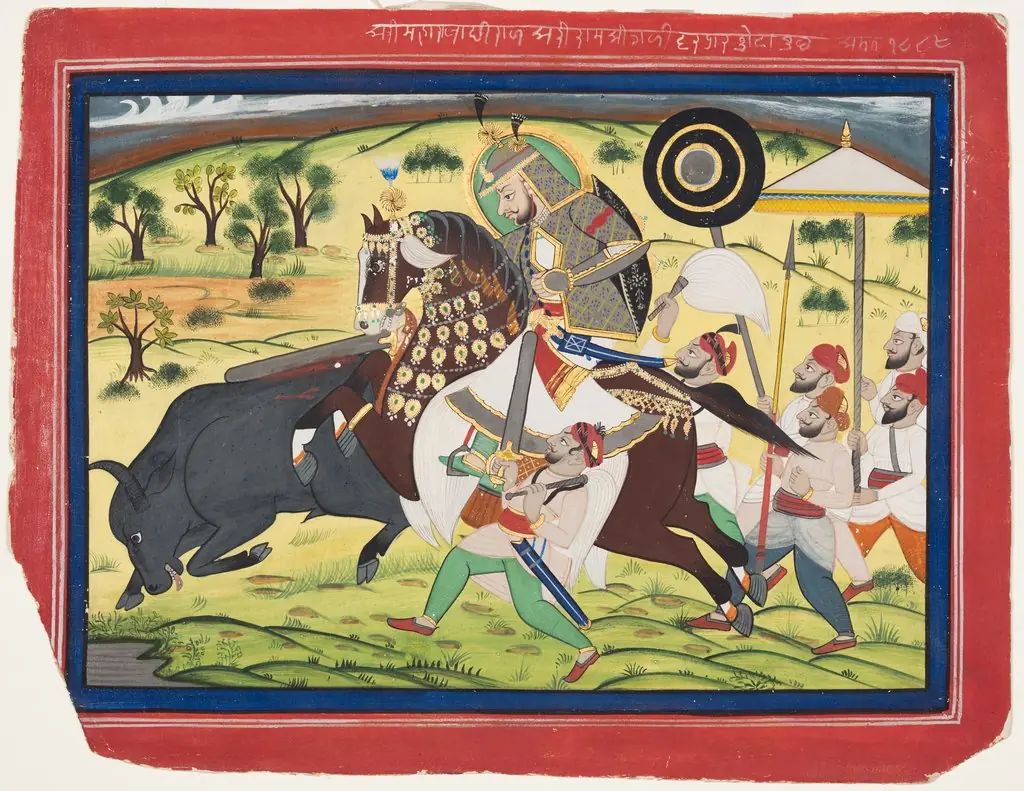
Executed with a palette of saturated yellows, reds and blues, the painting employs intricate decorative motifs on clothing and foliage, characteristic of courtly art intended for elite patrons. Fine brushwork renders the tiger’s musculature and the rider’s attire, while broader washes convey the expansive hills and river, balancing detail with atmospheric depth.
History & Provenance
The piece is associated with Raja Ram Singh II, a 19th‑century Indian monarch noted for his patronage of the arts. Though specific acquisition details are scarce, the work has entered the collection of the Cleveland Museum of Art, where it is catalogued among other princely hunting scenes.
Context
Royal hunting scenes were a popular genre in South Asian court painting, serving both as records of regal exploits and as allegorical affirmations of sovereign authority. The inclusion of elaborate costumes and vibrant scenery reflects the aesthetic preferences of the period’s aristocracy, linking the artwork to broader traditions of dynastic representation.
Artist & collection