Artwork
Maharao Ram Singh II of Kota (r. 1828–66) Hunting Buffalo
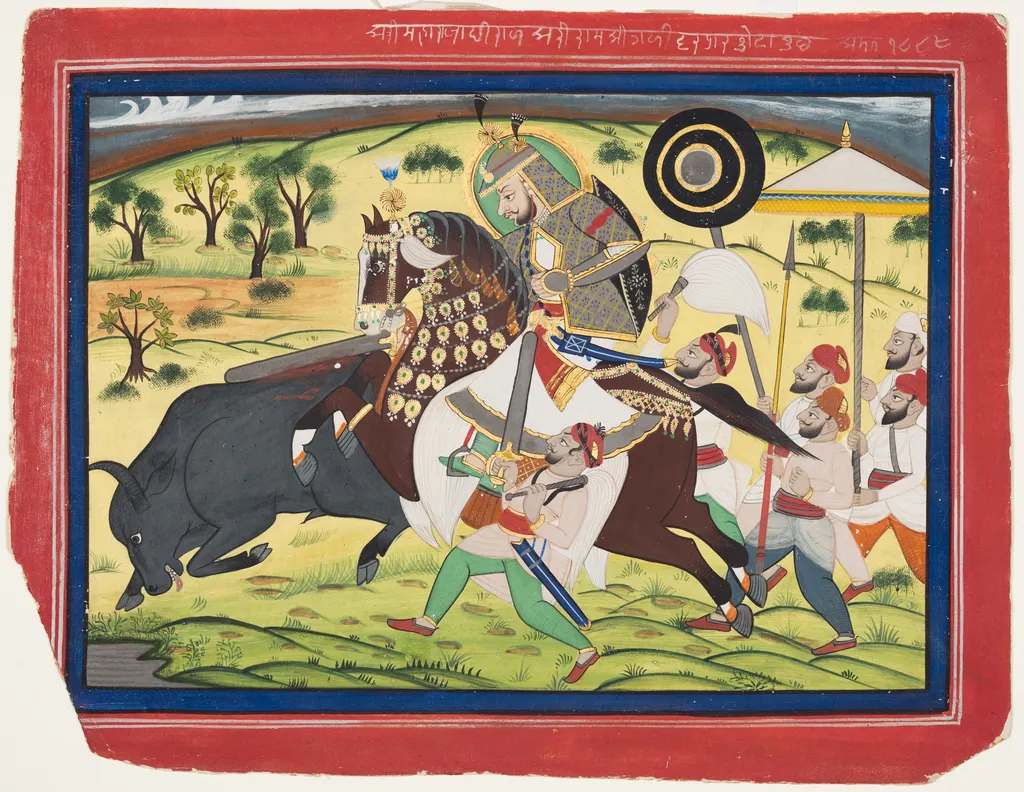
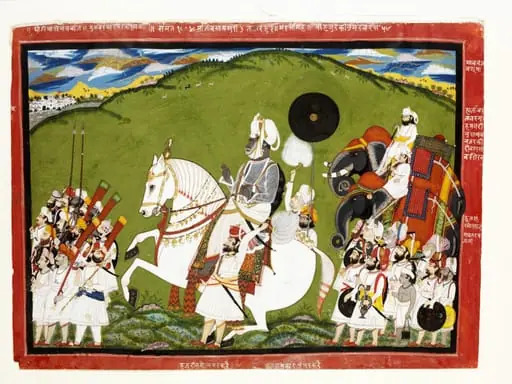
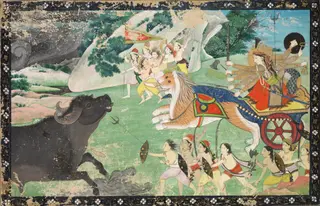
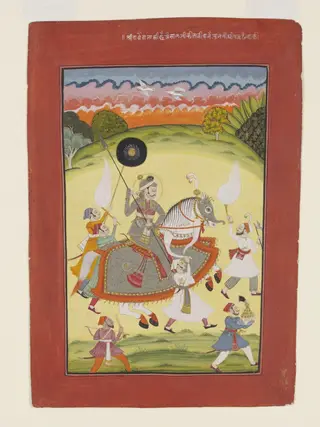
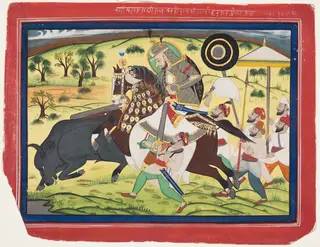
Maharao Ram Singh II of Kota (r. 1828–66) Hunting Buffalo is an unspecified painting. It dates from 1832 and is held in the collection of the Cleveland Museum of Art. The work depicts Maharao Ram Singh II of Kota, ruler from 1828 to 1866, engaged in a buffalo hunt.
About this work
Subject & Meaning
The painting portrays Maharao Ram Singh II of Kota during a buffalo hunt, an activity that symbolized royal vigor and martial prowess in Rajput culture. Hunting scenes in Rajput court art often conveyed the ruler's connection to nature and his role as a protector, reflecting themes of power and sovereignty.
History & Provenance
1828–66) Hunting Buffalo, created in 1832, is held in the collection of the Cleveland Museum of Art in Cleveland.
The painting Maharao Ram Singh II of Kota (r. 1828–66) Hunting Buffalo, created in 1832, is held in the collection of the Cleveland Museum of Art in Cleveland. The work is cataloged under the accession number 2018.180. While the specific exhibition history is not detailed in the available records, the artwork's presence in the museum's permanent collection is confirmed by its accession documentation.
Overview
The work depicts Maharao Ram Singh II of Kota, ruler from 1828 to 1866, engaged in a buffalo hunt. Mounted on a richly adorned horse, the Maharao thrusts a sword at a charging black buffalo while other riders, equipped with spears and shields, observe. The scene unfolds beneath a yellow sky, framed by trees, and the participants are dressed in vivid, patterned attire.
Technique & Style
Executed in a detailed, narrative style typical of 19th‑century Indian court painting, the composition balances dynamic movement with ornamental richness. Fine brushwork renders the gold embroidery on the horse and the intricate patterns on clothing, while the broader background employs a flattened perspective and a warm, yellow‑toned sky.
Context
Royal hunts were integral to the political and cultural life of Indian princely states, serving both as training for warfare and as public demonstrations of sovereignty. The depiction reflects the synthesis of indigenous artistic conventions with influences from European portraiture that entered Indian courts during this period.
Artist & collection