Artwork
Tiger Hunt of Ram Singh II
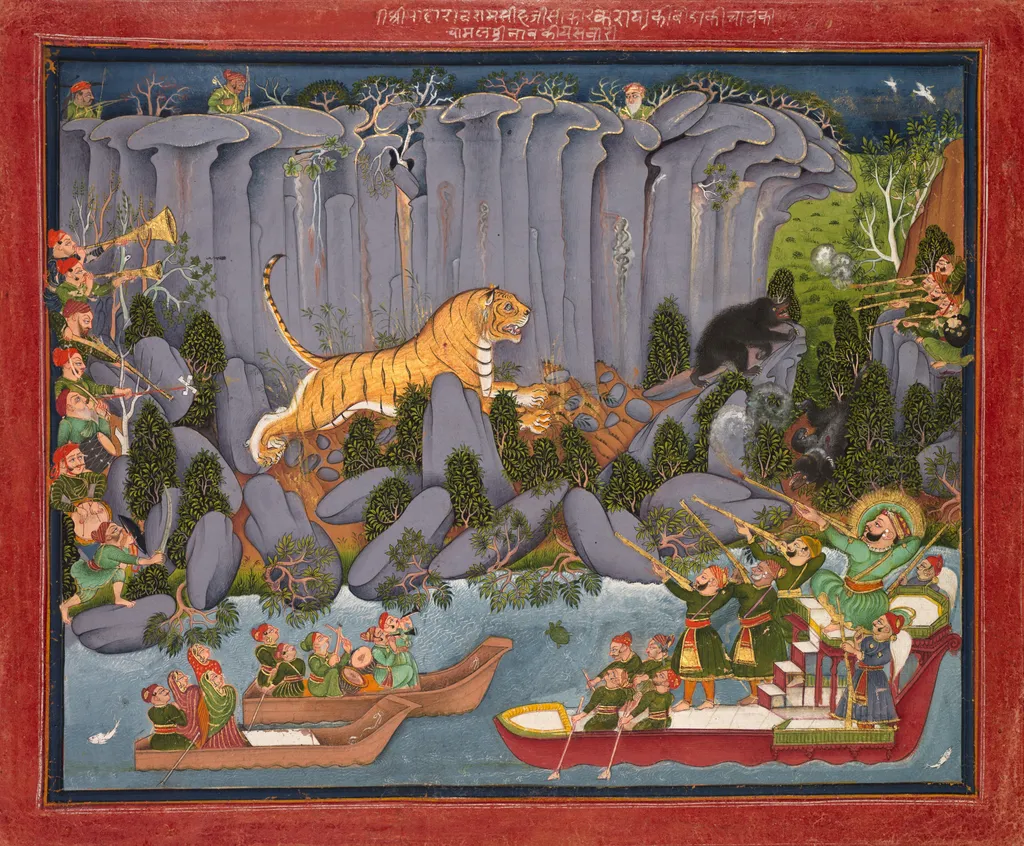
Tiger Hunt of Ram Singh II is an unspecified painting. It dates from 1835 and is held in the collection of the Cleveland Museum of Art.
About this work
History & Provenance
The Tiger Hunt of Ram Singh II is held by the Cleveland Museum of Art, where it is catalogued under accession number 1991.
The painting known as Tiger Hunt of Ram Singh II was created in 1835 by an artist who remains unidentified. The work entered the collection of the Cleveland Museum of Art, where it is held under the accession number 1991.168. While the specific circumstances of its commission and the details of its ownership prior to its museum acquisition are not detailed in the available records, the piece is formally classified as a painting dating from the early nineteenth century.
The Tiger Hunt of Ram Singh II is held by the Cleveland Museum of Art, where it is catalogued under accession number 1991.168. The painting, dated to 1835, entered the museum's collection and remains in its holdings.
The work has been displayed at the Cleveland Museum of Art as part of its collection of Indian paintings.
Overview
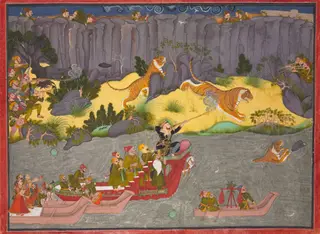
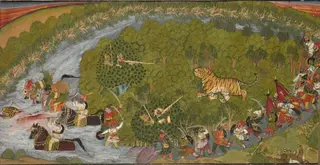
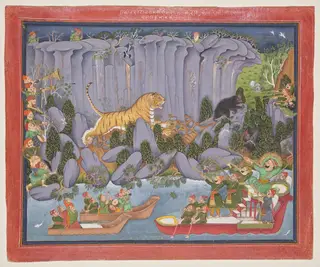
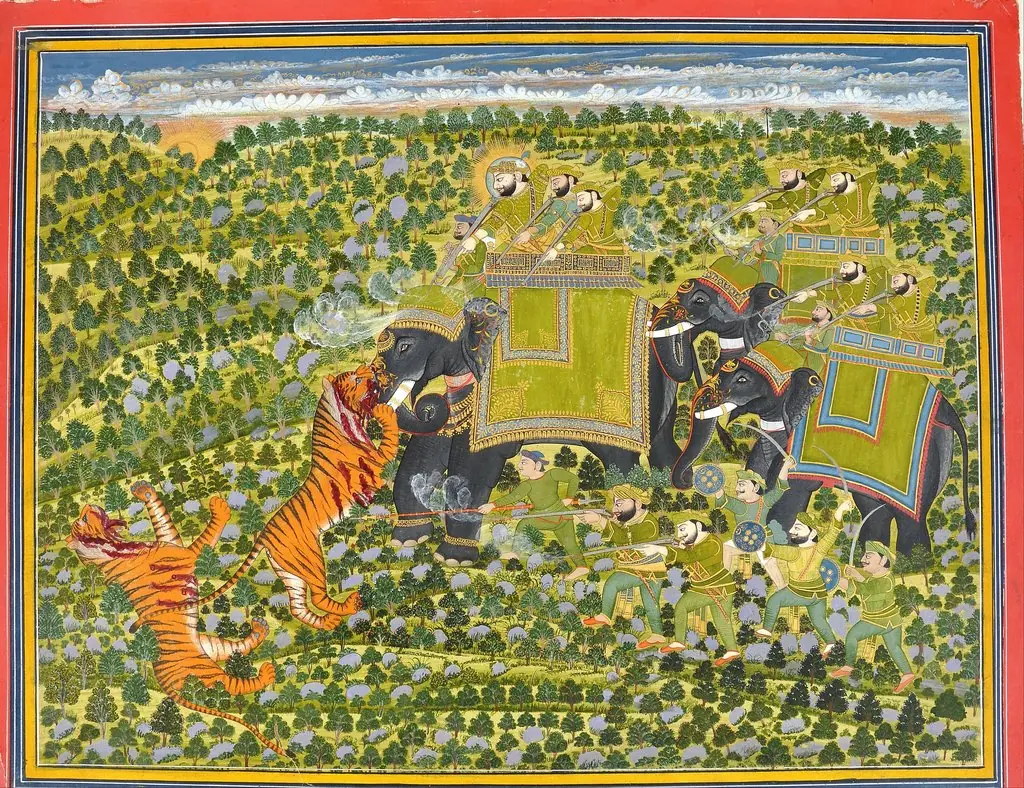
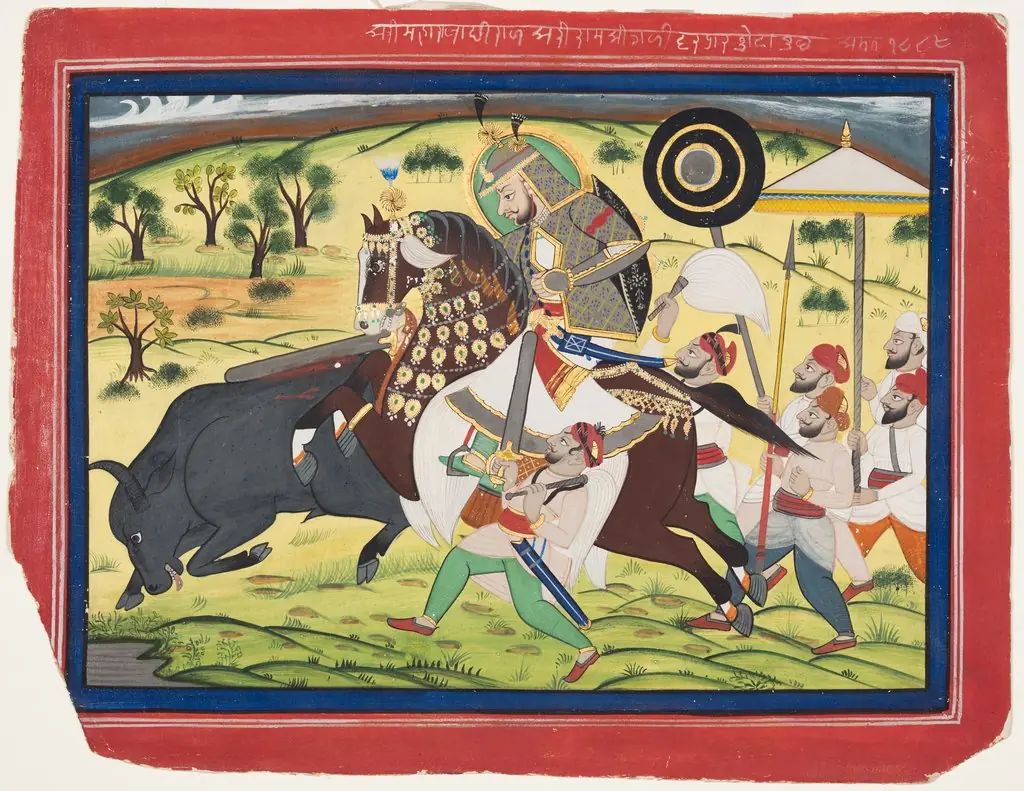
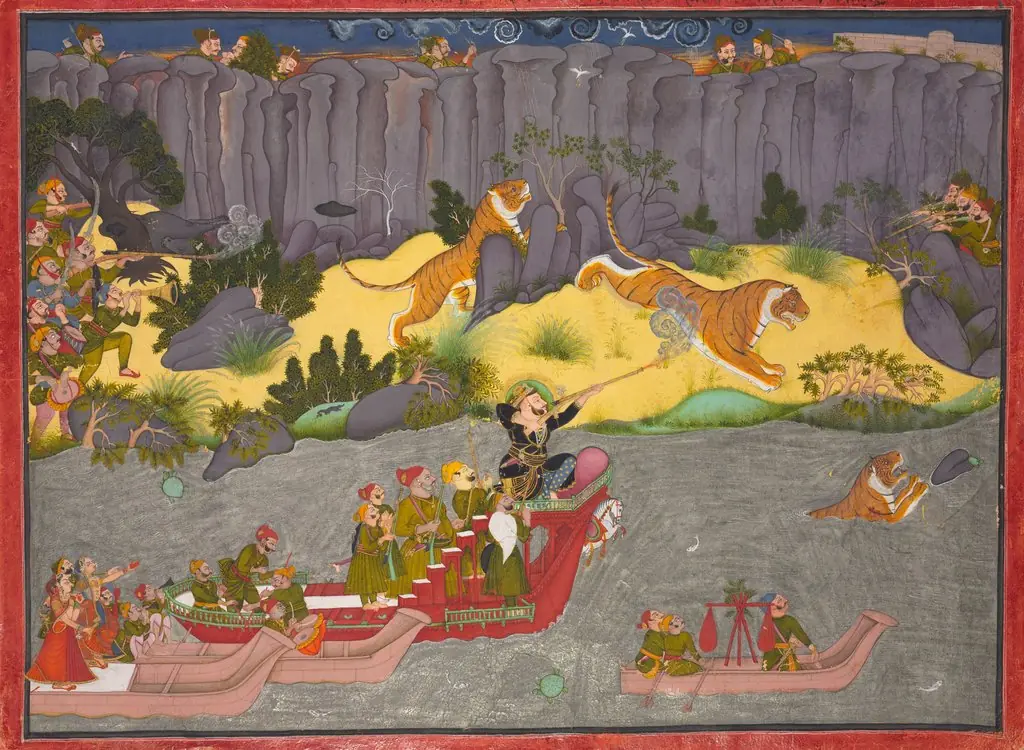
The work titled “Tiger Hunt of Ram Singh II” portrays a dynamic hunting episode in which a tiger dominates the central space of the canvas. The animal, rendered in orange and black stripes, stands on a rocky outcrop while surrounding foliage and a cliff backdrop frame the scene. Small boats populated by men bearing spears and other weapons occupy the foreground, suggesting an active pursuit.
Subject & Meaning
The composition captures a moment of confrontation between humans and a powerful predator, emphasizing the vigor of the hunt. The tiger’s prominent placement and the energetic posture of the hunters convey themes of bravery, dominance over nature, and the ceremonial aspects of royal sport in the region associated with Ram Singh II.
Technique & Style
Executed with vivid coloration and meticulous detail, the painting employs a lively palette to differentiate the tiger’s fur, the verdant vegetation, and the rocky terrain. Brushwork conveys motion, particularly in the water and the gestures of the boatmen, while the overall arrangement balances realism in the animal’s anatomy with a stylized representation of the landscape.
Artist & collection