Artwork
Tobacco Sign
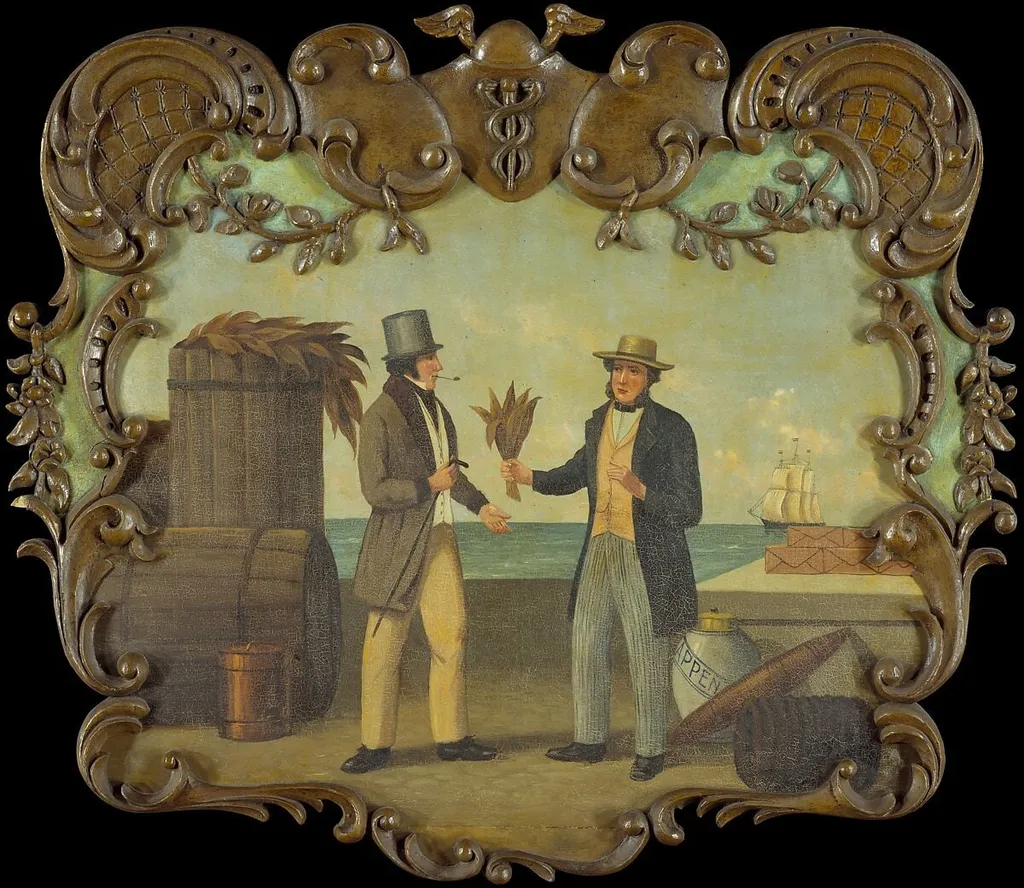
Tobacco Sign is an oil painting. It dates from 1850 and is held in the collection of the Metropolitan Museum of Art.
About this work
Subject & Meaning
Created around 1850 by an unidentified artist, this oil-on-wood work functions as a genre scene on the theme of tobacco.
Created around 1850 by an unidentified artist, this oil-on-wood work functions as a genre scene on the theme of tobacco. The composition depicts a male figure smoking, establishing the primary subject, while a ship is also present, plausibly alluding to the maritime trade that carried tobacco during the mid-nineteenth century. The presence of iron hardware, together with the subject, suggests the panel may have served a utilitarian purpose such as a shop sign advertising tobacco goods. The work links a scene of personal habit with the broader commercial networks of the period.
Technique & Style
The work is executed in oil on a wooden panel, with iron hardware suggesting a reinforced or mounted support. The medium is oil applied to wood. As a genre scene, the composition centers on a solitary figure smoking, accompanied by a stylized ship.
The formal qualities reflect a direct, descriptive approach with clear delineation of forms and a muted palette emphasizing the everyday activity. The painting's dimensions are approximately 60.3 × 69.2 cm, as recorded in the catalogue. It is displayed in the Metropolitan Museum of Art's American Wing.
History & Provenance
The Tobacco Sign was executed around 1850 in oil on wood with iron elements; the artist is unidentified. The work belongs to the genre-scene category and portrays a man smoking beside a ship. It is held in the Metropolitan Museum of Art, classified under the American Wing, with recorded dimensions of 60.3 cm in height and 69.2 cm in width. No specific accession number, prior ownership, or exhibition history is documented in the available sources.
Overview
This object, titled "Tobacco Sign," is an example of commercial art from the 19th century. Crafted from oil paint on wood and incorporating an iron element, it served as an outdoor advertisement for a tobacco merchant. Its design was intended to be easily recognizable and informative to potential customers, particularly those arriving from the docks, indicating the nature of the business within.
Context
Unlike artworks created for gallery display, this "Tobacco Sign" was conceived as a utilitarian object, a piece of street furniture advertising a specific trade. Its original placement would have been outside a tobacco shop during the 1800s, likely in a port town where its maritime theme resonated. Such signs represent a significant category of American folk art, reflecting the visual culture of everyday commerce.
Artist & collection

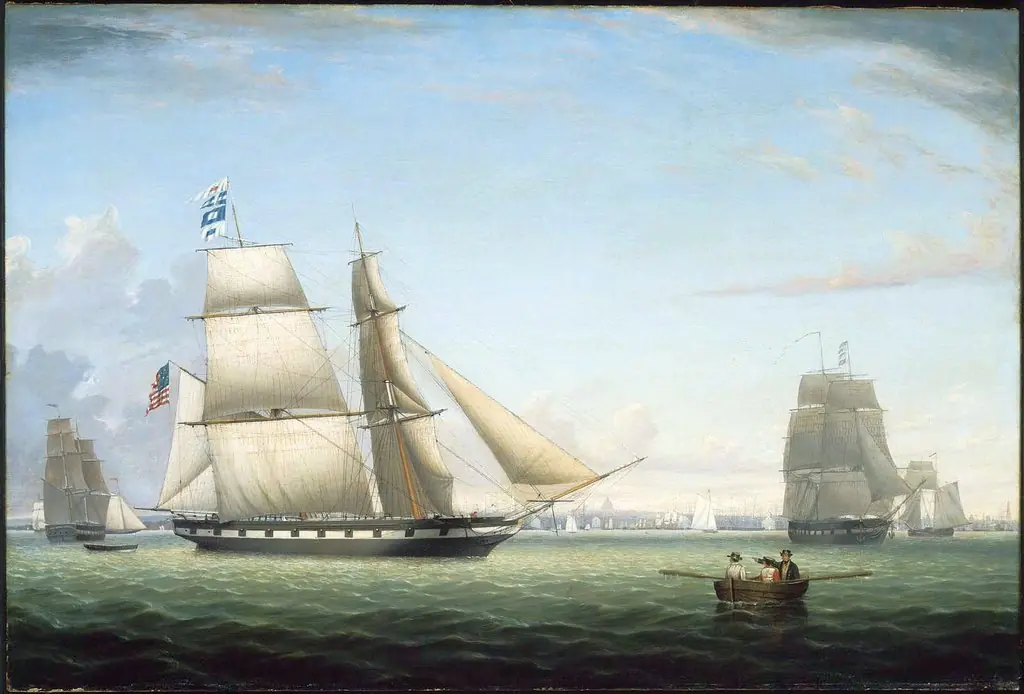
- Brig "Antelope" in Boston Harbor
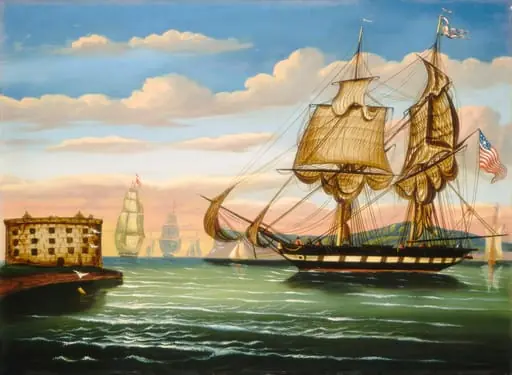 Bay of New York, Sunset
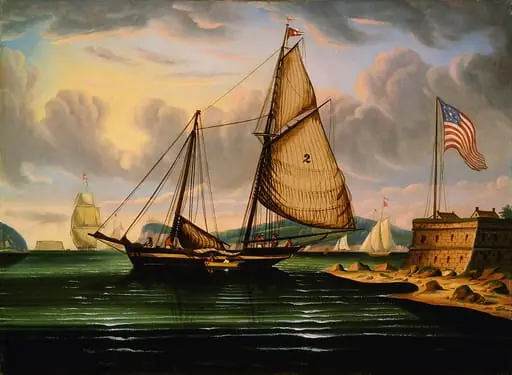 New York Harbor with Pilot Boat "George Washington"
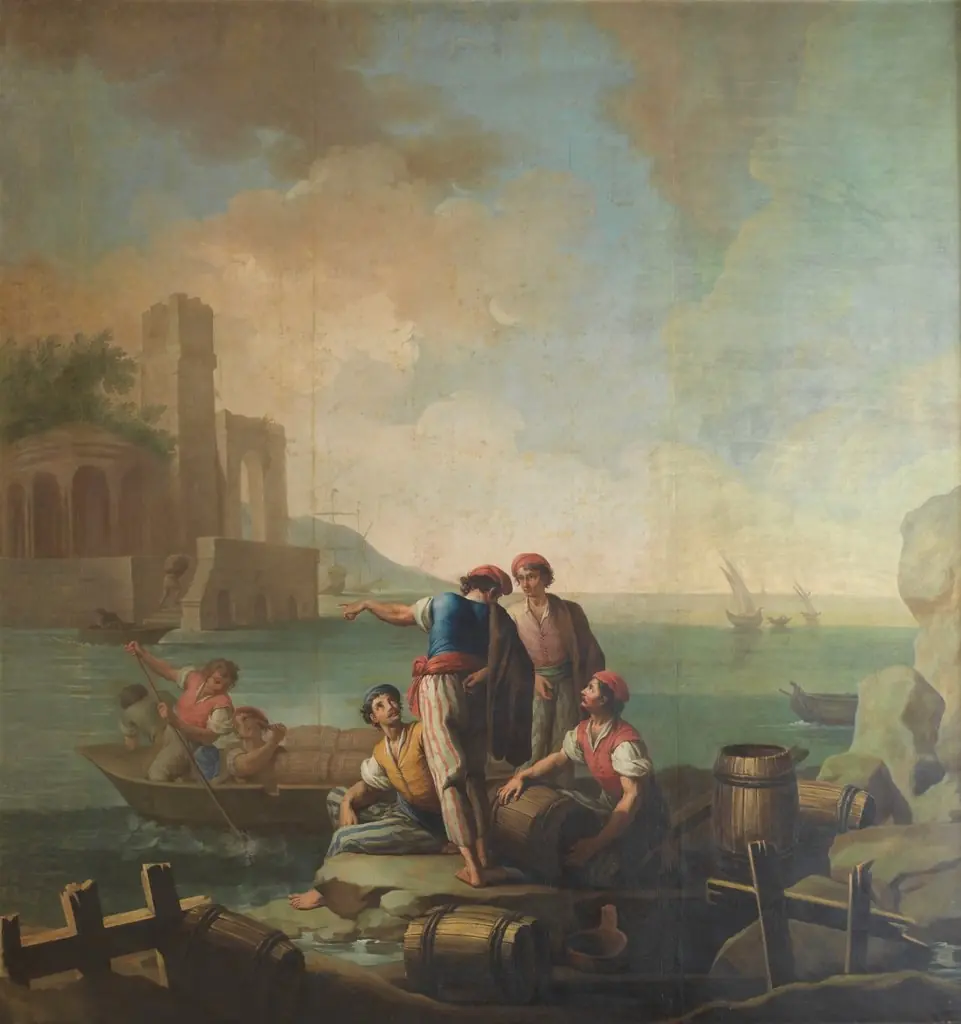 Pescadores junto a un puerto
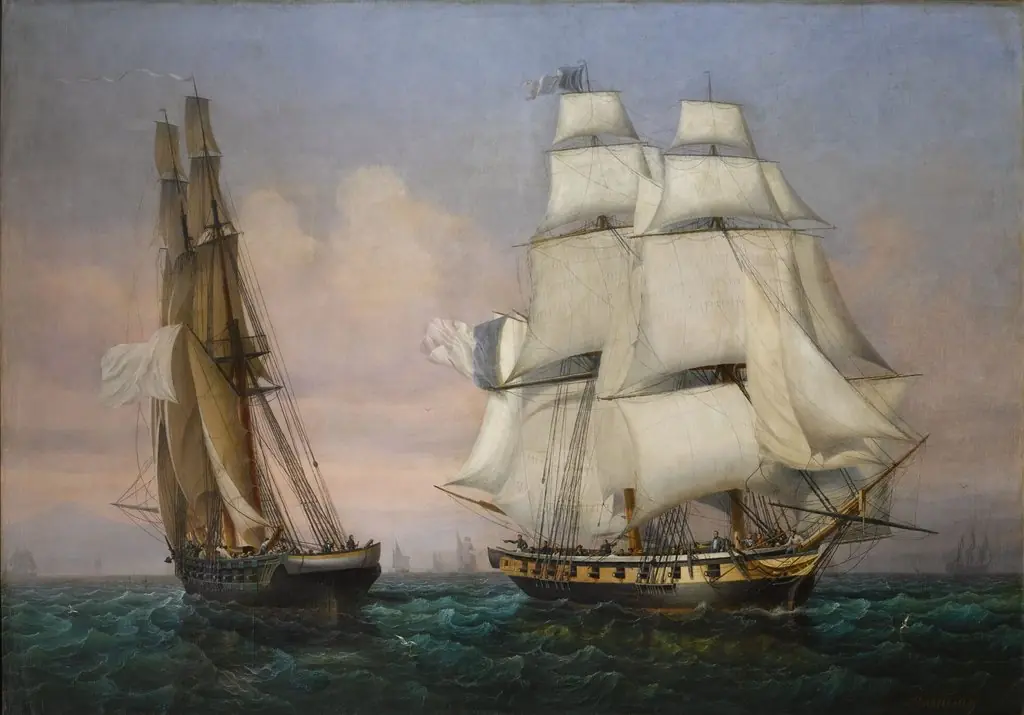 Return of Napoleon from Elba
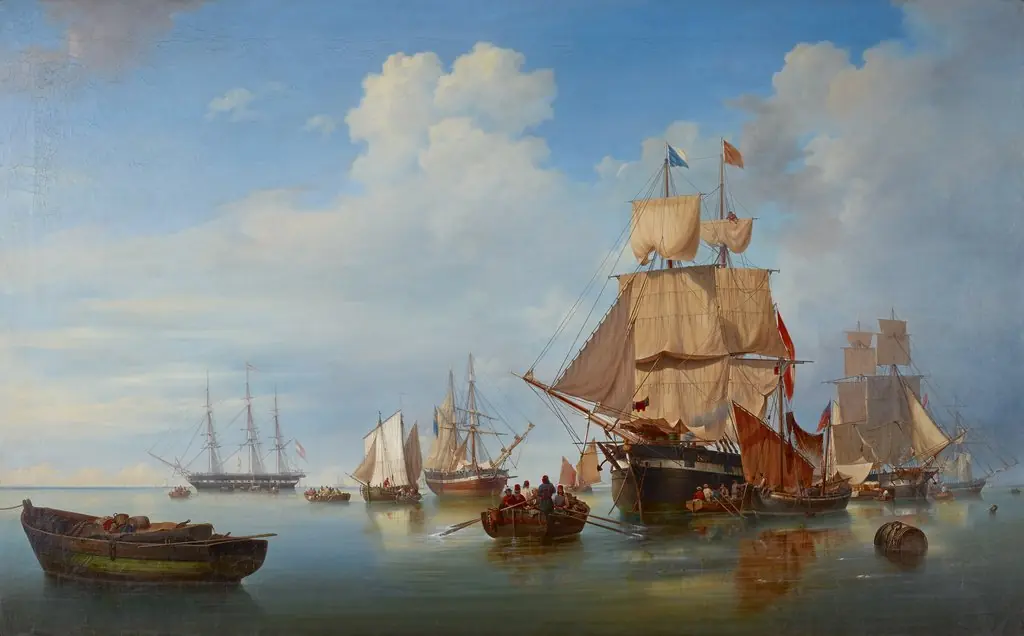 Marine art with Scirocco
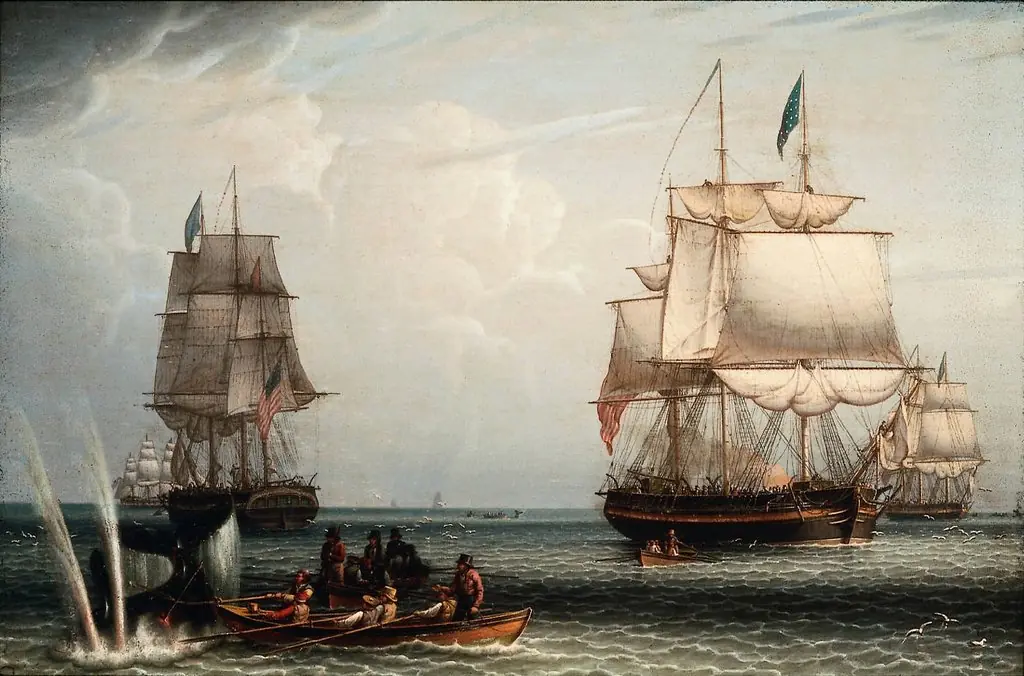 South Sea Whale Fishing II
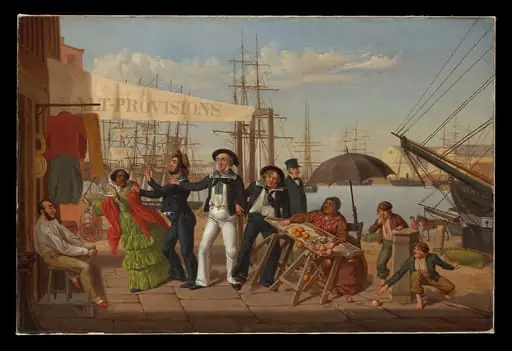 After a Long Cruise
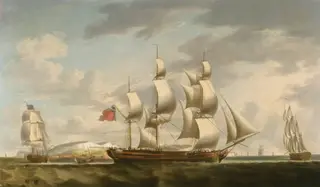 Three Views of "Amity Hall" With a View of Dover and the White Cliffs
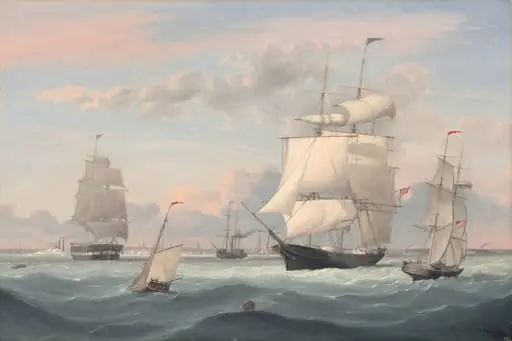 New York Harbor
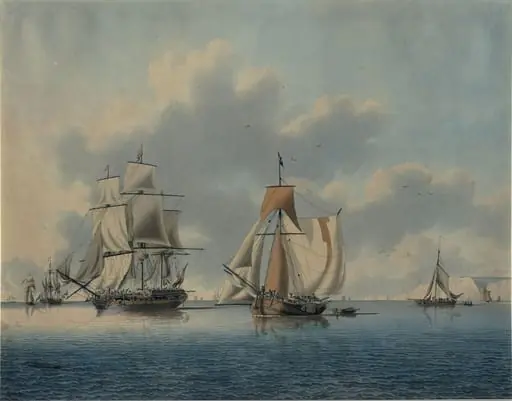 A frigate and Dutch fishing boats off the Isle of Wight
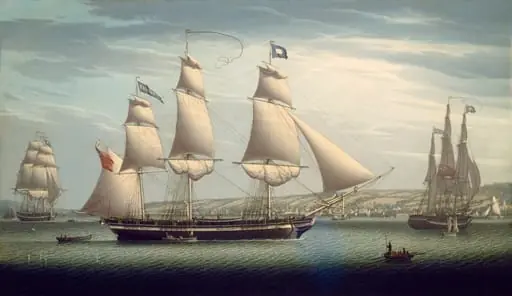 The Ship "Favorite" Maneuvering Off Greenock
 Lake Lucerne
 View from Mount Holyoke, Northampton, Massachusetts, after a Thunderstorm—The Oxbow
- New York Harbor with Pilot Boat "George Washington"
 Marine Landscape
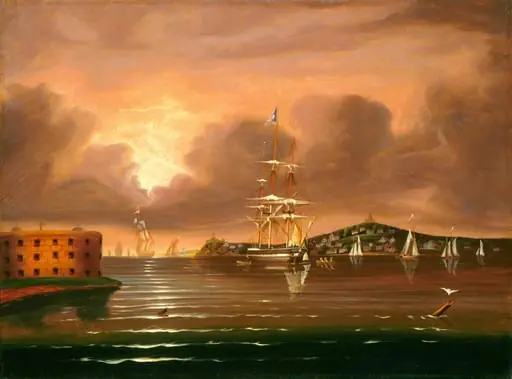 Threatening Sky, Bay of New York
 Lake George and the Village of Caldwell
 Rio de Janeiro Bay
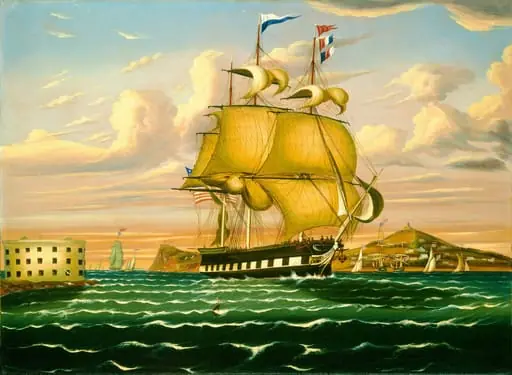 Packet Ship Passing Castle Williams, New York Harbor