Artwork
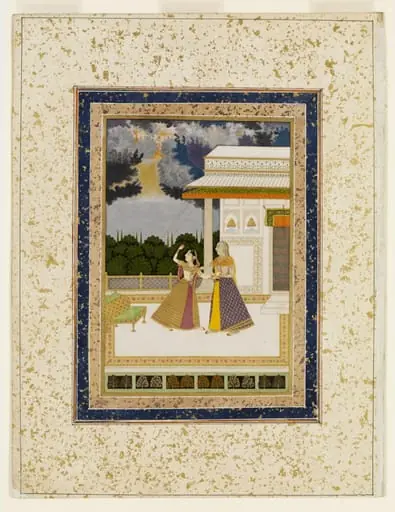
Two Girls Performing Kathak
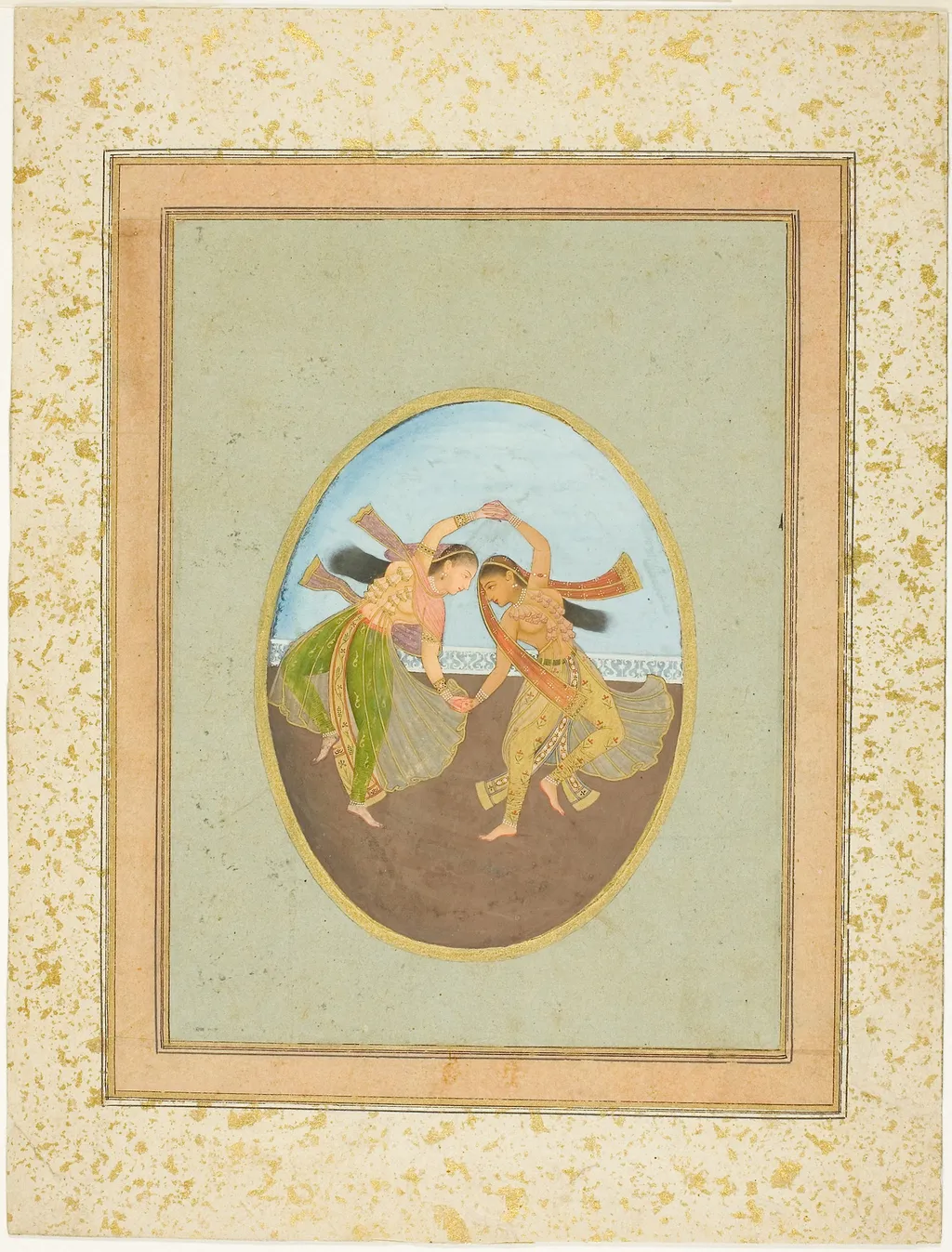
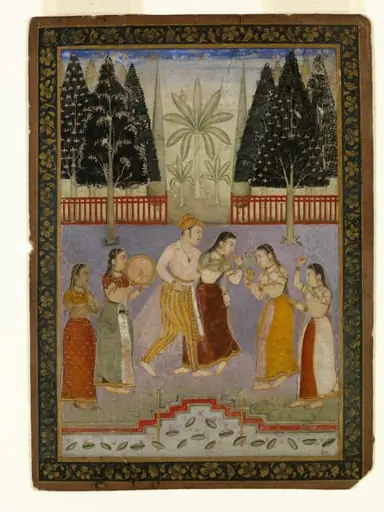
Two Girls Performing Kathak is an unspecified painting by the Rajput painting artist Unknown. It dates from 1750 and is held in the collection of the Art Institute of Chicago. This painting captures two young girls engaged in a synchronized dance, their movements suggesting the classical Indian form of Kathak.
About this work
Overview
This painting captures two young girls engaged in a synchronized dance, their movements suggesting the classical Indian form of Kathak.
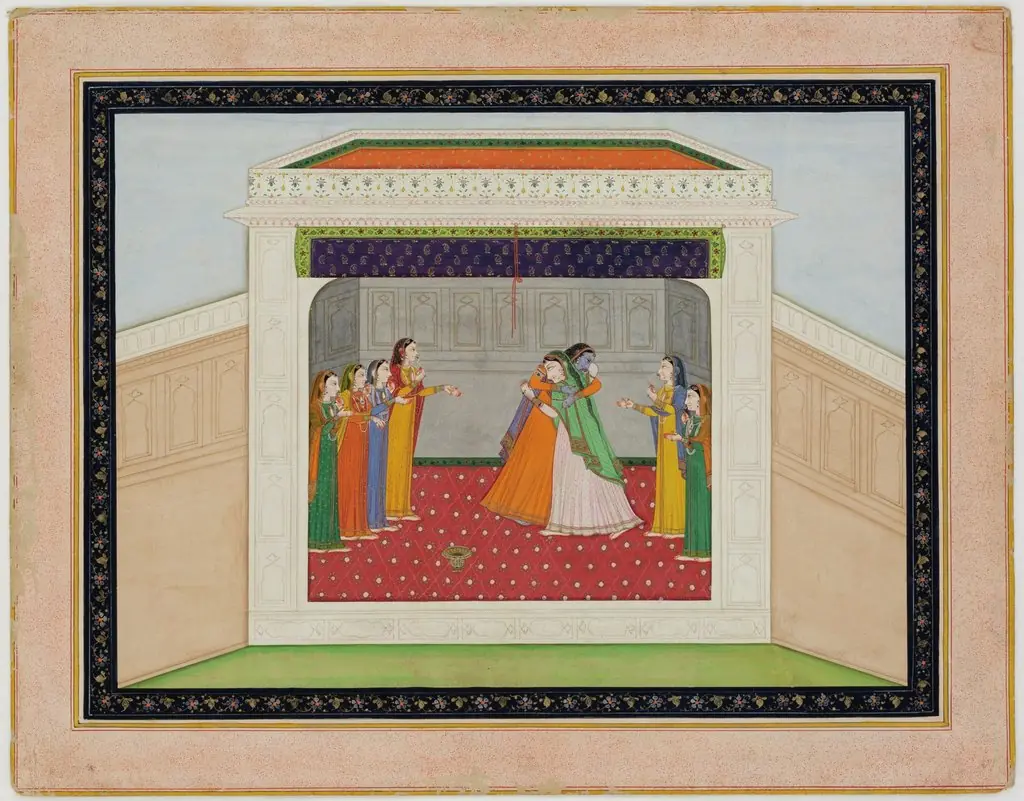
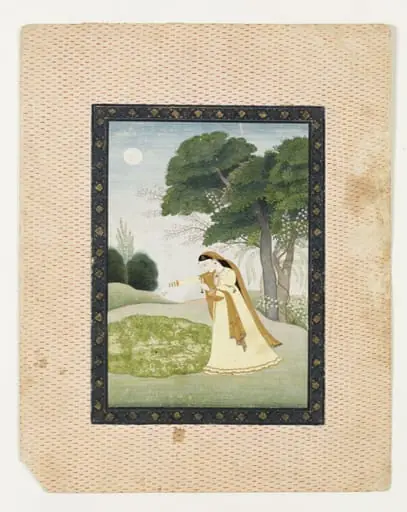
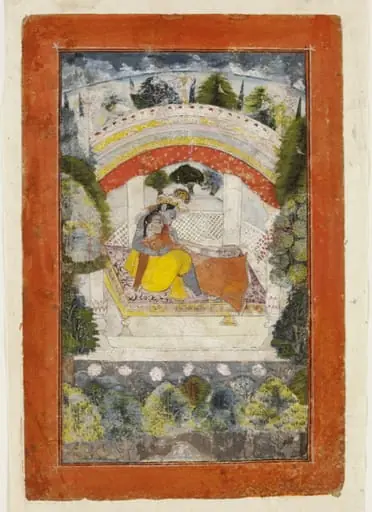
This painting captures two young girls engaged in a synchronized dance, their movements suggesting the classical Indian form of Kathak. The composition centers them within a circular frame, isolating their motion against a soft beige ground edged with gold detailing. Their attire and adornments reflect regional traditional dress, while the pale blue wall behind them provides a quiet backdrop that enhances the focus on their gestures and attire.
Subject & Meaning
The girls are depicted mid-performance, their circular motion evoking the rhythmic spins characteristic of Kathak. Their synchronized posture and shared energy suggest a pedagogical or communal setting, possibly a training session or ritual performance. The absence of spectators or elaborate scenery directs attention to the discipline and grace inherent in the dance, emphasizing cultural transmission through embodied practice.
Technique & Style
The artist employs fine brushwork to render intricate jewelry and fabric folds, with subtle tonal shifts defining the contours of the figures. The background’s white border and gold speckles are rendered with precision, contrasting the smooth, untextured skin tones of the girls. Color is used sparingly but deliberately, green and yellow garments stand out against muted surroundings, reinforcing visual harmony without distraction.
History & Provenance
The painting’s origins are not documented in public records, but its stylistic elements align with early 20th-century Indian miniaturist traditions influenced by colonial-era art schools. It likely emerged from a regional atelier focused on preserving classical themes, possibly commissioned for private or educational use rather than public exhibition.
Context
Kathak, originating in northern India, was historically performed in temples and royal courts before being adapted into formalized training systems under British rule. This painting reflects a period when traditional dance forms were being documented and preserved by artists and educators seeking to maintain cultural identity amid changing social structures.
Legacy
The work contributes to a visual archive of Indian classical dance as practiced by young learners, offering insight into how cultural traditions were transmitted through visual representation. Its quiet composition avoids theatricality, instead honoring the discipline and repetition inherent in learning Kathak, making it a modest but significant record of everyday artistic education.
Artist & collection