Artwork
Untitled
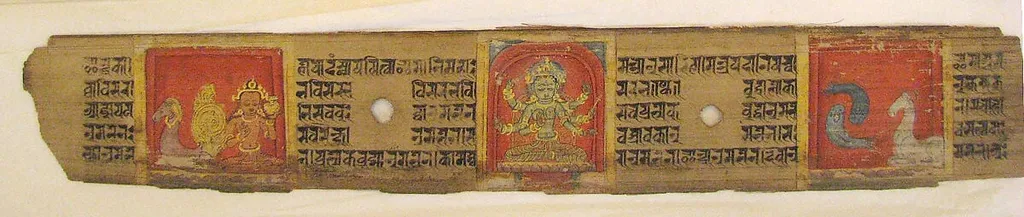
Untitled is an ink painting. It dates from 1349 and is held in the collection of the Metropolitan Museum of Art.
About this work
Subject & Meaning
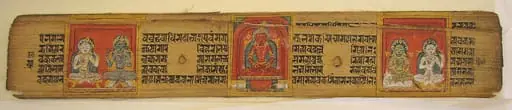
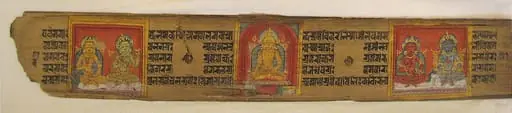
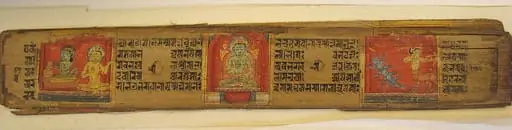
The work portrays a Buddhist deity, reflecting the religious genre of 14th‑century Nepalese painting. Executed in ink and color on palm leaves circa 1349, the image embodies the devotional and iconographic traditions of Buddhist art from the region, indicating a subject meant for veneration and spiritual contemplation.
History & Provenance
The painting has been exhibited at the Metropolitan Museum of Art, where it remains on view in the galleries of South and Southeast Asian Art.
The work titled Untitled is an anonymous 14th‑century painting created in Nepal, executed in ink and pigment on palm leaf and classified as a religious artwork depicting a Buddhist deity. Its creation is dated to 1349, a date recorded in the Metropolitan Museum of Art’s catalogue (accession 55.121.37.3).
The work is held by the Metropolitan Museum of Art, New York, where it is inventoried as 55.121.37.3. It was accessioned in 1955 as part of the Rogers Fund acquisition. The painting has been exhibited at the Metropolitan Museum of Art, where it remains on view in the galleries of South and Southeast Asian Art.
Overview
This untitled painting, created in Nepal's Kathmandu Valley during the 1300s, is rendered with ink and color on palm leaves. The small, vibrant work depicts a blue-skinned deity, characterized by multiple arms, seated upon a lotus flower. Such intricate paintings were integral to religious practices and were often housed within Buddhist temples, serving as visual aids for devotion.
Technique & Style
Artists in the Kathmandu Valley in the 14th century utilized palm leaves as a painting surface due to the scarcity of paper. The medium allowed for the application of vibrant colors and precise lines, a deliberate choice intended to ensure the longevity of these sacred images. This meticulous approach to materials and execution aimed to preserve the visual narratives for centuries within their temple environments.
Context
Originating from Nepal's Kathmandu Valley in the 1300s, this painting reflects the artistic traditions of the region during a period when Buddhism flourished. The use of durable palm leaves and lasting pigments indicates that these works were not merely decorative but served a functional role within religious institutions, intended for sustained use and contemplation within Buddhist temples.
Artist & collection

 Untitled
 Untitled
 Untitled
 Untitled
 Untitled
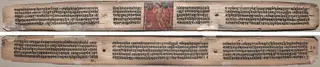 Folio 37 from a Gandavyuha-sutra (Scripture of the Supreme Array): Sudhana and a pair of antelopes (recto); text (verso)
 Untitled
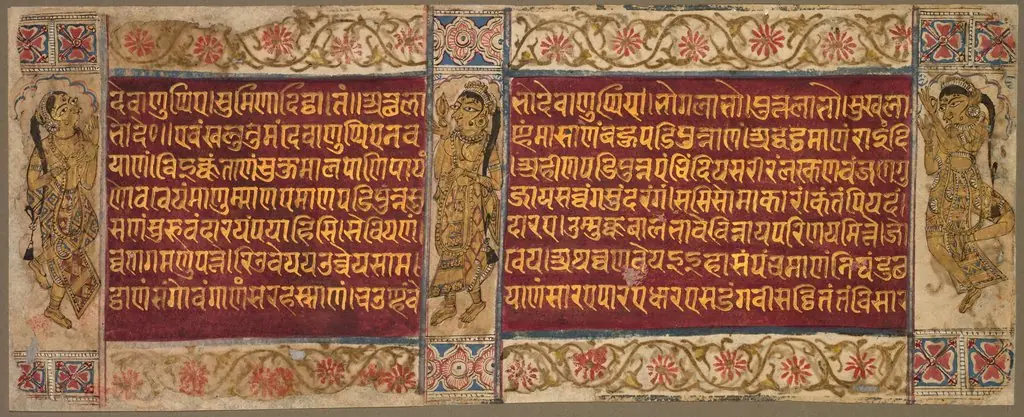 Brahman Rishabhadatta's speech, folio 5 from a Kalpa-sutra
 Untitled
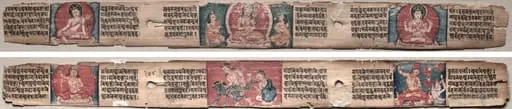 Folio 348 from a Gandavyuha-sutra (Scripture of the Supreme Array): Bodhisattva Manjushri with two forms of Avalokiteshvara (recto); Bodhisattva Samantabhadra purifies the path to enlightenment, with Manjushri (verso)
 Untitled
- Untitled