Artwork
Samantabhadra spinning clouds of things, folio 22 (recto) from a Gandavyuha-sutra (Scripture of the Supreme Array)

Samantabhadra spinning clouds of things, folio 22 (recto) from a Gandavyuha-sutra (Scripture of the Supreme Array) is an unspecified painting. It dates from 1100 and is held in the collection of the Cleveland Museum of Art. This artwork, titled "Samantabhadra spinning clouds of things," is folio 22 from a Gandavyuha-sutra.
About this work
Subject & Meaning
The figure is rendered as he spins clouds of assorted forms, a visual metaphor for the movement of spiritual energy and the dissemination of Buddhist teachings.
Samantabhadra, a prominent bodhisattva in Mahayana Buddhism, is shown in this 11th‑century Nepalese painting from the Gandavyuha‑sutra manuscript. The figure is rendered as he spins clouds of assorted forms, a visual metaphor for the movement of spiritual energy and the dissemination of Buddhist teachings. Clouds in Buddhist iconography often signify the heavenly realm and the transient nature of phenomena, while Samantabhadra’s act of generating them underscores his role as a protector and benefactor of the dharma.
The work belongs to the religious painting genre and was created in 1099, reflecting the artistic conventions of Nepalese Buddhist art.
History & Provenance
Created in Nepal in 1099, this religious painting depicts Samantabhadra spinning clouds of things. The work constitutes folio 22 (recto) from a Gandavyuha-sutra, also known as the Scripture of the Supreme Array. While the specific artist remains unknown, the piece entered the collection of the Cleveland Museum of Art, where it is held under the accession number 1955.49.6.a.
No further details regarding its commission or intermediate ownership history prior to its museum acquisition are provided in the available records.
The painting Samantabhadra spinning clouds of things, identified as folio 22 (recto) from a Gandavyuha-sutra, is held in the collection of the Cleveland Museum of Art in Cleveland. The work bears the accession number 1955.49.6.a within the institution's records. Created in Nepal in 1099, this religious artwork remains part of the museum's permanent holdings. No specific exhibition history is detailed in the provided sources.
Overview
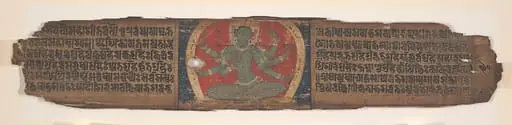
This artwork, titled "Samantabhadra spinning clouds of things," is folio 22 from a Gandavyuha-sutra. It is a small, painted wooden strip featuring a central image flanked by text. The piece served as an illustrated page within a larger religious manuscript, combining visual representation with scriptural content.
Despite its age and wear, the painting retains vibrant, though muted, colors, indicating its original decorative and didactic purpose.
Technique & Style
Executed on a narrow wooden strip, the painting employs a palette of reds, blues, and greens, which, though faded, still convey a sense of original vibrancy. The artist rendered the central figure and surrounding cloud forms with distinct lines and color blocks. The presence of tightly packed, unfamiliar script along the edges and on the reverse side indicates its function as an illuminated manuscript page, where text and image were integrated.
Context
This painted folio originates from a Gandavyuha-sutra, a significant Buddhist scripture also known as the "Scripture of the Supreme Array." Such illustrated pages were integral to disseminating religious teachings, offering visual aids to accompany the written word. The inclusion of detailed imagery alongside sacred text facilitated both contemplation and instruction, making complex spiritual concepts more accessible to practitioners and scholars alike.

Artist & collection

- Folio 22 from a Gandavyuha-sutra (Scripture of the Supreme Array): Samantabhadra spinning clouds of things (recto); Text (verso)
 Folio 348 from a Gandavyuha-sutra (Scripture of the Supreme Array): Bodhisattva Manjushri with two forms of Avalokiteshvara (recto); Bodhisattva Samantabhadra purifies the path to enlightenment, with Manjushri (verso)
 Sudhana and an antelope, folio 73 (recto) from a Gandavyuha-sutra (Scripture of the Supreme Array)
 Folio 73 from a Gandavyuha-sutra (Scripture of the Supreme Array): Sudhana and an antelope (recto); text (verso)
 Samantabhadra spinning clouds of things, folio 22 (recto) from a Gandavyuha-sutra (Scripture of the Supreme Array)
 Bodhisattva Manjushri with two forms of Avalokiteshvara, folio 348 (recto) from a Gandavyuha-sutra (Scripture of the Supreme Array)
 Folio 20 from a Gandavyuha-sutra (Scripture of the Supreme Array): Sudhana and a parrot (recto); Text (verso)
 Folio 37 from a Gandavyuha-sutra (Scripture of the Supreme Array): Sudhana and a pair of antelopes (recto); text (verso)
 Sudhana and a parrot, folio 20 (recto) from a Gandavyuha-sutra (Scripture of the Supreme Array)
 Sudhana and the rishi Bhishmottaranirgosha, folio 94 (recto) from a Gandavyuha-sutra (Scripture of the Supreme Array)
 Sudhana and a pair of antelopes, folio 37 (recto) from a Gandavyuha-sutra (Scripture of the Supreme Array)
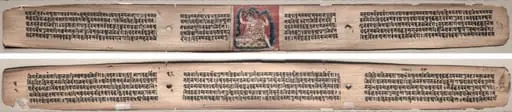 Folio 22 from a Gandavyuha-sutra (Scripture of the Supreme Array): Samantabhadra spinning clouds of things (recto); Text (verso)
 Prajnaparamita flanked by a white female figure and a white bodhisattva, folio 90 (recto), from a Manuscript of the Perfection of Wisdom in Eight Thousand Lines (Ashtasahasrika Prajnaparamita-sutra)
 Prajnaparamita flanked by a white female figure and a white bodhisattva, folio 90 (recto), from a Manuscript of the Perfection of Wisdom in Eight Thousand Lines (Ashtasahasrika Prajnaparamita-sutra)
 Untitled
 Untitled
 Bodhisattva Manjushri with two forms of Avalokiteshvara, folio 348 (recto) from a Gandavyuha-sutra (Scripture of the Supreme Array)
 Four bodhisattvas and two attendants flanking Vajrasattva, bottom cover, from a Manuscript of the Perfection of Wisdom in Eight Thousand Lines (Ashtasahasrika Prajnaparamita-sutra)