Artwork
Untitled
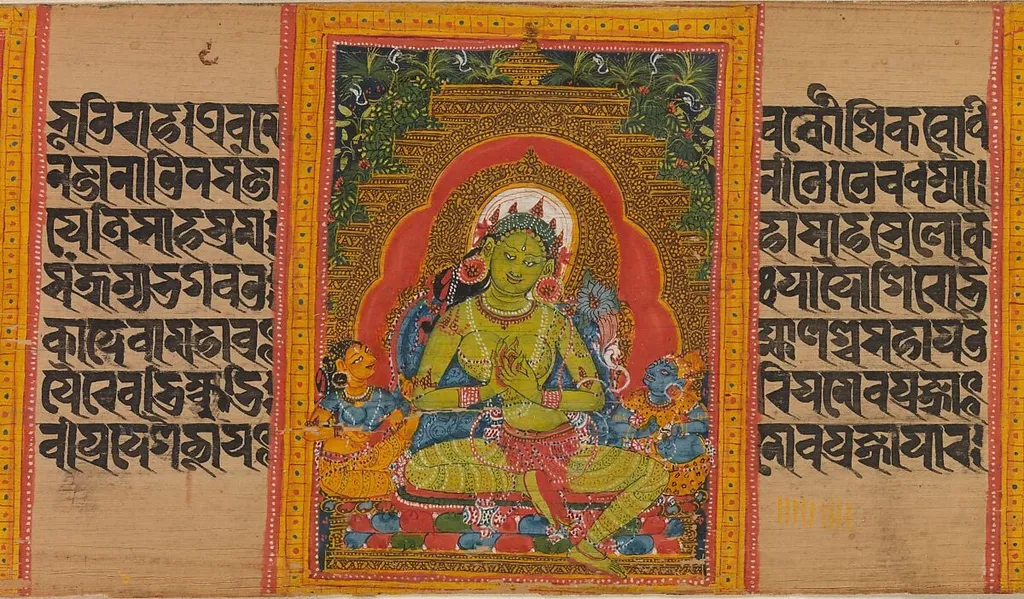
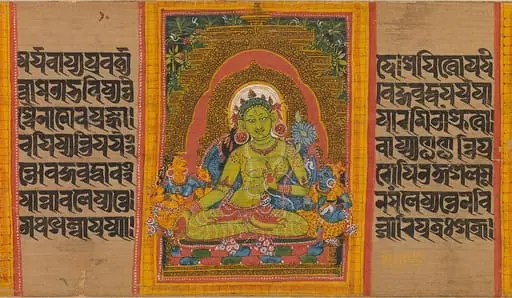
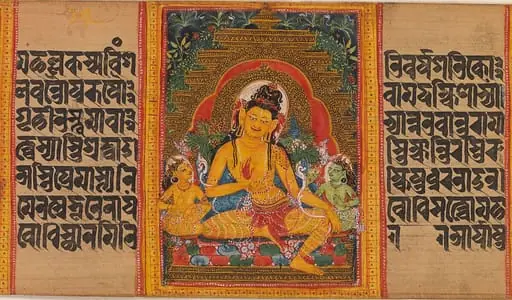
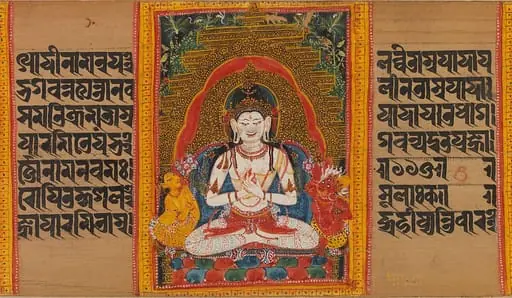
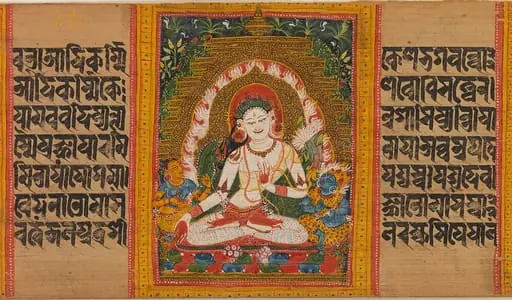
Untitled is a watercolor painting. It dates from 1116 and is held in the collection of the Metropolitan Museum of Art.
About this work
Subject & Meaning
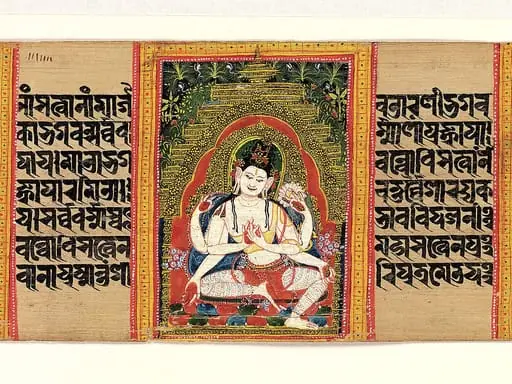
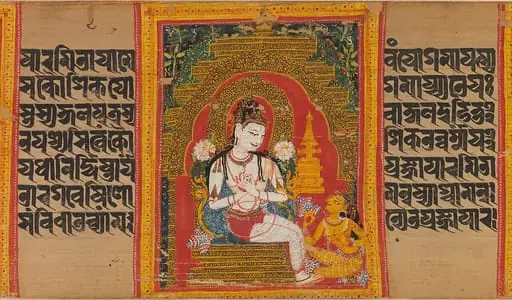
The Bodhisattva, a central figure in Buddhist iconography, embodies the enlightened being who forgoes nirvana to aid others on the path to awakening.
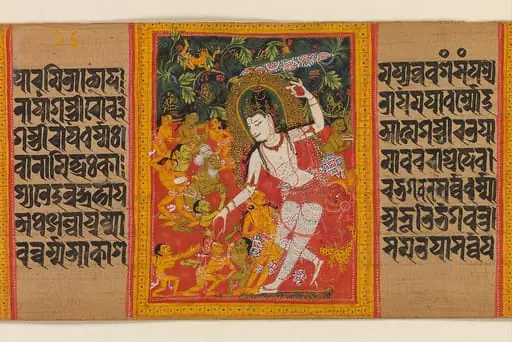
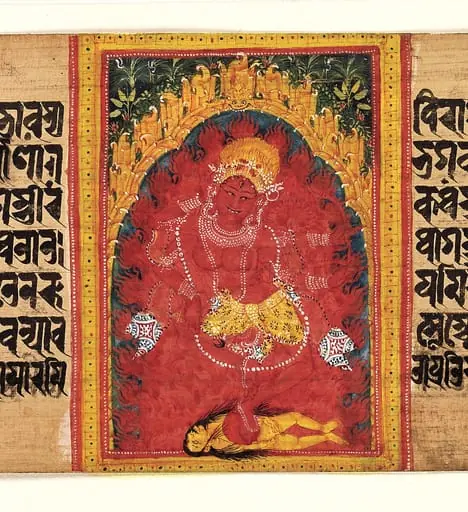
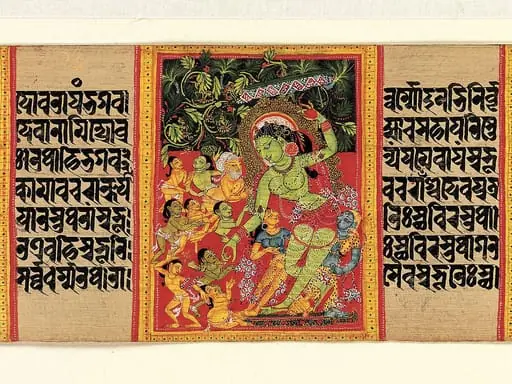
The work is a religious painting depicting a Bodhisattva within the Buddhist tradition. Created in 1116, it belongs to a devotional genre of opaque watercolor on palm leaf, a format closely associated with Buddhist manuscript and icon production in medieval India. The Bodhisattva, a central figure in Buddhist iconography, embodies the enlightened being who forgoes nirvana to aid others on the path to awakening.
As a religious image, the painting functions both as an object of veneration and as a visual expression of Buddhist doctrine, conveying spiritual ideals through figural representation. Its small horizontal format on palm leaf is characteristic of sacred artworks intended for devotional use, where the depicted deity serves as a focal point for ritual contemplation and worship.
Technique & Style
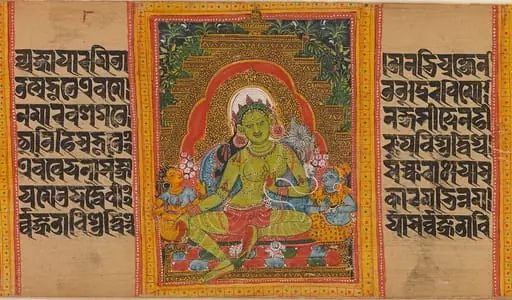
The work, dated 1116, is executed in opaque watercolor on a palm-leaf support. Its modest dimensions, approximately 7 by 41.9 cm, are recorded in the Metropolitan Museum of Art's holdings, which also note that the piece was produced in India. The medium's translucent washes and fine brushwork create a delicate, linear rendering of a Bodhisattva figure, typical of early Indian religious painting. Stylistically, the composition emphasizes graceful outlines and subtle color modulation, reflecting a serene, devotional aesthetic.
History & Provenance
The work, an opaque watercolor on palm leaf portraying a Bodhisattva, was produced around 1116 in India by an anonymous painter. Its religious subject matter situates it within Buddhist artistic traditions of the period. The piece entered the collection of the Metropolitan Museum of Art, where it is catalogued among the museum's holdings of religious paintings.
No record indicates a specific commission or patron, and the work remains attributed to an unnamed creator. Its dating to the early 12th century is documented in scholarly references, confirming its creation history and subsequent acquisition by the museum.
Overview
This untitled painting, rendered in opaque watercolor on a palm leaf, depicts a serene golden figure. Created approximately a millennium ago in Bengal, the artwork reflects the region's rich tradition of illustrating sacred texts on this delicate material. Its small scale and meticulous execution suggest a devotional purpose, offering a glimpse into the artistic practices associated with religious narratives of the period.
Context
The use of a palm leaf as a support for this painting aligns with the ancient practice in Bengal of inscribing and illustrating sacred texts on this material. Dating back a thousand years, such works were often created by anonymous artists who possessed profound knowledge of the religious narratives they depicted. The intricate craftsmanship suggests a deep familiarity with the stories, reflecting a devotional commitment inherent in their creation.
Artist & collection