Artwork
Untitled
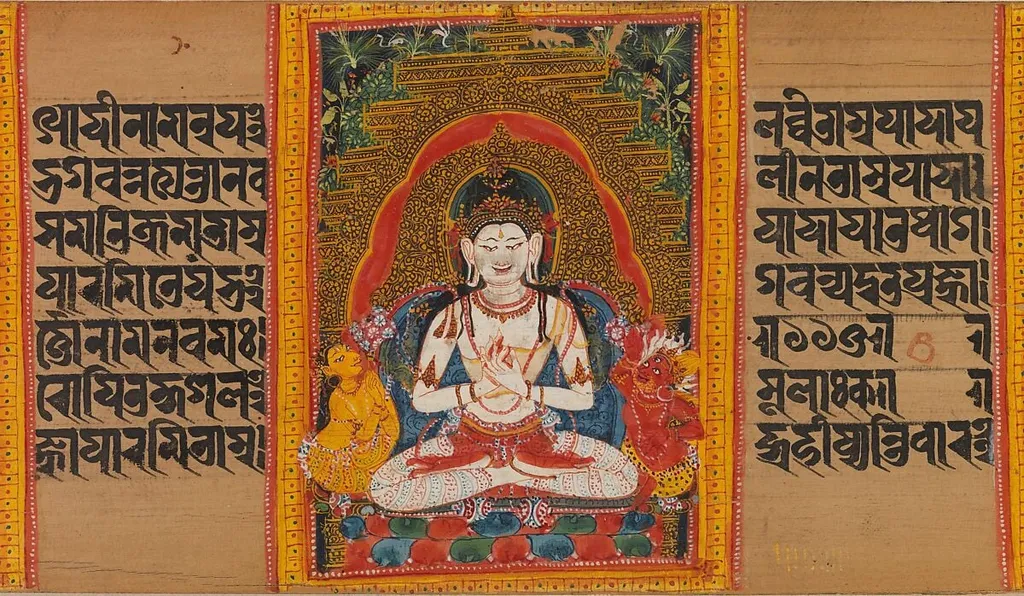
Untitled is a watercolor painting. It dates from 1116 and is held in the collection of the Metropolitan Museum of Art.
About this work
Subject & Meaning
The depiction aligns with the genre of religious art characteristic of the period, focusing on spiritual figures rather than secular narratives.
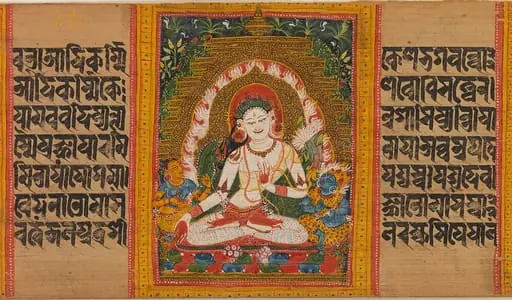
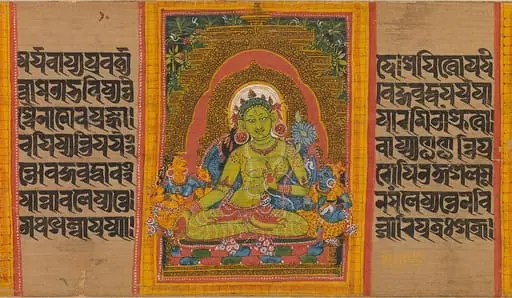
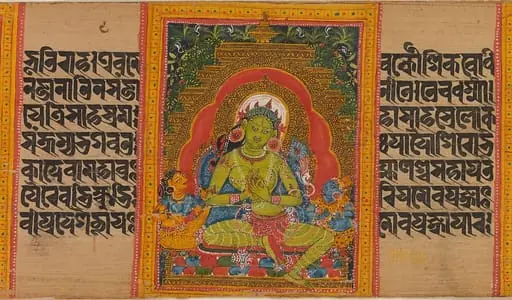
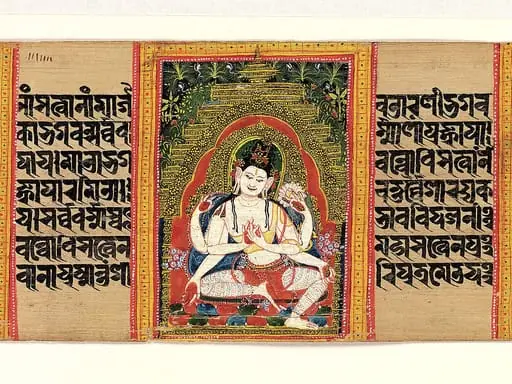
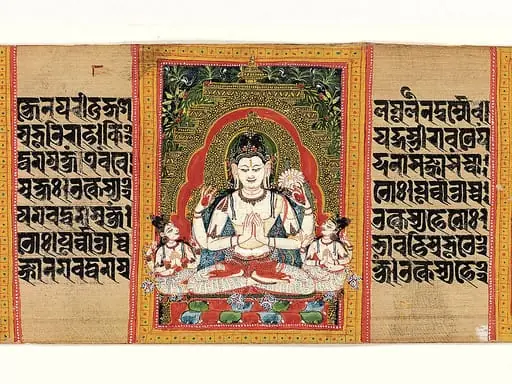
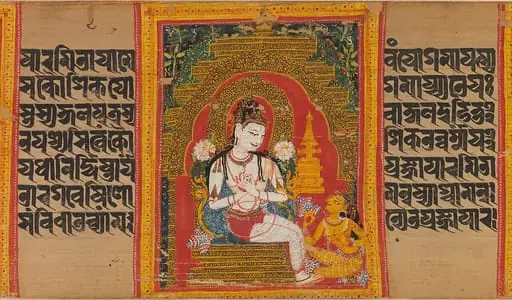
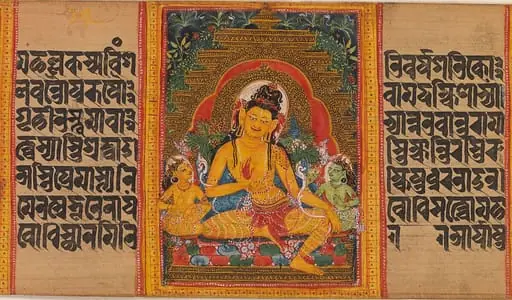
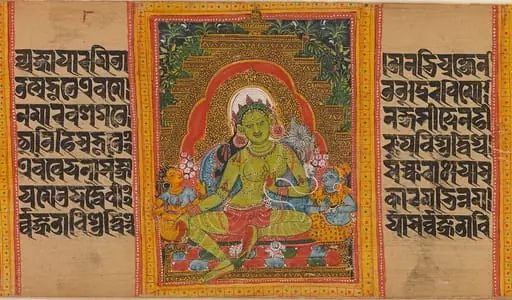
Created in 1116 in India, this anonymous religious painting depicts the Bodhisattva Maitreya, a central figure in Buddhist iconography representing the future Buddha. Executed as an opaque watercolor on a palm leaf, the work serves as a devotional object within the Buddhist tradition. The subject is identified explicitly as Maitreya, symbolizing the promise of future enlightenment and the continuity of the Buddhist path.
As a religious artwork, its meaning is rooted in the veneration of this specific Bodhisattva, who is traditionally awaited to descend to earth to teach the dharma. The depiction aligns with the genre of religious art characteristic of the period, focusing on spiritual figures rather than secular narratives.
Technique & Style
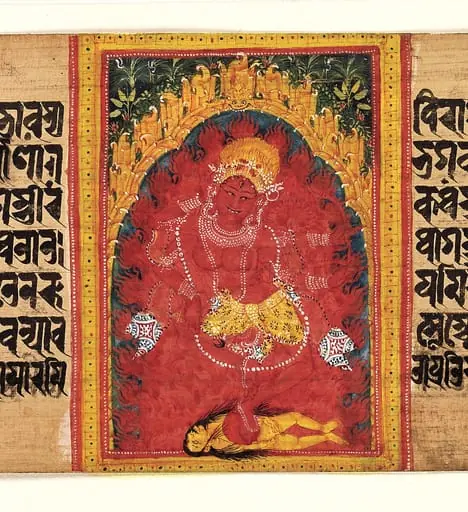
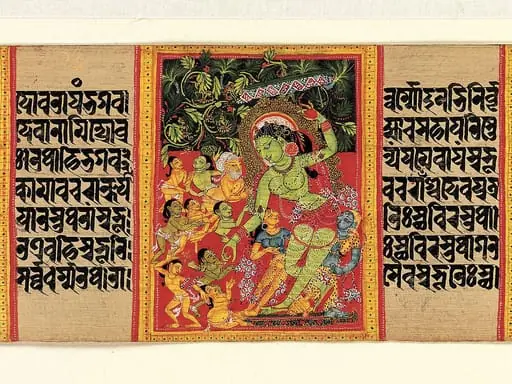
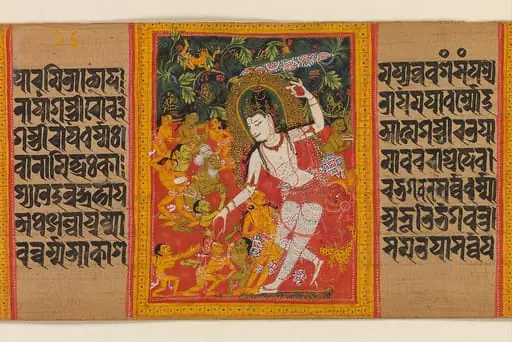
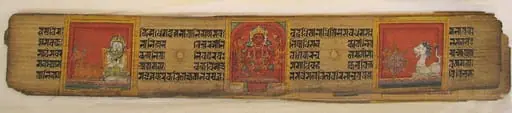
Executed in opaque watercolor on palm leaf, this work belongs to a tradition of South Asian manuscript painting in which the rigid, fibrous leaf serves as both support and compositional field. The horizontal format, measuring approximately 7 by 41.9 centimeters, is characteristic of palm-leaf strips designed to be bound into a larger codex. The opaque watercolor medium allowed the artist to apply saturated mineral and organic pigments directly onto the prepared leaf surface, producing the flat, vividly colored passages typical of religious imagery.
Stylistically, the handling is consistent with early twelfth-century Buddhist devotional painting from India, in which figural subjects such as the Bodhisattva Maitreya are rendered with linear precision and dense local color rather than modeled shading. The narrow, elongated proportions of the support dictate a frieze-like arrangement of forms, a formal constraint that shapes the rhythmic, horizontal flow of the composition.
History & Provenance
The work, Untitled, is an opaque watercolor on palm leaf created circa 1116 in India by an anonymous artist. It depicts the Bodhisattva Maitreya and is classified as a religious painting. Its creation history is limited to the date, medium, and place of origin; no record of a specific commission survives.
After its production, the painting's ownership chain is undocumented until it entered the collection of the Metropolitan Museum of Art, where it is currently housed. The Met lists the painting as part of its holdings, but earlier provenance remains unknown, and no specific accession number or exhibition history is recorded in the sources consulted.
Context
The 1116 opaque watercolor on palm leaf, attributed to an anonymous Indian painter, belongs to the corpus of early Buddhist manuscript paintings. Its subject, a Bodhisattva identified as Maitreya, places it within the religious art tradition of the Indian subcontinent during the 12th century. The Metropolitan Museum of Art holds the work, underscoring its place in collections of Buddhist visual culture.
Scholars interpret such pieces as evidence of the stylistic and iconographic developments that accompanied the spread of Mahayana Buddhism, using them to trace the emergence of devotional imagery in South Asian art.
Overview
This untitled painting, rendered in opaque watercolor on a slim palm leaf, depicts a serene figure seated on a lotus. The artwork was crafted for intimate viewing, intended to be held and examined closely rather than displayed on a wall. Its small scale and delicate medium suggest a personal or devotional function, preserving its vibrant details over centuries.
Artist & collection