Artwork
Untitled
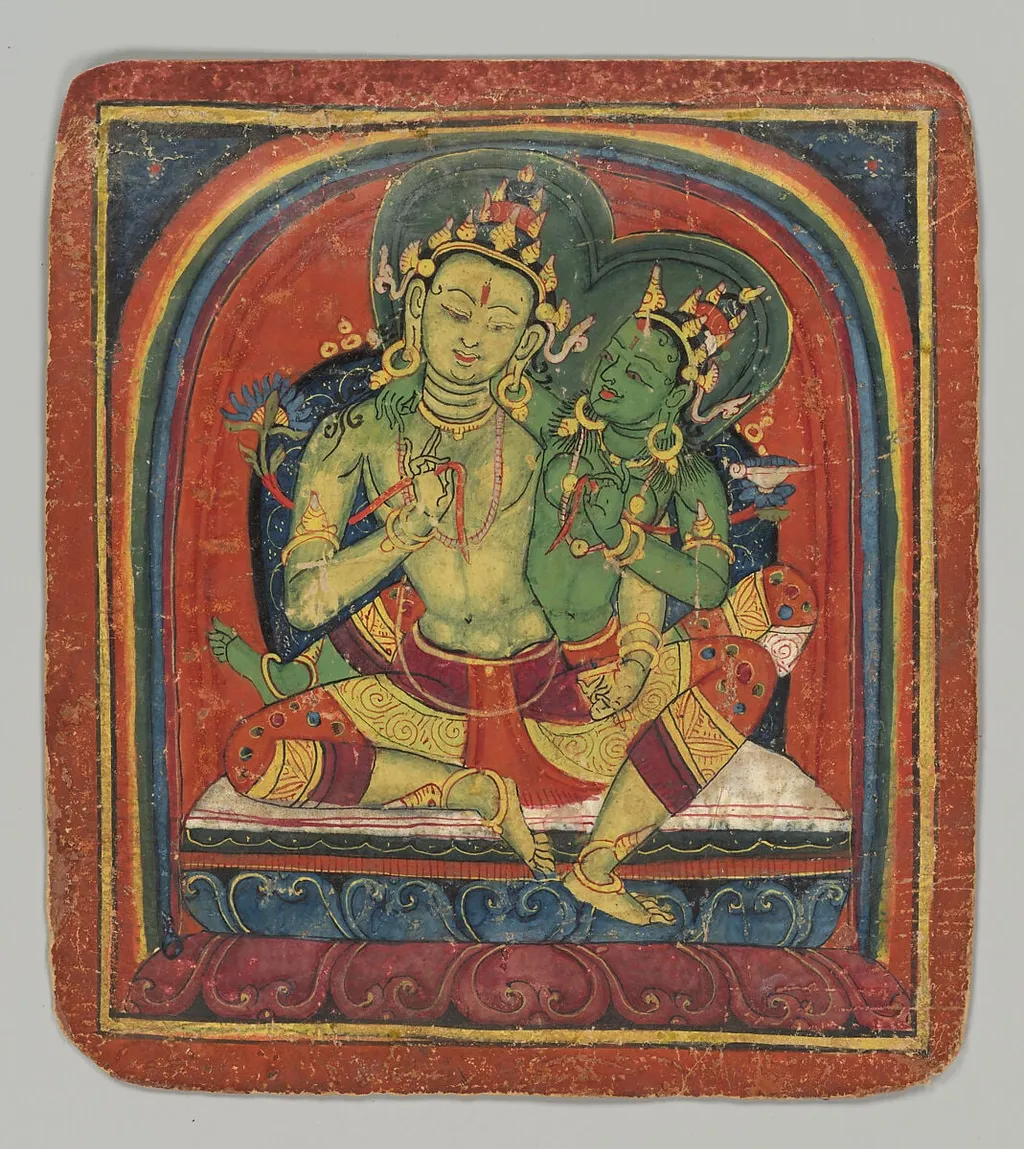
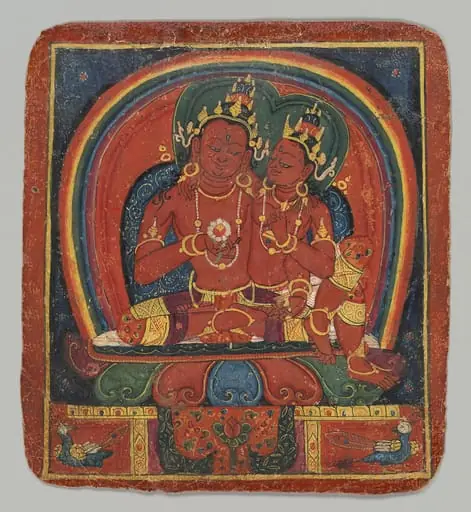
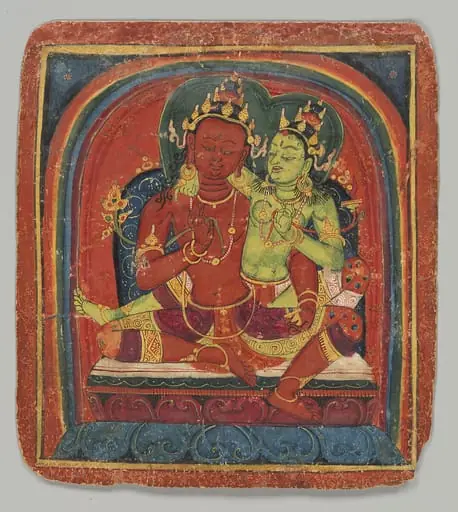
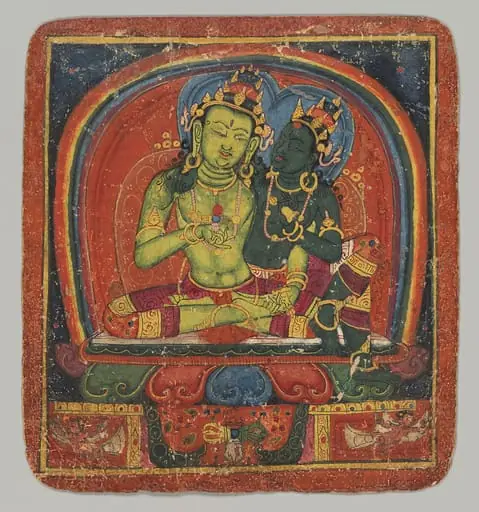
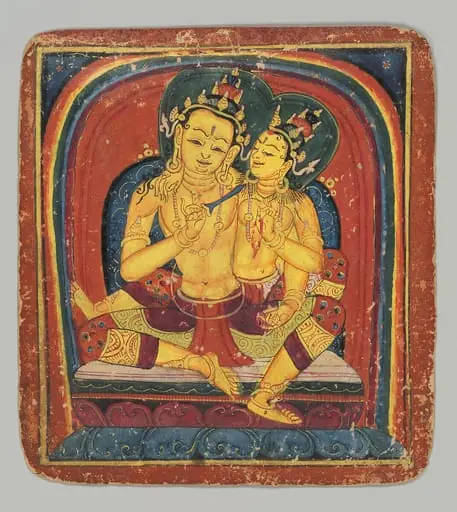
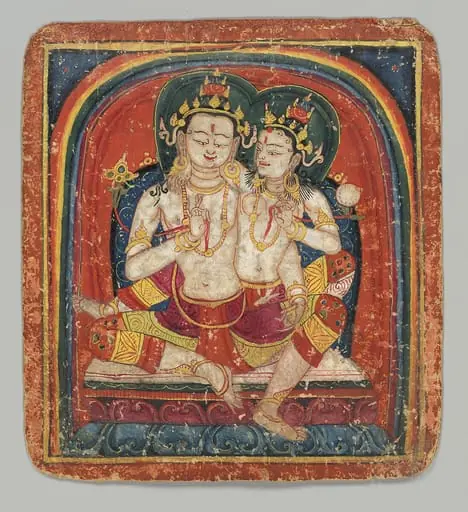
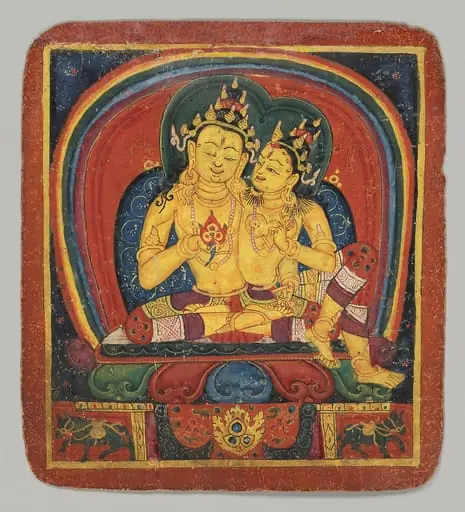
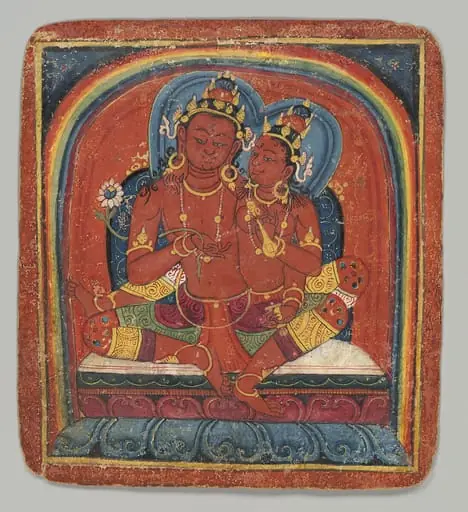
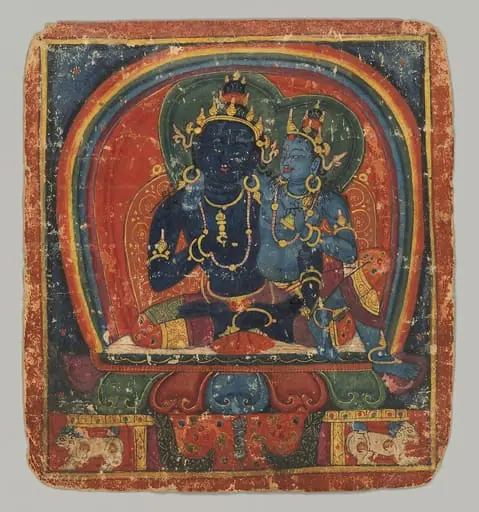
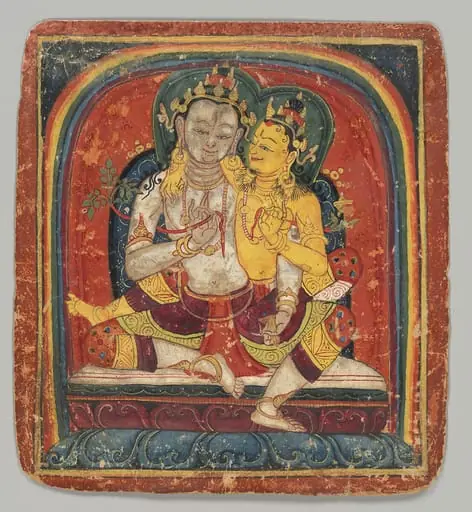
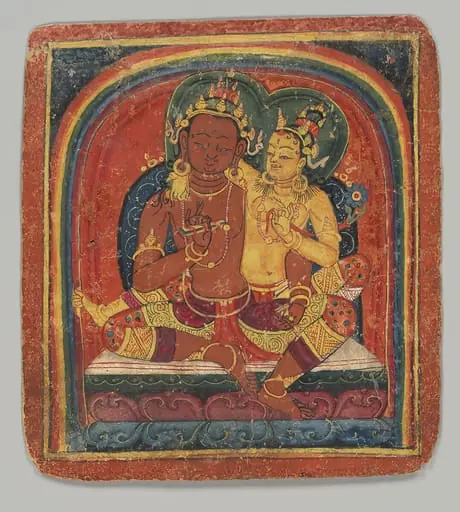
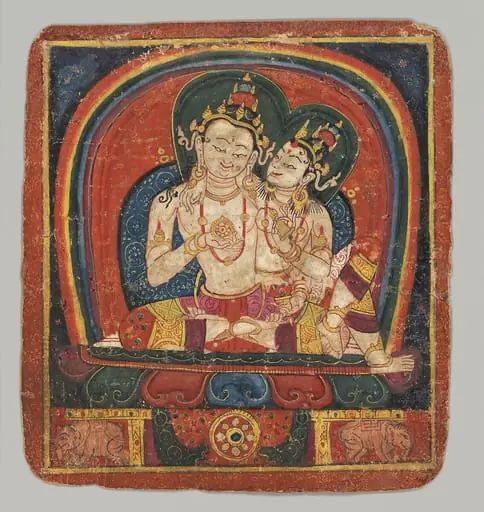
Untitled is a watercolor painting. It dates from 1416 and is held in the collection of the Metropolitan Museum of Art.
About this work
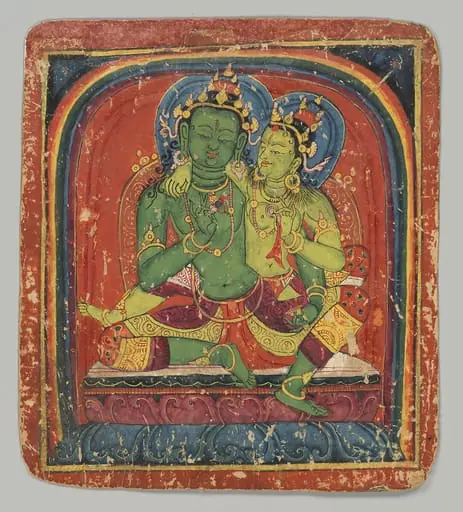
A bright blue, four-armed figure sits on a lotus, holding a sword and a book. The figure is Manjushri, the Buddhist deity of wisdom, in a Tibetan work from around 1416. No one knows who painted it, though it counts among the oldest surviving Tibetan paintings in a Western museum. Look up Manjushri.
Subject & Meaning
The painting depicts Mañjuśrī, the bodhisattva of wisdom in Buddhist iconography, identifiable by his association with a lion and the sword of discernment.
The painting depicts Mañjuśrī, the bodhisattva of wisdom in Buddhist iconography, identifiable by his association with a lion and the sword of discernment. Executed in opaque watercolor on paper in 1416, the work belongs to the genre of religious art, reflecting its devotional purpose. The subject’s presence as Mañjuśrī signifies the ideal of transcendent insight, central to Mahayana Buddhist practice.
The restrained palette and refined execution underscore the sacred character of the figure, emphasizing wisdom as both a divine attribute and an attainable human ideal.
History & Provenance
The painting’s earliest documented date is 1416, consistent with an inscription on the support that situates its creation in the early fifteenth century. It entered the collection of the Metropolitan Museum of Art as an anonymous work classified under religious painting, depicting Mañjuśrī. The medium is opaque watercolor on paper, and the dimensions are recorded as 16 × 14.5 cm. No accession number is provided in the available records, and no details of original commission, early ownership, or exhibition history are documented.
Overview
This untitled Tibetan painting, created around 1400, depicts Mañjuśrī, the Buddhist deity of wisdom. Executed in opaque watercolor on paper, it is notable for its vibrant portrayal of the four-armed blue figure seated on a lotus, holding a sword and a book. As one of the earliest Tibetan artworks held in a Western museum, its anonymous creation offers insight into the artistic practices of the period.
Technique & Style
The artist employed opaque watercolor on paper, utilizing a technique known as glazing. This method involves applying multiple thin, translucent layers of color, which allows light to pass through and reflect, creating a luminous and radiant effect. This approach contributes to the vibrant appearance of the deity and the overall depth of the composition, characteristic of the period's artistic practices.
Artist & collection