Artwork
Untitled
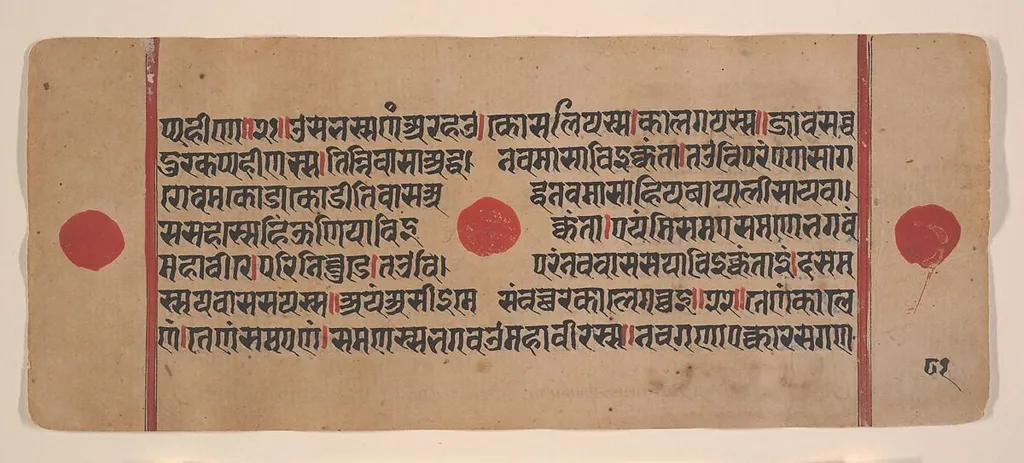
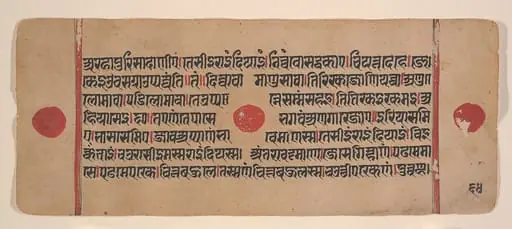
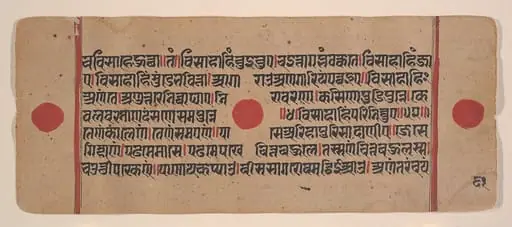
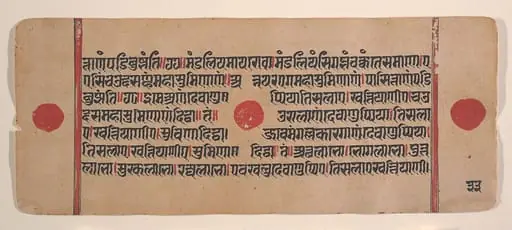
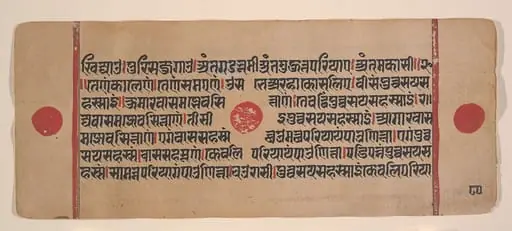
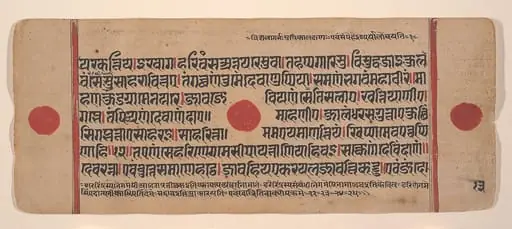
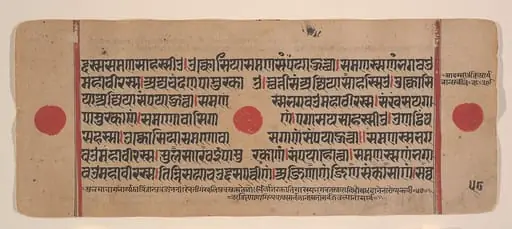
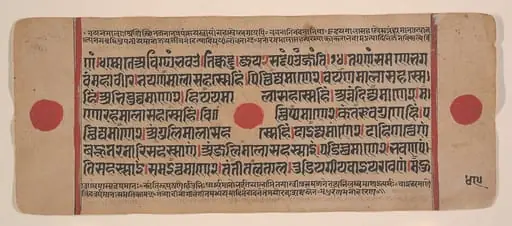
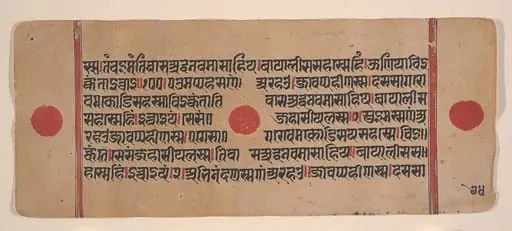
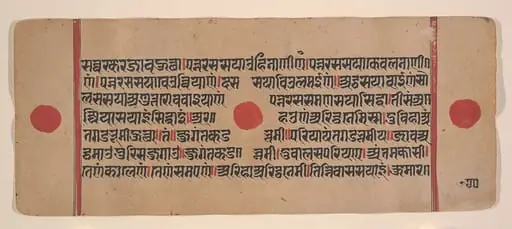
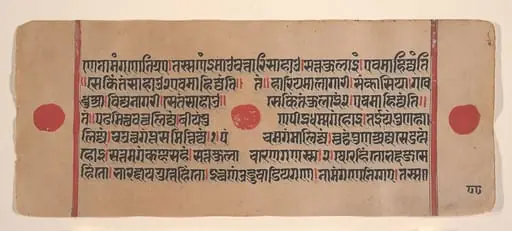
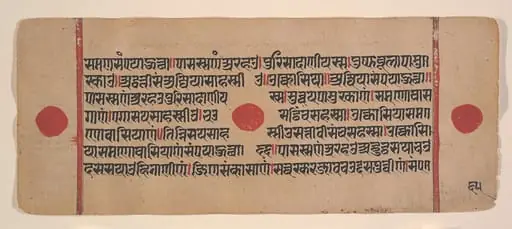
Untitled is a watercolor painting. It dates from 1449 and is held in the collection of the Metropolitan Museum of Art.
About this work
Technique & Style
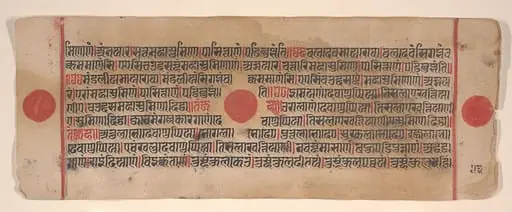
Created in 1449 in India, this religious painting depicting Jainism utilises ink, opaque watercolor, and gold applied to a paper support.
Created in 1449 in India, this religious painting depicting Jainism utilises ink, opaque watercolor, and gold applied to a paper support. The work measures 11.1 cm in height by 27 cm in width. As an example of Indian religious art from the mid-fifteenth century, the piece combines linear ink work with the luminosity of gold and the flat, vibrant fields characteristic of opaque watercolor.
The specific combination of materials on paper reflects the manuscript painting traditions of the region during this period. The artwork is currently held in the collection of the Metropolitan Museum of Art.
History & Provenance
Created in 1449 in India, this anonymous religious painting depicts themes of Jainism. The work, executed in ink, opaque watercolor, and gold on paper, resides in the collection of the Metropolitan Museum of Art, where it is catalogued under the accession number 55.121.38.90. The identity of its creator and specific circumstances of its commission remain unknown.
No details regarding previous owners or the chain of custody prior to its acquisition by the institution are recorded in the available sources.
Context
The untitled painting, dated 1449 and executed in ink, opaque watercolor and gold on paper, exemplifies early Indian Jain manuscript art. Attributed to an anonymous painter, it belongs to a corpus of religious works produced in the Indian subcontinent during the fifteenth century and is housed in the Metropolitan Museum of Art. The piece is illustrative of Jain devotional imagery, reflecting the tradition's emphasis on narrative clarity and decorative splendor.
Legacy
The 1449 ink and watercolor work, Untitled, is frequently cited in art‑historical studies as a benchmark for early Jain painting, shaping scholarly interpretations of the religion’s visual language. Its presence in the Metropolitan Museum of Art has made it a reference point for exhibitions on South Asian religious art, influencing curricula and catalogues that trace the development of Jain iconography. Researchers use the piece to illustrate the stylistic conventions of 15th‑century Indian manuscript production, and its documented dimensions and materials serve as a comparative standard for other works of the period. Consequently, the painting’s legacy endures in both academic discourse and museum displays focused on Jain heritage.
Overview
This untitled painting from 15th-century Gujarat, India, depicts a woman seated on a low stool. Rendered in ink, opaque watercolor, and gold on paper, she wears a red sari and holds a book with gold-edged pages. The deep blue background is adorned with small floral motifs, and a slender gold border frames the composition.
The work exemplifies the artistic traditions of the region during this period, showcasing a blend of vibrant color and symbolic detail.
Subject & Meaning
The central figure, a woman in a red sari, holds a book, an object of profound significance within Jainism. This painting was created for Jain monks, for whom sacred texts were revered as spiritual guides. The depiction likely underscores the importance of scripture and learning in their spiritual practice, reflecting the community's deep respect for religious knowledge and its transmission across generations.
Artist & collection