Artwork
Untitled
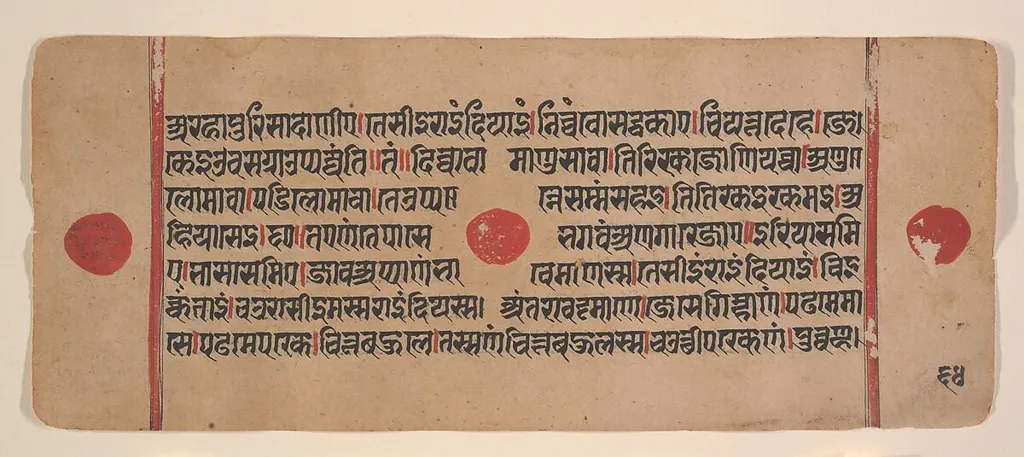
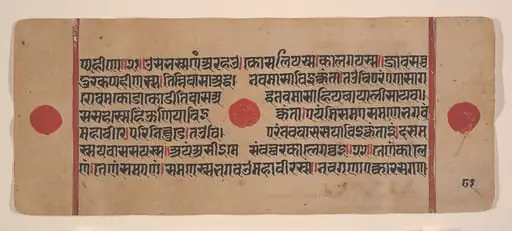
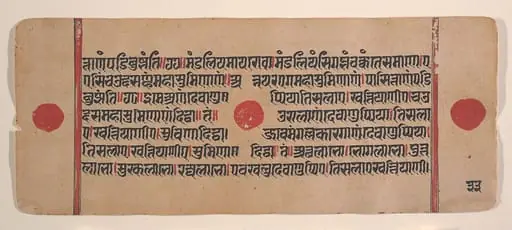
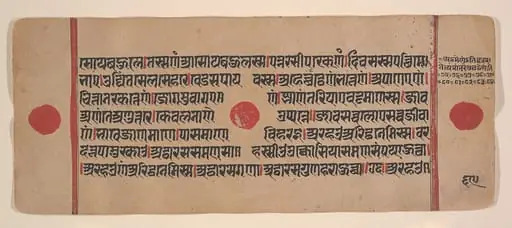
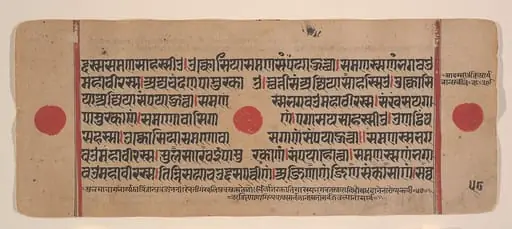
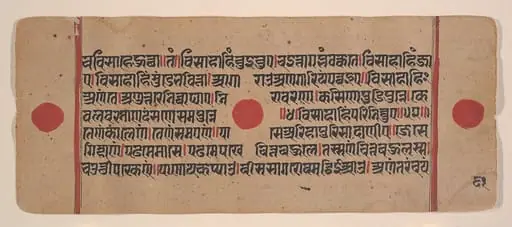
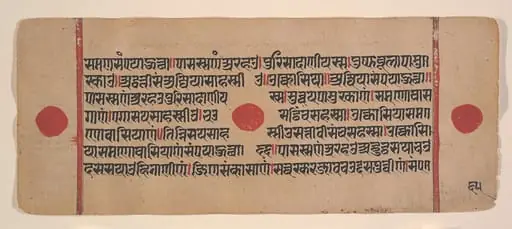
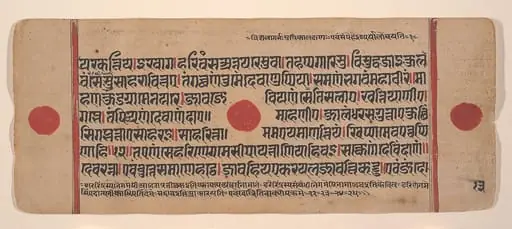
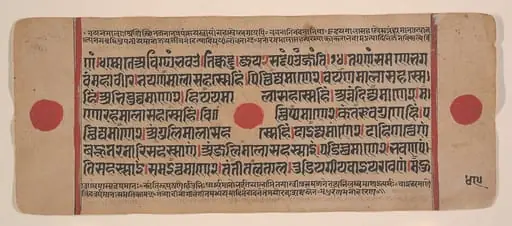
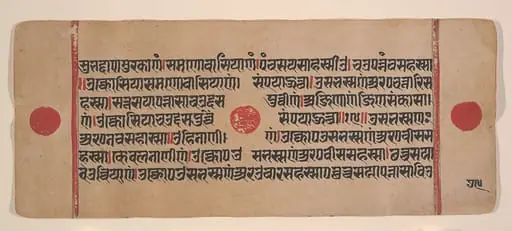
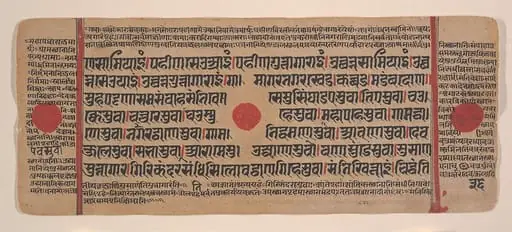
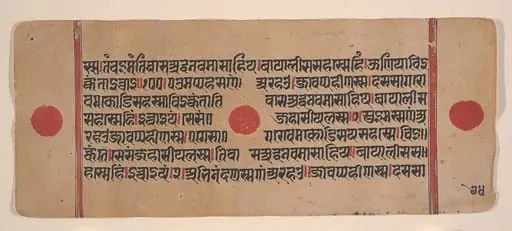
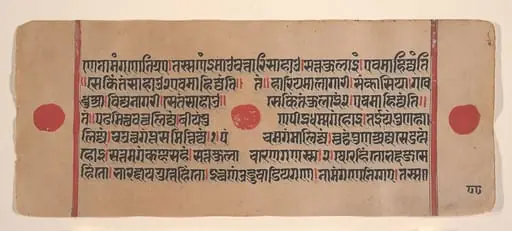
Untitled is a watercolor painting. It dates from 1449 and is held in the collection of the Metropolitan Museum of Art.
About this work
The figures are monks and gods from Jain stories, but the real magic is the gold, it’s not just shiny; it’s meant to glow like divine light in a dark shrine.
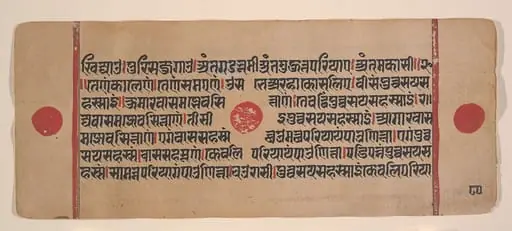
You see a small, bright painting on paper: a circle of flat gold leaf with tiny figures inside, all drawn in fine black ink and soft watercolor.
This was made in Gujarat, India, around 1450 for a Jain temple. The figures are monks and gods from Jain stories, but the real magic is the gold, it’s not just shiny; it’s meant to glow like divine light in a dark shrine.
To see more works like this, look up Jainism.
Subject & Meaning
Created in 1449 in India, this anonymous work is a religious painting depicting Jain iconography. Executed in ink, opaque watercolor, and gold on paper, the piece serves as a visual representation of Jain tradition. While the specific narrative scene is not detailed in available records, the classification as religious art within the Jain genre indicates that the subject matter revolves around the faith's spiritual figures, cosmology, or doctrinal themes.
The inclusion of gold suggests a devotional purpose, aligning with the tradition's emphasis on reverence and the depiction of sacred entities.
Technique & Style
Created in 1449 in India, this religious painting depicting Jainism utilizes ink, opaque watercolor, and gold applied to a paper support. The work measures 11.1 cm in height by 27 cm in width. The combination of opaque colors with metallic elements suggests a luminous surface quality intended for close viewing, characteristic of manuscript illumination or devotional art from the region during this period.
History & Provenance
Created in 1449 in India, this anonymous religious painting depicts themes of Jainism. Executed in ink, opaque watercolor, and gold on paper, the work currently resides in the collection of the Metropolitan Museum of Art, where it is catalogued under accession number 55.121.38.77. While the specific circumstances of its commission and the identity of its creator remain unknown, the piece is firmly dated to the mid-15th century. No details regarding ownership history prior to entering the Metropolitan's collection are available.
Overview
This untitled painting, created in Gujarat, India, around 1450, is a delicate work rendered with ink, opaque watercolor, and gold on paper. It was originally commissioned for a Jain temple. The artwork features a central circular motif, distinguished by its vibrant gold surface and intricate miniature figures. Its small scale and luminous quality suggest it was intended for close contemplation within a sacred space.
Context
This artwork serves as an example of the rich visual culture associated with Jainism, an ancient Indian religion. Works of this nature often formed part of illustrated manuscripts or were incorporated into temple architecture, providing visual aids for spiritual contemplation and narrative understanding. To explore similar artistic expressions and their theological underpinnings, one would examine the broader tradition of Jain art.
Artist & collection