Artwork
Untitled
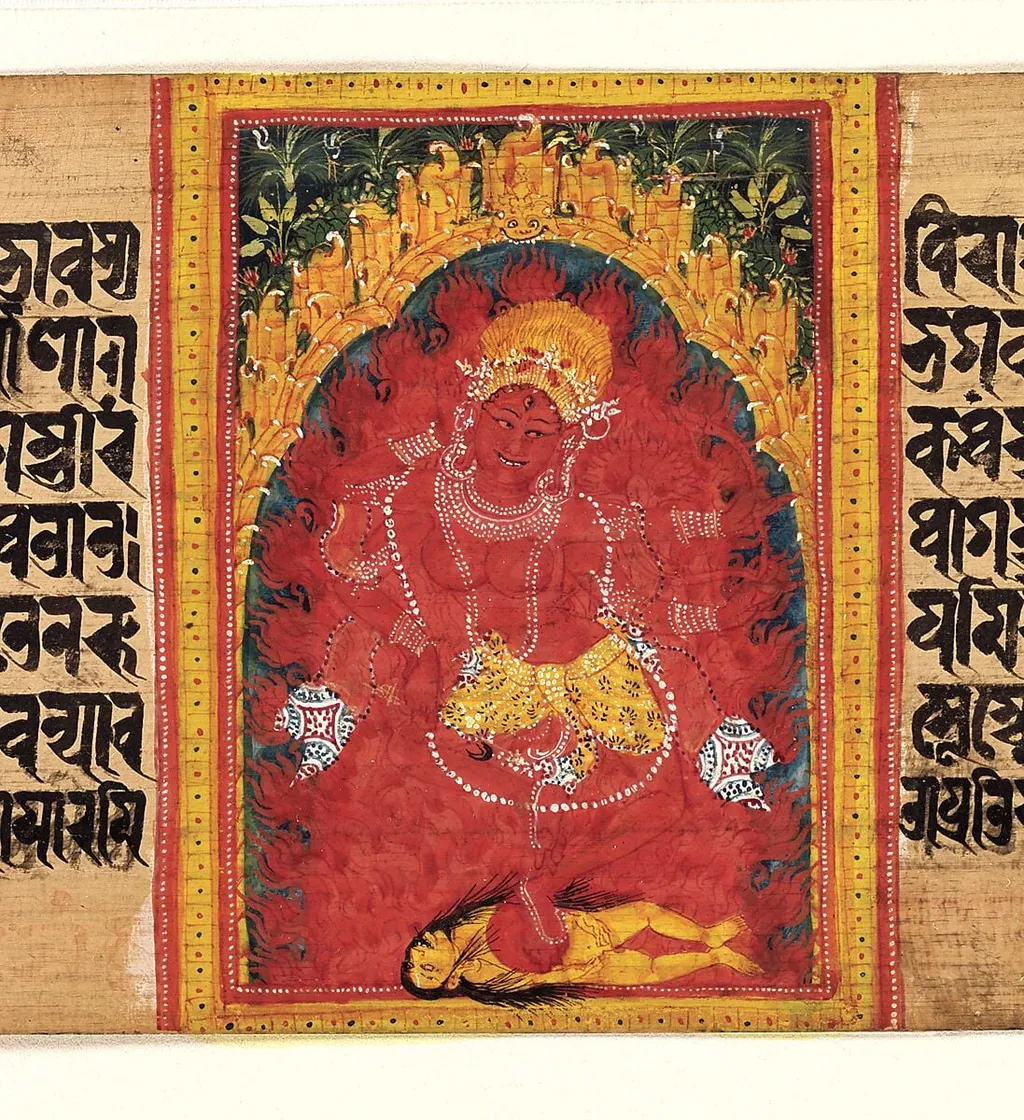
Untitled is a watercolor painting. It dates from 1116 and is held in the collection of the Metropolitan Museum of Art.
About this work
Subject & Meaning
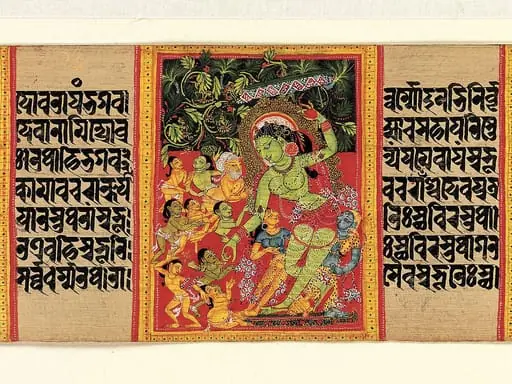
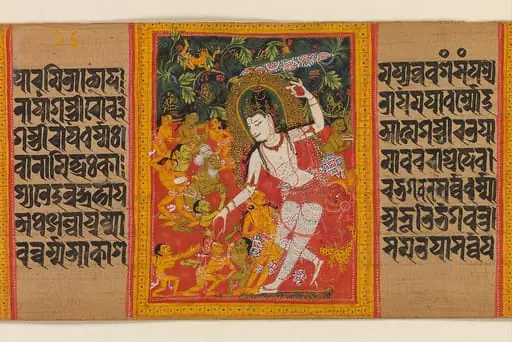
The deity’s dance may symbolize the fluidity of enlightened compassion and the cyclical nature of samsara, themes common in Buddhist art of the period.
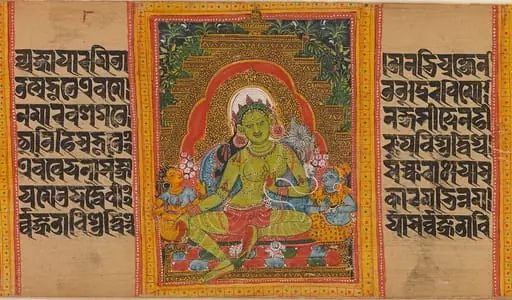
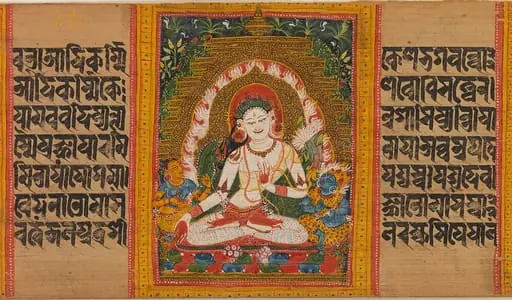
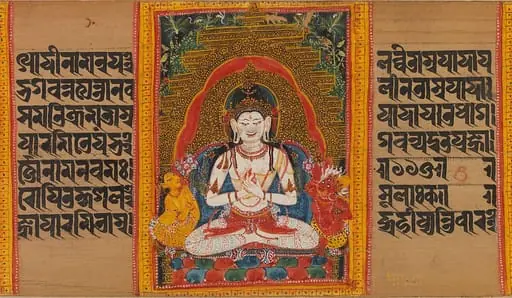
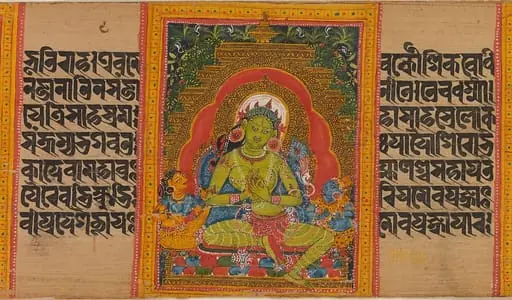
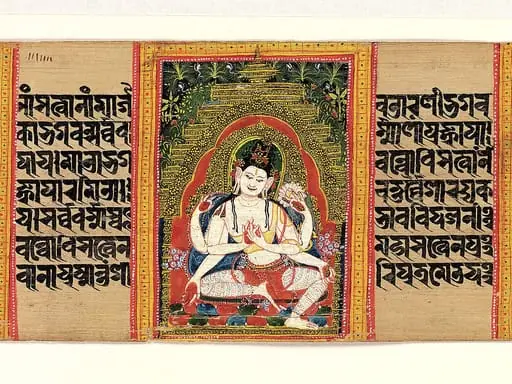
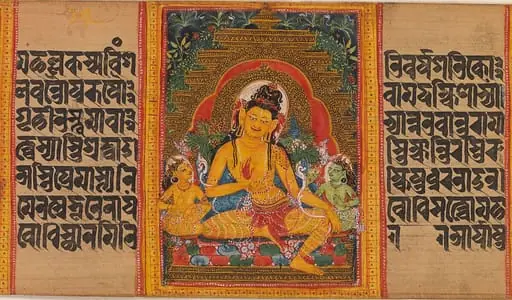
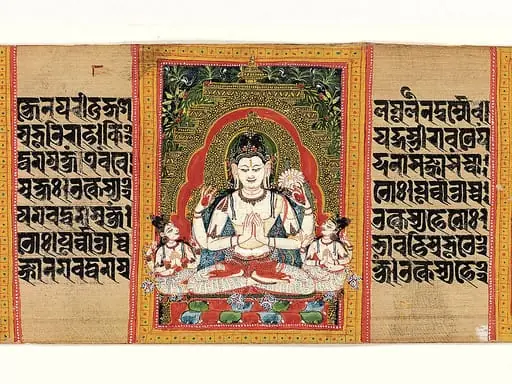
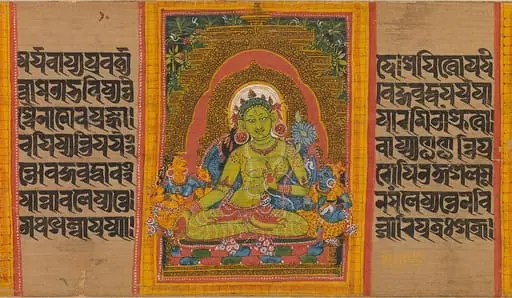
The painting shows a Buddhist deity captured in a dynamic dance pose. The combination of Buddhist iconography with a dancing figure suggests a ritual or meditative performance, possibly representing the deity's enlightened activity or the triumph of wisdom over ignorance. As a religious work from 12th‑century India, the image likely served didactic or devotional purposes, conveying spiritual concepts through the visual metaphor of movement.
The deity’s dance may symbolize the fluidity of enlightened compassion and the cyclical nature of samsara, themes common in Buddhist art of the period.
Technique & Style
The painting employs opaque watercolor applied on palm leaf, a support typical of early Indian manuscript traditions. The handling shows fine, controlled brushwork suited to miniature formats, with delicate modeling of figures and linear definition. Stylistically, the composition is symmetrical and hierarchical, reflecting Pala-period Buddhist iconography.
The palette is restrained, relying on earth tones and mineral pigments, with minimal modeling to convey volume. The surface exhibits age-related craquelure and localized pigment flaking, consistent with palm-leaf supports under prolonged storage.
History & Provenance
The work is dated to 1116 on the basis of internal curatorial records and the Wikidata entry, which both assign the painting’s inception to that year. It is attributed to an anonymous Indian artist and produced as a religious painting on palm leaf using opaque watercolor. The painting depicts a Buddhist deity in a dance, aligning with the palm-leaf manuscript tradition of eastern India.
No documented commission or patron is recorded in the cited sources, and the earliest recorded location is the collection of The Metropolitan Museum of Art, where it is currently held.
The unnamed religious painting, dated to 1116 and created on palm leaf with opaque watercolor, is held in the collection of the Metropolitan Museum of Art. While the museum's records identify the work as an anonymous creation depicting Buddhist themes, deities, and dance, the provided sources do not specify a unique inventory or accession number for the piece. Furthermore, the available documentation offers no details regarding a specific exhibition history for this artwork, limiting the account to its current institutional location and general classification within the museum's holdings.
Overview
This untitled painting depicts Shiva in his form as Nataraja, the cosmic dancer. Executed with opaque watercolor on a palm leaf, the artwork features a blue-skinned deity poised on one toe, surrounded by flickering flames. Delicate gold dots highlight the figure's elaborate jewelry and crown, emphasizing the divine presence within the composition.
Context
Palm-leaf painting was a prevalent artistic tradition in South Asia, particularly associated with the production of illustrated manuscripts. This medium served as a significant vehicle for disseminating religious narratives and iconography across various faiths, including Buddhism. Such works offer insight into the artistic practices and devotional culture of the time, often serving as portable objects for study and veneration.
Artist & collection