Artwork
Untitled
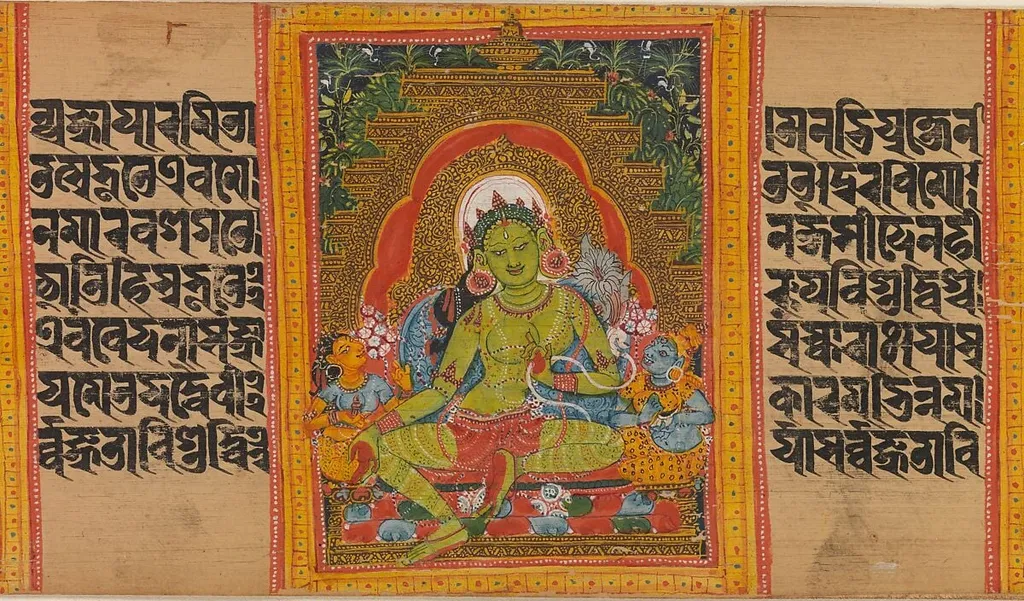
Untitled is a watercolor painting. It dates from 1116 and is held in the collection of the Metropolitan Museum of Art.
- Accession no.
- 2001.445e
- Credit line
- Purchase, Lila Acheson Wallace Gift, 2001
About this work
Subject & Meaning
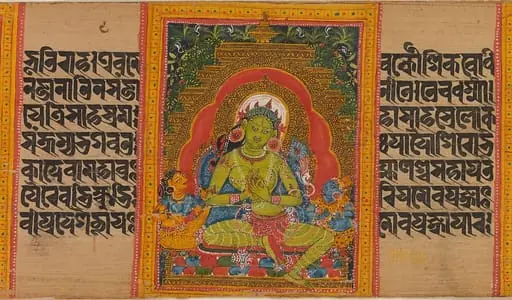
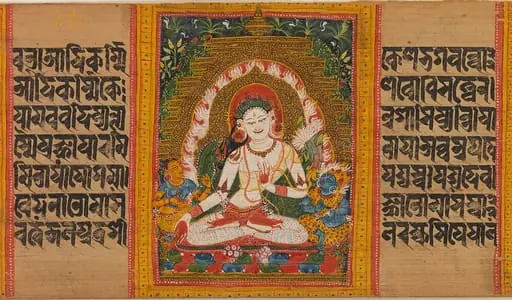
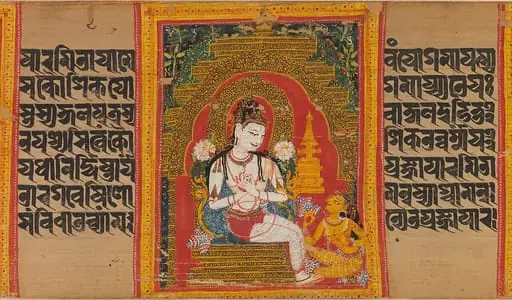
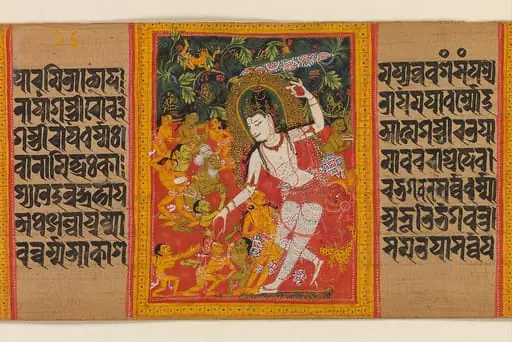
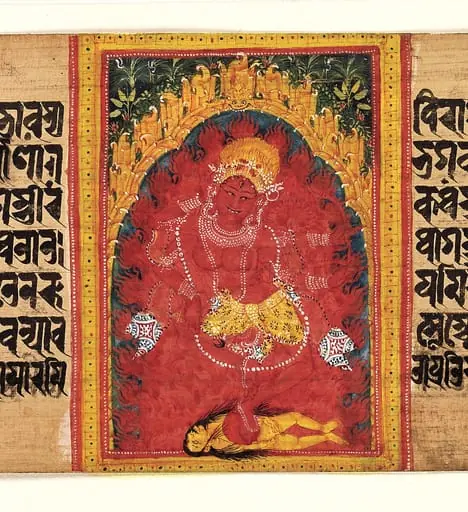
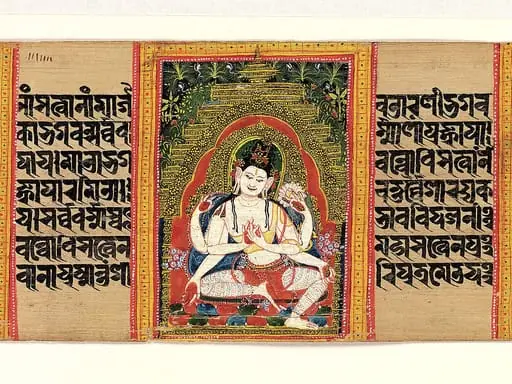
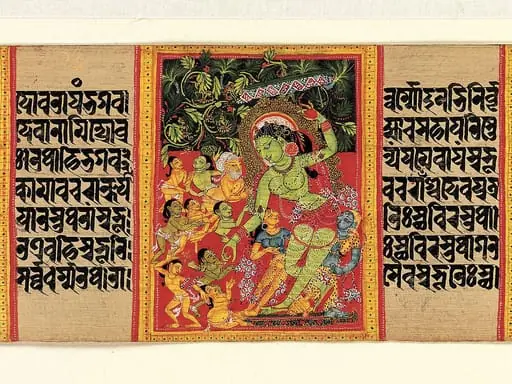
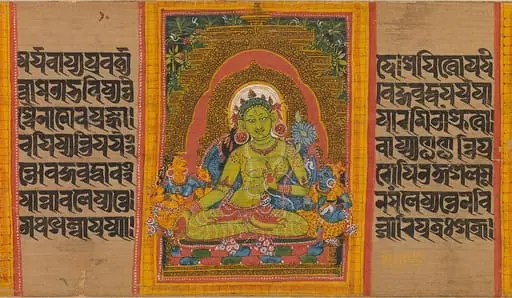
Created in 1116 as an opaque watercolor on palm leaf, the work belongs to a genre of devotional imagery intended to support Buddhist practice and teaching.
The painting depicts Buddhism, placing it within the religious art tradition of 12th-century India. Created in 1116 as an opaque watercolor on palm leaf, the work belongs to a genre of devotional imagery intended to support Buddhist practice and teaching. The palm-leaf format indicates it was likely part of a manuscript or portable religious object, a common medium for transmitting Buddhist texts and iconography in medieval South Asia.
While the specific visual details of the scene are not recorded, the work's classification as religious art depicting Buddhism signals its function as a vehicle for spiritual meaning and ritual use within its original context.
Technique & Style
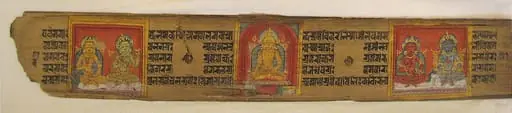
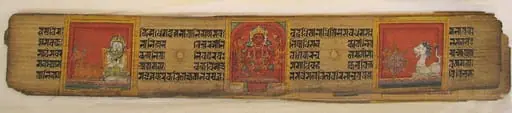
Executed in opaque watercolor on palm leaf, this work belongs to the tradition of painted Buddhist manuscripts produced in India. The narrow horizontal format is dictated by the palm-leaf support, with the painted surface measuring approximately 7 cm in height and 41.9 cm in width. The opaque watercolor medium allowed the anonymous painter to apply dense, saturated pigments directly onto the fibrous leaf surface, a technique characteristic of early twelfth-century Buddhist devotional painting.
The religious subject matter is rendered in this compact, elongated format suited to the constraints of the palm-leaf substrate.
History & Provenance
The work titled Untitled is an opaque watercolor on palm leaf painted in 1116 in India, depicting Buddhist imagery. The artist remains anonymous, and the piece is classified as a religious painting. Its creation history is tied to Indian artistic practice of the early 12th century.
The artwork entered the collection of the Metropolitan Museum of Art, where it is catalogued under accession number MET 2001.445e and is displayed in the museum's galleries. Provenance records indicate acquisition by the museum, though the precise transfer details are not publicly documented.
The work is held in the collection of the Metropolitan Museum of Art in New York, where it is cataloged under the accession number 2001.445e. This painting, created in 1116 in India, is classified as a religious artwork depicting Buddhism. It is executed in opaque watercolor on a palm leaf and measures 7 cm in height by 41.9 cm in width. The piece is attributed to an anonymous painter.
Overview
This untitled painting, executed with opaque watercolor on a palm leaf, originates from Bengal or Bangladesh approximately nine centuries ago. It depicts a central Buddha figure seated beneath a tree, surrounded by numerous worshippers and various mythical creatures. The diminutive scale of the figures and the vibrant palette of red, green, and gold characterize this ancient work.
Context
This palm leaf likely functioned as a page within a larger manuscript, where multiple such leaves were bound together to form a book. These ancient texts were instrumental in disseminating Buddhist narratives and teachings. The practice of illustrating religious stories on palm leaves was prevalent in the region, serving as an important visual aid for spiritual instruction.
Artist & collection