Artwork
Untitled
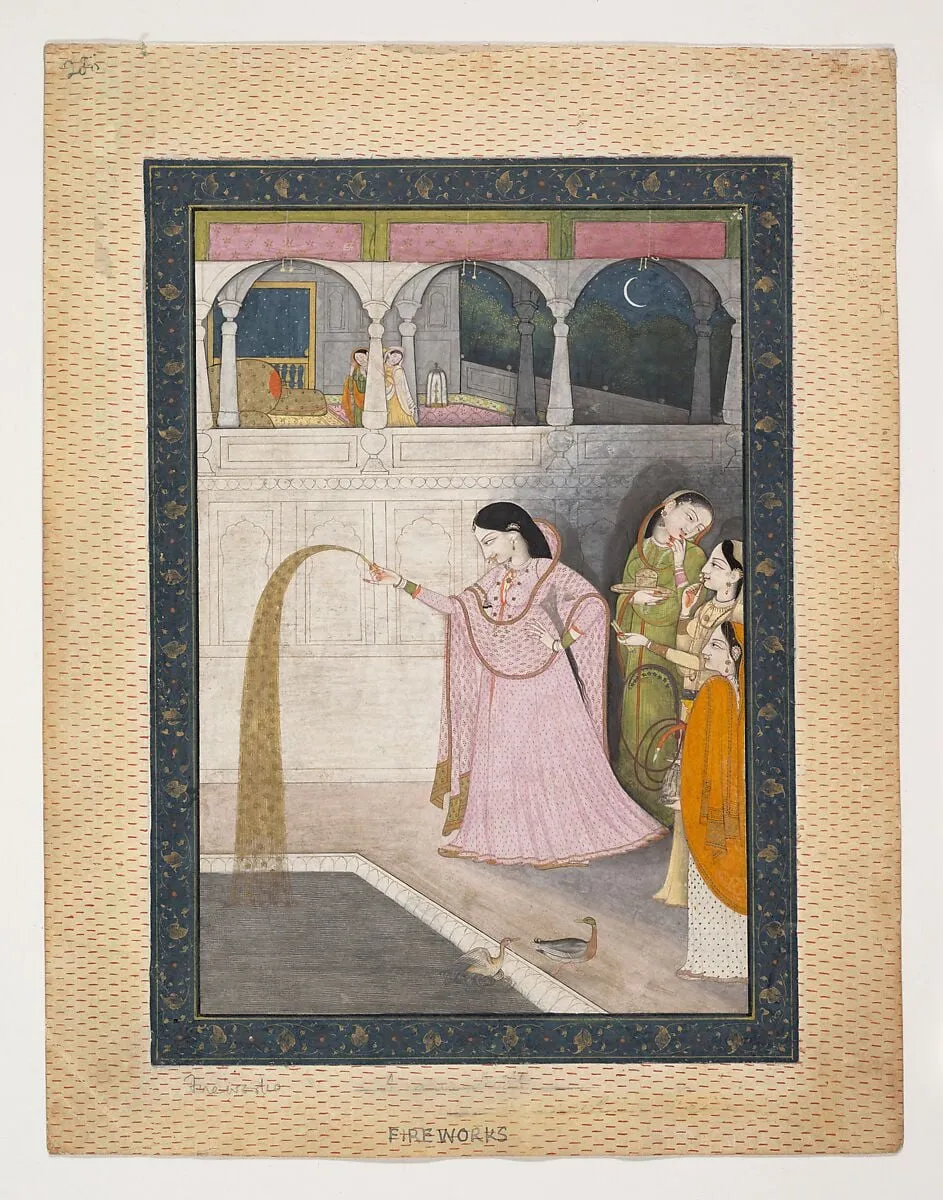
Untitled is a watercolor painting. It dates from 1800 and is held in the collection of the Metropolitan Museum of Art.
About this work
Two women in bright saris stand by a pond at night, ducks floating nearby as fireworks burst overhead. From the Punjab Hills of northern India around 1800, the painter used tiny dots of silver and gold to make the fireworks glow like glitter on wet paper. The artist is unknown, the mood intimate. Look up more works from India, Punjab Hills, Kangra.
Subject & Meaning
No further iconographic or symbolic interpretation is provided in the available documentation, leaving the precise meaning of the composition unspecified.
The painting titled Untitled, dated 1800, portrays three distinct motifs: a duck, a firework, and a woman. These elements are documented in the work's cataloguing information, which identifies the subjects as part of the depicted scene. The duck, often associated with waterfowl, appears alongside a firework, a brief explosive display, and a female figure, together forming a composite scene recorded in the painting's description.
No further iconographic or symbolic interpretation is provided in the available documentation, leaving the precise meaning of the composition unspecified.
Technique & Style
Created in 1800 in India, this anonymous painting is executed on paper using a combination of ink, opaque watercolor, silver, and gold. The work measures 16.8 centimeters in height and 5.8 centimeters in width, suggesting a narrow, vertical format typical of specific genre scenes from the period. The artist employed these metallic and pigmented materials to depict a scene featuring a woman, a duck, and fireworks.
The inclusion of silver and gold alongside watercolor indicates a technique that blends drawing and painting traditions to create a luminous, decorative effect. As an object held in the collection of the Metropolitan Museum of Art, the piece represents a specific instance of early 19th-century Indian genre painting, utilizing mixed media to render its subject matter.
History & Provenance
The work is held by the Metropolitan Museum of Art, New York, where it is cataloged as an anonymous Indian painting dated to circa 1800. It entered the museum's holdings as part of its South and Southeast Asian collection and remains in its permanent installation in New York.
Overview
This untitled painting, created around 1800 in the Punjab Hills of northern India, uses ink, opaque watercolor, silver, and gold on paper. It depicts two women in vibrant saris beside a pond at night, with ducks on the water and fireworks illuminating the sky. The work exemplifies a delicate aesthetic from the region.
Context
This painting aligns with the artistic traditions of the Punjab Hills, particularly styles associated with the Kangra school. Works from this region often share a quiet and shimmering quality, emphasizing delicate detail and emotional subtlety. It represents a broader artistic movement known for its refined aesthetic and narrative depth.
Artist & collection

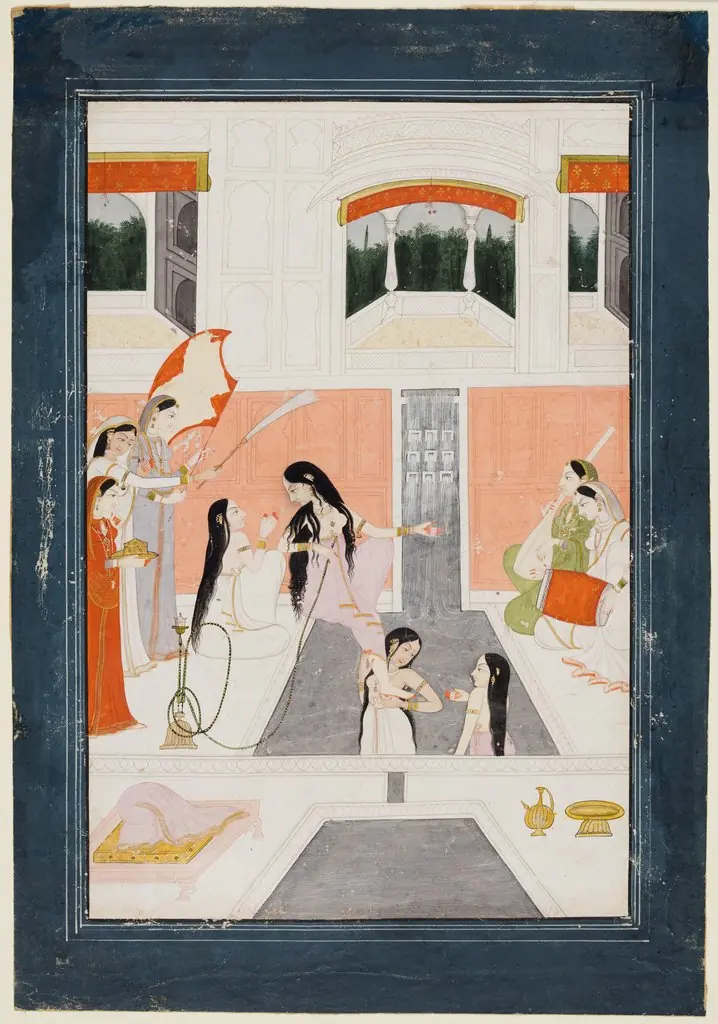
- Palace Women Enjoy Music by the Side of a Water Cascade
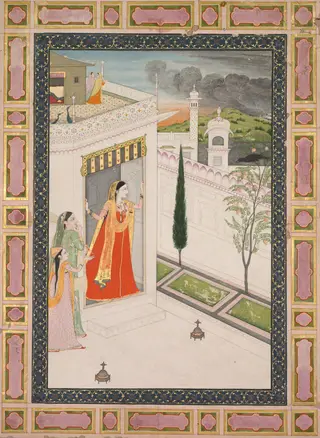 Augury of the Crow (Vasakasajja Nayika)
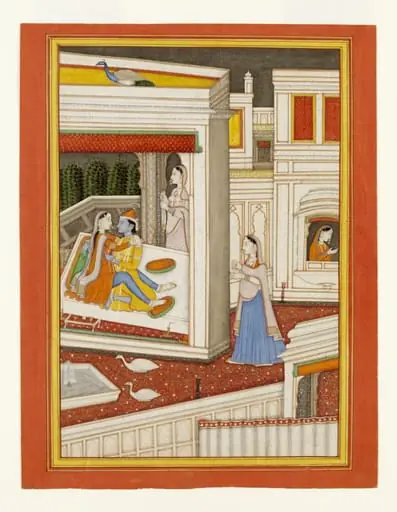 Untitled
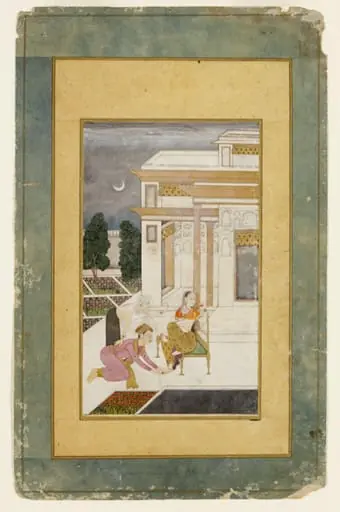 Ramakali Ragini
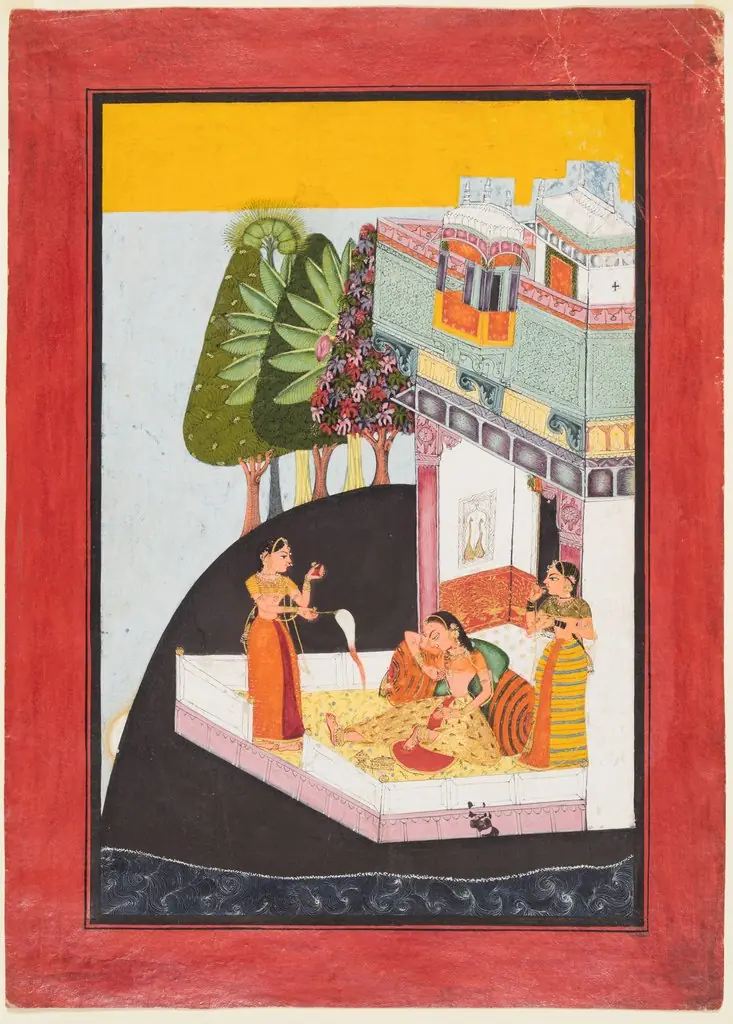 A Disconsolate Lady on a Terrace with Attendants
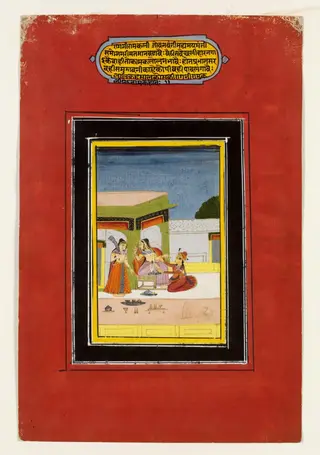 Ramakali Ragini
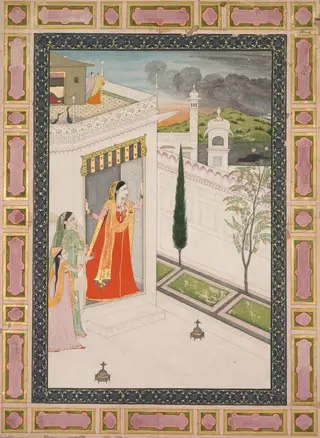 Augury of the crow (Vasakasajja Nayika)
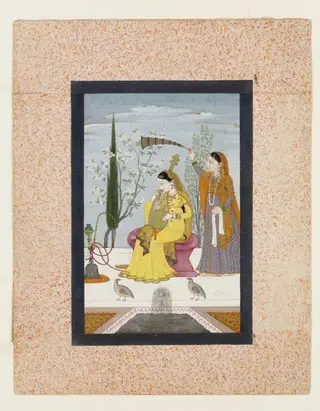 Untitled
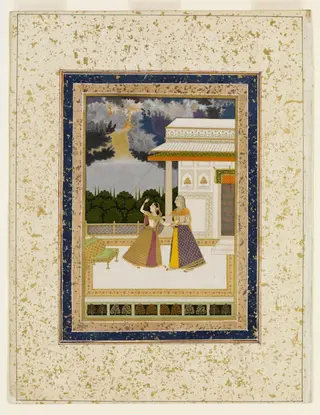 Madhumadhavi Ragini
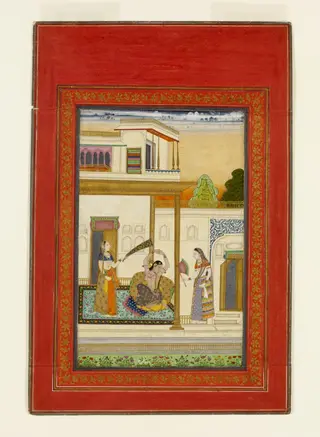 Purvi Ragini
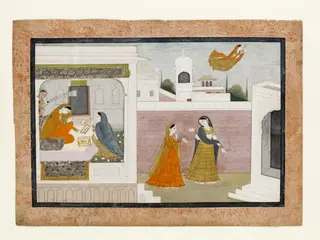 Usha viewing the portrait of Aniruddha
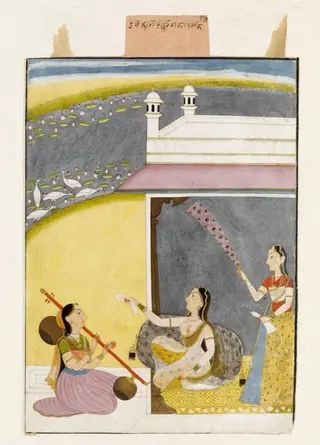 Vasakasajja Nayika