Artwork
Untitled
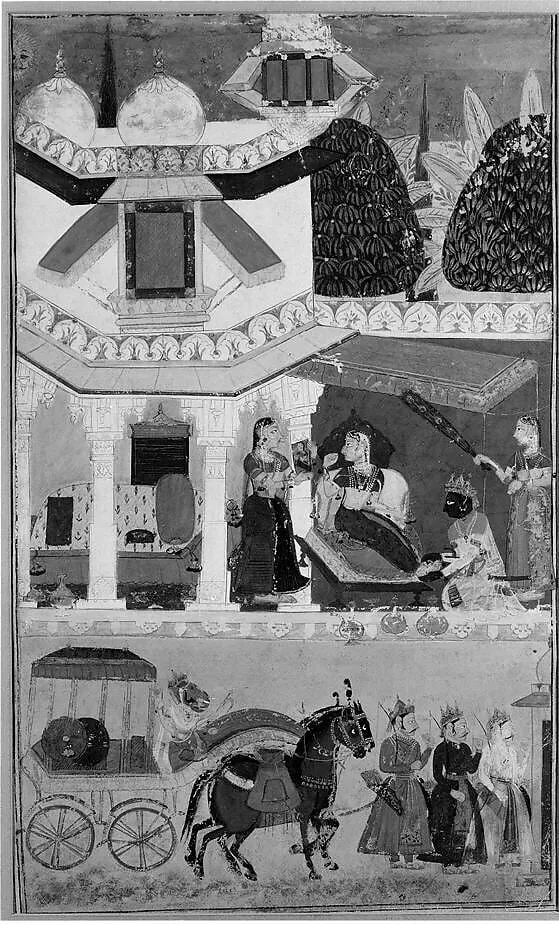
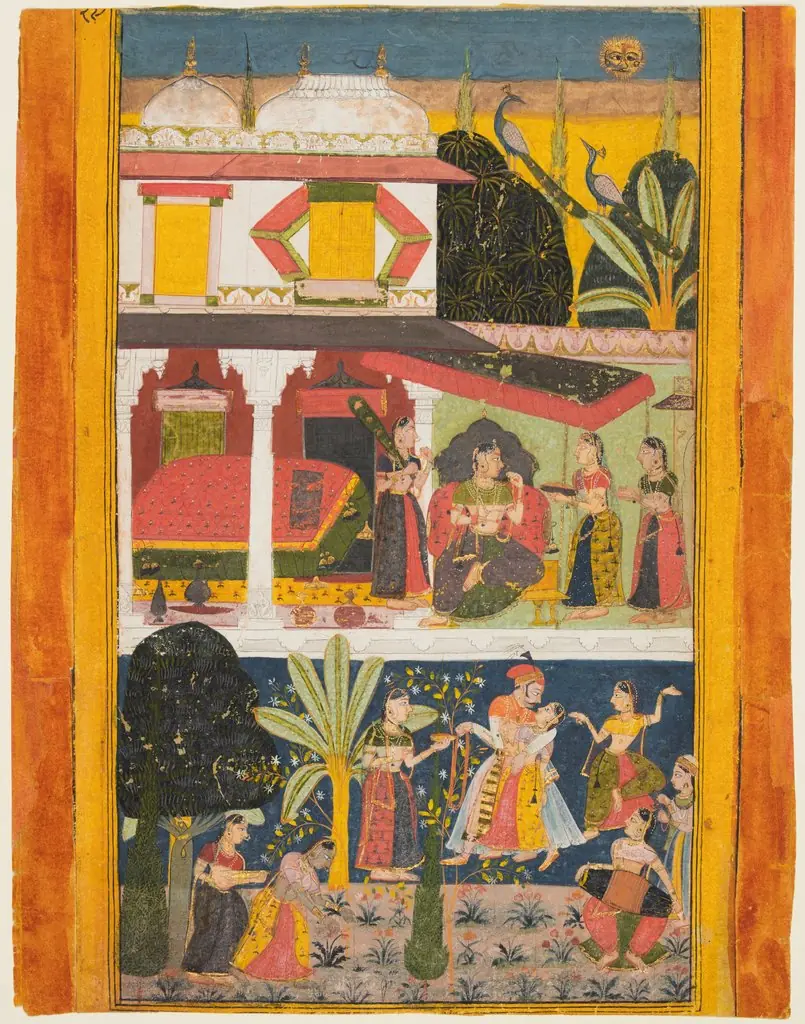
Untitled is a watercolor painting. It dates from 1680 and is held in the collection of the Metropolitan Museum of Art. This folio, titled Ramkali Ragini, was created around 1680 in the Rajput court of Mewar, Rajasthan.
About this work
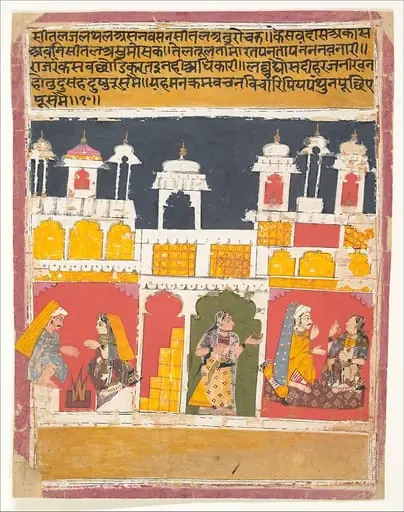
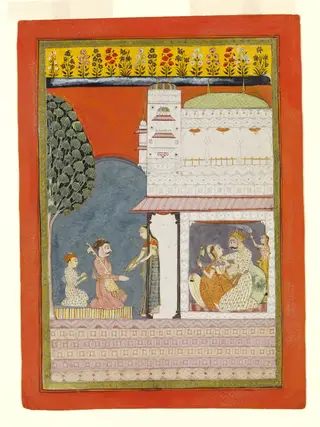
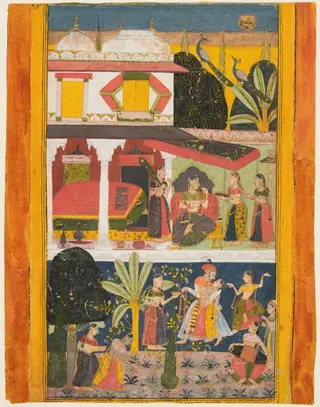
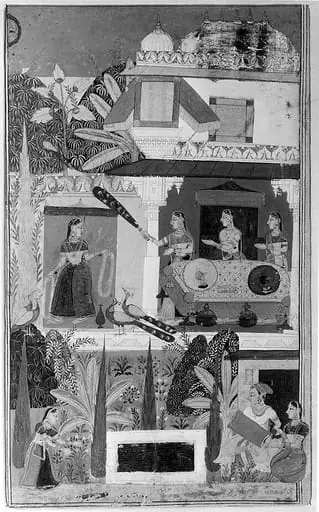
Radha turns away from Krishna as he returns at dawn from another woman's arms, with Ganesha waiting below as a charioteer. This Mewar folio of about 1680, Ramkali Ragini from a ragamala series, renders a musical mode in ink and opaque watercolor on paper. The Metropolitan Museum of Art acquired it in 1954, casting a raga's emotional charge as a Rajput scene of jealousy and desire.
Subject & Meaning
Created in 1680 in India by an anonymous artist, the work belongs to the tradition of narrative painting that illustrated sacred texts and popular devotion.
The painting depicts a mythological scene from Hinduism, featuring the divine couple Krishna and Radha accompanied by a chariot and horse. In Hindu iconography, Krishna and Radha symbolize the eternal bond of divine love, while the chariot often represents spiritual journey or the vehicle of the soul. The horse adds a dynamic element, possibly alluding to movement or devotion.
Created in 1680 in India by an anonymous artist, the work belongs to the tradition of narrative painting that illustrated sacred texts and popular devotion.
Technique & Style
The work is executed in ink and opaque watercolor on paper, a medium typical of Indian courtly painting of the period. It measures 37.0 by 22.2 cm. The opaque watercolor (gouache) is applied in thin, even washes, while ink provides outlines and detail. The composition depicts a chariot scene with Krishna, Rādhā, horses, and a female attendant, rendered in a flattened, decorative style characteristic of Rajput or Mughal-influenced idioms.
No specific brushwork or condition notes are given, but the materials suggest careful handling of pigment on a lightweight support.
History & Provenance
This work, dated to 1680, is an anonymous painting from India executed in ink and opaque watercolor on paper. It entered the collection of the Metropolitan Museum of Art, where it is currently housed. No specific commission, ownership chain, or earlier provenance is recorded in the available sources. The painting's subject matter draws on Hindu mythology, depicting Radha and Krishna with a chariot and horses.
Overview
This folio, titled Ramkali Ragini, was created around 1680 in the Rajput court of Mewar, Rajasthan. Executed in ink and opaque watercolor on paper, it belongs to a larger ragamala series, which visually interprets specific musical modes. The scene depicts a moment of emotional tension between Radha and Krishna, reflecting the mood of the Ramkali raga.
Context
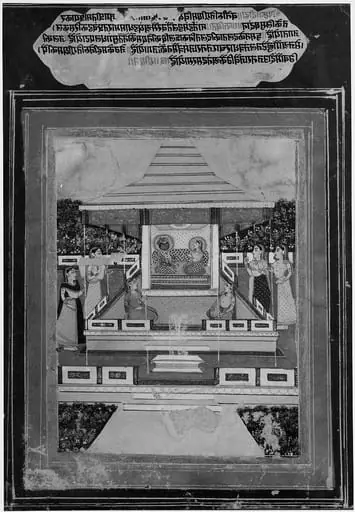
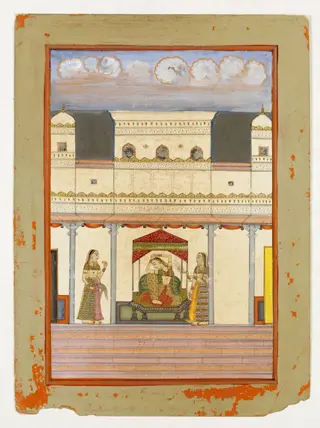
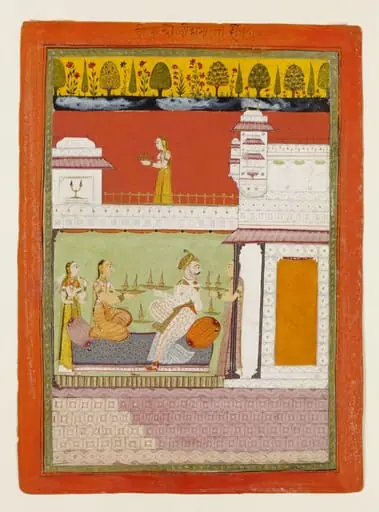
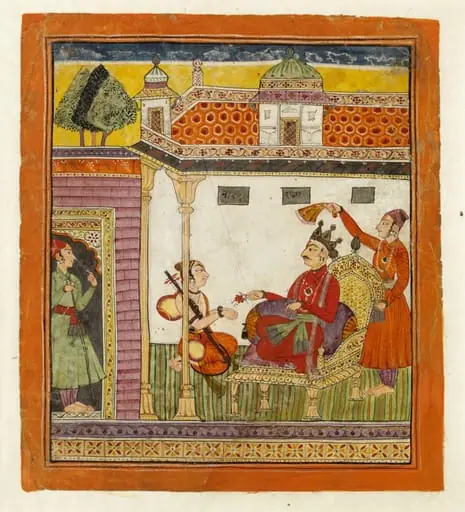
This work is part of a ragamala series, a distinctive genre in early modern Indian art that translates the emotional qualities of musical ragas (melodic modes) into visual narratives. These series served to bridge the realms of music, poetry, and painting, offering a multi-sensory experience to their courtly audiences. The visual conventions, including architectural settings and figural representations, often drew upon and adapted styles prevalent in Mughal painting.
Artist & collection