Artwork
Untitled
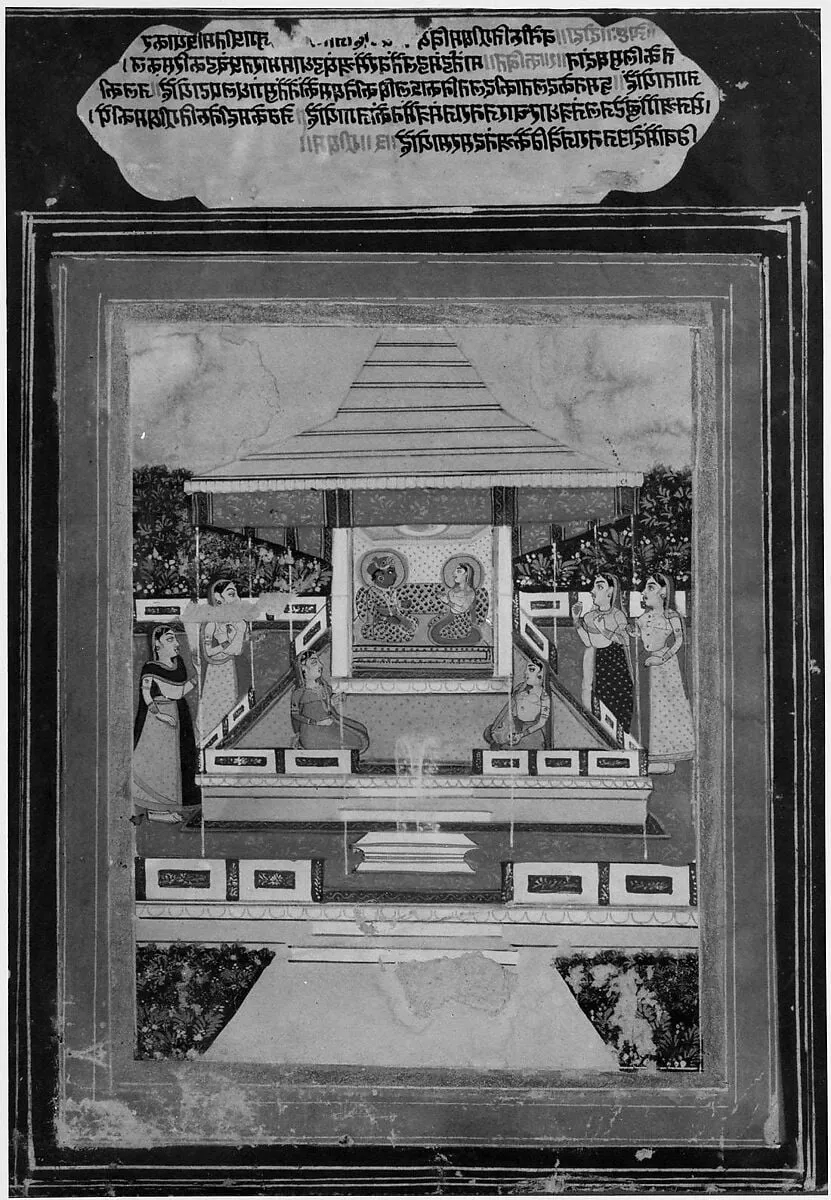
Untitled is a silver painting. It dates from 1885 and is held in the collection of the Metropolitan Museum of Art.
About this work
Subject & Meaning
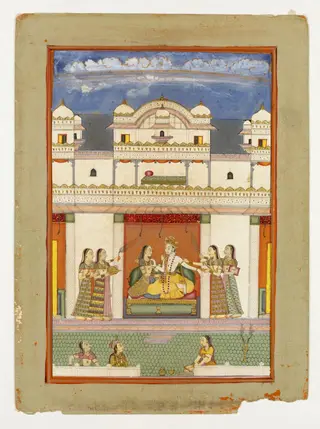
The pavilion functions as a symbolic setting for spiritual rendezvous, while the accompanying female figure may represent Rādhā’s role as the beloved devotee.
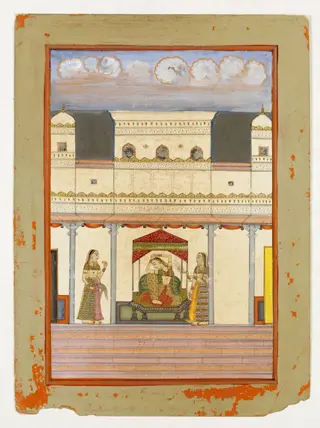
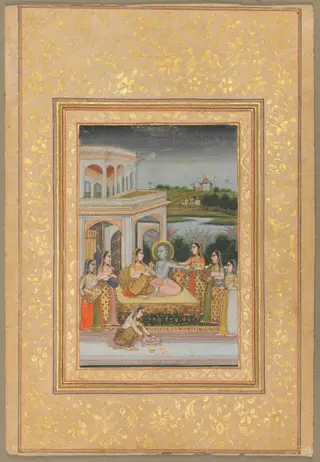
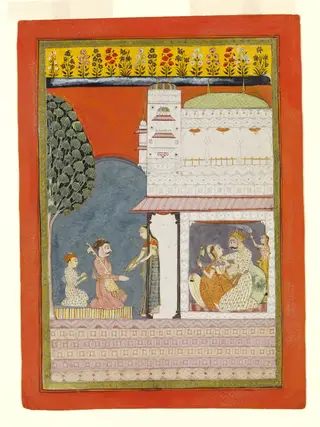
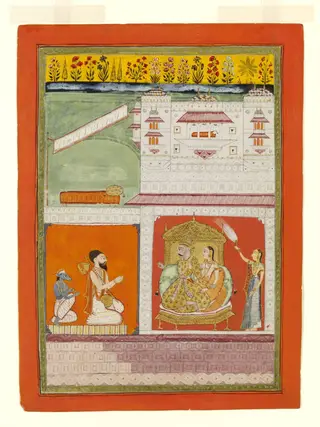
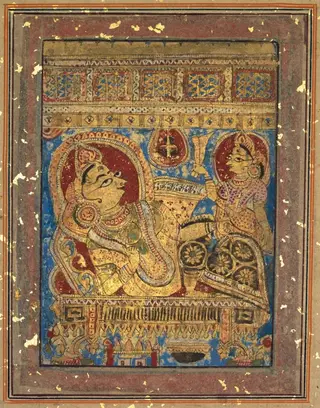
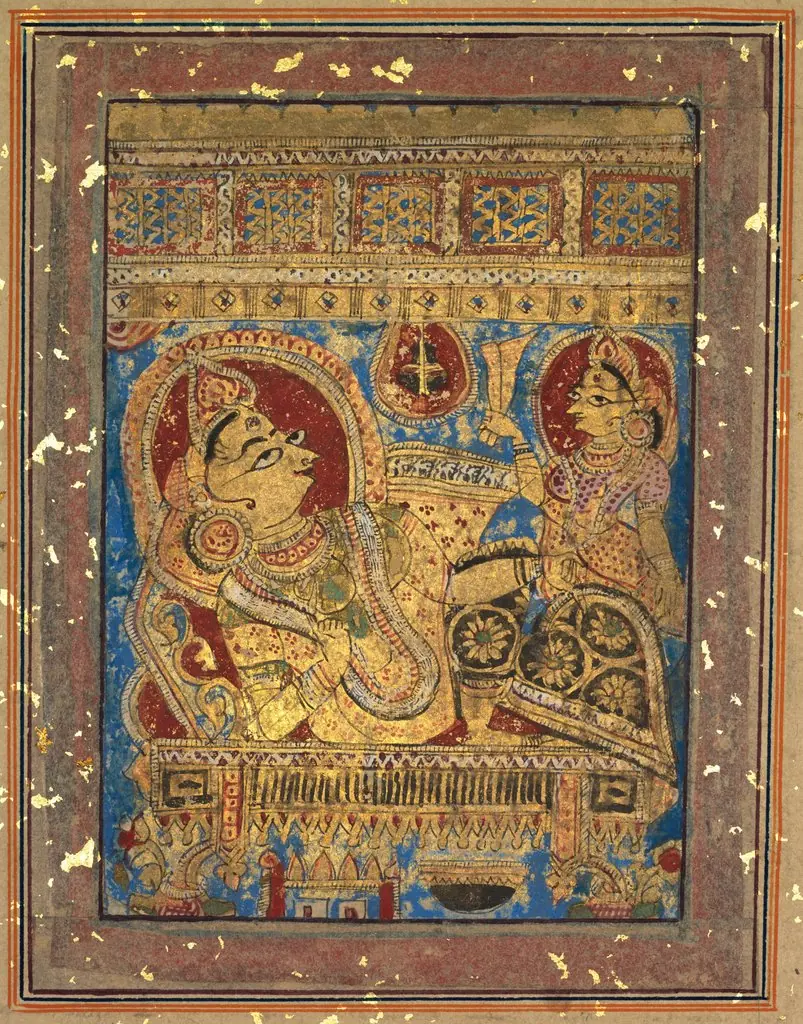
The work shows the divine couple Krishna and Rādhā seated within a modest pavilion, accompanied by a lone woman, all identified in the catalog as figures from Hindu devotional iconography. Their presence situates the painting within the religious genre, reflecting the bhakti tradition that emphasizes loving union with the deity. The pavilion functions as a symbolic setting for spiritual rendezvous, while the accompanying female figure may represent Rādhā’s role as the beloved devotee.
The use of color, gold and silver on paper suggests an emphasis on sacred splendor rather than naturalistic detail. The composition thus conveys themes of divine love and devotion central to Indian miniature painting of the late nineteenth century.
Technique & Style
Created in 1885 in India, this work is executed on a paper support using color, gold, and silver pigments. Classified as a painting within the religious genre, the piece exhibits formal qualities characteristic of its tradition through the depiction of Krishna, Rādhā, a woman, and a pavilion. The anonymous artist employed metallic leaf or pigment, specifically gold and silver, to enhance the visual richness of the composition alongside standard color application.
While specific handling techniques or current conservation condition are not detailed in the available records, the medium and support define the object as a two-dimensional painting measuring 30.5 by 22.5 units. The integration of precious metals with colored pigments on paper establishes its stylistic identity as a devotional image from late 19th-century Indian art.
History & Provenance
Untitled, a religious painting dated 1885, was created in India by an anonymous artist using color, gold and silver on paper. The work portrays Krishna, Rādhā, a pavilion and a woman, subjects documented in both the artwork’s description and its entry in the Metropolitan Museum of Art’s collection. The painting’s provenance traces directly to the museum, which has held it since at least the inception date recorded as 1885‑01‑01; no earlier owners or commissioning details are recorded.
Its dimensions are 30.5 × 22.5 cm. The piece remains in the Metropolitan Museum of Art’s collection in New York, where it is catalogued as part of the museum’s holdings of Indian religious paintings.
Overview
This untitled painting, rendered in color, gold, and silver on paper, depicts two figures within a garden pavilion. The artwork is a small-scale painting, characteristic of Indian miniatures. The shimmering gold and silver leaf behind the figures creates a luminous backdrop, emphasizing the sacred and opulent nature often associated with such depictions. It presents a serene moment shared between the two individuals.
Artist & collection