Artwork
View of the Hudson
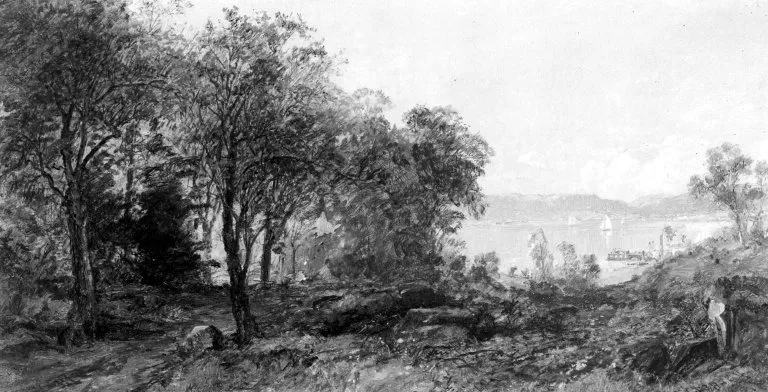
View of the Hudson is an oil painting by the American Impressionist artist Jasper Francis Cropsey. It dates from 1894 and is held in the collection of the Brooklyn Museum.
About this work
Subject & Meaning
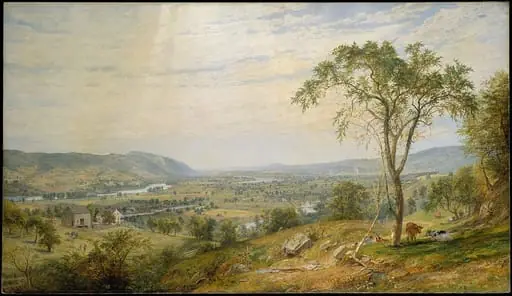
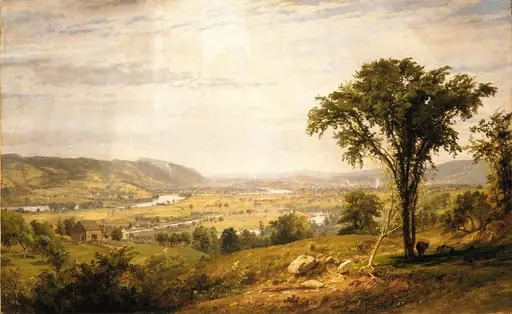
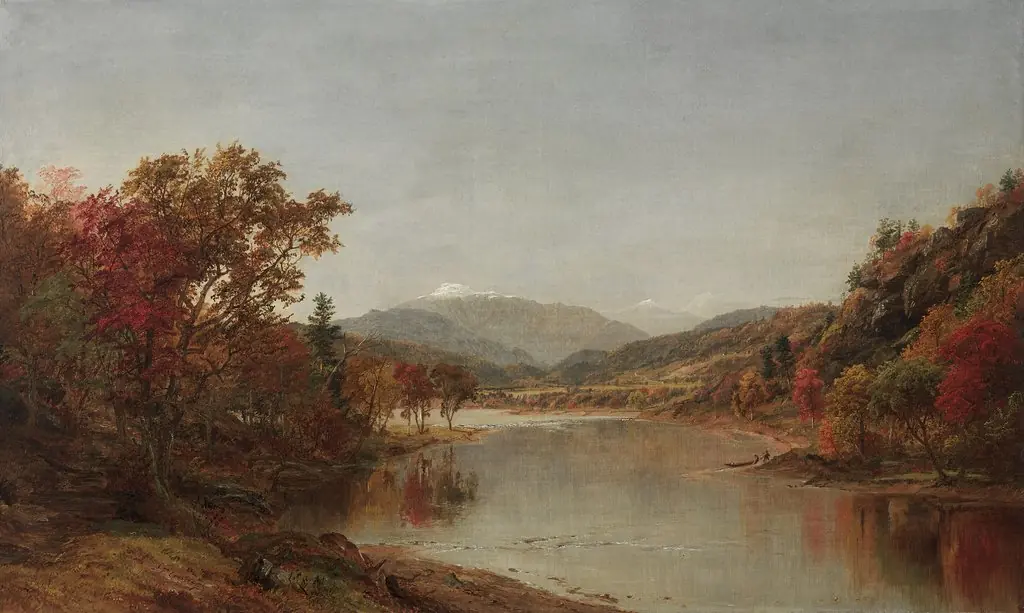
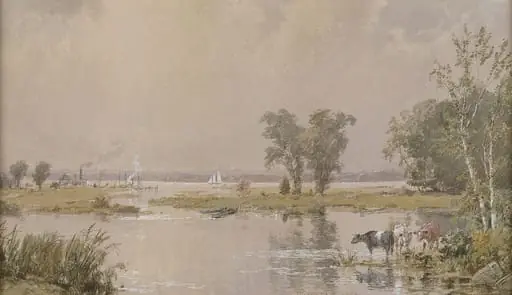
Jasper Francis Cropsey's 1886 oil painting, View of the Hudson, depicts a landscape scene along the Hudson River. The composition features natural elements including the river itself, hills, trees, and the sky filled with clouds. A sailboat is also visible within the depicted waters. The work functions as a landscape painting that captures these specific scenic components.
Technique & Style
Created in 1886, View of the Hudson is an oil painting executed on canvas. The work measures 21.9 cm in height and 40.6 cm in width. As a landscape composition, the piece depicts the Hudson River surrounded by hills, trees, and a sky filled with clouds. A sailboat is also rendered within the scene, contributing to the naturalistic representation of the river environment.
History & Provenance
It has been displayed in the museum's American Wing galleries as part of the permanent collection exhibition.
View of the Hudson is an 1886 oil painting by Jasper Francis Cropsey, classified as a landscape work. The canvas measures 21.9 cm by 40.6 cm and depicts sky, cloud, Hudson River, hill, sailboat and tree. It entered the collection of the Brooklyn Museum, where it remains on view.
The painting was created in 1886 and has been part of the museum's holdings since its acquisition, reflecting a continuous ownership chain from the artist to the institution.
View of the Hudson is an 1886 oil painting by Jasper Francis Cropsey, cataloged as accession number 1956.1114 in the Brooklyn Museum's collection. It has been displayed in the museum's American Wing galleries as part of the permanent collection exhibition.
The work measures 21.9 cm in height and 40.6 cm in width, reflecting its classification as a landscape painting within the museum's holdings.
Overview
View of the Hudson, painted by Jasper Francis Cropsey in 1894, is a late-career landscape that exemplifies the enduring principles of the Hudson River School. The composition features a foreground hill densely populated with trees and shrubbery, establishing a natural frame that directs the viewer's gaze toward the middle ground. Beyond this vegetative barrier, the Hudson River extends horizontally across the canvas, its surface animated by several sailboats that suggest gentle movement and human presence within the vast natural setting.
The sky occupies a significant portion of the upper register, rendered with voluminous cloud formations that interact with the light to create atmospheric depth. Executed in oil paint, the work demonstrates Cropsey's characteristic attention to light and color, utilizing a palette that captures the specific luminosity of the American landscape. Created in the final decade of the artist's life, this piece reflects his continued dedication to the idealized representation of nature, a hallmark of his artistic identity throughout the 19th century.
The painting serves as a testament to Cropsey's role in defining the American landscape tradition, balancing detailed observation with a romanticized vision of the Hudson Valley.
Artist & collection
Artist
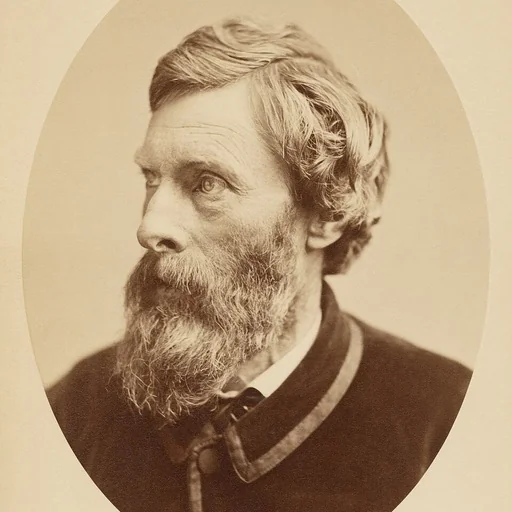
Jasper Francis Cropsey was an American architect and artist. He is best known for his Hudson River School landscape paintings.


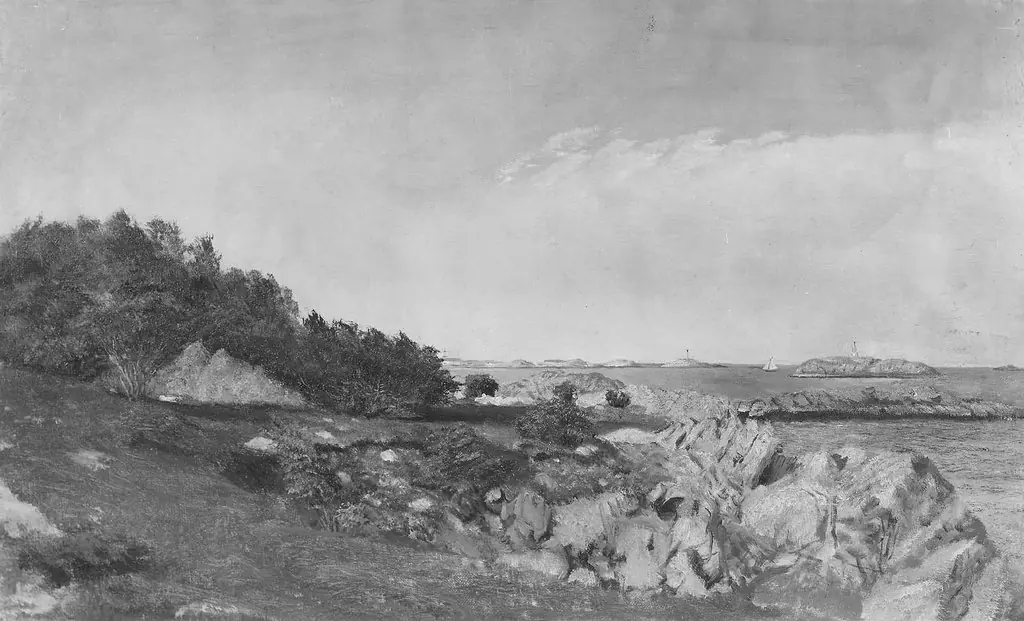 Rocky Coast with Light House
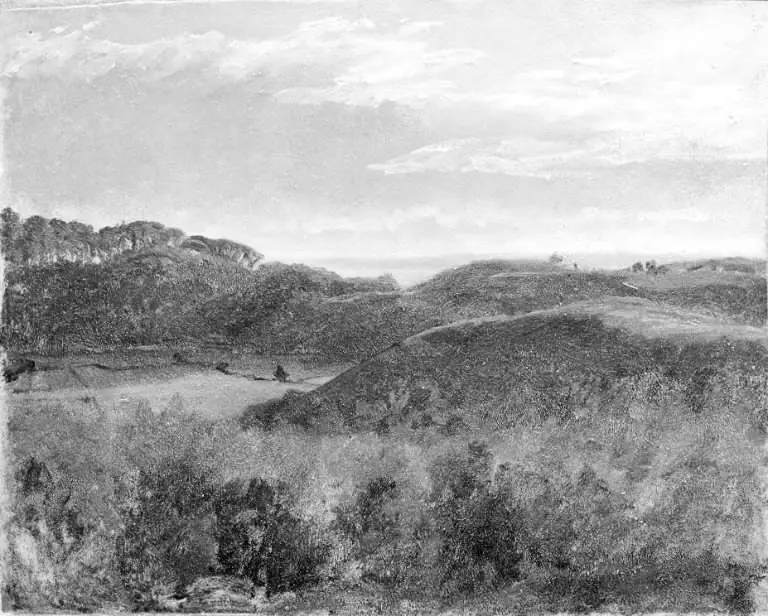 Landscape with Hills
 A Glade
 Udsigt over Skanderborg fra Edelsborgmark
 Wooded Landscape with a River
 Lake Mendota, Madison, Wisconsin
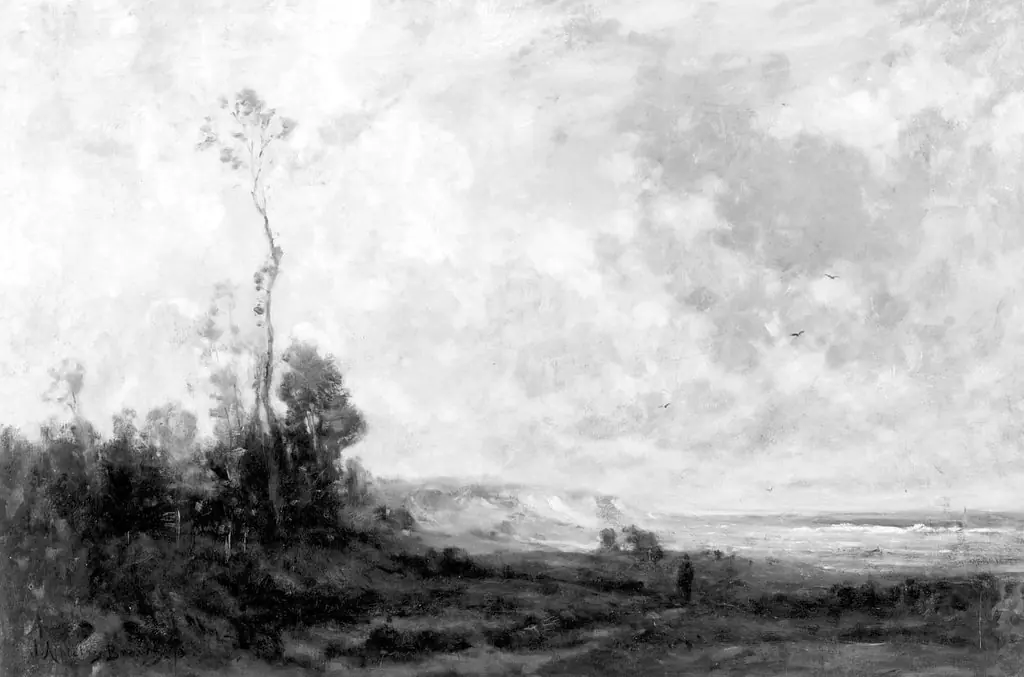 On the Coast of France
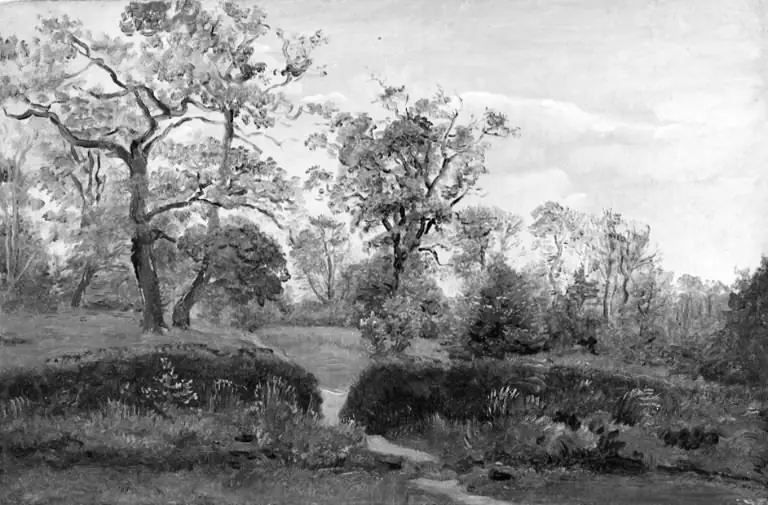 The Fringe of a Wood
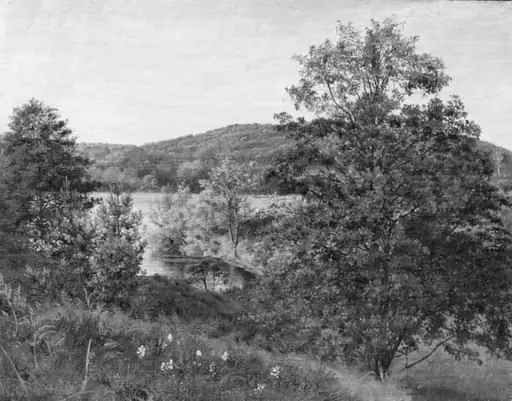 Sen eftermiddag ved Rössjön i Skåne
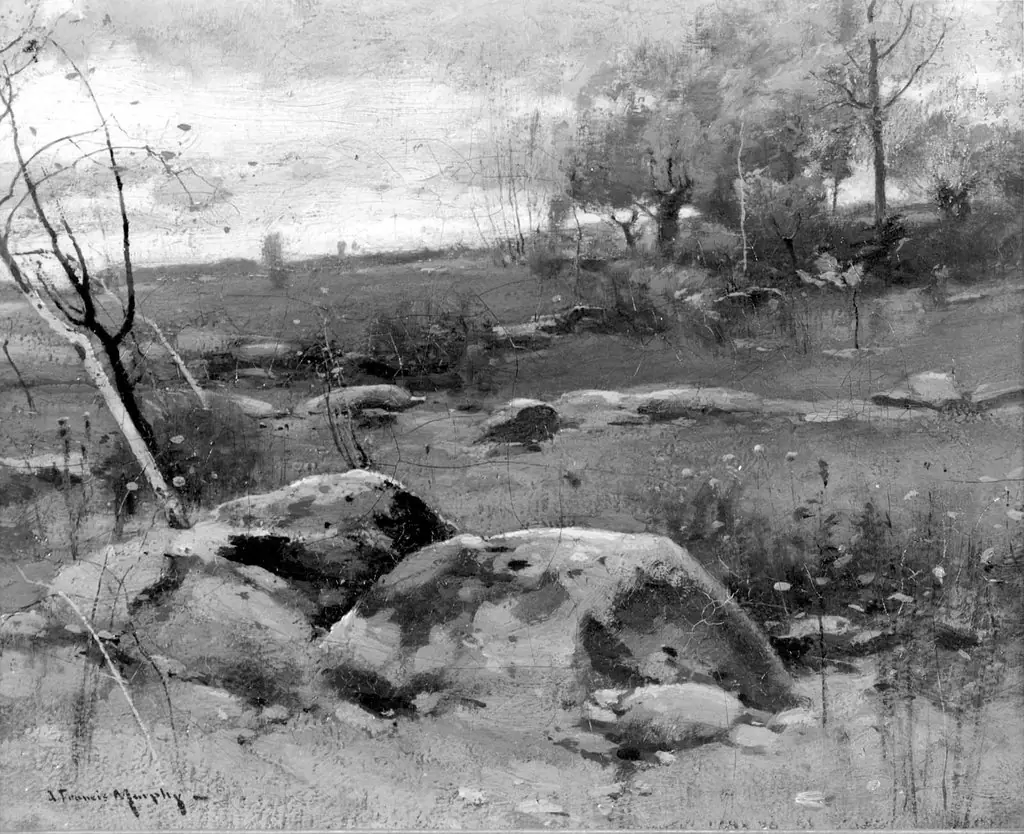 Rocky Fields
 Landscape near Hammermøllen. Study
- View of New York from New Jersey