Artwork
Virgin and Child
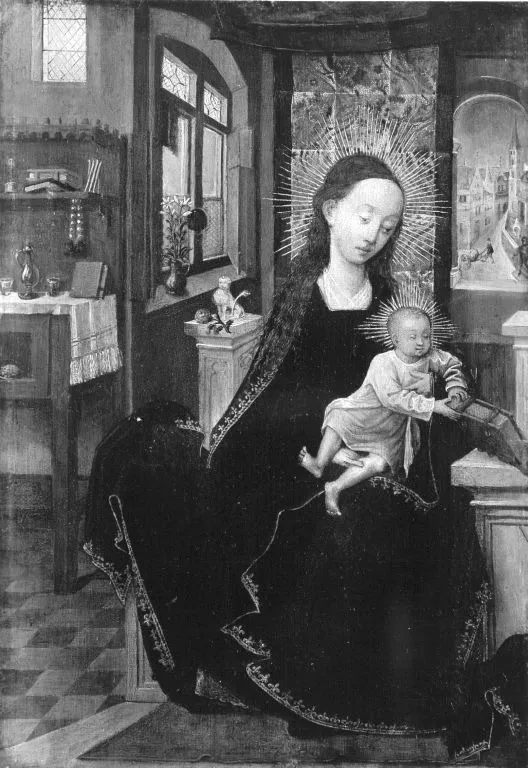
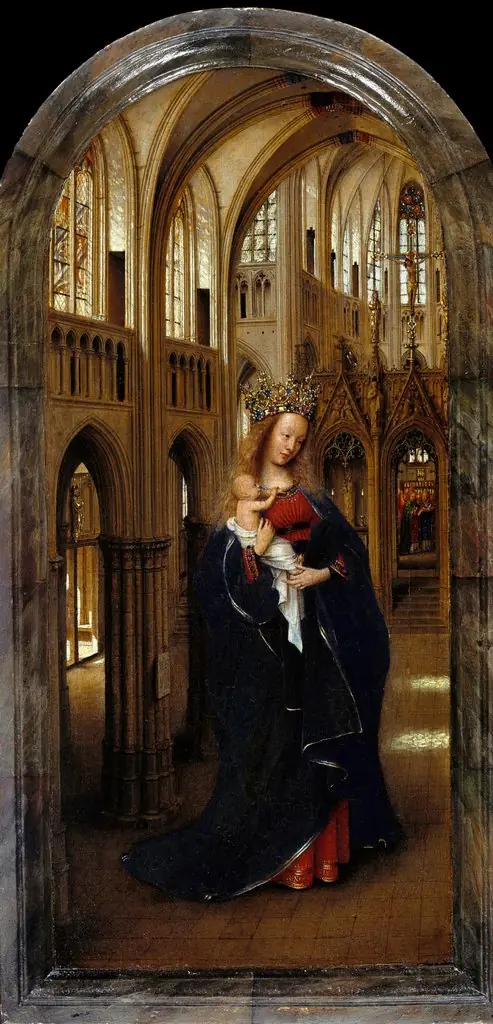
Virgin and Child is an oil painting. It dates from 1493 and is held in the collection of the Bavarian State Painting Collections. The oil painting portrays a seated woman cradling an infant within an intimate interior.
About this work
Subject & Meaning
The composition serves as a devotional object, focusing entirely on the human and divine nature of the pair without additional narrative elements or saints.
This late 15th-century oil painting on oak panel depicts the Madonna and Child, a central subject in Christian religious art. The work portrays the Virgin Mary holding the Christ Child, representing the theological concept of the Incarnation. Created around 1485 by an artist from the Netherlands active before 1500, the image adheres to traditional iconography where the mother and infant are the sole figures, emphasizing their sacred bond.
The composition serves as a devotional object, focusing entirely on the human and divine nature of the pair without additional narrative elements or saints.
Technique & Style
Created in 1485, this religious painting is executed in oil paint on an oak panel support. The work measures 40.3 cm in height and 29.2 cm in width. It depicts the Virgin Mary and the Christ Child, adhering to the conventions of Northern European religious art from the period before 1500. The piece is currently held within the Bavarian State Painting Collections at the Alte Pinakothek.
History & Provenance
The painting Virgin and Child was created in 1485 by an artist identified as Niederländisch vor 1500. Executed in oil paint on an oak panel, the work measures 40.3 cm in height and 29.2 cm in width. The piece depicts the Madonna and Child within the religious genre.
Currently, the artwork is held in the collection of the Bavarian State Painting Collections and is located at the Alte Pinakothek. No specific details regarding its original commission or intermediate ownership history prior to its current museum location are provided in the available records.
Context
The painting was created in 1485 by an artist identified through Wikidata as part of the Northern European tradition before 1500, employing oil paint on an oak panel measuring 40.3 cm in height and 29.2 cm in width. Depicting the Virgin Mary with the Christ Child, it belongs to the religious art genre and is housed in the Bavarian State Painting Collections at the Alte Pinakothek, where it has been part of the permanent display since its acquisition. Contemporary scholarship situates the work within the broader context of pre-Reformation devotional imagery, emphasizing its role in mediating Marian veneration through intimate domestic scale and naturalistic detail characteristic of late 15th-century panel painting in Southern Germany.
Overview
The oil painting portrays a seated woman cradling an infant within an intimate interior. Shelves of books line the walls, a window admits daylight, and a modest table holds a vase, a pitcher, and a cat. Both figures are encircled by luminous halos, and the woman's dark garment is edged with gold trim, while the child wears a plain light tunic.
Artist & collection

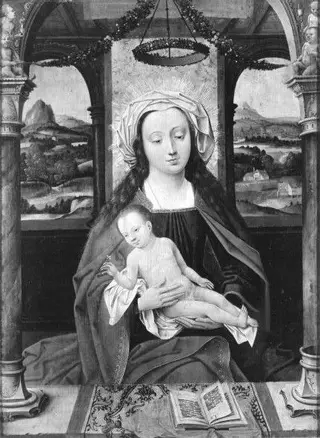
- Mary enthroned with the Christ child
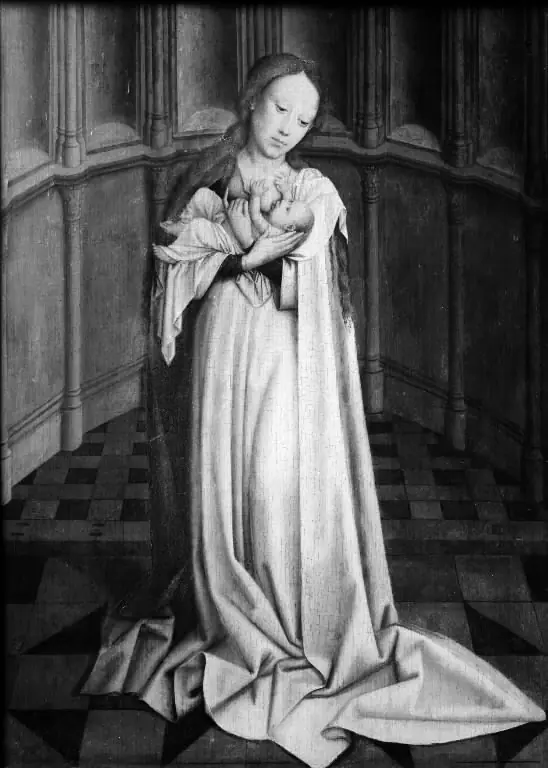 Jomfru Maria giver Kristusbarnet die
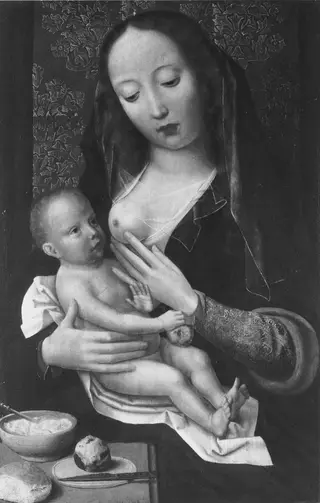 Virgin and Child
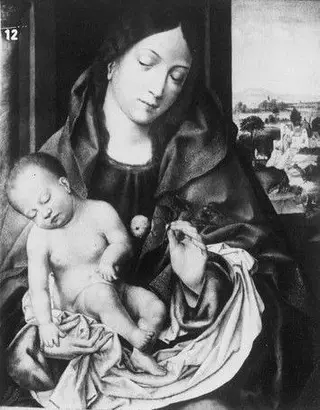 Maria met slapend kind op de arm
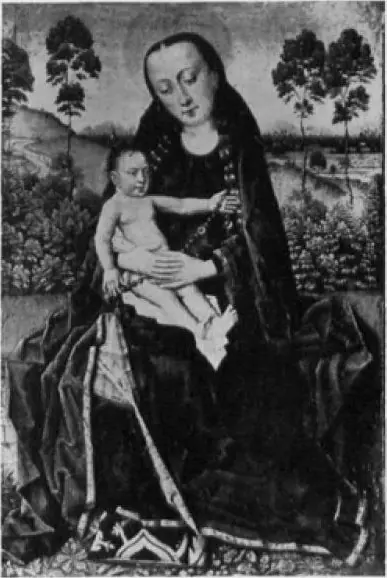 Maria met kind zittend ten voeten uit voor een landschap
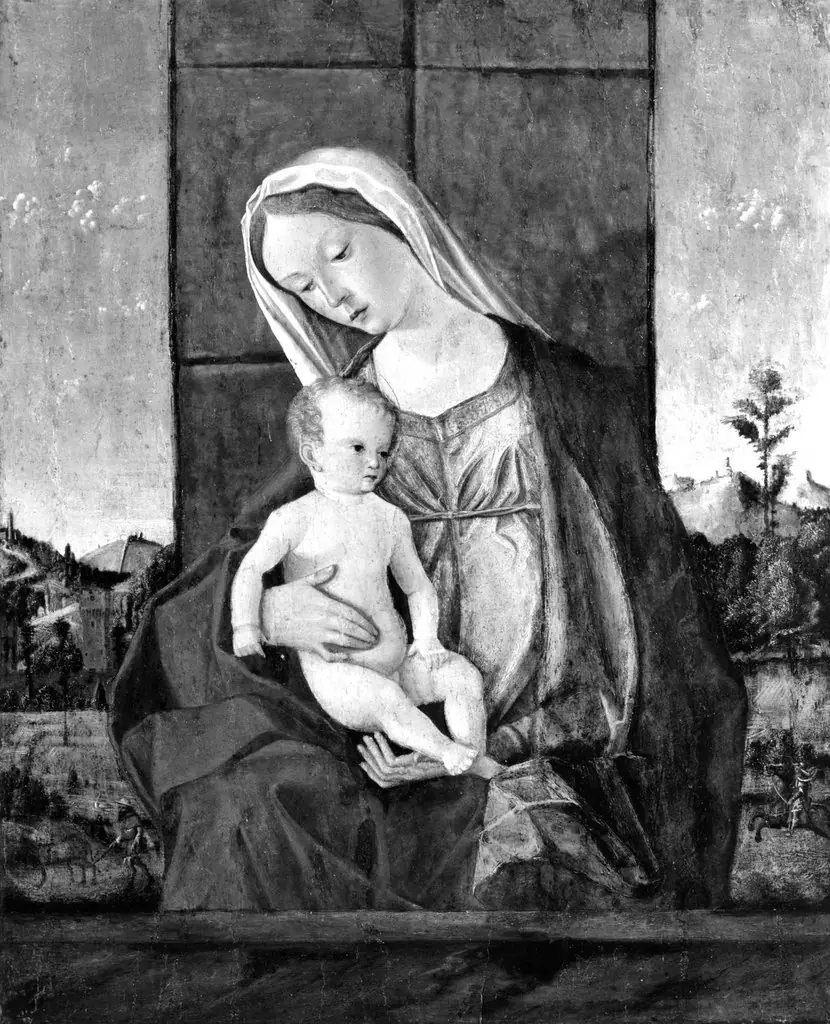 Madonna and Child
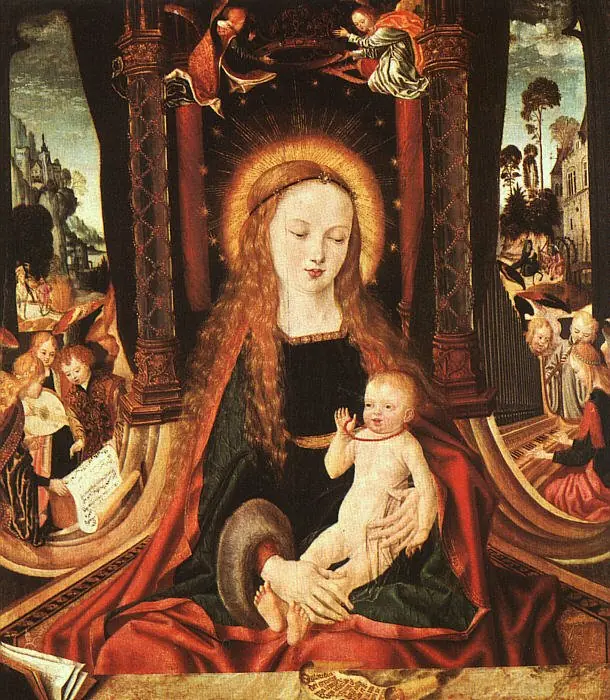 Madonna and Child
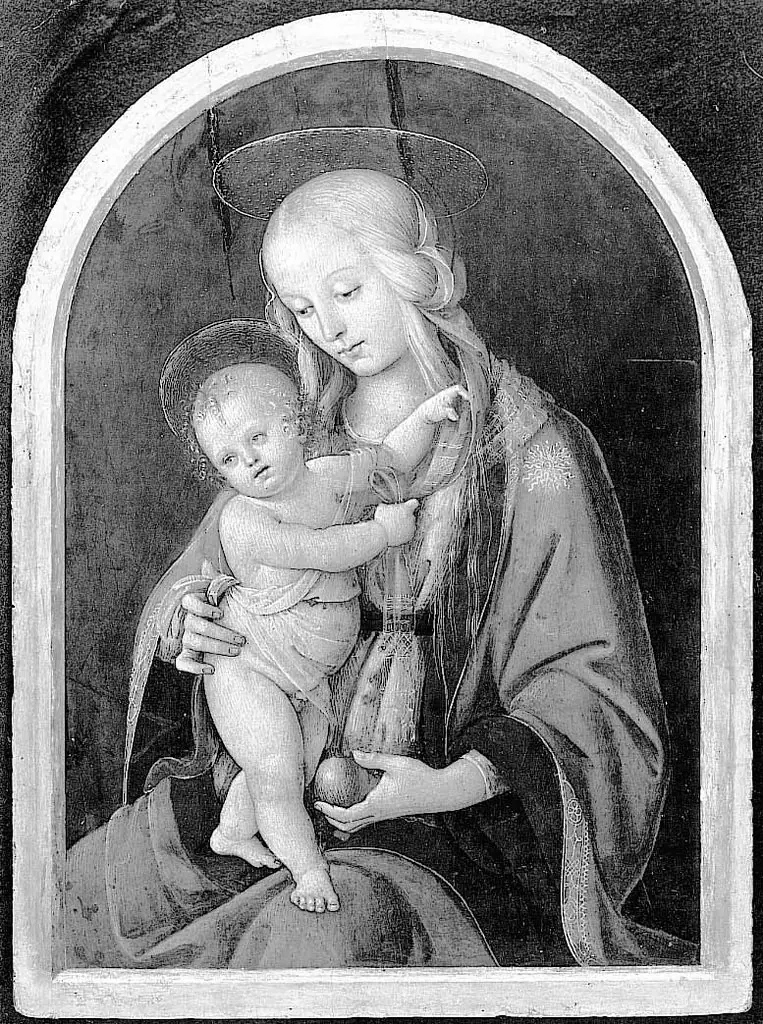 The Virgin and Child
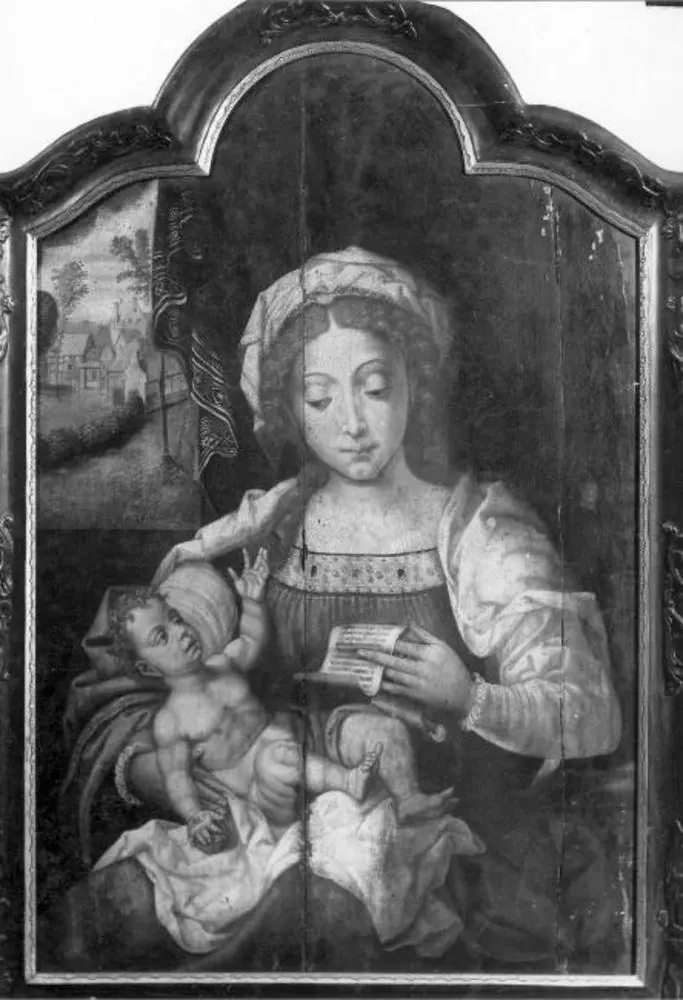 Virgin with child
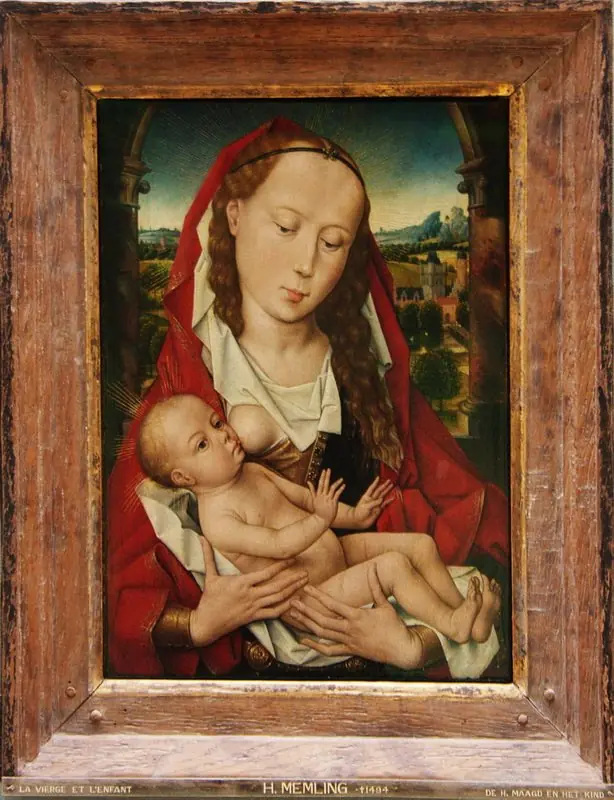 Mare de Déu de la llet
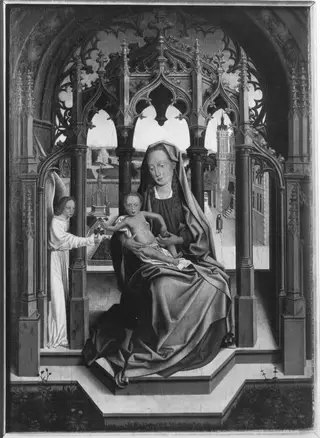 Maria mit Kind in einem steinernen Tabernakel
 The Madonna in the Church