Artwork
Vyasa
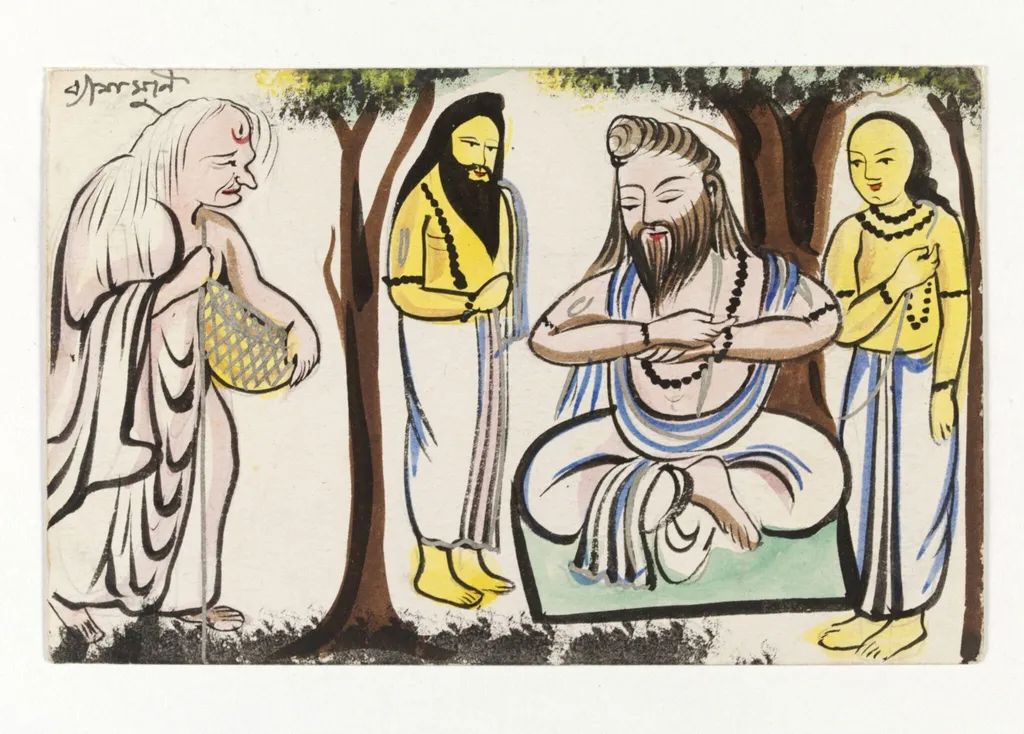
Vyasa is a paint painting by the Impressionist artist Unknown. It dates from 1890 and is held in the collection of the Victoria and Albert Museum.
About this work
The style matches kalighat, a type of Indian folk painting from the 19th century.
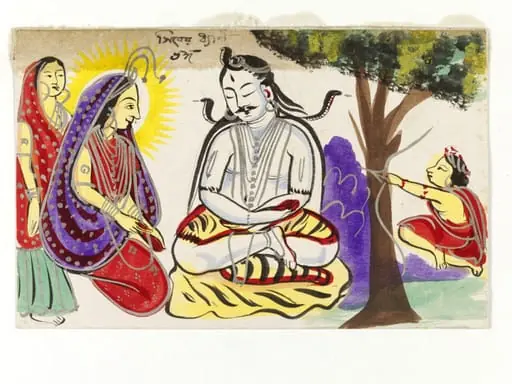
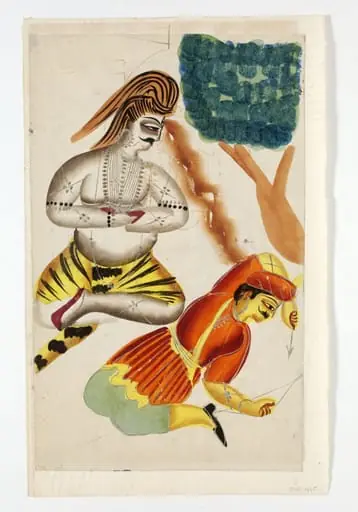
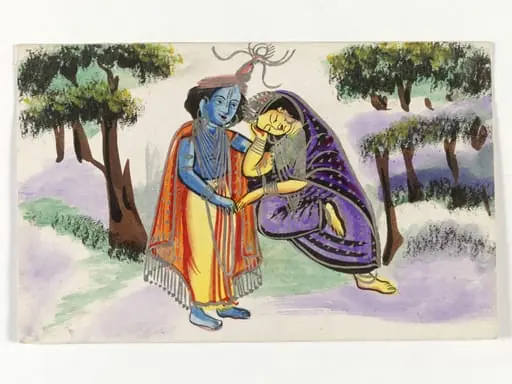
This painting shows four people in a simple outdoor setting. On the left, a woman with white hair holds a woven basket. Next to her, a bearded man stands with his hands folded.
In the center, a seated man with a long beard adjusts his clothes. To the right, a woman in a yellow dress stands with her hands clasped.
The bright colors and bold outlines give it a lively, almost cartoonish look. The style matches kalighat, a type of Indian folk painting from the 19th century.
Check out kalighat to learn more about this art style.
Overview
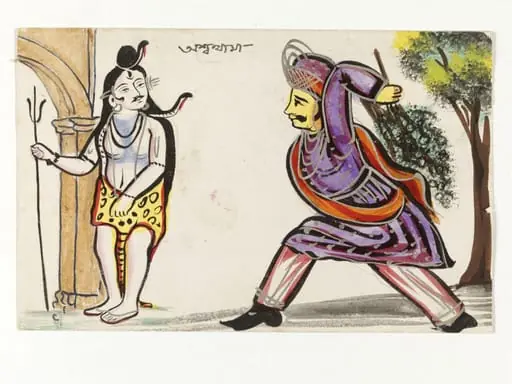
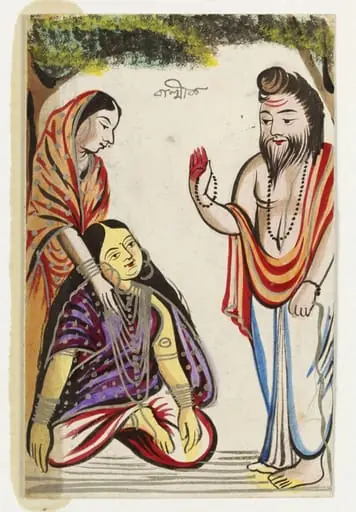
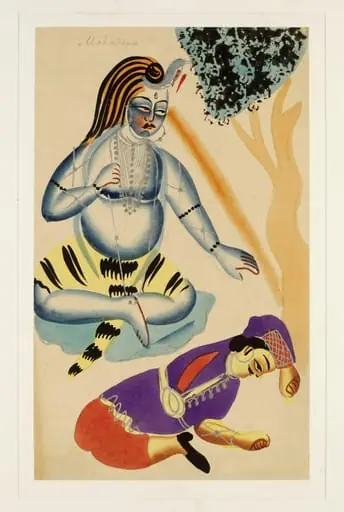
The work portrays the legendary sage Vyasa surrounded by three attendants in an outdoor setting. Executed with watercolour and tin alloy on a cardboard support, the composition features bright hues and pronounced outlines that lend the scene a lively, graphic quality characteristic of a folk tradition.
Subject & Meaning
At the left, a white‑haired woman carries a woven basket, while a bearded man beside her folds his hands in a gesture of reverence. Central to the scene, Vyasa, distinguished by his long beard, adjusts his garments, suggesting a moment of contemplation or preparation. To the right, a woman in a yellow dress clasps her hands, completing the group of four figures.
Technique & Style
The artist combined watercolour washes with tin alloy accents, applying them to a sturdy cardboard base. This method produces vivid coloration and sharp contour lines, aligning the piece with the 19th‑century Kalighat school of Indian folk painting, known for its bold, simplified forms and narrative clarity.
Context
Kalighat paintings emerged from the bustling market area of Kolkata, where itinerant artists catered to a diverse clientele. By adopting this style, the work situates itself within a tradition that blends devotional themes with accessible visual language, bridging elite literary subjects like Vyasa and popular artistic expression.
Artist & collection